

Getting a child to brush for a full two minutes can feel like a craft project that arrived without instructions. Habits stick when they are playful, predictable and shared by the whole household.
This checklist collects practical ideas for school-age children, along with preventive thinking from Lernor Family Dental, a privately owned family and general dentistry practice in Scottsdale, Arizona, led by Eric W. Lernor, DDS, and serving patients since 2003.
It is written for children ages 5 and up, and as late 2026 settles into a rhythm of homework, holiday baking and cooler evenings, it is a good moment to reset the bathroom routine.
Jump to:
- Where Can A Scottsdale Family Find A Family Dentist For School-Age Kids?
- The Bathroom Setup Checklist
- How Long Should Kids Brush, And How Do You Keep It Enjoyable?
- What Does A Dental Visit Add That Home Brushing Cannot?
- Should I Worry If My Child Grinds Their Teeth At Night?
- Your Weekly Follow-Through Checklist
Where Can A Scottsdale Family Find A Family Dentist For School-Age Kids?
Start with a general dentistry office that sees children as well as adults, and ask at what age it begins seeing them.
Many parents prefer a Scottsdale family dentist that offers cleanings, exams, digital x-rays and fillings for adults and for children from age 5, because one office can follow a family's oral health over many years.
That continuity is how Lernor Family Dental describes its focus: personalized care, long-term patient relationships and continuity of treatment.
It also helps to confirm credentials before a first visit. Dentists in Arizona are licensed by the Arizona State Board of Dental Examiners, so checking a license is a reasonable first step with any office. The checklist below works with whichever licensed dentist your family chooses.
The Bathroom Setup Checklist
A smooth routine starts before anyone picks up a brush. Treat the bathroom like a small craft station, with everything inside a child's reach and nothing that needs a grown-up to fetch.
- A sturdy step stool so your child can see the mirror and reach the sink comfortably.
- A toothbrush in a color your child picked, kept in a cup they decorated themselves.
- A two-minute sand timer or kitchen timer placed where it is easy to see.
- A paper brushing chart taped at eye level, with room for stickers or hand-drawn stars.
- A calm light and a clean hand towel, so the space feels welcoming instead of rushed.
Let your child own as many choices as possible. Picking the cup, the chart colors and the order of the routine turns a chore into a project, and children who help design a routine often feel more invested in keeping it going.
Keep the steps in the same order every night so your child always knows what comes next. Predictability cuts down on negotiation, which leaves more energy for the fun parts.
How Long Should Kids Brush, And How Do You Keep It Enjoyable?
The American Dental Association recommends brushing twice a day for two minutes with a fluoride toothpaste, and replacing a toothbrush every three to four months.
Two minutes feels long to a child, so the timer and the chart do real work. Writing the replacement date on the family calendar keeps that three-to-four-month window from slipping by.
A few ideas that fit a busy household:
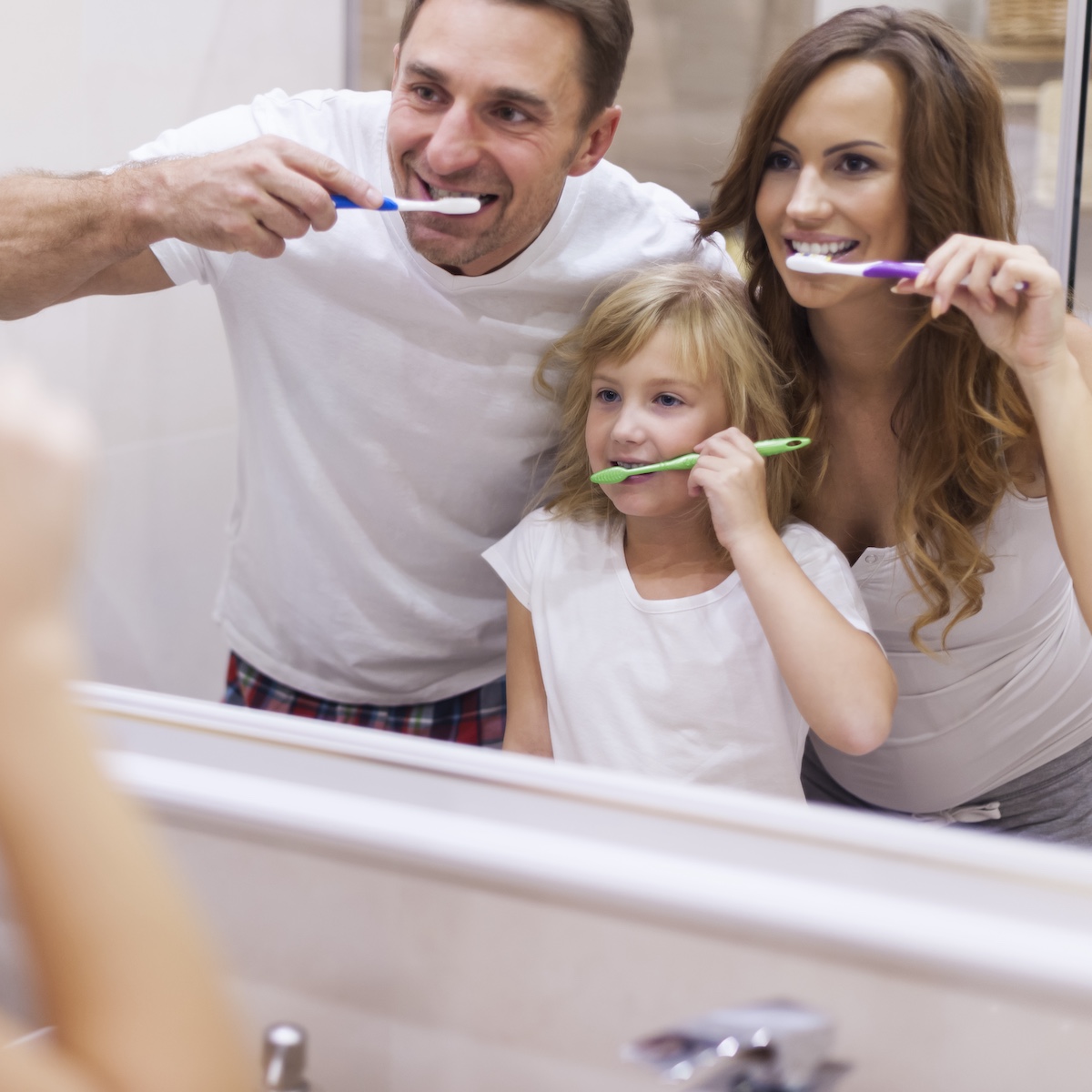
- Brush alongside your child so they can copy you. Shared brushing time doubles as a few quiet minutes together.
- Split the two minutes into four zones: top front, top back, bottom front and bottom back. Give each zone a little story, like a room in a pretend house.
- Let your child play teacher and brush a stuffed animal's pretend teeth first, then their own.
- Tie brushing to the same cue every night, such as the last page of a bedtime story.
- Make the chart a monthly craft project, with a new theme such as planets, a garden or the ocean.
- Keep snack time in the routine. A build-your-own plate of crunchy vegetables, cheese and fruit is an easy after-school recipe, and water is simple to keep on the table.
Older children can take on more of the job, such as setting the timer or choosing the next chart theme.
Younger school-age children usually still welcome a grown-up nearby to watch and cheer, so plan to stay in the room for a while.
Praise effort rather than perfection. A chart with a few empty squares is still a chart that is working.
What Does A Dental Visit Add That Home Brushing Cannot?
A dental visit removes and checks what a toothbrush at home may leave behind. Lernor Family Dental states that its dentist holds the view that home care alone does not remove everything that causes dental disease, which is why regular visits still matter.
The same view is that preventive care keeps long-term care simpler, and that good dental care takes time but prevents redoing work later.
| Job | At home | At the dental office |
| Daily plaque | Brushing twice a day for two minutes | Professional cleaning and exam |
| Spotting early problems | Parents watch for changes | Exam and digital x-rays |
| Routine support | Timer, chart, shared brushing | Questions answered face to face |
| Tools | New brush every three to four months | Guidance on what suits your child |
Put simply, home care covers daily plaque removal, timers and charts, while a visit adds a professional cleaning, an exam with digital x-rays and a place to ask questions in person.
A first visit can be framed as an ordinary family outing rather than a big event. Talk about what will happen in simple, friendly terms, read a picture book about a dental office beforehand, and let your child ask questions. Children who know what to expect often walk in more relaxed.
Should I Worry If My Child Grinds Their Teeth At Night?
It is worth mentioning to your dentist rather than guessing at the cause. The ADA's MouthHealthy site reports that a 2021 survey by the ADA Health Policy Institute found more than 70% of dentists noticed signs of teeth grinding and clenching in their patients. It lists stress, sleep disorders and misaligned, missing or crooked teeth as causes of grinding.
That finding describes patients in general, so treat it as a reason to ask a question, not as a diagnosis.
A calm, predictable bedtime routine is a sensible habit either way, and it happens to make brushing easier.
Jot down what you notice, such as morning jaw complaints or noises at night, and bring the notes to the next checkup.
Your Weekly Follow-Through Checklist
Once the routine is running, a short weekly review keeps it from fading. Pick a regular time, such as Sunday evening while the week's plans are being sorted, and walk through these items together.
Keep the review short and upbeat: five minutes is plenty, and a small celebration, like choosing the weekend's craft, keeps motivation high.




- Brushing happened morning and night on most days, and the chart shows it.
- The timer was used and reset each time.
- Stickers are placed, and next month's chart theme has been chosen.
- Brushes are rinsed and stored upright, and the replacement date is on the calendar.
- One new snack-time idea or kitchen activity was tried.
- Anything unusual your child mentioned is written down for the dentist.
- The next dental visit is on the calendar.
Habits grow from small, cheerful repeats rather than one big push. Keep the tools simple, keep the mood light, and let regular dental visits back up the work done at the sink, the way Lernor Family Dental frames prevention.
When a question comes up that a checklist cannot answer, a licensed dentist is the right person to ask.





Leave a Reply