

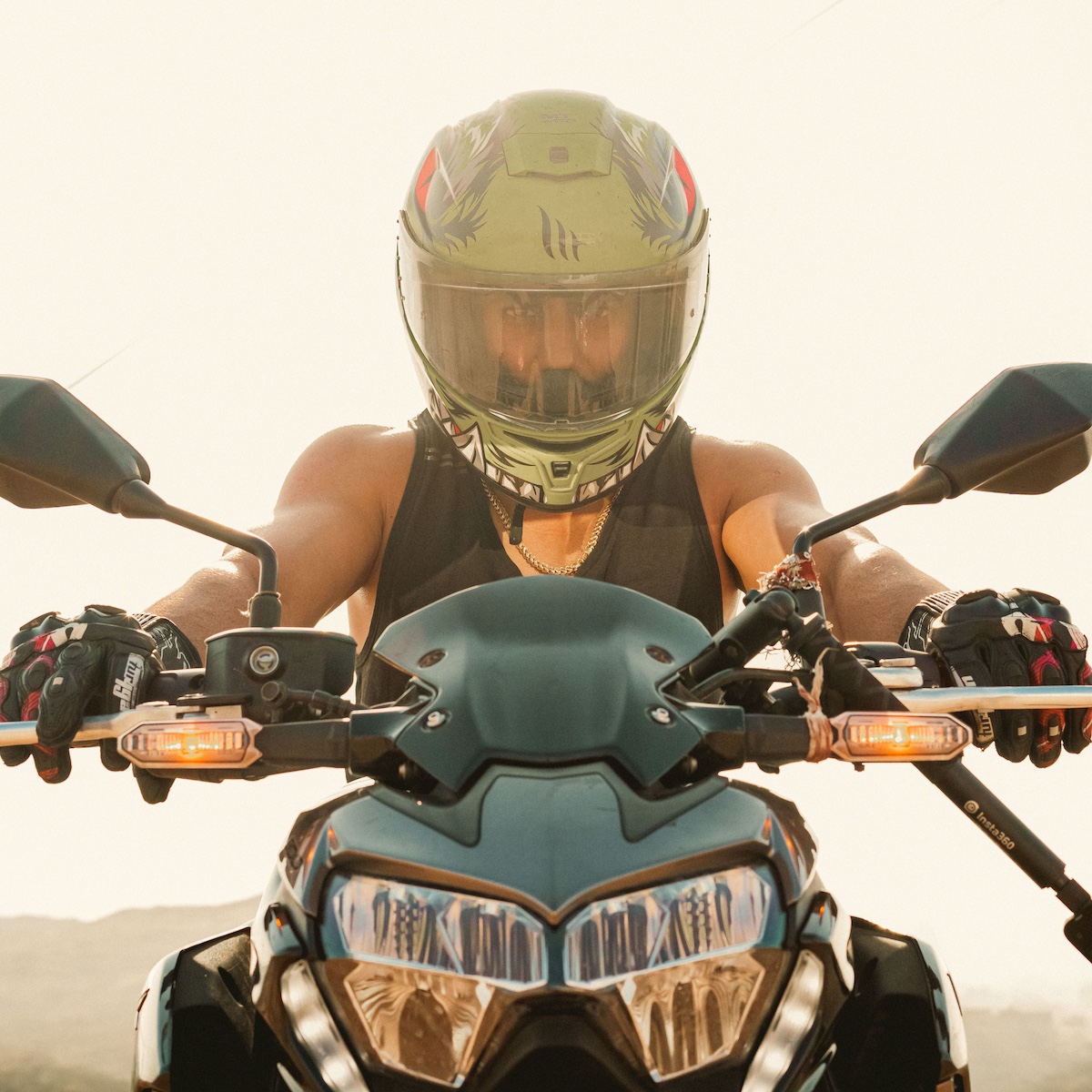
Sun glare can make it difficult for motorcyclists to spot road hazards by temporarily affecting their vision.
A pothole, a car braking ahead, or someone stepping into the road may go unnoticed until there's barely enough time to react.
For riders, that can be frightening. Unlike someone inside a car, a motorcyclist has little protection if a sudden swerve or collision throws them off balance.
Bright sunlight can also hide road dangers that are easy to see under normal lighting.
In this article, we will explore how sun glare can make it difficult for motorcyclists to spot road hazards.
Jump to:
Sun Glare and Driving Safety
The evening sun can make it hard to see the road. For motorcyclists, the problem is especially serious because they need a clear view to steer, brake, and maintain balance.
Glare occurs when sunlight overwhelms the eyes or reflects off surfaces such as windshields and wet pavement.
Riders may squint or struggle to judge distances. Even after looking away from the sun, their vision may take a moment to adjust.
Common road hazards hidden by sun glare include:
- Potholes
- Loose gravel
- Other vehicles
- Pedestrians and cyclists
- Traffic signs
The National Highway Traffic Safety Administration (NHTSA) reported 6,228 motorcyclist deaths in the U.S. in 2024.
Sun glare wasn't necessarily a factor in these crashes, but the figure is a sobering reminder of riders' vulnerability.
When bright sunlight makes it hard to see what's ahead, even a small mistake can have serious consequences.
Dangers of Driving Through Sun Glare
Sun glare doesn't just make the road uncomfortable to look at. It can affect how quickly a motorcyclist notices trouble, judges what's happening ahead, and reacts when something changes. Sometimes, a rider sees the danger but simply doesn't have enough time to avoid it.
Reduced Visibility
Bright sunlight can hide potholes, road debris, and brake lights. Moving between sunlight and deep shadows can also make it harder to see clearly.
Impaired Judgment
Glare can make distances difficult to judge. A rider might misjudge a gap while changing lanes or underestimate how close another vehicle is.
Increased Risk of Accidents
A motorcyclist who spots loose gravel too late might swerve into another lane to avoid it. That split-second decision can lead to a collision.
Delayed Reaction Time
A rider may notice a stopped vehicle or pedestrian only at the last moment. At higher speeds, there's little time left to brake safely.
Loss of Motorcycle Control
Sudden braking or sharp steering can throw a motorcycle off balance, especially on loose or uneven roads. Poor visibility makes controlled reactions harder.
Practical Ways to Reduce Sun Glare Risks
Sometimes, a few small changes can make a ride in bright sunlight much safer.
The trick is to give yourself a better view of the road and more time to react when something unexpected happens.
- Wear the right eye protection. A clean visor helps, and riding glasses can reduce glare. Just make sure tinted lenses aren't too dark for the conditions.
- Slow down a little. If the sun is shining straight into your eyes, ease off the throttle. There's no sense in riding at full speed when you can't see clearly.
- Leave more room ahead. Keep a greater distance from the vehicle in front. If it breaks suddenly, you'll have more time to respond.
- Keep your visor clean. Dust, smudges, and scratches can make sunlight harder to see through. A quick clean before setting off can help.
- Turn on your headlights. They make your motorcycle easier for other drivers to notice, although they can't guarantee someone will see you through the glare.
- Pull over when you need to. If the sunlight becomes too intense to see the road properly, find a safe place to stop and wait for conditions to improve.



A helmet is just as important. In the United States, Federal Motor Vehicle Safety Standard No. 218 (49 CFR § 571.218) sets safety requirements for motorcycle helmets.
It won't stop the sun from affecting your vision, but a compliant helmet can help protect your head in a crash.
Final Takeaways
- Sun glare can hide road hazards and affect depth perception.
- Potholes, gravel, pedestrians, and vehicles may become harder to see.
- Sunrise and sunset can create difficult riding conditions.
- Clean visors, suitable eye protection, and lower speeds help reduce risks.
- Liability depends on the evidence and the actions of those involved.





Leave a Reply