

Three things make a fall table look expensive: low arrangements people can see over, one dominant color instead of four, and stems that are in season.
Everything else is detail. Here is how to do all three on a normal budget, and how to make the flowers last the full week instead of three days.
Jump to:
START WITH WHAT IS ACTUALLY IN SEASON
October and November flowers are the sturdiest of the year, which is good news for a table that has to survive a dinner party.
Dahlias, chrysanthemums, celosia, amaranth, garden roses in copper and toffee shades, and dried elements like wheat, bunny tail grass and seeded eucalyptus. All of them hold up for a week or more with basic care.
Skip tulips, peonies and ranunculus. They are out of season, expensive, and they wilt in a warm dining room within a day.
ONE COLOR, THREE TONES
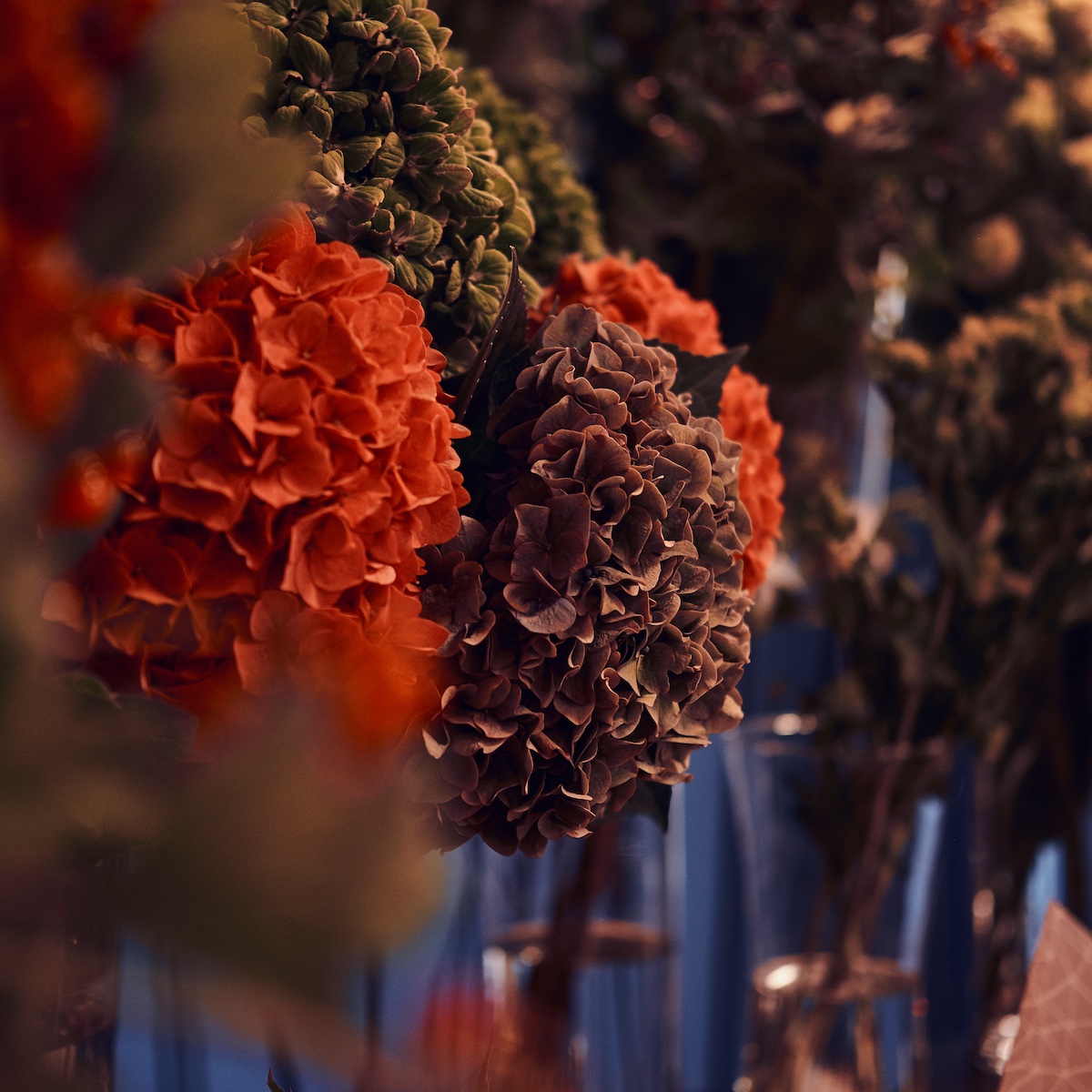
The fastest way to make a table look designed rather than assembled is to pick one color and use three versions of it. Rust, terracotta and blush. Burgundy, plum and dusty pink. Mustard, toffee and cream.
Florists like JJ's Flower Shop in Atlanta build most of their fall tables this way, because a single color family reads as intentional from across the room while a mix of oranges, reds, yellows and purples reads as a grocery store bouquet.
Add greenery and one dried texture (wheat or grass) and stop. Restraint is the whole trick.
KEEP IT LOW
Anything taller than 10 inches blocks the person across the table. For a long table, use three to five low vessels in a line, each about the size of a cereal bowl, rather than one tall centerpiece.
For a round table, one low bowl in the middle and bud vases with a single stem at each place setting.
Low bowls need less flower, which is where the budget savings come from. A 6 inch bowl takes 8 to 12 stems. A tall vase takes 25.
THE 10 MINUTE BUILD
Fill the bowl with water and a pinch of flower food. Make a loose grid across the top with clear floral tape, or crumple a ball of chicken wire into the bowl.
Cut every stem at an angle, strip any leaf that would sit below the waterline, and start with greenery around the rim.
Add your three largest flowers in a triangle, then fill between them with the smaller stems and the dried texture. Turn the bowl as you go so it looks right from every seat.
Do this the morning of the dinner, not the night before. The flowers will open slightly over the day and look best at the table.
HOW TO MAKE THEM LAST A WEEK
Most people throw out a table arrangement on day three because the water went cloudy and the stems started to droop. Both are avoidable.
Change the water every other day, fully, not topped up. Recut the stems a half inch each time you do it. Keep the arrangement away from the fruit bowl (ripening fruit releases ethylene gas, which ages flowers fast) and away from heating vents.
At night, move it somewhere cool if you can. A dining room that drops to 62 degrees overnight adds two days of life.
Pull individual stems as they fade instead of tossing the whole thing. A fall arrangement usually loses the roses first and the dahlias second, while the mums, celosia and dried elements keep going for two weeks.
By day five you may have a smaller, tighter arrangement, and it still looks right.


IF YOU WOULD RATHER ORDER THEM
For a dinner you care about, ordering fresh flower arrangements built by a florist and asking for "low, one color family, fall stems" gets you the same result without the morning build.
Tell them the table shape and the number of guests, and ask for bud vases to match. Most shops can turn it around same day if you order before early afternoon.
Either way, the rules are the same. Low enough to talk over, one color done three ways, and flowers that belong to the month you are in.

Leave a Reply