

A nursery chair often becomes one of the most-used pieces of furniture in a home with a young baby.
Parents may start the morning with a feeding, spend a quiet afternoon reading, or sit in the early hours when a child needs comfort.
Because these moments happen at different times and under different circumstances, the space around the chair deserves as much thought as the chair itself.
Setting up a comfortable corner doesn't require a large nursery or a room full of accessories.
A suitable chair, gentle lighting, convenient storage, and enough room to move can make everyday routines easier to manage.
A lullapod nursery chair can be a starting point, but its usefulness will also depend on where it sits, what parents keep nearby, and how the area changes as the baby grows.

Jump to:
- Start With the Room's Natural Layout
- Make Feeding Supplies Easy to Reach
- Build a Routine Around Different Times of Day
- Choose a Chair for Repeated Use
- How the Lullapod Chair Fits Into Everyday Nursery Routines
- Set Up the Space for Reading
- Keep Comfort and Safety Together
- Adapt the Corner as Your Baby Grows
- Create a Corner That Works Every Day
Start With the Room's Natural Layout
Before moving furniture, observe how the room is used throughout the day.
A corner beside a window might be pleasant for daytime reading, while a quieter area away from the doorway may work better for evening routines.
The chair should feel connected to the rest of the nursery without blocking access to the crib, wardrobe, or other frequently used areas.
Measure the available space before deciding on the final position. A reclining chair may extend farther into the room than when upright, and a swivel base needs enough clearance to turn without hitting a wall or nearby furniture.
Leave a clear walking route, especially if parents will enter the room while carrying a baby. Planning these details in advance can prevent repeated rearranging after the nursery is already in use.
Make Feeding Supplies Easy to Reach
Feeding sessions can happen frequently, sometimes with little warning. Having essential supplies within reach means parents are less likely to interrupt a settled position to search for a burp cloth, water bottle, or feeding accessory.
A small side table, shelf, or built-in storage pocket can help keep these items organized without filling the room with extra furniture.
Think about which supplies are genuinely needed during a typical session. Burp cloths, tissues, a water bottle, and a clean cloth for small spills may be useful to keep close.
If bottle-feeding, prepare and handle formula or expressed milk according to appropriate food-safety guidance rather than leaving prepared feeds sitting out for convenience. Items that are needed less often can remain in a nearby drawer or cabinet.
The goal is to make the chair area practical, not crowded. Keep the surface beside the chair limited to essentials, and return items to their usual places after use.
Small organizational habits can make the space easier to maintain, particularly when feeding sessions happen several times a day.
Build a Routine Around Different Times of Day
Daytime Feeding and Quiet Breaks
Daytime routines often involve interruptions. A parent might feed the baby, answer a message, read a few pages, and then settle the child again. Positioning the chair where natural light is available can make these activities more pleasant without requiring bright overhead lighting throughout the day.
Keep the environment flexible. A lightweight blanket for the adult, a book, or a notebook may be useful, but avoid piling loose items onto the chair.
If the nursery also serves as a playroom or guest room, choose storage that can be cleared quickly. The feeding corner should remain ready for use without requiring a full room tidy-up first.
Late-Night Settling
At night, the main priority is reducing unnecessary movement and keeping the room calm.
A lamp with a low, adjustable brightness can provide enough light to see what is needed without flooding the entire room.
Place its switch where an adult can reach it comfortably from the chair, and route electrical cords away from walking paths and the baby's reach.
Keep frequently used items in consistent locations so they can be found without searching. A familiar arrangement is particularly helpful when a parent is tired.
However, the chair should not become a place where an adult unintentionally falls asleep while holding a baby. If drowsiness becomes difficult to manage, place the baby on their back in a separate, firm, flat sleep space that meets current safe-sleep recommendations.
Choose a Chair for Repeated Use
A nursery chair may be used for much longer than a single feeding session. Parents might sit down to comfort a restless baby, read a story, or simply take a break between household tasks.
Seat support, arm positioning, and the ease of changing positions can therefore matter as much as the chair's appearance.
When comparing a nursery recliner, consider how its shape fits the person who will use it most often.
Seat height can affect how easily someone sits down and stands up, while the backrest and armrests influence the position of the shoulders and arms.
If several caregivers will share the chair, check whether its adjustments accommodate their different heights and preferred sitting positions.
It is also worth thinking about the room's style, but appearance should not be the only deciding factor.
Upholstery that is straightforward to clean may be useful during the early months, when small spills and everyday messes are common.
A neutral colour can work with changing nursery décor, while a chair with a supportive shape may remain useful even after the room is no longer primarily used for infant care.
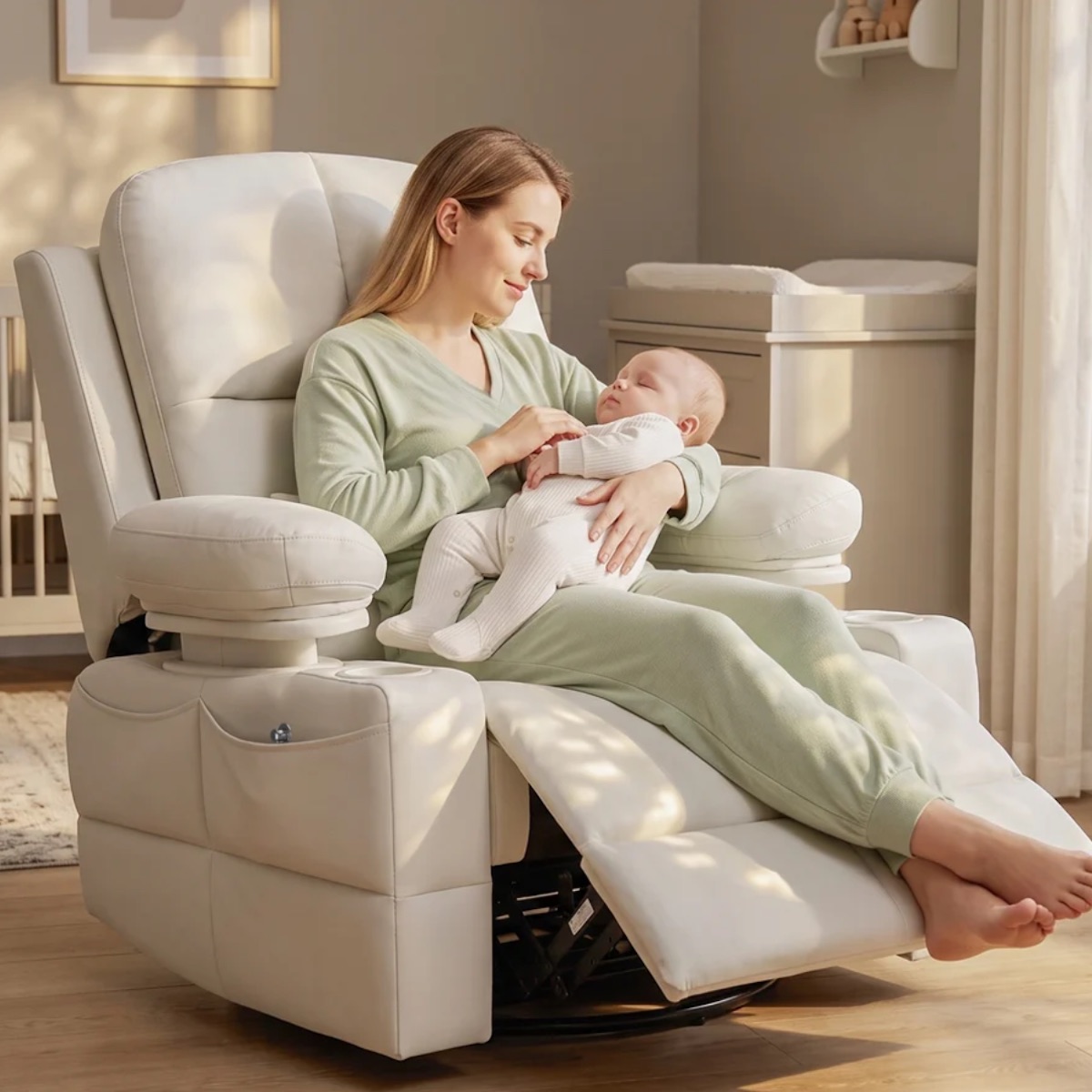
How the Lullapod Chair Fits Into Everyday Nursery Routines
The MAMAZING Lullapod Nursery Recliner with Adjustable Swivel Lift-Up Armrests is designed around the repeated tasks associated with feeding and soothing a baby.
Its adjustable HugAssist armrests can be raised to help position the arms more comfortably, while the reclining backrest offers another way to adjust the sitting position.
The chair also includes swivel functionality, a lumbar support pillow, cup and bottle holders, side pockets, and an integrated phone stand.
Built-in charging ports add convenience for adults who use a phone or other compatible device while seated.
These features help keep everyday essentials nearby and let the chair serve several purposes in the nursery.
Parents should review the current product specifications and instructions to understand its adjustment ranges and operation before use.
Set Up the Space for Reading
Reading can become a familiar part of a child's daily routine long before they understand the words in a story.
Babies may respond to a parent's voice, rhythm, and facial expressions, while older infants begin to notice pictures and enjoy repeated phrases.
Keeping a few age-appropriate books near the chair makes it easier to create these moments without adding another task on a busy day.
A small basket or low shelf can hold a rotating selection of books. You don't need to keep the entire collection beside the chair; a few favourites are often enough.
Choose a storage location that does not obstruct the chair's movement or create a tripping hazard. Books with durable pages may be practical for supervised interaction as a child becomes more interested in reaching and touching.
The lighting should support comfortable reading without creating glare. A lamp positioned to illuminate the pages can be more useful than a bright ceiling light, particularly in the evening.
Make sure the lamp is stable, and keep cords, small accessories, and anything potentially hazardous away from the baby's reach.
Keep Comfort and Safety Together
A welcoming nursery corner should also be safe and easy to use. Place the chair on a stable surface and follow the manufacturer's guidance for reclining, swivelling, and operating any powered adjustments.
Keep hands and small objects away from moving parts, and check that there is enough space around the base before moving it.
The chair supports the adult during feeding and soothing, not a safe sleep space for the baby.
If the baby becomes sleepy, follow current safe-sleep guidance and transfer them to an appropriate crib or bassinet when needed.
Avoid leaving the baby unattended on the chair, even if the recliner feels secure.
Arrange feeding supplies, charging accessories, and household items so they don't interfere with safe movement around the room.
Comfort also depends on the adult's posture. Adjust the backrest and arm support to avoid hunching the shoulders or leaning forward for long periods.
If a feeding position feels uncomfortable, adjust the chair or use an appropriate support cushion based on professional feeding advice.
A setup that works well should make it easier to stay relaxed while still letting the caregiver respond promptly to the baby.
Adapt the Corner as Your Baby Grows
The nursery does not need to remain arranged exactly as it was during the newborn stage. In the early months, parents may prioritize feeding supplies and quiet lighting.
Later, the chair may become a place for picture books, bedtime stories, and calm conversations before sleep. Thinking ahead can help the room stay useful without requiring a complete redesign every few months.
Storage can change along with these routines. Feeding accessories may gradually move to a kitchen or cabinet, while books and small toys take their place near the chair.
Keep the floor clear as the child becomes more mobile, and reassess the position of lamps, cables, shelves, and other furniture from the child's perspective.
Items that were previously out of reach may become accessible once the baby begins crawling or pulling up.
It is equally useful to review how the adult uses the chair. A feature that is particularly helpful during frequent feeding sessions may still be valuable for reading or resting later on.
A thoughtfully arranged corner can therefore remain part of family life after the earliest stage of childcare has passed.
Create a Corner That Works Every Day
A useful nursery chair setup is built around the routines that happen most often.
Clear pathways, accessible supplies, appropriate lighting, and a comfortable sitting position can make feeding, reading, and late-night settling feel more manageable.




The room does not need elaborate décor or an extensive collection of accessories; thoughtful placement and simple organization can make a noticeable difference.
By choosing a chair that suits the caregiver and arranging the surrounding space with changing needs in mind, parents can create a practical corner that evolves with their family.
It becomes more than a place to sit: it is a familiar setting for everyday care, quiet reading, and the small moments that gradually become part of family life.





Leave a Reply