

Bringing greenery indoors does more than decorate a room; it can genuinely reshape how a space feels and functions day to day.
Research suggests houseplants may help reduce certain indoor air pollutants, ease stress, and even support focus and mood.
But beyond these wellness perks, a well-placed huge indoor plant can turn an empty corner into a lush focal point, adding personality and warmth a room didn't have before.
This article walks through how to choose, place, and care for statement-sized houseplants across different rooms and light conditions, with a practical, non-promotional focus on helping you make informed decisions.
Jump to:
- Understanding the Benefits of Indoor Plants in Everyday Spaces
- Key Takeaway
- Choosing the Right Statement Houseplant for Your Space
- Planning the Role of Large and Statement Houseplants in Room Design
- Design Tip
- Practical Care Fundamentals for Statement Houseplants
- Avoiding Common Mistakes with Large Indoor Plants
- Bringing It All Together: Creating a Sustainable, Plant-Friendly Home
- Key Takeaway
Understanding the Benefits of Indoor Plants in Everyday Spaces
Studies on indoor plants point to modest but real benefits: some species may absorb volatile organic compounds (VOCs), and simply being surrounded by greenery has been linked to lower stress levels and a better perceived sense of air quality.
That said, plants work best as a complement to, not a substitute for, proper ventilation and regular home maintenance.
Key Takeaway
Indoor plants can support well-being, but they perform best alongside good airflow and consistent upkeep.
Choosing the Right Statement Houseplant for Your Space
Before bringing home a large plant, assess your home's light. Rooms generally fall into low, medium, bright indirect, or direct light categories, depending on window orientation and how far a space sits from natural light sources.
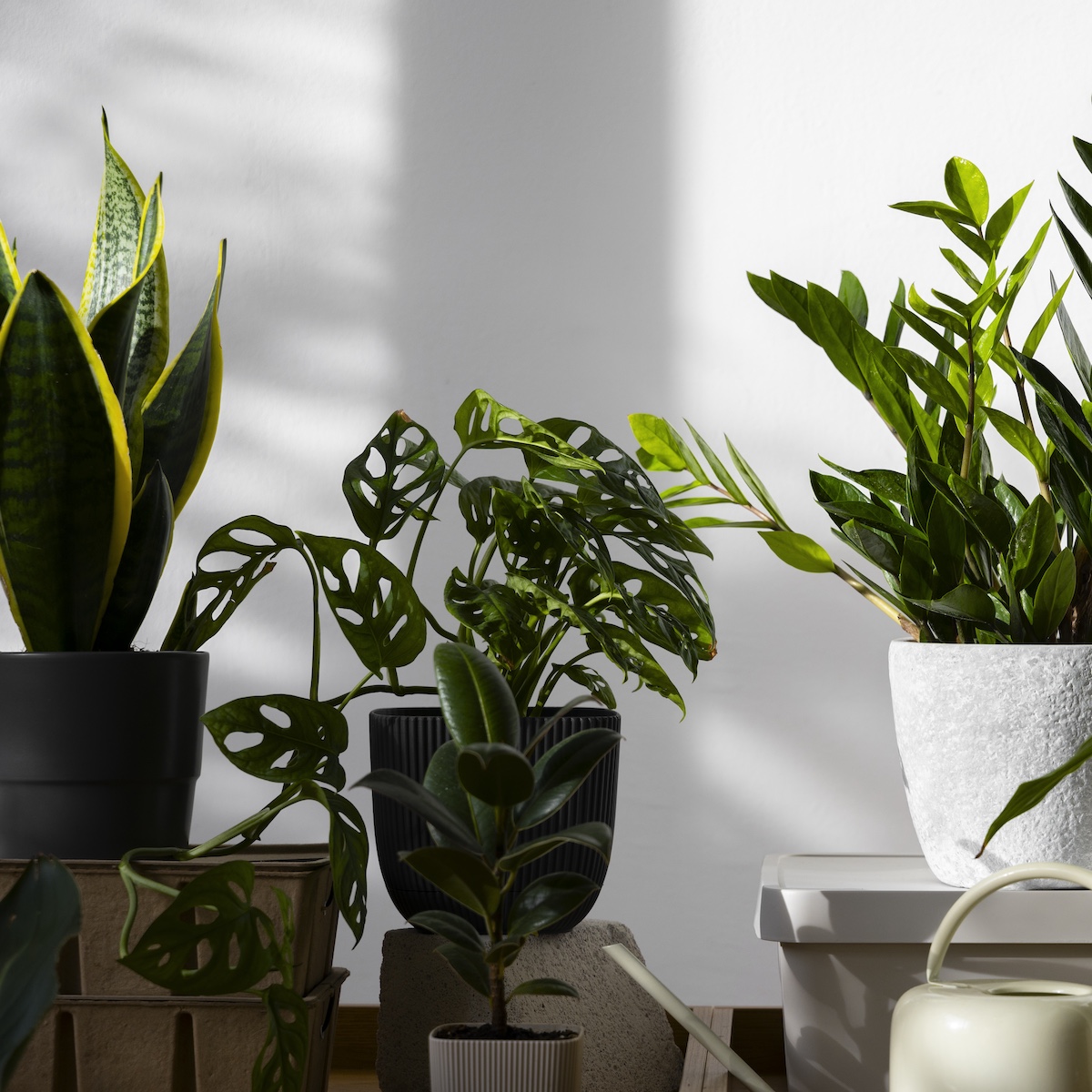
One simple way to gauge this: look at the shadows in a room. Sharp, well-defined shadows usually signal bright light, while faint or barely-there shadows point to lower light conditions.
Large tropical floor plants typically do best in bright indirect light, ideally positioned within a few feet of a window with filtered sun.
- Bright indirect light: Monstera deliciosa, fiddle leaf fig, rubber plant, bird of paradise
- Medium light: Pothos, philodendron, dracaena, parlor palm, peace lily
- Low light: Snake plant, ZZ plant, cast-iron plant, darker Chinese evergreen varieties
Matching a plant's light requirements to your space isn't just about aesthetics; it's often the deciding factor between a plant that thrives and one that slowly declines, stretching into leggy growth or dropping leaves along the way.
Planning the Role of Large and Statement Houseplants in Room Design
Whether you opt for a single huge indoor plant as your centrepiece or a cluster of mid-sized pots, thinking through how these plants interact with your furniture and natural light will shape how balanced the room ultimately feels.
Large plants create a natural focal point, draw the eye upward, and soften harder architectural lines. In many cases, one well-placed statement plant carries more visual weight than several smaller ones scattered around; consider how a tall fiddle leaf fig can fill a bare living room corner and instantly make the space feel intentional rather than incomplete.
Design Tip
Choose plant sizes proportional to your room; a very large plant needs enough physical and visual breathing room to shine without overwhelming the layout.
Practical Care Fundamentals for Statement Houseplants
Larger containers hold more soil, which naturally affects how often you'll need to water.
Check moisture about 1–2 inches below the surface, and water thoroughly only when it's dry at that depth; avoid letting pots sit in standing water.
A well-draining potting mix is essential, especially for tropical species prone to root rot when kept too wet for too long.
Rotate pots periodically so plants grow evenly rather than leaning toward their light source. When relocating a plant to a brighter or dimmer spot, ease it into the change gradually over one to two weeks to prevent shock.
For nutrition, a balanced liquid fertilizer during the growing season—spring through summer; supports healthy growth, while feeding should taper off once winter arrives.
Repot when roots start circling the pot's base or emerging from drainage holes, which typically happens every couple of years depending on the species.
Common signs your plant needs attention include yellowing leaves, wilting despite moist soil, or slowed growth, all worth investigating before they escalate into bigger problems.
Avoiding Common Mistakes with Large Indoor Plants
Even experienced plant owners run into avoidable issues:
- Placing large plants in narrow, dim hallways where they can't get adequate light
- Overlooking mature size and growth rate, which leads to overcrowded rooms down the line
- Failing to secure heavy pots in high-traffic areas, risking tipping
- Skipping routine checks for pests, disease, or other stress signals
Avoid overwatering, and always plan for mature size before committing to a large specimen; many statement plants keep growing for years and may eventually need pruning or a new home elsewhere in the house.
Bringing It All Together: Creating a Sustainable, Plant-Friendly Home
Successful indoor gardening really comes down to matching plants to your light, space, and long-term care capacity. Rather than buying several plants at once, it's worth taking a start-small-and-observe approach: bring in one or two well-chosen specimens, see how they change the feel of a room, and expand from there once you've got a rhythm.




There's no universal "best" plant; the right choice depends on your home's conditions and your day-to-day habits.
For species-specific guidance, local nurseries, university extension resources, and reputable plant databases remain valuable references.
Key Takeaway
Match the plant to the light, plan for its size, and commit to routine care, three principles that make any statement houseplant a lasting addition to your home.





Leave a Reply