

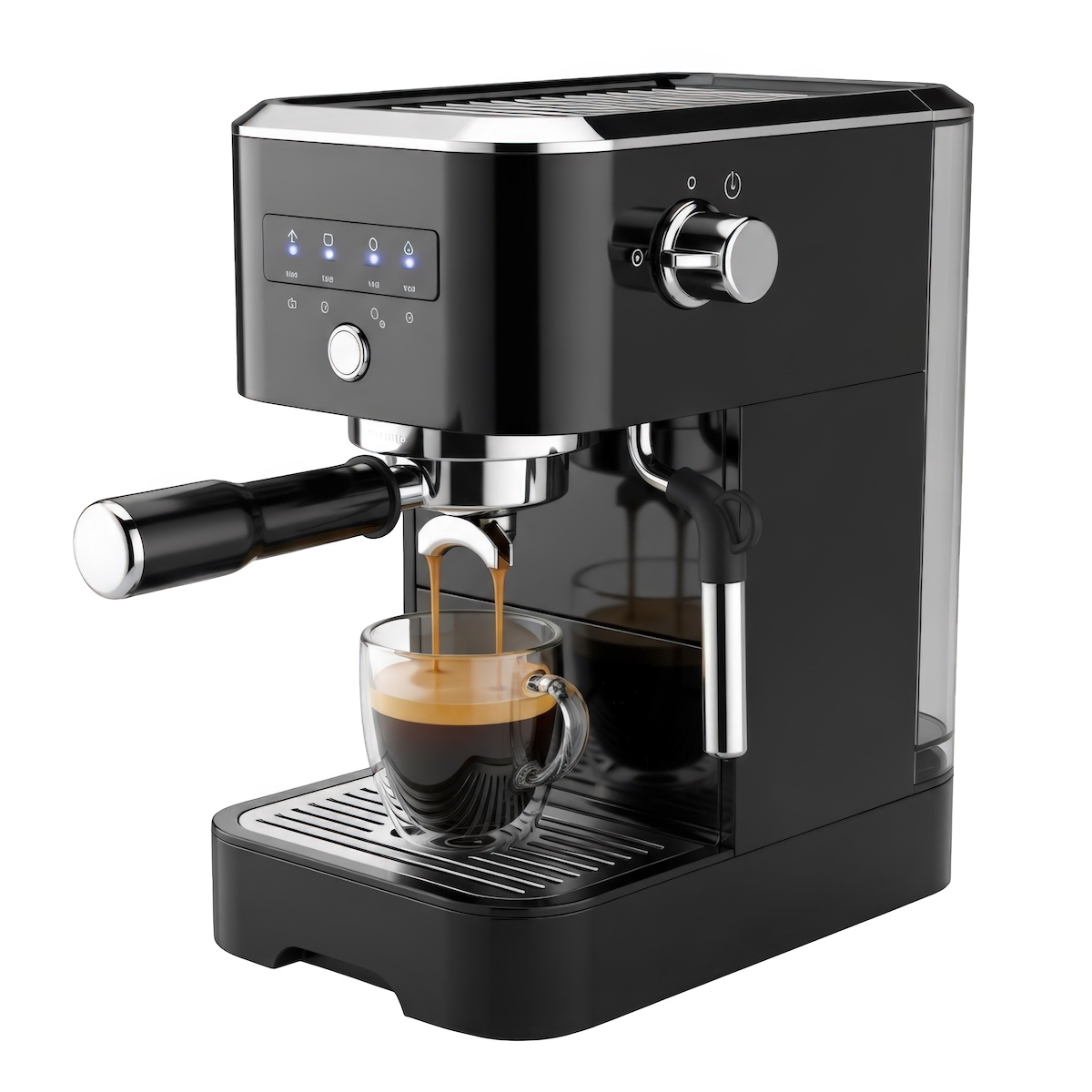
Though most espresso machines can look similar, their daily performance can differ sharply. Basic models often require manual grinding, dosing, tamping, milk frothing, and cleanup.
Fully automatic units combine those steps through built-in systems that control pressure, heat, grind size, drink volume, and rinse cycles.
Before buying a machine for their home or office, buyers should know which features matter so they can evaluate ease of use, cup quality, maintenance effort, and long-term value.
Jump to:
1. Integrated Grinder and Bean Handling
A basic espresso setup may need a separate grinder, which adds cost, counter space, and extra adjustment. By contrast, many fully automatic espresso machines include burr grinders, bean hoppers, and dose controls inside one unit. This matters because grind size affects the extraction time, crema, bitterness, and aroma in every cup.
2. Automatic Dosing
Basic machines often require users to measure ground coffee by hand. That can create uneven shots if the dose changes from drink to drink. Automatic dosing ensures a more consistent level of strength by measuring a predetermined amount for each cycle. Some machines also let users select mild, medium, or strong settings for different preferences.
3. Built-In Tamping
Tamping controls how evenly water passes through ground coffee. With a manual machine, pressure and levelness depend on user skill. Fully automatic models handle tamping inside the brew group. This reduces channeling, where water finds weak paths through the puck. Better puck formation can improve balance, body, and repeatability.
4. Programmable Drink Settings
Basic machines usually offer limited control through buttons, switches, or manual timing. Advanced automatic units store drink settings for espresso, lungo, cappuccino, latte, and other recipes. Users may adjust volume, strength, temperature, and milk level. Saved profiles are useful in shared homes or offices where several people prefer different drinks.
5. Milk Frothing System
Milk texture separates a simple coffee maker from a true drink station. Basic machines may include a steam wand, which needs practice and cleaning after each use. Fully automatic systems can draw milk from a container, heat it, froth it, and dispense it into the cup. Texture consistency is the main gain here.
6. Temperature Stability
Espresso needs a stable water temperature, usually near 195 to 205 degrees Fahrenheit. Basic machines can fluctuate more during heating and brewing. Fully automatic units often use sensors, thermoblocks, or boiler systems to hold tighter control. Stable heat supports proper extraction, which helps avoid sourness from low heat or harsh flavors from excess heat.
7. Pressure Management
Pressure affects how water extracts soluble compounds from coffee. Many basic models rely on simple pump systems with less refined control. Fully automatic machines may regulate pre-infusion, brewing pressure, and flow timing. Pre-infusion wets the coffee before full pressure starts. That short stage can improve extraction, especially with freshly ground beans.
8. One-Touch Operation
Manual preparation can be rewarding, but it also takes time. Grinding, dosing, tamping, brewing, steaming, and cleaning can turn one drink into a multi-step task. One-touch controls compress that process into a single selection. This feature is valuable for busy mornings, shared break rooms, and users who want consistent drinks without practice.
9. Cleaning and Rinse Programs
Coffee oils, milk residue, and mineral deposits affect flavor and machine life. Basic machines often leave cleaning schedules to the user. Fully automatic models commonly include rinse cycles, descaling alerts, removable brew groups, and milk system cleaning prompts. These reminders reduce neglect and help keep internal parts working as intended.
10. Maintenance Tracking
A basic machine may show little feedback until something goes wrong. More advanced units track water filter status, brew counts, descaling needs, grounds container levels, and drip tray capacity. Clear alerts help users act before performance drops. This can reduce downtime and protect parts that face heat, moisture, and pressure every day.
Conclusion
The gap between basic and fully automatic espresso machines is mainly about control, consistency, and workload. Basic models can suit hands-on users who enjoy each step. Fully automatic units shift more work to built-in systems that grind, dose, tamp, brew, froth, rinse, and track service needs.
By comparing these ten features, buyers can match machine design to drink habits, skill level, available space, and desired upkeep.





Leave a Reply