

Your basement can be more than a dim storage zone packed with holiday bins, old workout gear, and furniture you swore you’d sell online.
With the right plan, it can become one of your home's hardest-working spaces.
A smart remodel adds function, improves comfort, and can even raise resale appeal. The trick is knowing what to fix first, what to spend on, and where people often get tripped up.
Jump to:
- Start By Figuring Out What You Actually Need
- Know When To Bring In Professionals
- Check Moisture, Air Quality, And Structural Issues First
- Build A Budget That Covers The Boring Stuff Too
- Design for comfort, not just looks
- Make the space flexible enough to grow with you
- Don’t overlook legal and resale considerations
- A Well-Planned Basement Can Become Your Smartest Upgrade
Start By Figuring Out What You Actually Need
Before you pick flooring samples or dream about a giant sectional, decide how you want the basement to function day to day.
That sounds obvious, yet plenty of remodels go sideways because the space tries to be five rooms at once.
Think about your real life. You might need:
- A guest bedroom for visiting family
- A quiet home office
- A playroom that contains toy chaos
- A media room for movie nights
- A workout area you’ll genuinely use
- Extra storage that doesn’t look like a cardboard avalanche
Write down your top two priorities.
Then think about who will use the room most often.
A basement for teenagers needs a different setup than one designed for aging parents.
When you define the purpose early, every later choice becomes easier, from lighting and layout to insulation and furniture.
Know When To Bring In Professionals
Some homeowners can handle parts of a basement update on their own, especially painting or assembling storage.
Full remodeling is different. Basements involve code requirements, moisture management, electrical systems, and sometimes emergency egress rules that need careful planning.
Working with experienced basement remodelers can help you avoid expensive missteps, especially when the project includes layout changes, plumbing, or custom finishing.
Professionals can also spot design constraints you may miss, like where ceiling bulkheads will interrupt cabinetry or how to make a small basement still feel open.
Ask clear questions before hiring anyone:
- Are permits included?
- How do you handle waterproofing concerns?
- What materials work best below grade?
- What is the timeline?
- How are change orders managed?
A solid contractor won’t dodge these details.
They’ll treat them like the baseline, not an afterthought.
Check Moisture, Air Quality, And Structural Issues First
A basement remodel is not the place for cosmetic optimism. Fresh paint won’t solve damp walls, musty air, or foundation cracks.
If your basement has a history of water seepage, condensation, or flooding, address it before any decorative work begins.
Pay attention to warning signs such as:
- Water stains on walls or floors
- A persistent damp smell
- Efflorescence, the chalky white residue on masonry
- Warped trim or soft drywall
- Cracks that seem to grow over time
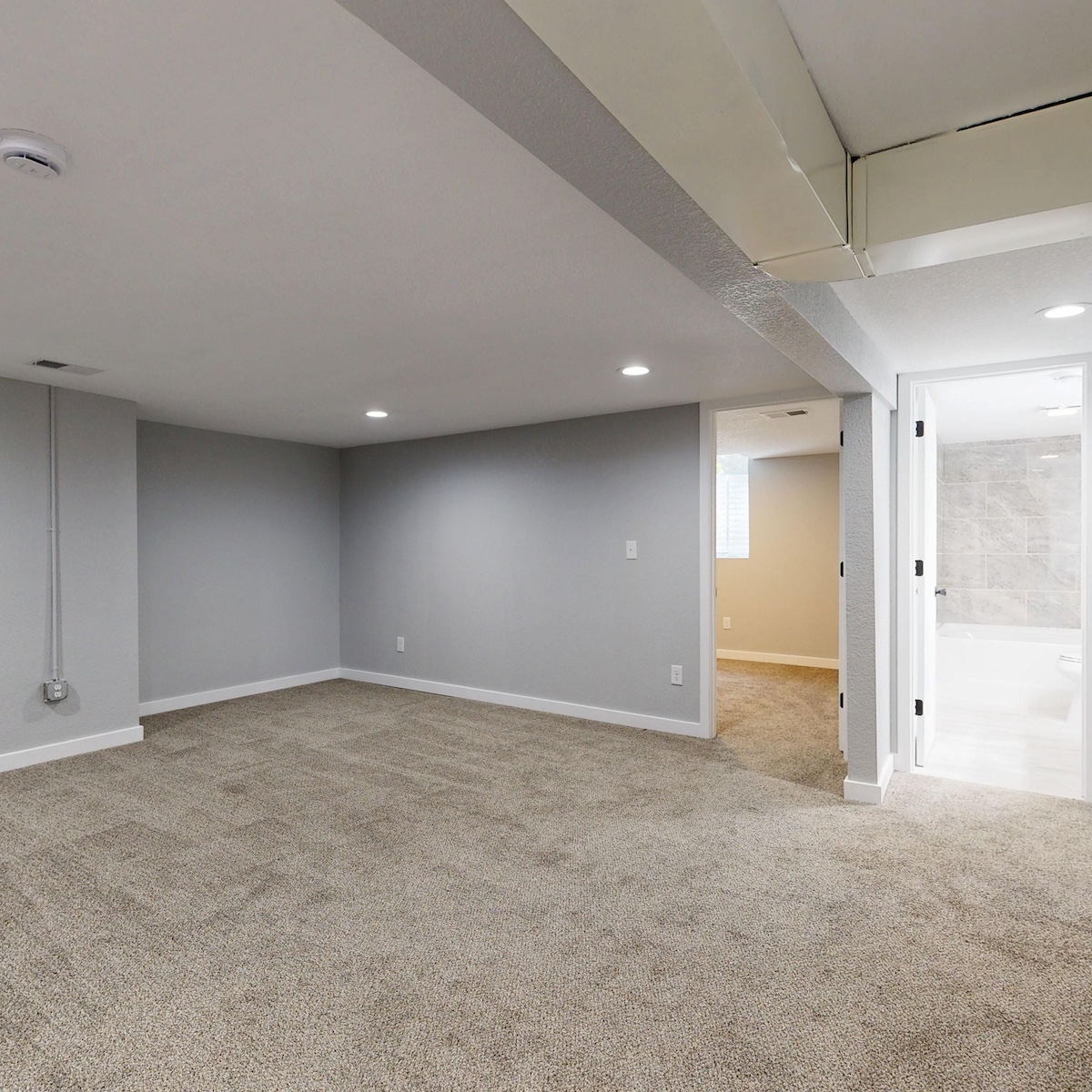
You should also look at ceiling height, support posts, plumbing lines, and electrical panels. These elements affect what the room can realistically become. A home theater sounds great until a duct run slices through the middle of the ceiling like an unwanted plot twist.
A thorough inspection upfront can save you from paying twice for the same work later, which is a very unfun budget plot twist.
Build A Budget That Covers The Boring Stuff Too
People usually budget for visible upgrades and forget the behind-the-walls expenses that make the room safe and comfortable.
A basement remodel often includes insulation, waterproofing, wiring, plumbing, permits, egress work, and HVAC updates before you even get to the stylish part.
Break your budget into categories:
- Planning and design
- Demolition and prep
- Moisture control and insulation
- Electrical and lighting
- Plumbing, if needed
- Flooring and wall finishes
- Furniture and storage
- Contingency fund for surprises
That last item matters a lot. Basements love surprises. Once walls open up, contractors may find hidden issues like outdated wiring or minor mold growth.
A good rule is to keep 10 to 20 percent aside for unexpected costs. That buffer helps you make decisions calmly instead of cutting corners on essentials after the project is already moving.
Design for comfort, not just looks
A finished basement should feel like part of your home, not like you dragged a couch into a concrete box and hoped for the best. Comfort comes from solving the classic basement problems: low light, cooler temperatures, sound transfer, and awkward layouts.
Focus on features that improve daily use:
- Layered lighting with recessed fixtures, sconces, and lamps
- Warm, moisture-resistant flooring such as luxury vinyl plank
- Insulation that controls temperature and sound
- Lighter wall colors to reflect available light
- Built-in storage to reduce clutter
If you’re adding a bedroom, office, or hangout area, acoustics matter too. Sound tends to bounce in lower-level spaces, especially with hard surfaces.
You don’t need a magazine-perfect setup.
You need a room that feels inviting on a Tuesday evening, not just impressive in listing photos.
That standard usually leads to better choices.
Make the space flexible enough to grow with you
The best basement remodels don’t lock you into one season of life. Your needs can change faster than you expect.
A playroom can become a study zone. A home gym can shift into a guest suite. A teen lounge can eventually become a quiet office or hobby room.
You can future-proof the space with smart choices such as:
- Modular furniture that moves easily
- Neutral finishes that adapt over time
- Extra outlets in useful locations
- Sliding or pocket doors for flexible separation
- Storage that hides equipment, toys, or office supplies
It also helps to think about maintenance.
Choose finishes that can handle traffic, spills, and general wear without constant fuss.
Basements often become the most used room in the house once they’re done well.
That means durability matters just as much as style, maybe more.
A beautiful room loses its charm pretty quickly when every scuff feels like a personal attack.
Don’t overlook legal and resale considerations
Even if you’re remodeling for your own use, the work should still meet local building codes.
This matters a lot if you plan to add a bedroom, bathroom, or rental-style living area.
Requirements for egress windows, ceiling height, insulation, smoke detectors, and permits can affect what counts as legal finished space.
Keep records of:
- Contractor agreements
- Permit approvals
- Inspection results
- Product warranties
- Final invoices
Those documents can be valuable if you sell your home later.
Buyers often love finished basements, but they also want confidence that the work was done properly.
A polished basement with poor ventilation or questionable wiring won’t impress anyone for long.
A well-documented remodel, on the other hand, signals that the space is more than attractive. It’s functional, compliant, and built to last.
A Well-Planned Basement Can Become Your Smartest Upgrade
A basement remodel works best when you treat it like a real extension of your home, not leftover square footage with a rug tossed over it. If you set clear goals, handle moisture issues early, budget realistically, and design for comfort, the finished result can serve you for years.
You don’t need to chase every trend.
You need a space that solves problems, supports your routine, and feels good to spend time in.
That could mean movie nights, easier hosting, more privacy, better storage, or simply one less underused part of the house.
When a basement is planned well, it stops being the place where stuff goes to disappear.
It becomes a room you actually want to walk into.





Leave a Reply