

A seasonal craft blog rarely publishes at a flat weekly pace, which is why SeeAPI replaces leaking monthly seats with one durable gateway of non-expiring credits across creative formats.
Asset demand spikes around back-to-school printables, holiday craft guides, and seasonal recipe roundups, then drops sharply for six quiet weeks between campaigns.
During those slower stretches, separate subscriptions for graphics, short craft clips, and text helpers keep billing every month, making a direct comparison against one shared balance worthwhile.

Jump to:
Where Separate Creative Subscriptions Quietly Leak Budget
Separate creative tools look inexpensive when you inspect one checkout page at a time, yet their combined quarterly ledger tells a different story. A typical craft and family lifestyle site ends up paying for one image generator for Pinterest pins, a second video platform for short step-by-step reels, and a third tool for copy classification or audio background tracks. Each vendor carries its own billing renewal date, its own credit unit, and its own expiration clock.
The financial leak is rarely the cost of a single rendered image. The leak is stranded capacity. Suppose a publisher finishes a holiday printable bundle in November and takes two quiet weeks in December. On separate monthly subscriptions, any leftover credits on the image app cannot pay for a January video intro, and most unused monthly allotments reset to zero before the next campaign starts. Over four quarters, creators frequently pay for double the rendering capacity they actually consume.
Administrative overhead compounds that expense. Whenever a freelance virtual assistant joins for a seasonal push, the blog owner has to share three sets of credentials, explain three separate credit meters, and reconcile three invoices at tax time. Even before evaluating output quality, the multi-account habit creates a recurring maintenance tax that small creative businesses rarely budget for.
Four Criteria That Decide The Right Setup For Creators
Evaluating creative infrastructure works best when a solo publisher or small blog team scores tools against publishing reality rather than promotional feature lists. Four practical criteria separate a sustainable setup from a cluttered subscription drawer: credit durability, cross-format pooling, concurrency headroom during seasonal spikes, and low-friction testing before paying.
Credit Durability Across Seasonal Publishing Gaps
For any site driven by seasonal search traffic, credit expiration matters more than headline seat pricing. If a tool erases unused allowances every thirty days, the creator is forced either to rush low-priority visuals just to avoid losing money or to accept silent waste during slower months. Non-expiring credits flip that incentive: you generate assets only when an article, printable, or tutorial genuinely requires them, and the remaining balance waits intact for the next traffic peak.
Cross-Format Pooling And Concurrency Headroom
Modern lifestyle tutorials mix formats inside a single post—an illustrated header, two process diagrams, and a brief motion clip showing the finished craft. Pooling credits across image, video, text, and music models inside one balance eliminates the frustration of running dry on video credits while sitting on hundreds of unused image tokens. Concurrency limits also matter during batch production days, when a creator needs to queue multiple pins or tutorial thumbnails simultaneously instead of waiting on a single-file bottleneck.
Side-By-Side Comparison: One Gateway Vs Separate Accounts
Placing a unified model gateway next to a stack of separate creative logins makes the operational trade-offs concrete across an entire publishing year. The comparison below maps how each approach behaves on a quarterly craft-blog asset ledger.
| Evaluation Dimension | Separate Single-Purpose Accounts | Unified Model Gateway |
| Trial and onboarding | Multiple signups, separate onboarding flows, fragmented limits | Free tier starts with 10 trial credits on the default provider with no complex setup |
| Credit expiration | Unused monthly allotments commonly reset at each renewal | Credits never expire, including after a subscription ends |
| Budget pooling | Image credits stranded separately from video or text balances | One shared annual credit pool across image, video, text, and music models |
| Annual tier clarity | Scattered monthly bills across three or four vendors | Clear annual pools: Starter (24,000 / $199), Pro (150,000 / $799), Studio (320,000 / $1,199) |
| Parallel batch speed | Fixed per-app queue caps that differ on every dashboard | Tiered parallel jobs scaling from Limited to More to Unlimited |
Reading the table from top to bottom highlights why a unified AI model gateway changes quarterly planning for small creative teams. Instead of guessing how many image credits versus video credits next month will require, the publisher allocates one annual budget and draws from it according to actual editorial demand. That flexibility is especially valuable when a blog experiments with short-form video for the first time without wanting to lock into a dedicated video-only subscription.
Notice also how pricing visibility behaves on the workspace. The platform includes a cost-provider control that updates cost estimates before you run a job, helping creators understand expected credit draw without surprising billing shocks. Because those controls adjust estimates only rather than altering actual provider billing rules behind the scenes, publishers still track real spend directly against their single credit balance.
How SeeAPI Fits Seasonal Blog And Craft Workflows
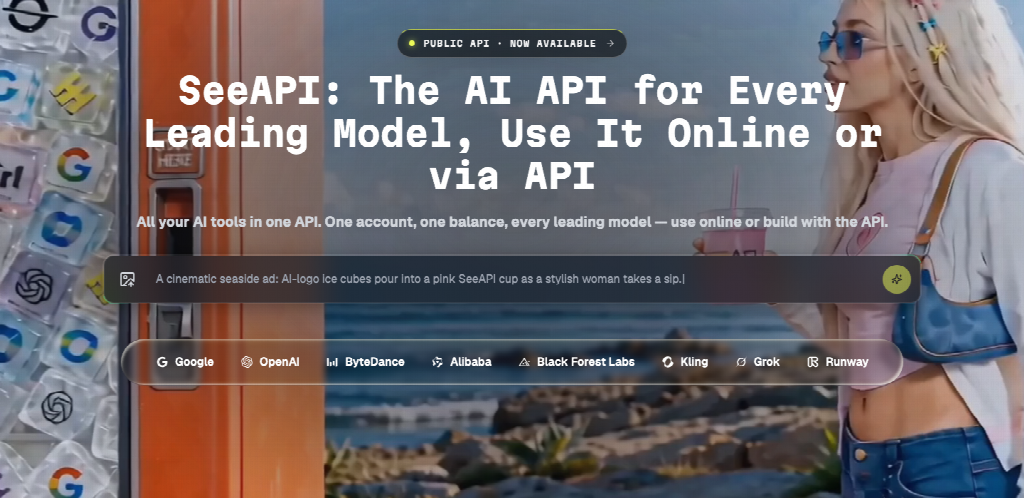
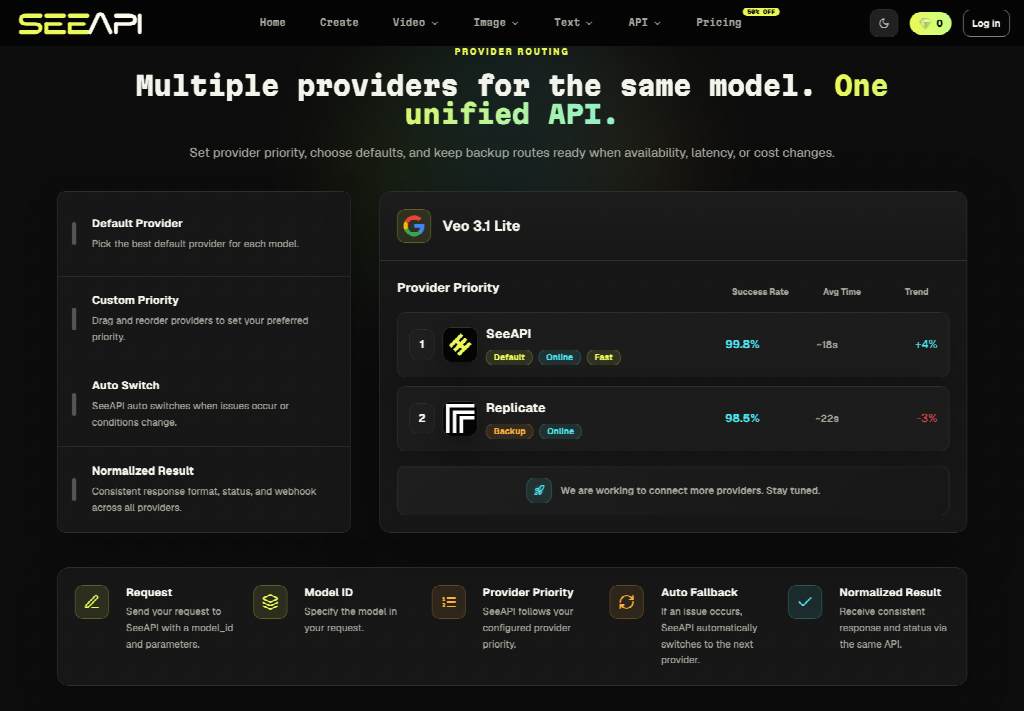
SeeAPI functions as a unified AI model marketplace and API gateway that lets creators access major model families—including providers such as Google, OpenAI, ByteDance, Alibaba, Black Forest Labs, Kling, Grok, and Runway—through one interface and one balance. Rather than forcing a lifestyle blogger to chase each new model release by opening yet another account, the gateway brings model discovery and execution into one dashboard.
Matching Annual Tiers To Real Publishing Volume
Choosing the right tier comes down to honest quarterly volume rather than aspirational growth charts. A solo craft or parenting blogger testing whether AI visuals fit their brand starts on the Free tier with 10 trial credits on the default provider. Once a workflow proves useful for weekly blog headers and seasonal printable covers, the Starter plan at 24,000 credits per year ($199 billed yearly) provides predictable runway without monthly expiration anxiety. Higher-volume content studios producing daily multi-format social packages across multiple niches step up to Pro (150,000 credits a year at $799) or Studio (320,000 credits a year at $1,199), gaining expanded parallel job capacity along the way.
Stopping Quiet-Month Waste When Publishing Pauses
The policy that credits never expire—even after a subscription ends—solves the biggest objection small publishers raise against annual billing. If a creator takes a summer break, shifts focus to an ebook launch, or pauses visual campaigns for two months, the remaining credit balance does not evaporate. On a quarterly asset ledger, that single rule protects margins far more effectively than hunting for a ten-percent promotional coupon on a separate monthly app that wipes unused balances every thirty days.
Realistic Limits To Keep In Mind
SeeAPI is a model marketplace and API gateway, not a full desktop layout suite or print-ready pagination program. Creators who rely on multi-layer typography, CMYK print bleeds, or hand-drawn vector cut files will still finish final assembly in their usual design software. In addition, the Free tier's 10 trial credits run on the default provider only, so teams wanting broader multi-provider routing or higher parallel jobs need a paid tier.
- How to Buy Gold Bullion Without Getting Burned on Premiums
- When a Crash Becomes a Wrongful Death Case: What LA Families Should Know About Evidence and the First 72 Hours
- What to Look for in Dallas Custom Home Designers and Architects
- Why Every Modern Office Lobby Needs a Turnstile (And How to Choose One)




Who Should Consolidate And Who Can Skip It
Use a unified gateway like SeeAPI if your site publishes across mixed formats—blog stills, craft diagrams, and short social clips—on a seasonal calendar where monthly subscriptions routinely go unused. Consolidating into one balance with non-expiring credits removes credential sprawl, simplifies bookkeeping, and lets you test newer image or video models without signing up for another vendor every quarter.
Skip consolidation if your entire creative output stays strictly inside one narrow desktop tool that already handles everything you publish, or if you generate fewer than a handful of visuals all year and never touch video or multi-model comparisons. For everyone in between, replacing three leaking monthly seats with one durable credit pool is the cleaner business decision.





Leave a Reply