

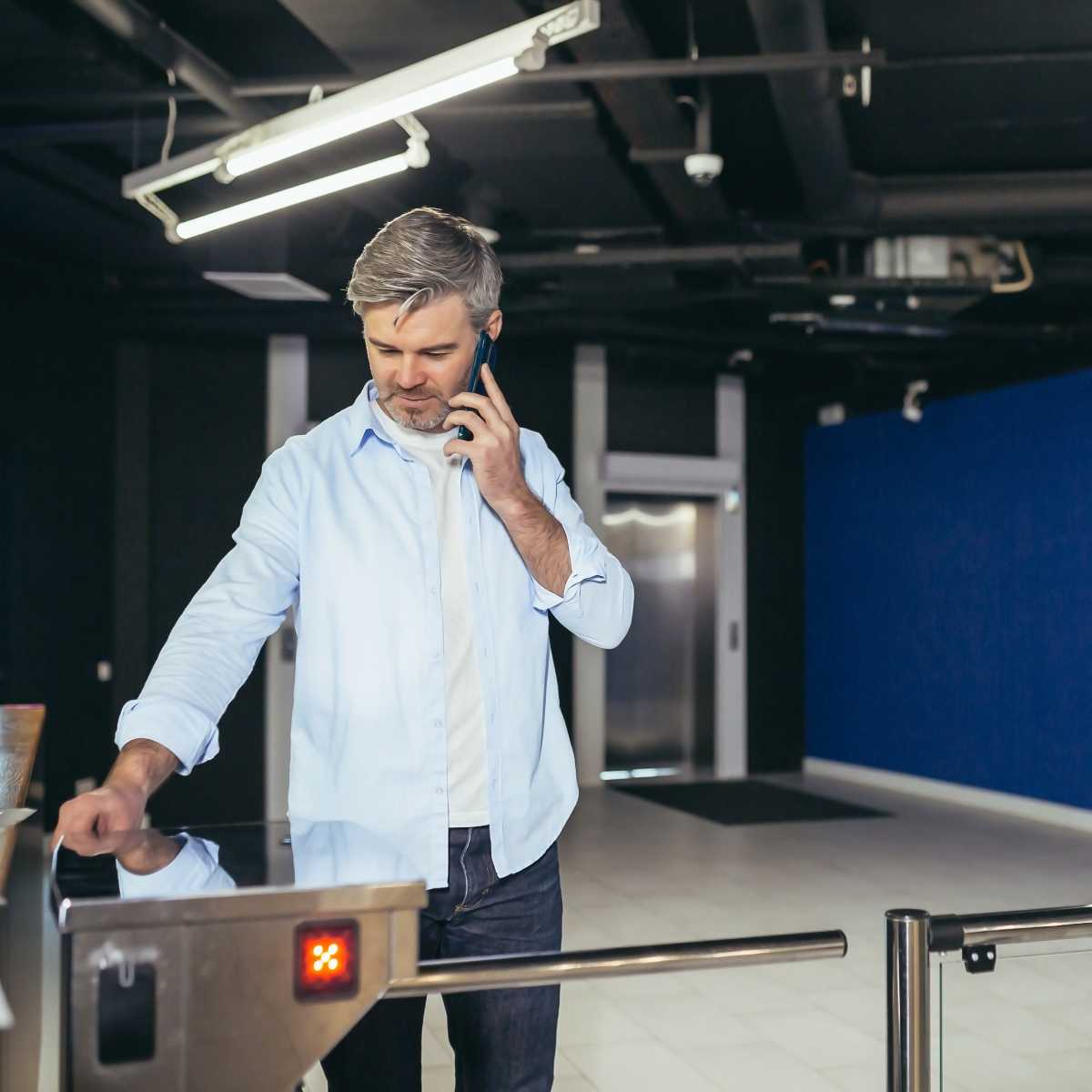
The first time I walked into a lobby with a turnstile, I was annoyed. Thirty seconds later I was impressed. The receptionist never looked up from her screen, the badge reader beeped, and I was through without a word.
No clipboard, no guest log, no awkward stare from a security guard deciding whether I was a threat or a delivery.
That little gate at the entrance does more for a building than most people give it credit for. It routes traffic, creates a hard perimeter, and quietly tells everyone who walks in that this place takes itself seriously.
If you manage a lobby, lease office space, or sit on a facilities committee, this is the piece of hardware that decides how the whole floor feels.
And the good news is that picking one isn't that hard once you know what questions to ask. Companies like Controlled Access, a leading turnstile manufacturer, build models for pretty much every traffic pattern, from a two-person startup office to a government facility that needs full-height barriers.
Jump to:
What A Turnstile Actually Does For Your Building
A turnstile isn't just a gate. It's a decision point. Every person who passes through has to prove they belong on the other side, and that single interaction replaces a dozen small security habits that nobody actually follows.
Think about your current lobby. Someone props the side door open for a smoke break. A vendor walks past the front desk while the receptionist is on a call. An employee holds the door for a stranger out of pure politeness.
These are the leaks that let unauthorized people into a building, and they happen every single day in offices with badge readers and security cameras installed.
A turnstile closes the gap by making entry physical. You can't tailgate through a full-height turnstile. You can't slip past a waist-high gate without tripping an alarm. The hardware enforces the policy your sign at the front door already claims to have.
There's a compliance angle too. According to OSHA, workplaces are required to keep emergency exit routes that are clear and unobstructed, which matters when you're choosing a barrier that sits right next to your main entrance. Any turnstile you install has to work with your evacuation plan, not against it.
Turnstile Types, Ranked By How Much Security You Actually Need
You don't buy a turnstile because it looks cool. You buy it because you need a specific traffic pattern controlled in a specific way. Here's how the main categories break down.
| Type | Best for | Throughput |
|---|---|---|
| Full-height security turnstile | Government, military, utility plants | Low to moderate |
| Waist-high turnstile | Offices, schools, factories | Moderate |
| Optical turnstile | Corporate lobbies, sports venues | High |
| Barrier optical turnstile | Premium lobbies with high traffic | Very high |
Full-height units are the heavy hitters. They look like a cage and they're meant to feel like one, which is exactly why they belong in facilities where the security posture is non-negotiable. Waist-high models are the office workhorse: visible enough to enforce policy, open enough that people don't feel trapped.
Optical units are the ones you barely notice. They use sensors to track each person and close their panels the moment a second person tries to slip through. In a corporate lobby with hundreds of badge swipes an hour, that speed is the whole point.
How Do You Avoid The Lobby Bottleneck?
The most common complaint about turnstiles is the line at the door at 8:55 in the morning. That's not a turnstile problem. That's a sizing problem, and it happens because someone installed two lanes when the building needed five.
Start with your actual peak flow. Count how many employees badge in during your busiest fifteen minutes, then add visitors and contractors. A single lane handles one person every couple of seconds at best, and the math gets ugly fast when you have three hundred people arriving in the same window. If your building shares an entrance with a coffee shop or a transit hub, add more lanes than the headcount suggests.
Accessibility is the other trap. Every bank of lanes needs a wide access gate that meets ADA requirements, and those gates are not optional. Federal accessibility standards from the General Services Administration guide how accessible entry points are designed in public buildings, and any lobby with a turnstile array should plan a matching gate for wheelchairs, strollers, and deliveries from day one.
The Installation Checklist That Saves You From A Costly Mistake
Here's the part that separates a smooth install from a six week headache. Run through this list before you sign a purchase order.
- Measure the actual floor space, including the swing arc of nearby doors and the clearance needed for the traffic lane.
- Confirm power and network drops are within reach of where each unit will sit, not where you hope they'll sit.
- Map the pedestrian flow for a typical morning rush, including where people come in from parking and the elevator bank.
- Decide how visitors get through. Most lobbies pair turnstiles with a reception desk that issues temporary cards.
- Check the electrical classification against safety standards at UL Solutions, especially for outdoor units or gate hardware exposed to weather.
I'd pick a waist-high or barrier optical unit for almost any normal office building. Full-height is overkill unless your facility has a genuine reason to expect someone trying to get in without authorization. That's my bias, and it comes from watching people's shoulders drop when they see an open lane versus a cage.
One Scenario Worth Copying
A regional utility company I worked with had a single receptionist covering a lobby with three entrances. She couldn't see two of them. They added a full-height turnstile at the main entrance and a waist-high unit at the employee side door, then rerouted visitors to the front desk. The receptionist got her job back. The badge reader did the other two.
That's the pattern worth stealing: put the barrier where the traffic actually flows, and let the people you pay to be welcoming stay focused on being welcoming.



What To Do Next
A turnstile is the cheapest security guard you'll ever hire, and it never calls in sick. It also makes your lobby feel intentional. The building stops pretending to be secure and starts actually being secure, and everyone who walks through gets the same message without a single conversation.
So here's your next move. Count your morning traffic. Sketch your lobby on a napkin. Then call a manufacturer and ask which lane works for your number. What's stopping you from starting that count tomorrow?





Leave a Reply