

The room is loud for about thirty seconds. Then the baby cries, the monitors settle, and everyone exhales. The focus shifts immediately to weight, feeding, skin color, and sleep. There is so much to learn in the space of a few hours.
What almost nobody thinks to check is the spine.
For the majority of people, the first time the nervous system ever experienced interference was not from a sports injury or years at a desk. It was in the birth canal, or on the delivery table, in the minutes it took to arrive in the world.

Jump to:
- What Birth Actually Does to a Newborn's Spine
- What a Subluxation Is and Why It Matters From Day One
- Why Infant Symptoms Are Often Nervous System Signals
- What a Newborn Chiropractic Assessment Actually Looks Like
- The Developmental Window That Makes Timing Matter
- Why This Conversation Starts Before the Birth
- FAQ’S
- Conclusion
What Birth Actually Does to a Newborn's Spine
Birth puts a measurable mechanical force on a newborn's cervical spine, even in simple vaginal deliveries. This makes it one of the earliest and most common causes of spinal stress in a person's life.
Not only is the birth process important for the mother, but it is also important for the baby. During a normal vaginal delivery, a baby's head and neck are put under a unique combination of forces that they won't experience again until they are born:
- Compression occurs as the head descends through the birth canal
- Rotation of the head and neck during delivery
- Traction as the baby is guided out
- Sustained lateral pressure against the cervical vertebrae throughout active labor
In assisted deliveries involving forceps or vacuum extraction, those forces increase considerably. In cesarean births, the rapid extraction from the uterus creates its own mechanical stress on the upper cervical spine, a region that has had no gradual preparation for the outside world.
Birth being physically demanding does not mean something went wrong. It means a physical event occurred, and physical events leave physical traces.

What a Subluxation Is and Why It Matters From Day One
A subluxation is when the spine isn't lined up right. This bothers the nervous system and messes up the brain-body communication channel. This makes things work differently throughout the body, not just in the area around the spine.
The term subluxation appears regularly in chiropractic settings, and it is worth understanding clearly because it is the foundation of everything that follows.
When a vertebra shifts out of its optimal position, it does not simply create a structural issue. It creates interference in the nervous system. The nerves running through and around the spinal column become irritated. The signal traveling continuously between the brain and the rest of the body, the communication that coordinates every function in every system, becomes disrupted.
The difference between a nervous system with interference and one without looks like this:
- Before adjustment: static, tension, interference, and miscommunication between the brain and the body
- After adjustment: clear channel, free communication, the body functioning as it was designed to
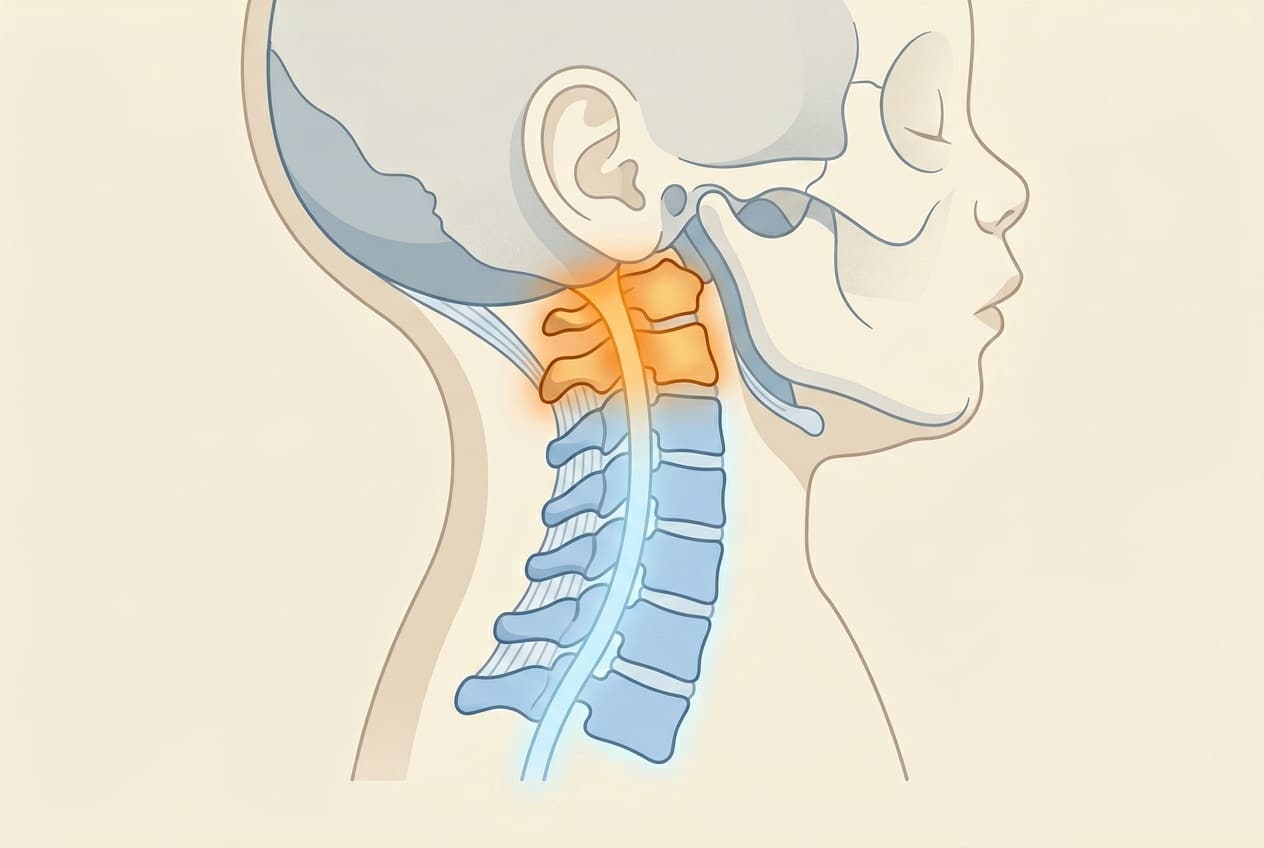
Subluxations are most likely to happen in newborns in the upper cervical region, where the skull meets the top of the spine. This area is most affected by the forces of birth and also contains the nerve pathways that control digestion, muscle tone, immune response, and the coordination needed for feeding.
Why Infant Symptoms Are Often Nervous System Signals
In newborns, a birth-related subluxation can cause problems with feeding, constant fussiness, or colic instead of visible spinal pain. This is because the nervous system controls all of these functions and sends signals of disruption through them.
The nervous system doesn't just tell you when you're in pain. It controls and coordinates all of the body's functions, such as:
- Digestion and gut motility
- Immune regulation
- Sleep and arousal cycles
- Muscle tone and bilateral symmetry
- The coordination required for latching, swallowing, and feeding
According to Wiberg, Nordsteen, and Nilsson in their study "The Short-Term Effect of Spinal Manipulation in the Treatment of Infantile Colic," published in the Journal of Manipulative and Physiological Therapeutics (1999), infants receiving chiropractic adjustments showed a significant reduction in colic symptoms compared to those receiving medication, supporting a neurological rather than purely digestive root cause in many presentations.
When a newborn's spine is out of place at the top, it puts stress on the nervous system, which means the brain and body aren't talking to each other as clearly as they should.
Sometimes, that disruption doesn't look like a problem with the spine. It often looks like this:
- A baby who will not latch comfortably on one side
- A newborn who startles constantly and cannot seem to settle
- An infant whose colic does not resolve despite weeks of changes to the feeding position or the mother's diet
These presentations are not random. They are often the nervous system talking to the brain and body in the only way a body that can't speak yet can: that something isn't working properly in the brain-body connection.
When the interference is gone and the channel is clear, the body can do what it already knows how to do.

What a Newborn Chiropractic Assessment Actually Looks Like
A chiropractic assessment for a newborn uses fingertip pressure that is less than what is needed to test a ripe piece of fruit. Instead of treating each symptom separately, it looks at spinal alignment, muscle symmetry, and cervical range of motion.
Most parents who have never seen a pediatric chiropractic assessment assume it resembles an adult adjustment. It does not. A newborn assessment is a quiet, gentle process that typically involves:
- Visual assessment of posture, head position, and symmetry of movement
- Gentle palpation along the spine to identify areas of restriction or asymmetry
- Evaluation of muscle tone on each side of the body
- Light spinal manipulation where needed, using no more force than a gentle, sustained fingertip touch
The adjustment itself takes seconds. There is no audible release and nothing disproportionate for a body weighing under ten pounds.
Just as knowing when to see your doctor during pregnancy is part of responsible prenatal care, knowing when to have a newborn assessed by a chiropractor trained in pediatric care is part of the same instinct. Professional assessment at the right time gives the nervous system the best possible environment to develop from.
What is being addressed is the structural source of the interference, not the symptom it produces. Not colic as a standalone diagnosis. Not latching difficulty as a separate category. The point in the spine where the clear channel broke down, and the restoration of signal flow from that point forward.

The Developmental Window That Makes Timing Matter
The nervous system undergoes its most rapid period of development in the first years of life, which means the quality of brain-body communication during infancy has direct relevance to motor development, sensory integration, and immune function during the window when these systems are being built.
Early assessment carries a significance that extends well beyond resolving immediate infant discomfort.
The neural pathways established in the first months and years of life form the architecture on which all subsequent development runs.
A nervous system building itself during this window needs the clearest possible signal to work with. That includes:
- Gross and fine motor development
- Sensory processing and integration
- Immune system regulation
- Emotional regulation and stress response
- Sleep architecture as it matures through infancy and toddlerhood
A nervous system carrying interference during this period is not building through as clear a channel as it could be.
The body's innate intelligence is always working and always adapting, but adaptation under interference is not the same as function without it.
Checking on a newborn isn't about looking for problems. It is important to make sure that the most important communication system in a child's body starts off as clearly as possible at the time when it matters most.

Why This Conversation Starts Before the Birth
The Webster Technique is a type of prenatal chiropractic care that focuses on restoring pelvic balance during pregnancy.
This directly affects the mechanical forces that a baby's spine experiences during delivery and helps make the third trimester more comfortable overall.
The birth room and the prenatal conversation are more connected than most people realize.
Pregnancy places significant physical demands on the body, and how a mother cares for herself during that time directly shapes the environment in which her baby develops.
Alongside nutrition, rest, and regular prenatal check-ins, spinal health is one of the most overlooked components ofself-care during pregnancy and one of the most directly connected to birth outcomes.
When the sacrum is not aligned properly during pregnancy, the ligaments and uterine attachments that are close to it have to work harder to keep things in place.
This makes the uterus tighter, which makes it harder for a baby to move into the best position for birth.
The Webster Technique addresses exactly this. It works by:
- Restoring sacral alignment
- Releasing tension in the soft tissue structures around the pelvis
- Creating the pelvic environment in which the baby has the most room to move naturally
Pistolese, in "The Webster Technique: A Chiropractic Technique with Obstetric Implications," published in the Journal of Manipulative and Physiological Therapeutics (2002), noted that sacral misalignment contributes to intrauterine constraint and suboptimal fetal positioning, with chiropractic care demonstrating a favorable correlation with resolution in several documented instances.

Dr. Sarah at Cypress Chiropractic & Wellness, a chiropractor Charleston SC, specializes in prenatal and pediatric care and works with families through both the Webster Technique during pregnancy and newborn assessments after birth.
Many families who come in for Webster Technique care during pregnancy return within weeks of delivery for a newborn assessment.
Different appointments, same understanding: the clearer the channel, the better the body functions at every stage.
FAQ’S
Yes. The newborn chiropractic assessment employs light pressure on fingertips to check if any misalignment exists within an infant's body. The procedure is absolutely safe in the hands of a qualified chiropractor; in addition, the force required for this procedure is lower compared to adult treatment.
Visiting a pediatric-trained chiropractor with an infant can help to facilitate healthy neurological communication right from the very beginning of the baby's life. Some of the advantages that might result from taking your infant for adjustments could include proper feeding and latching, less colicky behavior, sounder sleep habits, balanced, bilaterally symmetrical movements, and the development of the neurological system through the best possible avenue.
An infant might need a chiropractic evaluation in the instance where there is a subluxation within the top part of their neck that occurs due to the stress system's labor that has interfered with the communication between their nervous system and the rest of their body. The situations that cause parents to consider chiropractic services for infants can range from birth trauma in their spine to trouble nursing on one side.
There is no minimum age. Many chiropractors trained in pediatric care assess newborns within the first days or weeks of life. Early assessment is preferable because it identifies interference before the developing nervous system has had time to build compensatory patterns around it.
A subluxation in the upper cervical spine can create nervous system interference that affects digestion, muscle tone, and the coordination required for feeding and swallowing. Infants presenting with colic, one-sided latching difficulty, or persistent unsettled behavior have shown improvement following chiropractic assessment and adjustment in a number of documented cases, though individual outcomes vary and specific results cannot be guaranteed.
Newborn adjustment uses no more than a light fingertip touch with sustained gentle pressure. There is no rotation, no thrust, and no audible release. Pediatric chiropractic techniques are specifically adapted to the size, anatomy, and developmental stage of the patient, making newborn care fundamentally different from adult care in both approach and force applied.
The Webster Technique is a specific chiropractic analysis and adjustment used during pregnancy to restore sacral alignment and reduce uterine constraint. It is designed to support optimal pelvic balance during pregnancy, which may support more favorable fetal positioning. The connection to newborn care is direct: the forces a baby's spine experiences during delivery are influenced by the pelvic environment the baby moves through.
Conclusion
Most parents spend several months getting ready for the arrival of their child, but the system that ties all these preparations together, the nervous system, does not find its way onto the list.
- Parents Are Prioritising Breathable, Sustainable Fabrics For Children's Seasonal Sleepwear
- Our Homemade Christmas Printables, Made With AI: What Worked, What Didn't, and What I'm Saving for Next Year
- At-Home vs. In-Lounge IV Therapy in the Hudson Valley: Which Makes More Sense?
- Can Passengers Pursue Compensation After a Car Accident?




The first subluxation that many individuals ever experience does not occur due to an injury sustained in a workout room or years of sitting behind a desk; rather, it stems from the biological experience of birth.
If you are currently pregnant or have recently given birth, a chiropractic evaluation is one of the easiest methods by which you can help ensure that your infant's nervous system gets off to the best start.





Leave a Reply