

School mornings can become stressful surprisingly quickly. Between finding clothes, eating breakfast, and getting everyone out of the door on time, there is often little room for peace. Children may also resist and detest the chaos of mornings when they feel like a long list of instructions is coming from a parent.
Yet, a few small changes can make tasks more engaging without adding more work to an already busy morning. It is possible to change how both you and the kids experience the morning routine with a few simple steps. In this article, let’s look at three of them.
Jump to:
1. Turn the Morning Routine Into a Small Challenge
By nature, routines are boring and easily become monotonous. After a while, your kids might throw tantrums and become argumentative. What do you do in such moments?
As author Elaine Goodwin explains, routines should be respectful. She recommends giving kids ten minutes before they need to do the routine. Likewise, avoid flooding them with choices. Instead of going, “Will you put on your shoes?” make it something like, “Let’s put on your shoes.” It’s a subtle difference, but it makes a difference.
Likewise, children often respond well to challenges because they give ordinary tasks a clear purpose. Instead of repeatedly telling a child to get dressed or pack their bag, turn one or two of those jobs into a simple morning mission. For instance, a favorite song can become the soundtrack for getting dressed.
That makes the transitions between activities a useful place to introduce playful ideas. It’s always worth keeping an eye out for tips to make back-to-school more fun for kids in parenting communities and on the internet. This becomes particularly important after a vacation or a new school year.
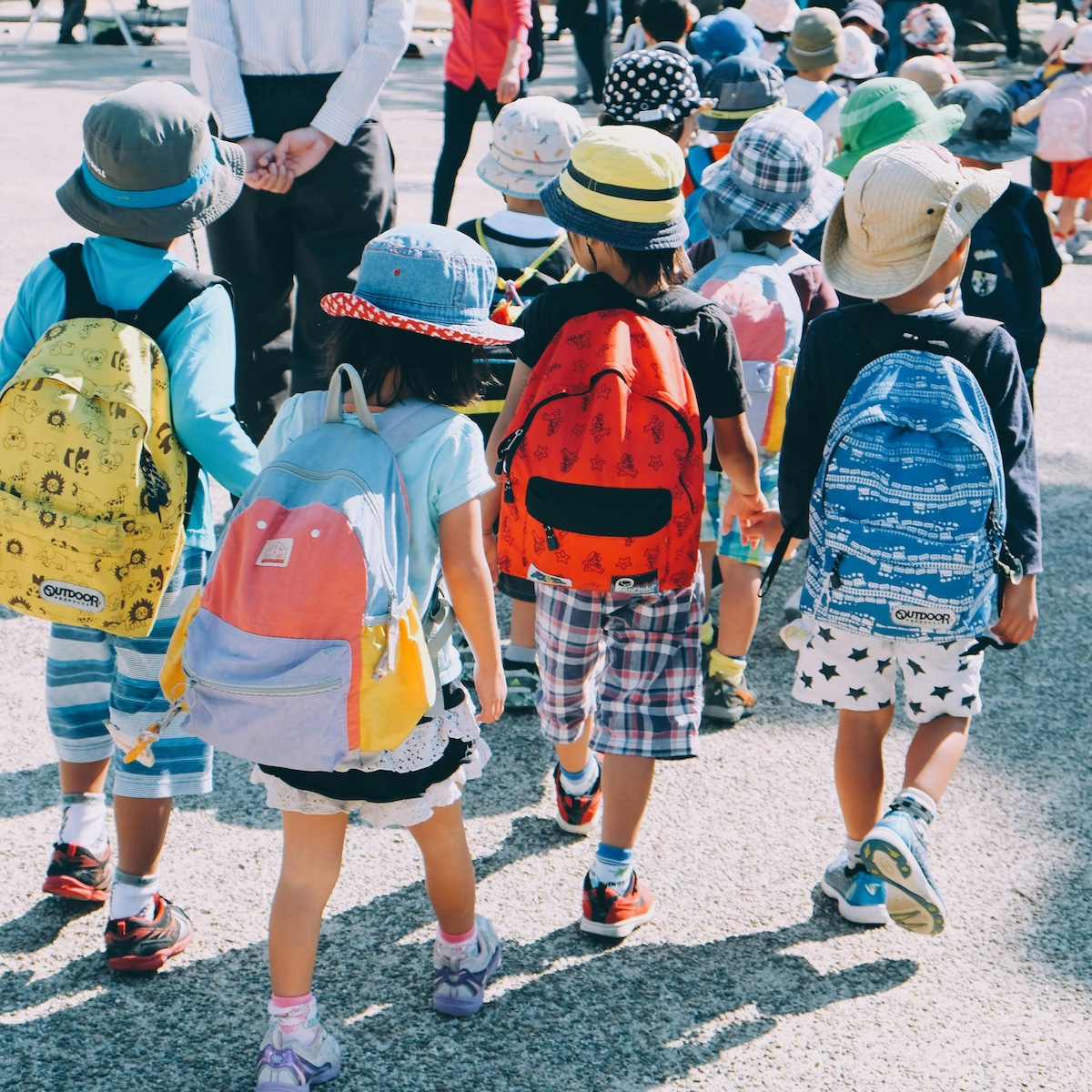
Allow kids to choose their own clothes to reflect their personality. This can give them confidence and excitement for the first day. You can also add notes in their lunchboxes and give them personalized backpack charms or keychains to remind them that they’re loved and supported.
2. Give Kids a Real Say in What Happens Before School
Giving children some control over their morning can make familiar tasks feel less like instructions they have to follow. The trick is to offer choices that are genuine but limited.
A parent might let a child choose between two outfits, decide which fruit goes into their lunchbox, pick the music for breakfast, or choose whether to brush their teeth before or after getting dressed.
This approach works particularly well because the parent still establishes the boundaries. Asking a child whether they want to attend school is unlikely to be a useful choice when school attendance is already settled.
Asking which shirt they would prefer gives them control over something that genuinely can be decided. Often, the morning experience is affected by the night before. Thus, pay extra attention to factors like sleep.
A Pew Research Center survey from October 2025 highlights key parenting goals. It shows that 75% of parents view getting enough sleep as a major priority. Morning routines can easily support those broader goals. A simple rule such as keeping devices away at night helps in this regard.
3. Build a Routine That Leaves Room for Play
A predictable routine does not have to mean scheduling every minute of the morning. Children can know what happens next while still having a little space for humor, conversation, or a short game. One useful approach is to identify the few things that genuinely need to happen every morning, then build small playful moments around them.
At the same time, helping kids become more responsible can also become a sort of ritual in itself. Children can learn to check their backpacks, put away their lunch containers, and other such responsibilities.
So, if a child comes home with chewing gum stuck to a sole, parents can turn the cleanup into a quick lesson in caring for their belongings by showing them the most effective way to remove gum from shoes rather than simply doing things for them.
Perroquet Shoes points out a simple fix that involves placing shoes inside a plastic bag and placing it into the freezer. The gum hardens and becomes easy to scrape off then. It’s a simple task that a child can easily complete, yet many parents will take up that responsibility as well. Consider making simple tasks a routine for your kids, or you’ll find yourself doing everything, which eats away at your time.
Look at data from the Bureau of Labor Statistics' American Time Use Survey, 2024 annual averages. Parents whose youngest children were between 6 and 12 spent 1.03 hours per day helping them with household tasks as their main activity. For context, playing with children accounted for only 0.11 hours.
Giving your kids a routine also has a number of positive effects, as one study tracking children through their preschool years shows. Using latent profile analysis, researchers identified four routine patterns based on timing and frequency: stable-high, increasing, decreasing, and stable-low.
After accounting for confounding factors, children who maintained consistently high routines showed significantly fewer attentional, externalizing, and internalizing difficulties than those whose routines declined.
The research does not establish that routines cause these outcomes, but it does provide an interesting reason to value consistency.
FAQ'S
Talk about the things they enjoy, such as seeing friends, favorite subjects, sports, clubs, or creative activities. Let them help choose school supplies or plan their first-day outfit. A small back-to-school tradition, such as a special breakfast, can also give them something positive to anticipate.
Start by handing over small responsibilities that match their age. They might pack their backpack, choose clothes, organize school supplies, or prepare part of their lunch. Give them time to complete these tasks themselves rather than stepping in immediately, even if their approach differs from yours.
Children can pack their backpacks, choose their clothes, prepare anything needed for breakfast, and check that homework or school materials are ready. Keeping these tasks consistent can make the morning easier. A calm bedtime routine is also useful, particularly when children need to adjust to an earlier wake-up time.
Key Numbers and Facts at a Glance
| Percentage of parents who consider reasonable screen time a day-to-day priority | 86% |
| Percentage of parents who consider enough sleep for their children to be one of their biggest priorities | 75% |
| Daily time parents spend caring for and helping children aged 6–12 | 1.03 hours |
Making school mornings more enjoyable does not require parents to introduce elaborate games or completely redesign the family's schedule.
- What Happens to Your Old Medical Scans When a Hospital Upgrades Its Imaging System
- Start Vlogging for Free: Watermark-Free Editing Tools for Beginners
- How to Design a Custom Folder for Your Small Business Without Design Software
- Smart Financial Planning Tips for Parents Investing in Their Children’s Education




Small adjustments can change the atmosphere around tasks that already have to happen, particularly when children have some ownership over the process.
The most useful routine is likely to be one that fits the family's actual life. When children know what is expected, have reasonable opportunities to make choices, and occasionally get to inject some fun into the process, getting ready for school can become a more cooperative part of the day.





Leave a Reply