

The unpopular part comes first: extra practice can make you worse. Not always, but often enough that it's worth a warning.
If you're in a nail technician course and you go home to drill what you learned, you're also drilling every little error you made in class, and this time no one is standing behind you.
Hands are lazy learners. They don't ask whether a movement was correct. They only notice it happened again.
So the aim of practice between classes is to be a little less random about it, and that comes down to one goal, one slow attempt, one honest look afterwards.
And nothing you haven't been taught yet. That point comes up a few more times below, on purpose.
Jump to:
- Start With One Specific Skill Per Practice Session
- Choose Practice Exercises That Match Your Current Level
- Build a Short, Repeatable Practice Routine
- How to Review Your Own Work
- How to Recognize a Bad Habit Before It Becomes Automatic
- When Should You Ask Your Instructor for Feedback?
- Track Your Progress Without Obsessing Over Perfection
- Conclusion
Start With One Specific Skill Per Practice Session
The usual evening goes like this. You sit down, decide to work on shaping, product, cuticles and speed, and ninety minutes later there are ten nails on the desk, and you couldn't say which of the four improved. Probably none, honestly.
Choose one thing. Say, ten nails with matching shapes. Or smoother product with less to clean up afterwards. Or a wrist that stops wandering. Or a full set that looks like one person made it on one afternoon.
The test is whether you can check it when you're done. "Improve my shaping" can't be checked. "Do the left-hand corners match the right?" takes about four seconds.
Choose Practice Exercises That Match Your Current Level
Practice hands exist so that you can ruin things for free. Use them for the dull basics, over and over.
Do the exercises your instructor gave you. If you're unsure whether something is one of them, send a message and wait for the answer before you start, since a text costs you less than a week of doing it wrong.
Live models come later, when your instructor decides you're ready, and with supervision.
This is the line that shouldn't be crossed. If a procedure wasn't covered in class, don't try it at home, and that goes double for anything with a tool near skin. The equipment is easy to buy, which is exactly why people get ahead of themselves.
Build a Short, Repeatable Practice Routine
Keep each session short enough that it's easy to repeat. Start by writing the goal on a sticky note or the first line of your log.
Then set up your tools and materials the way you were taught, with the sanitation and safety steps, even on a practice hand. Skipping them there makes skipping them elsewhere easier.
Work through the exercise slowly enough to notice what your hands are doing. Photograph the result if that helps, and finish by noting one improvement and one thing to change next time.
Here is a sample session, as an illustration only, since your instructor may recommend a different one. The goal is even shaping on a practice hand.
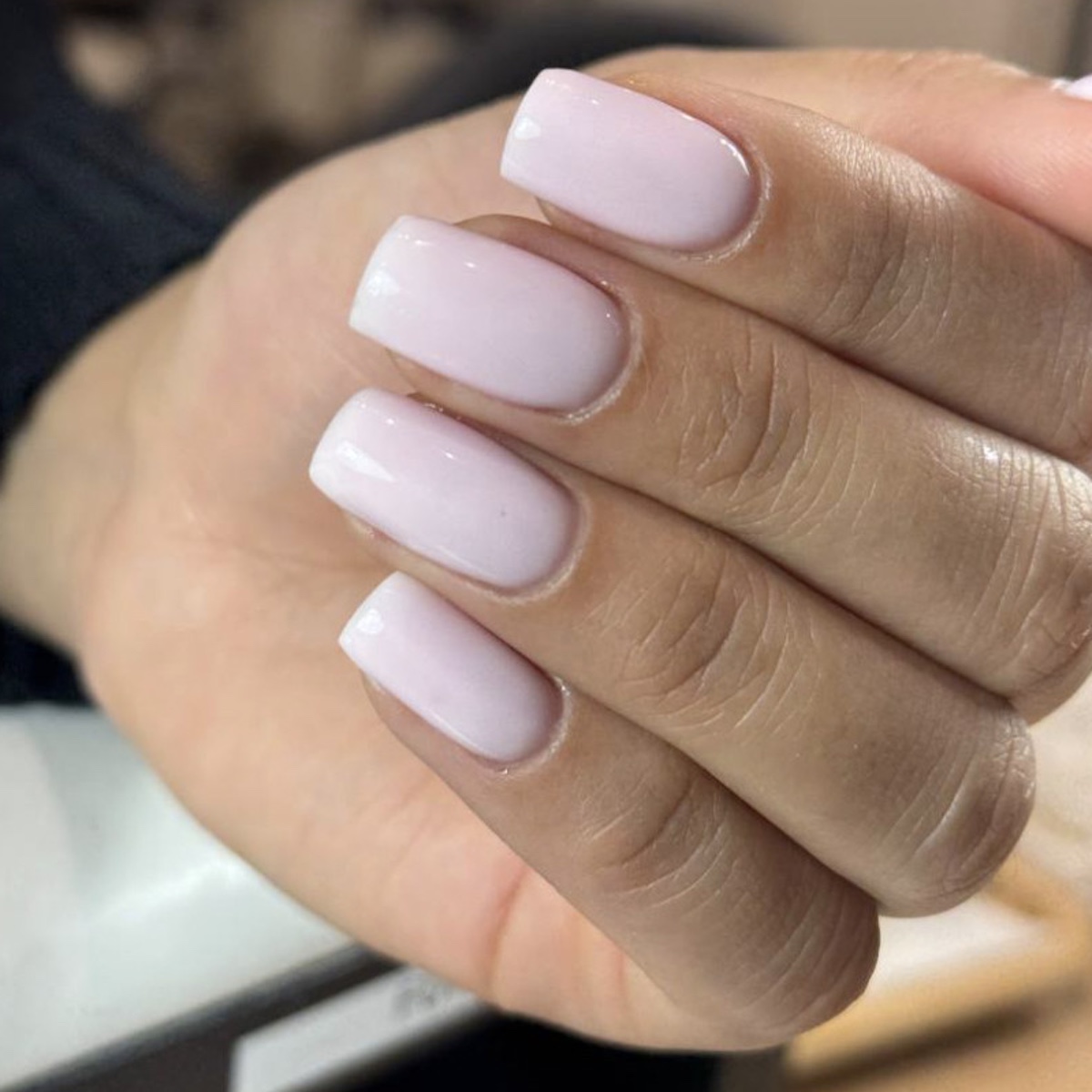
All ten tips get shaped, then photographed from above under the same lamp, and the note reads "right hand matches, left-hand corners uneven." The next session starts with the left hand.
How to Review Your Own Work
Compare the result with that day's goal and nothing else. If the goal was matching shapes, a striking color doesn't change how the shapes turned out.
Photograph under the same lamp and from the same angle each time. With different lighting you end up comparing the photos instead of the nails. Then check what is visible: shape, symmetry, surface smoothness, how the product sits.
Treat your own verdict with some caution. A photo doesn't record how hard you pressed or whether a step was safe.
A nail can look perfect and come from a shaky method, and you won't find out from a screen.
How to Recognize a Bad Habit Before It Becomes Automatic
You'll know it by the pattern. Same problem, same movement, again. A tool feels hard to control so you lean on it. You rush prep or finishing to reach the part you enjoy.
You keep correcting the result without ever finding the cause. Or something stings or feels wrong and you keep going because you're nearly done.
Stop at that point. Walk back through what you did, one step at a time. Then bring it to your instructor. Trying again the identical way is how a habit gets fixed.
When Should You Ask Your Instructor for Feedback?
Earlier than you want to. When the same mistake appears three times. When results swing from one attempt to the next and you can't see why.
Before you change a technique or use a product in a way the instructions don't mention.
When a procedure involves tools, chemicals or skin contact that need additional training (that one is a question for your instructor, not a video).
A specific question gets a specific answer. "Is this okay?" gives them nothing to work with. "My left-hand corners keep coming out uneven, here's what I did" gives them a lot. Bring the practice tips, the photos, anything.
Track Your Progress Without Obsessing Over Perfection
A notebook is fine; a note on your phone is too. Date, skill, goal, what you noticed. Don't download an app for this.
Save a few photos now and then. Day to day you'll see nothing, and a month later you'll see quite a lot, along with the mistakes that keep reappearing, which is humbling in a useful way.
Track consistency rather than perfection. If this week's nails look more alike than last week's, you're improving, even if none of them is flawless.



Conclusion
Keep it small. One goal, a short routine, an honest look at the result, and a question for your instructor when you can't explain what happened. Stay inside what you've been taught.




Leave a Reply