

Picture a Tuesday night. Your fourth grader is halfway through a math worksheet, pencil frozen, eyes filling up. “I can't do this,” she says. You may want to fix it, finish it, or promise it does not matter. But one small change can shift the moment: “You can't do it yet.”
That single word, “yet,” opens the door to a useful parenting idea. Understood describes a growth mindset for families as the belief that skills can improve with effort and support, and it points to the “power of yet” as an easy place to start.
This guide keeps things practical, with scripts to borrow tonight, tiny routines to repeat, a one-week starter plan, and a grounded look at what the research does and does not promise.

Jump to:
- What a Growth Mindset Really Means For Families
- Say This, Not That: Everyday Scripts You Can Borrow
- How to Praise So It Actually Helps
- Handling big feelings alongside the mindset
- Make it a family habit: five tiny routines
- A One-Week Quick-Start Plan
- When Extra Support Helps
- What The Research Says, Briefly
- Start with one script and one routine
What a Growth Mindset Really Means For Families
Stripped of jargon, a growth mindset is the belief that abilities can develop through effort, useful strategies, and help from others.
It is not about telling kids they are amazing or pretending everything is easy. It is about pointing them toward the next useful step when something is hard.
It is also not just any praise. Praise alone does not build a growth mindset; what you choose to notice is the active ingredient.
Most people hold a mix of mindsets, too. A child might feel confident about reading and stuck about soccer.
Say This, Not That: Everyday Scripts You Can Borrow
The fastest way to try this is to swap a few common phrases. Mindset Kit's parent activities and Seattle Children's guidance point in the same direction: add “yet,” focus on effort and strategy, and name a next step.
Tough Homework
Instead of: “You're just not a math person.” Try: “You haven't figured this one out yet. What's one different way we could try the first problem?”
An Art Project That Flopped
Instead of: “It's fine, just start over.” Try: “You put real effort into this. What part do you like, and what would you change next time?”
Notice the pattern. You acknowledge the difficulty, keep the focus on effort or strategy, and end with a small, doable next step.
How to Praise So It Actually Helps
Mindset Kit draws a useful line between “person praise” and “process praise.” Person praise sounds like, “You're so smart.” Process praise sounds like, “You tried three different ways before it worked.”
Personal praise can backfire because it ties a child's worth to a fixed trait rather than to what they did.
Two simple things to notice:
- What they did: effort, persistence, and choices. Try stems like, “Walk me through your strategy,” or, “You kept going even when it got hard.”
- How they improved: progress from last time, not a final label. For example: “Last week this took ten minutes. Tonight it took five.”

A quick self-check helps: before you praise, ask, “What am I praising here: effort, strategy, or a fixed trait?” If the answer is a fixed trait, adjust on the fly.
Handling big feelings alongside the mindset
Growth-oriented language lands better when a child feels understood first. The Gottman Institute connects growth mindset with emotion coaching and encourages praising effort over outcomes. A frustrated kid may need the feeling named before a new strategy is useful. The point is to notice the effort without skipping the feeling, which is where positive praise ideas can be useful.
- Name the feeling. “You seem really frustrated with this.”
- Validate it. “That makes sense. This is genuinely tricky.”
- Ask for one small next step. “What's one thing we could try next?”
Two example lines combine feeling and forward motion: “Want to take a two-minute break, then look at it together?” and “What's one part you already understand?”
Make it a family habit: five tiny routines
The National Association of Elementary School Principals notes that families play a strong role in nurturing a growth mindset at home. Small routines do that work better than a single big talk.
- The “Yet” Jar. When someone says, “I can't do this,” they write it on a slip and add “yet.” When they master it, you celebrate and pull the slip out.
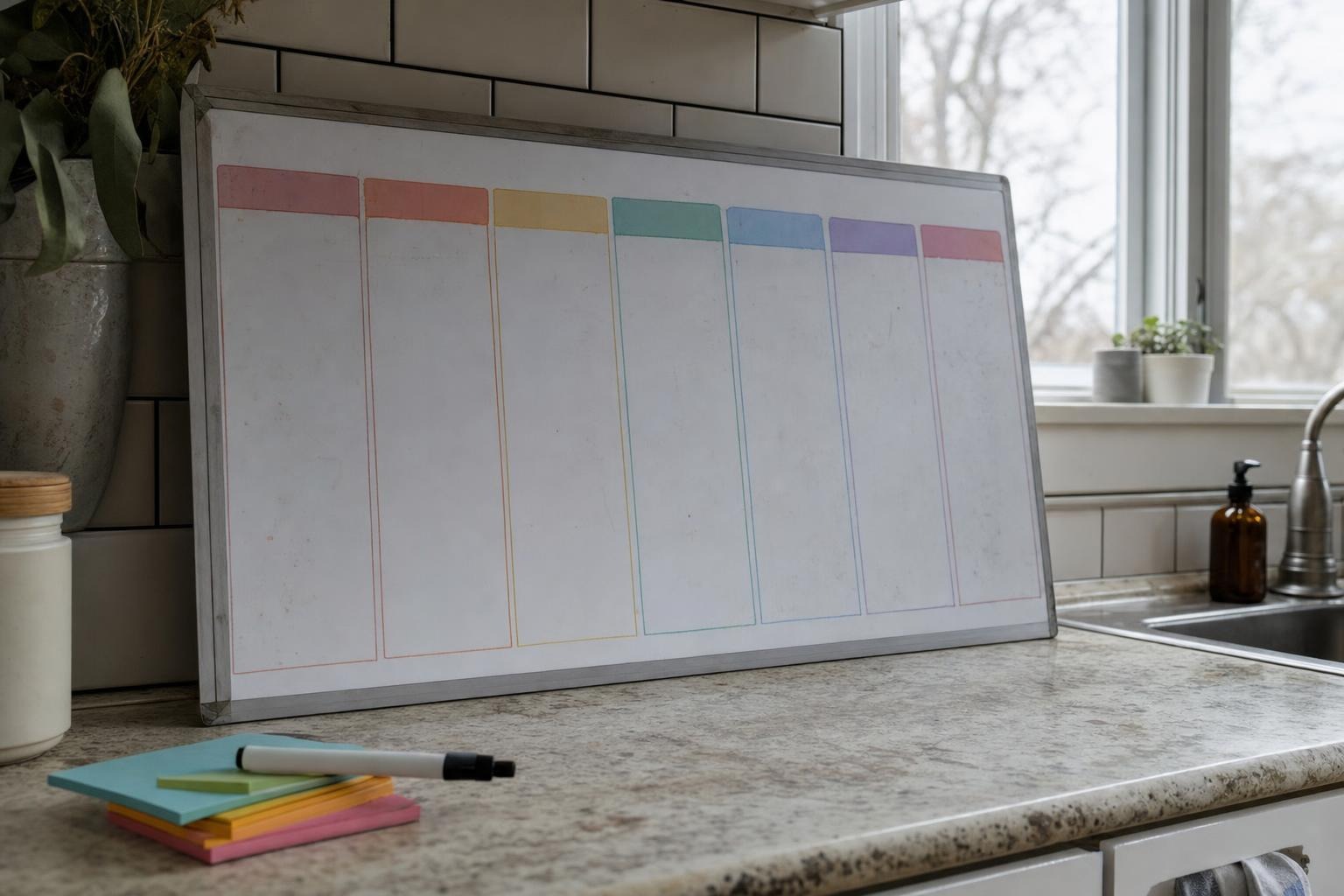
- Challenge of the Week board. Each person picks one hard thing to practice, and you check in on Friday.
- Mistake of the week. Everyone, adults included, shares a mistake and what they learned. Seattle Children's suggests praising a child's willingness to learn from mistakes.
- Strategy swap at dinner. Ask, “What did you try today that was hard?” instead of, “How was school?”

Adapt the language to your child. Kids differ in temperament, age, and learning style, so a script that clicks for one child may need rewording for another.
A One-Week Quick-Start Plan
You do not have to overhaul your family routine. Try one small action a day for a week.
- Day 1: Teach “yet.” Add it to one frustrated sentence out loud.
- Day 2: Replace two person-praise moments with process praise.
- Day 3: Model your own mistake and how you repaired it.
- Day 4: Help your child set one small practice plan.
- Day 5: Reflect on strategy: “What worked, and what would you change?”
- Day 6: Do a family challenge together.
- Day 7: Celebrate effort, not just results.
When Extra Support Helps
Sometimes the hardest mindset to change is our own. If you keep hearing yourself say, “I'm bad at this too,” you are not alone.
It is worth noticing because kids absorb the way adults talk about ability. If you want structured help applying these habits at home, mindset coaching can give adults a place to spot fixed-thinking traps and practice new language patterns.
The Life Coaching Academy frames this as a guided conversation about beliefs, habits, and thinking patterns.
Keep expectations grounded. Coaching is not therapy, and outcomes vary from person to person. If you decide to explore it, look for someone with credible training and treat it as one supportive option rather than a fix. For most families, the everyday scripts and routines above are the best starting point.
What The Research Says, Briefly
It is useful to hold this topic with a light grip. The research is encouraging, but it is not a promise.
- Parent language can shape beliefs. Mindset Kit summarizes research suggesting the way parents talk about abilities can influence what children believe about learning.
- Academic effects vary. A federal What Works Clearinghouse synthesis reported potentially positive effects on some outcomes and no clear effects on others.
- Benefits may need reinforcement. One longitudinal study found that students with stronger growth mindsets initially outperformed peers, but that advantage diminished over time.
- Short interventions can help some students. Understood cites a national training linked to improved end-of-year GPAs among lower-performing ninth graders in an earlier study.
None of this promises a guaranteed jump in grades. It suggests that a growth-oriented home, paired with real practice, is a reasonable, low-risk support.
Start with one script and one routine
A growth mindset is not a switch you flip. It is a family language you build slowly, one small sentence at a time.
You will slip back into old phrases sometimes, and that is fine. Repair, try again, and let your kids see you doing exactly what you are asking of them.
- Parents Are Prioritising Breathable, Sustainable Fabrics For Children's Seasonal Sleepwear
- Our Homemade Christmas Printables, Made With AI: What Worked, What Didn't, and What I'm Saving for Next Year
- At-Home vs. In-Lounge IV Therapy in the Hudson Valley: Which Makes More Sense?
- Can Passengers Pursue Compensation After a Car Accident?









Leave a Reply