

Some areas of the country are more humid than others. That’s just a fact. Take Louisiana, for example. New Orleans is stated as having the highest relative humidity among US cities. It has an average of nearly 86%.
Then there’s Jacksonville in Florida just behind it.
And so many people live in these areas. They have learned to cope with the almost constant humidity. Whether that’s their clothes, or their hair, or their food, everyone in a humid area will have some experience.
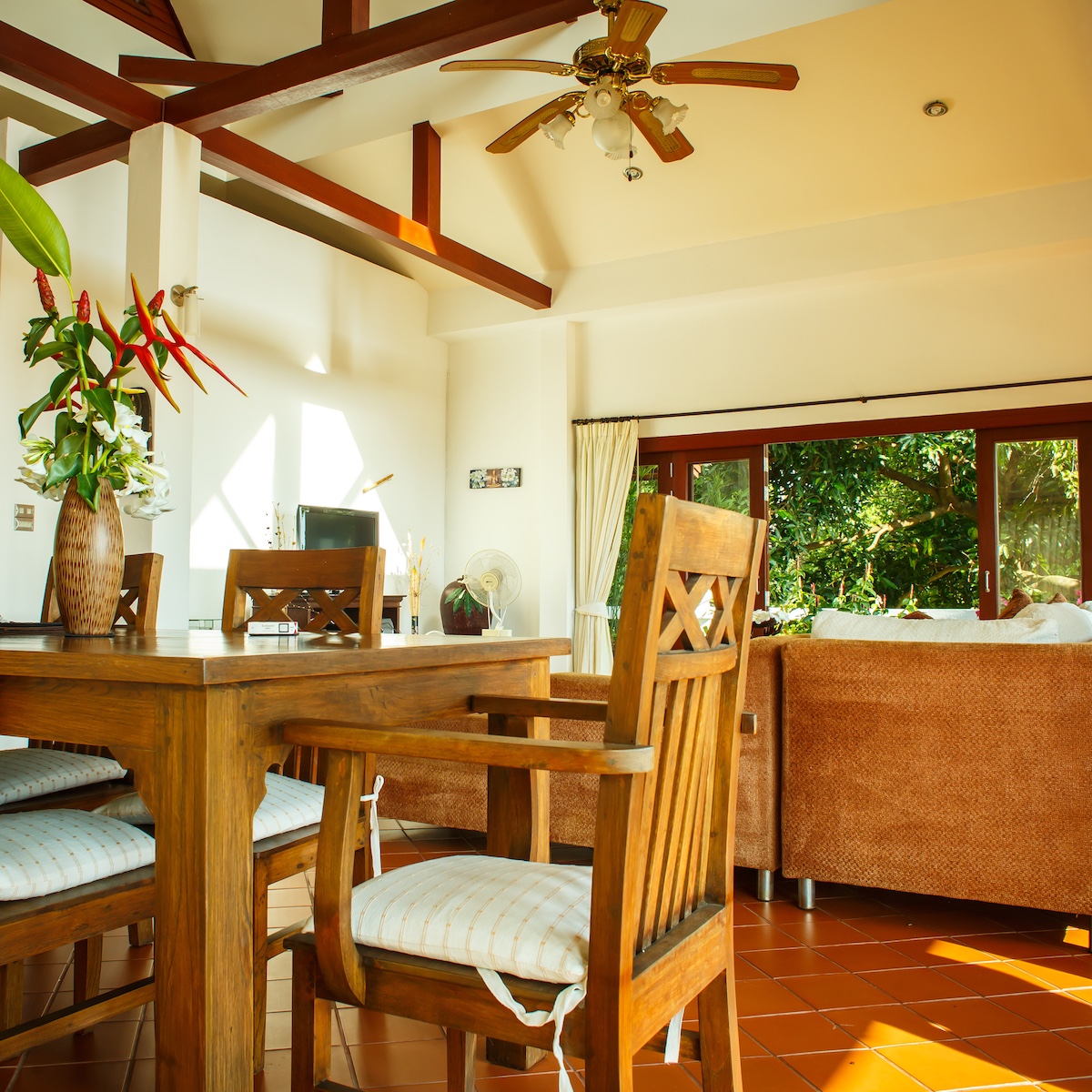
But what they might not expect what it does to their furniture. High levels of moisture could cause problems. Wood warps. Fabrics take longer to dry. Some materials even develop unpleasant smells. After so long, the damage becomes too much, and you need to purchase new pieces of furniture.
You are better avoiding that, and there are some ways to ensure your furniture survives the humidity. You just need to be a little more careful about the materials you choose.
Fortunately, this post is here to help. Keep reading on to learn four key tips to furnish your home in a humid environment.
Jump to:
1. Choose Moisture-Resistant Furniture Frames
Where do you begin? With the furniture itself.
There are some materials that just cope with moisture. Then there are those that don’t. Veneered wood expands. Standard chipboard soaks up the moisture. The same occurs with MDF and particle board – both of which act like a sponge.
So, what should you choose instead?
Solid wood is a better option, especially if it is properly treated and finished. Metal, too, is a possibility. It isn’t going to absorb moisture in the same way as wood-based materials.
If you are struggling with this, look for professional furniture designers and the like. They will assist you with your needs. For instance, a custom closet company in Palm Beach County will know the humidity levels. They will also have the experience to select the right materials and wardrobe for your home.
You should also look at the finish on the furniture. A good protective coating is a good idea. It would provide an extra layer of protection against moisture getting into the material.
2. Opt for Airy, Quick-Drying Upholstery
Next, you need to think about the upholstery. This is easy to overlook. You might spend plenty of time choosing the right sofa or armchair. After all, you need a nice place to sit, right? But then you might not give much thought to the material covering it.
In a human environment, that is a mistake. Heavy fabrics hold moisture. This means they take longer to dry. In some cases, they’ll begin to develop an unpleasant odor eventually.
Rather than that, look for lighter and more breathable materials. Cotton and linen, for instance. These two are great options for high humidity. They allow more air to move through the fabric.
It is also a good idea to think about how easy the material can be cleaned. If something does get damp, then you want to be able to clean it. You will need to let it dry properly as well. Both tasks shouldn’t cause you too much hassle.
3. Elevate Furniture for Air Circulation
Speaking of air circulation, the next tip is vital. Furniture doesn’t always need to sit directly on the floor. In many cases, it shouldn’t.
Raised furniture gives air somewhere to move underneath it. This is especially handy in humid areas, where you want to avoid trapping moisture in small spaces. Mold might form as a result of damp.
Think about large pieces of furniture. Beds. Cabinets. Sofas. If they have legs, there is room underneath for air to circulate.
But you don’t need to replace every piece of furniture if it doesn’t have legs. Just keep this in mind when you are buying new furniture. For your existing furniture, you only need to worry about the positioning. A little gap between the furniture and the wall is enough.
4. Swap Heavy Rugs for Natural Fibers
Finally, look at your rugs. They might look great in a bedroom or lounge, especially the heavy ones. However, in a humid environment, it causes issues. Why? Because they trap moisture. It’s as simple as that.



Natural fibers are better. Cotton. Jute. Wool. Any of these materials will work well, although you will need to consider where they rug is being used.
To conclude, living in a humid environment does pose a few problems. Not everyone thinks about their furniture in these scenarios, but they should. Thankfully, this post should have helped you decide on your home furnishings if you live in high humidity.




Leave a Reply