

The sound of a hailstorm is unmistakable. That first clatter on the roof quickly becomes a roar, and when it’s over, you’re left with a sinking feeling. A walk to the driveway confirms your fear: your car’s hood, roof, and trunk look like the surface of a golf ball. The immediate damage is obvious, but the real challenge is the confusing process that comes next. You have to deal with insurance adjusters, repair estimates, and a choice between very different repair methods.
Navigating this process correctly is the key to a successful outcome. The goal is not just to fix the dents, but to restore your vehicle’s value without getting lost in paperwork or paying more than you should. The first step is a thorough assessment from a specialist. Getting a clear evaluation for hail damage repair castle rock or in your local area will determine the extent of the damage and the best path forward. Hailstorms are a significant and costly weather event. This financial impact is why insurance companies have a very specific process for these claims.
Quick answer: Successfully repairing hail damage is less about the dents and more about managing the insurance claim correctly. The right repair facility works directly with your insurer, documents all the damage for a complete claim, and uses techniques like Paintless Dent Repair (PDR) to preserve your car’s factory finish. In many cases, the only out-of-pocket cost is your comprehensive deductible.
Jump to:
How is hail damage actually repaired?
The repair method depends entirely on the severity of the dents and whether the paint is broken. Most hail damage is repaired using a specialized process called Paintless Dent Repair (PDR), which avoids the need for sanding, fillers, or repainting. This technique preserves your vehicle’s original factory finish, which is crucial for maintaining its resale value.
Paintless Dent Repair is a highly skilled craft. Technicians use custom tools to access the back of the damaged panel, like the underside of the hood or the inside of a door. They then apply slow, steady pressure to gently massage the metal back to its original position. The process requires a deep understanding of metal memory, the tendency of a panel to return to its pre-dented shape. When done correctly, the dent vanishes completely without any sign it was ever there.
If the hail was large enough to crack the paint or sharply crease the metal, traditional bodywork is required. This involves sanding the damaged area down to the bare metal, applying body filler to smooth the surface, and then priming and repainting the entire panel. While effective for severe damage, this method is more invasive. It breaks the original factory paint seal, and matching the new paint to the rest of the car can be challenging. A repainted panel can sometimes be detected by vehicle valuation experts, potentially lowering its trade-in value.
❝ A good rule of thumb: if you can run your fingernail across the dent and it doesn't catch on a paint chip or crack, the damage is likely a good candidate for Paintless Dent Repair. This is the first thing an estimator will check.
Insurance companies generally prefer PDR because it is typically faster and more cost-effective than conventional repairs. A PDR-based repair can often be completed in a few days, whereas a job requiring repainting can take a week or more due to paint curing times. The cost savings can also be significant. This preference aligns with your own goal: to get your car back to its pre-storm condition as quickly and completely as possible.
How do I choose a reputable repair shop?
Choosing the right shop means verifying their insurance expertise, repair process, and the quality of their guarantee. After a major storm, the market can be flooded with options, so it’s critical to look for signs of stability and professionalism. A great repair facility acts as your advocate, managing the complexities of the insurance claim so you don't have to. They should work directly with your insurance adjuster and handle any supplements, requests for additional funds if more damage is discovered after the initial estimate.
This deep insurance integration is a hallmark of an experienced shop. The FBI estimates that non-health insurance fraud costs over $40 billion annually, which is why both insurers and quality shops have rigorous documentation processes. Ask a potential shop how they handle the supplement process. They should be able to clearly explain how they document hidden damage with photos and submit it to the insurer for approval. This prevents you from being caught in the middle or facing unexpected costs.
❝ A shop's willingness to explain the insurance supplement process is a key indicator of their expertise. If they can't clearly describe how they'll document and negotiate for hidden damage, be cautious.
Beyond insurance, evaluate their technical skill. Ask to see examples of their Paintless Dent Repair work. A quality PDR finish is flawless, with no trace of the original dent. Ask specific questions about their process:
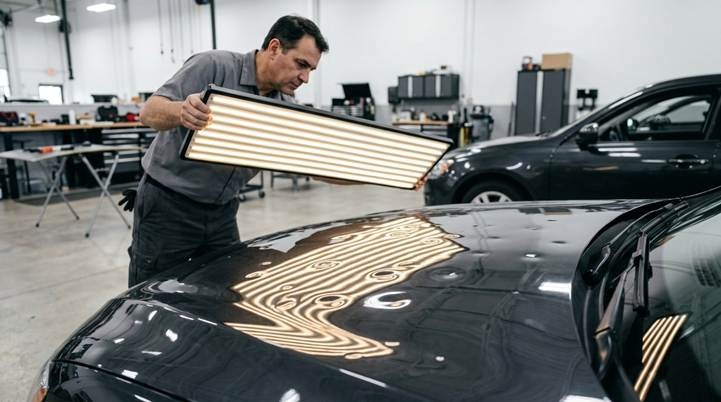
· What kind of lighting do you use to inspect for damage and verify repairs? (Specialized LED lights are the industry standard for revealing every tiny imperfection.)
· Are your technicians formally trained in PDR?
· Will you provide a written, lifetime warranty for the repair?
Be wary of "hail chasers", out-of-state operations that follow storms, set up temporary tents in parking lots, and disappear once the work dries up. Nationally, severe storms cause tens of billions in damages annually, creating a rush of repair work where questionable operators can thrive. According to the National Oceanic and Atmospheric Administration, there were 28 separate billion-dollar weather and climate disasters in the U.S. in 2023 alone. This high volume of damage attracts both good and bad actors. In states with frequent hail, like Colorado, this is especially true. The National Insurance Crime Bureau has consistently ranked Colorado among the top states in the country for hail loss claims.
A few red flags can help you spot a less-than-reputable outfit. High-pressure tactics, vague answers about their warranty, or promises to waive your entire deductible (which can be a form of insurance fraud) are all warning signs. A stable, local business will have a permanent address and a long-standing reputation to protect.
| Feature | Reputable Local Shop | Temporary "Hail Chaser" |
| Location | Permanent, physical address with a garage. | Operates out of a tent or temporary space. |
| Insurance | Works directly with your insurer on supplements. | May ask you to handle all insurance communication. |
| Warranty | Offers a written, lifetime warranty on repairs. | Warranty may be vague or non-transferable. |
| Payment | Asks only for your deductible upon completion. | May demand upfront payment or pressure you. |
Ultimately, the goal is to find a partner who will restore your vehicle correctly and handle the administrative burden. Taking an hour to vet your options can save you from months of headaches and a poor-quality repair.
What Separates a Good Repair from a Great One?
A great repair is one you can't see, even under close inspection. While many shops can make dents smaller, only a highly skilled technician can make them vanish completely. The difference lies in a deep understanding of metal, a meticulous process, and the right equipment. It’s about restoring the panel, not just pushing out a low spot.
Every dent has two components: the low spot you see and a raised ridge of displaced metal around it called a "crown." A common mistake made by less experienced technicians is to focus only on pushing up the low spot. This often creates a new high spot, or "pimple," on the panel, trading one imperfection for another. A master technician works differently. They start by gently "tapping down" the crown with specialized tools to relieve the stress in the surrounding metal. Only then do they use tools from behind the panel to slowly massage the low spot back up until it is perfectly level with the original surface. This patient, two-sided approach is what creates a truly invisible repair.
❝ The final quality check is everything. Ask a potential shop how they verify their work is finished. The best answer involves using multiple, specialized light sources from different angles. A single light source can hide tiny shadows or imperfections that become visible when the car is back out in the sun.
This level of precision is impossible without the right lighting. Professional PDR shops use large, mobile LED light boards that cast crisp, parallel lines of reflection across the car's body. On a smooth, undamaged panel, these lines appear perfectly straight. A dent, no matter how small, will cause the lines to bend and distort. The technician’s job is to manipulate the metal with dozens of tiny, precise pushes until those reflected lines are perfectly straight again. This method allows them to see and correct imperfections that are invisible to the naked eye under normal lighting.
Finally, a great repair respects the integrity of the vehicle. Accessing the back of a panel often requires carefully removing components like headliners, door panels, or taillights. A top-tier shop does this without breaking the delicate plastic clips or creating future rattles. They understand the construction of hundreds of different vehicle models. This careful disassembly and reassembly is a critical, often overlooked, part of the process that separates true professionals from amateurs.
FAQ'S
Is it worth it to repair hail damage on my car?
Yes, for two main reasons: resale value and future insurance claims. Unrepaired hail damage can significantly lower your vehicle's trade-in value. More importantly, if you have another claim later for unrelated damage, your insurance company may deduct the value of the unrepaired hail damage from your new settlement, leaving you to cover the difference.
What is the average cost to fix hail damage?
There is no single average cost, as estimates are built using a specific formula. Technicians use a pricing matrix that accounts for the number of dents per panel, their size (dime, nickel, quarter), and the panel material. Aluminum panels, for instance, are more difficult to work with than steel and cost more to repair. A light peppering of small dents might cost a few thousand dollars, while severe damage across the entire vehicle can easily exceed $10,000.
Can't you just "pop out" the dents with a suction cup?
This is a common myth. DIY methods like suction cups or using dry ice are ineffective and often cause more harm. Suction cups can pull the center of the dent too far, creating a high spot, and can damage the paint. Professional Paintless Dent Repair involves meticulously massaging the metal from behind with specialized tools to restore its original shape without stressing the paint or panel.
Will a hail damage claim show up on a vehicle history report?
It depends on the repair method. Since Paintless Dent Repair does not involve repainting or major component replacement, a PDR-only hail claim typically does not appear on reports like CarFax. However, if the damage is severe enough to require conventional bodywork with repainting, or if parts like a hood or roof are replaced, it is much more likely to be reported.
What happens if the damage costs more to fix than my car is worth?
If the repair estimate exceeds a certain percentage of your car's actual cash value (often around 75%), your insurer will declare it a "total loss." In this case, they will pay you the vehicle's value minus your deductible. You typically have the option to surrender the car to the insurance company or to "buy it back" from them and keep the vehicle. Many states then require a salvage title, although Colorado's salvage law excludes vehicles totaled by hail alone.
Making the Right Choice After the Storm
After a hailstorm, the dents on your car are only the most visible problem. The real challenge is navigating the complex world of insurance claims and repair options. Your vehicle's path back to its original condition depends less on the storm's severity and more on the expertise of the partner you choose to fix it. A successful outcome is a blend of technical mastery on the metal and fluent management of the insurance paperwork.
The most critical questions you can ask a shop have little to do with the initial price quote. Instead, focus on their process. How will they find, document, and negotiate for hidden damage with your insurer? What kind of specialized lighting do they use to verify a flawless finish? How do they access the back of a panel without creating future rattles or broken clips? A shop’s detailed answers to these questions reveal their commitment to a true restoration, not just a quick fix.
Ultimately, your vehicle is a significant asset. A proper repair using Paintless Dent Repair protects its value, preserves its factory finish, and avoids complications on future insurance claims. By focusing on a provider's process and demonstrated expertise, you ensure the damage from the storm is completely and permanently erased, leaving no trace behind.
About the author
StormWise Hail Repair is a Denver-area auto body shop specializing in Paintless Dent Repair (PDR) for vehicles damaged by hail. The team focuses on managing the entire insurance claim process for vehicle owners, from initial assessment and documentation to negotiating with insurers for supplemental coverage on hidden damage. They provide PDR services that restore a vehicle's factory finish without the need for fillers or repainting, serving clients throughout the Colorado Front Range.


Leave a Reply