

You bought your first tuning fork, excited to explore sound healing. You strike it, bring it near your ear, and... the tone is thin. It buzzes oddly, or the vibration dies almost immediately.
Instead of a sense of calm, you feel a small wave of disappointment. The experience doesn't match what you were hoping for. This is a common story, and it rarely has to do with your technique.
The market is full of tuning forks that look right but don't work well for healing. The difference is usually the type of metal used and how the fork is made. These are details you can't see in a picture.
Feeling and hearing a high-quality fork is a key first step. Exploring a special collection of the best tuning forks can help you learn what to look for. This way, you'll know good quality when you find it.
Quick answer: The most common mistakes are choosing the wrong metal (cheap aluminum or steel), buying a fork made from a mold instead of one carved from a single block of metal, and picking the wrong type (weighted vs. unweighted) for what you want to do. Focusing on the metal and how it's made, instead of just the price, will get you a much better tool.
Jump to:
Why does the metal alloy make such a difference?
The metal used decides how pure the tone is and how long the fork will ring. High-quality forks are usually made from special aluminum metals picked for how well they make sound.
These metals create a clear, main tone without a lot of extra, higher-pitched sounds that can be distracting.
Cheaper forks often use low-quality aluminum or mixed metals. These have tiny flaws that stop the vibration and make the sound noisy or harsh.
How the fork is made is just as important as the metal. The best forks are carved from one solid piece of metal, called a billet. This gives the fork a solid structure inside, so vibrations can travel smoothly through it.
In contrast, many cheap forks are made by pouring melted metal into a mold. This can create tiny air bubbles or weak spots that kill the sound and make it stop ringing very quickly.
The difference in quality is easy to notice. A good fork will keep vibrating for a minute or more. A bad one might stop in less than 15 seconds. This long vibration, called "ring time," is needed for most types of sound healing.
Before you buy, ask the seller what kind of aluminum they use and if their forks are carved (milled) or made in a mold (cast).
❝ A simple test for quality is to listen closely as the sound fades. A good fork will have a smooth, even fade. If you hear wavering, buzzing, or a sudden drop-off in volume, it points to problems in the metal or how it was made. The sound should feel clean and focused, not scattered.
In the end, you want a tool that makes a steady and clear sound wave. A fork made from cheap materials creates a messy sound wave that can feel unpleasant. This defeats the whole point of using the tool to relax and find balance. Buying a well-made fork makes sure the vibration you put into your body is pure and clean.
Are weighted and unweighted forks interchangeable?
No, they are made for very different things and can't be swapped for each other. Weighted forks send vibration right into the body. Unweighted forks send a clear, loud tone out into the air. Which one you choose depends on how you plan to use it.
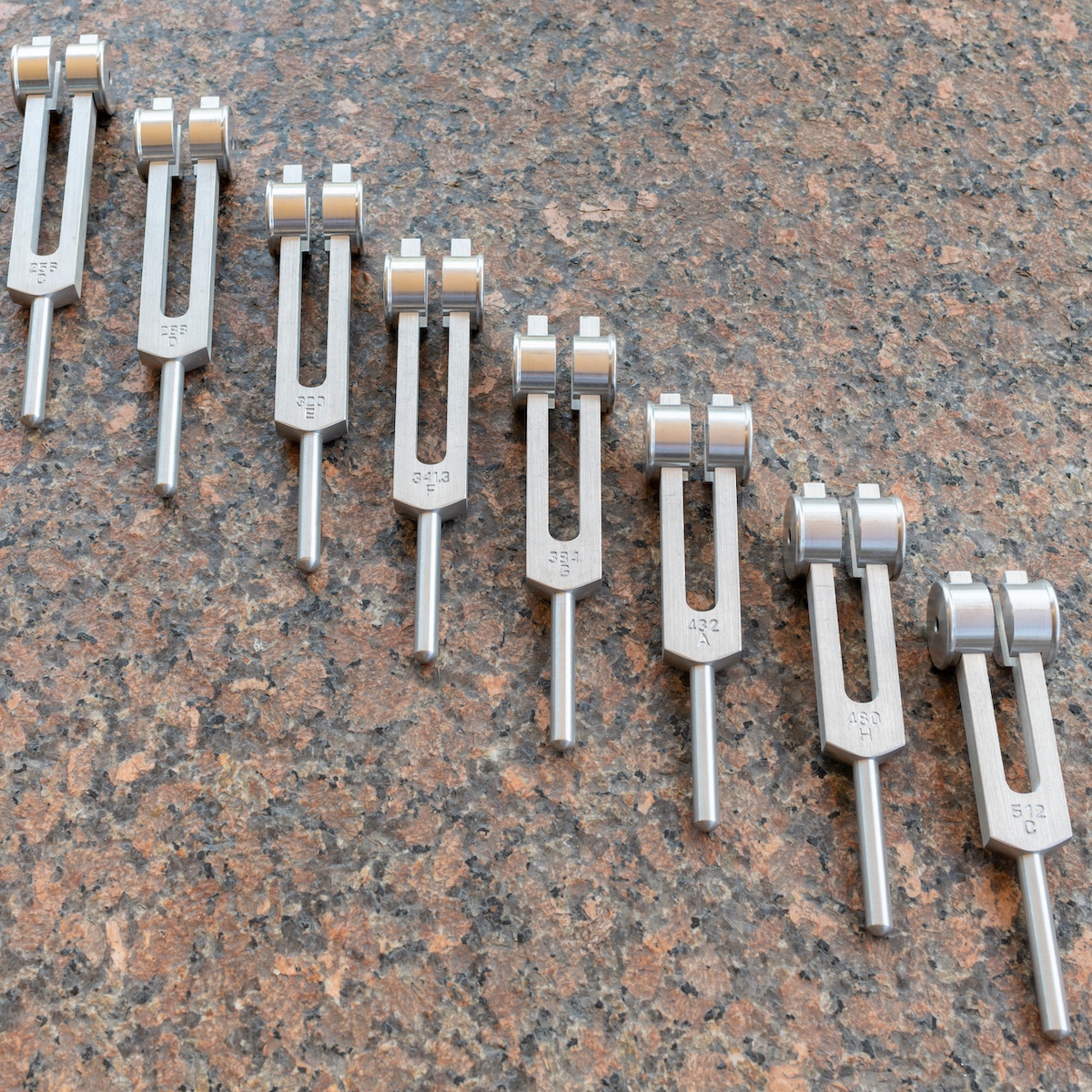
The main difference is how they are built. A weighted fork has round weights attached to the end of each prong. These weights do two things: they make a stronger, longer-lasting vibration, and they aim that vibration down through the handle (stem). When you put the handle on a part of your body, like a joint or a tight muscle, that focused vibration goes right into your body. The sound is usually quieter, but you can feel the vibration strongly and deeply. This makes them perfect for working on specific spots on the body.
Unweighted forks, on the other hand, are for listening and for use around the body, not on it. Without weights, the prongs can move more freely. This pushes the air and makes a louder, purer sound. The sound you can hear is the main tool. People use them in the energy field around the body, for sound baths, or for meditation where the goal is to listen to the sound. They create a sound environment instead of a direct physical feeling.
❝ Think of it like the difference between a massage gun and a speaker. A weighted fork is like a massage gun, delivering targeted vibration directly to a muscle. An unweighted fork is like a speaker, filling the room with sound that you experience with your ears and sense on your skin. Both use vibration, but how they deliver it and what they do are completely different.
To pick the right tool, you first need to be clear about your goal. Do you want to work on physical tightness in one spot, or do you want to use sound for meditation and clearing your energy field? Your answer will tell you which type of fork is right for you.
| Feature | Weighted Forks | Unweighted Forks |
| Primary Use | On the body | In the air, for listening |
| Sensation | Strong physical vibration | Subtle vibration, clear sound |
| Sound Volume | Quieter, more focused | Louder, more resonant |
| Application | Placed on joints, muscles, acupoints | Held near the ears or moved through the air |
| Goal | Release tight muscles | Calm the nervous system, clear a space |
What is "ring time" and why does it matter?
Ring time is how long a tuning fork keeps vibrating after you strike it. It's one of the best ways to tell if a fork is good quality. It tells you a lot about its metal and how it was made. A fork with a long, steady ring time is a well-made tool. One that dies out quickly is often little more than a fork-shaped object.
The science is simple. When you strike a fork, you put energy into it. A high-quality fork, carved from a solid block of special aluminum, has very little friction inside. This lets the prongs vibrate freely, turning that energy into a pure sound very efficiently. The vibration keeps going until the energy fades away. But a cheap fork made in a mold is full of tiny flaws and weak spots. These flaws create friction. This makes the energy scatter and turn into heat instead of sound. The vibration stops almost right away.
❝ A common mistake is to judge a fork by its weight or thickness. The key is not the amount of metal, but its ability to ring. A well-designed fork feels alive in your hand. The vibration is clean and focused in the prongs, not buzzing uncomfortably in the handle you are holding. If more vibration is traveling into your hand than into the air, the fork is poorly designed and is wasting energy.
The design of the handle is also very important. A good handle keeps the vibration in the prongs, stopping it from being soaked up by your hand. This is why you can hold a good fork and it will ring for a minute or more. A bad handle pulls the energy out of the prongs and into your hand, silencing the fork too soon. This is why just holding two different forks can tell you a lot about their quality, even before you hear them. For any healing work, a long and steady ring time is necessary to be effective.
FAQ'S
For your first fork, consider a weighted 128 Hz fork. This frequency is often used for grounding and is low enough that you can strongly feel its vibration. It gives you clear, instant feedback, making it a great tool for learning how to use a fork on the body to loosen tight muscles and joints.
To get the purest tone, strike the fork on a special rubber block or the firm, fleshy part of your palm. Avoid hitting it against hard surfaces like a table or your knee. Hard impacts can damage the fork over time, possibly changing its frequency, and will almost always create harsh extra sounds that are unpleasant to hear.
It is very rare for a well-made fork to go out of tune. Forks carved from a single piece of high-grade aluminum are very stable and will hold their sound for a lifetime if you take care of them. Dropping it hard on the floor could possibly change the sound, but with normal use, its frequency is fixed.
The effects are based on the idea of resonance, where a steady vibration can affect a less steady one. Many people report deep relaxation as the vibrations help calm the nervous system. The most direct way to understand the effect is to experience it yourself by placing an activated, weighted fork on a tense muscle and feeling the response.
A trustworthy seller will be open and honest about their products. Look for clear details on the metal used, how it's made (carved from a single block is the sign of quality), and a promise that the frequency is accurate. They should also provide information to help you use the tools well.
Choosing a Tool, Not Just a Tone
Selecting the right tuning fork is less about finding a specific frequency and more about choosing a well-made instrument. Ignoring the metal, the way it's made, and the ring time are all mistakes that come from treating these tools like cheap items.
A fork that makes a messy, short buzz isn't just a worse version of a good one. It's a completely different thing that won't give you the healing effect you want. The goal is to add a clear, steady, and clean vibration to your body.
- Parents Are Prioritising Breathable, Sustainable Fabrics For Children's Seasonal Sleepwear
- Our Homemade Christmas Printables, Made With AI: What Worked, What Didn't, and What I'm Saving for Next Year
- At-Home vs. In-Lounge IV Therapy in the Hudson Valley: Which Makes More Sense?
- Can Passengers Pursue Compensation After a Car Accident?




The key difference is between a tool that works with your body and one that works against it. A high-quality fork carved from one piece of ringing metal is reliable and works well. It turns your first tap of energy into a pure, long-lasting tone.
But a cheap fork made in a mold, full of flaws, scatters that energy into harsh noise. Before you buy, focus less on the frequency number (hertz) and more on the physical quality that makes the sound.
The most important question is not "what frequency is this?" but "how cleanly and for how long can this instrument produce its frequency?"
In the end, your choice should be based on your goal. If you want to send vibration right into your body's tissues, a weighted fork is the right tool. If you want to create a space filled with sound, you need an unweighted fork. By understanding the basic differences in how they are made and what they do, you can pick a tool that will be a trusted partner in your wellness routine for years.
About the author
This article is contributed by the team at Biofield Tuning, a company founded by researcher and author Eileen McKusick. Biofield Tuning offers learning materials and sound healing tools, including a special line of tuning forks made for healing. The group also offers training and certification in its method. This method uses sound to find and fix problems in the body's energy field. Their work is based in Vermont.





Leave a Reply