

Why Turkey Leads in Affordable Hair Transplants comes down to a unique blend of expertise, technology, and accessibility. The country has positioned itself as a global hub for hair restoration, attracting patients from across Europe, the Middle East, and beyond.
Clinics in cities like Istanbul offer world-class hair transplant procedures performed by highly trained surgeons using advanced techniques such as FUE and DHI, often at a fraction of Western prices.
This affordability doesn’t mean lower quality; Turkey’s competitive market ensures modern facilities, personalised care, and excellent results.
With comprehensive travel packages that include accommodation and transport, it’s easy to see why Turkey remains a top destination for those seeking affordable and effective hair restoration.
Jump to:
- Why Turkey became the world’s go-to
- The patient journey, step by step
- What truly drives results
- Cost efficiency without cutting corners
- What to look for in a clinic
- 🤖 Looking For An Answer?
- The Tourism Piece, Handled Sensibly
- For Afro and Curly Hair, Customization Is Key
- Safety and the red flags to avoid
- Where Asli Tarcan Clinic fits in
- Timelines and expectations
Why Turkey became the world’s go-to
Turkey did not arrive here by accident. Over two decades, clinics built a model that brings skilled surgeons, efficient teams, and predictable aftercare under one roof.
Patients fly in for a streamlined experience that usually includes airport transfers, hotel stays, preoperative tests, the procedure itself, medications, and follow-up.
For many, the all-inclusive design removes friction and keeps the focus on recovery.
The economic advantage is significant. Typical procedures range from about 1,500 to 7,000 dollars, compared with 8,000 to 15,000 dollars in the United States.
Lower operating costs, currency differences, and very high case volumes make these prices possible.
The final fee still depends on graft count, technique, surgeon involvement, and extras like PRP, but the overall gap remains wide.
The patient journey, step by step
Consultation and planning
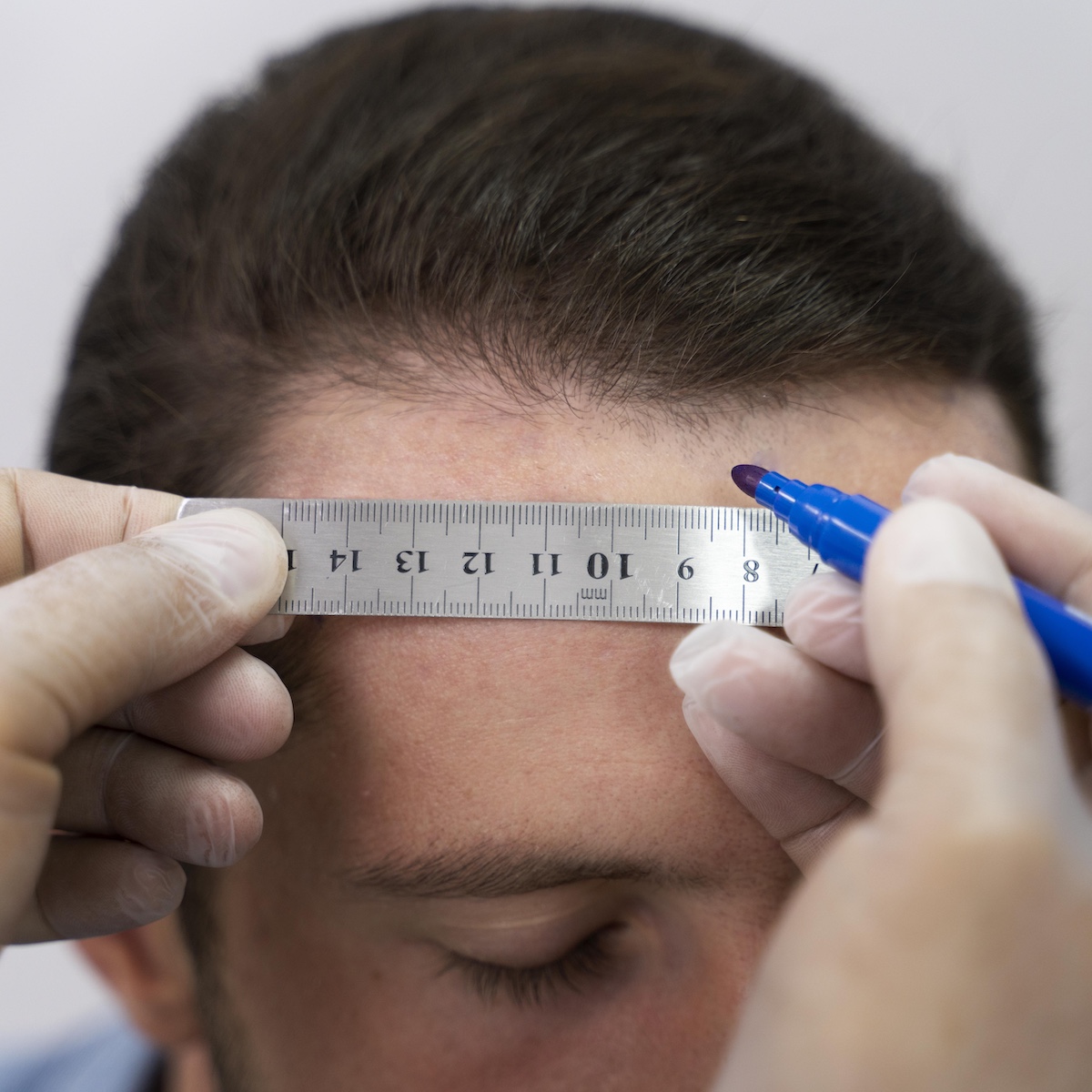
Good clinics start with a video call or in-person assessment that maps your goals to your donor supply.
Surgeons measure hair calibre, density, curl pattern, and the rate of ongoing loss.
They sketch a design that respects future change rather than chasing short-term density.
Technique selection
Most patients receive FUE or DHI. Sapphire blades for site creation are common because they help with precise angles and clean incisions.
FUT is still used selectively when very large graft numbers are needed and a patient accepts a linear scar.
Surgery day choreography
What patients rarely see is the rhythm that protects graft survival. Teams work under magnification, keep grafts cool and hydrated, track time out of the body, and place each unit at the right depth and direction.
This quiet discipline is why high-quality centers report survival in the 90 to 98 per cent range and why density looks honest at 12 months rather than only in the first weeks.
Aftercare that fits real life
Clear washing routines, sun and sweat precautions, and answers on call make the first ten days easier.
Many clinics use simple photo follow-ups at one, three, six, and twelve months, so progress is documented without guesswork.
What truly drives results
Devices attract attention, but skilled hands and smart planning do the real lifting. Hairlines succeed when they match your face and age profile, not a template.
Donor areas look good years later when surgeons pace extraction across zones and avoid overharvesting.
Survival climbs when handling is gentle and timing is tight.
These are technique decisions. Technology supports them, but it does not replace them.
If you meet a surgeon in Istanbul who walks you through angles, depths, density per square centimeter, and donor conservation, you are hearing the language of durability. This is the conversation you want.
Cost efficiency without cutting corners
Lower prices do not have to mean lower standards. In a well-run center the savings come from scale and structure.
High volume builds muscle memory in the team. Logistics improve. Suppliers offer better rates. Clinics can bundle hotels and transfers.
None of this changes the fundamentals of safety.
You should still see sterile fields, see a licensed surgeon in charge, and see a stable team that knows its roles.
What to look for in a clinic
- Surgeon-led design and site creation
- Transparent graft counts and realistic density targets
- Clear statements about average time out of body and storage solutions
- Unedited twelve-month photos in strong light, including close crops of the donor
- Straight answers about complications and revision policies
- Verified licensing, and ideally international accreditation
You do not need to be a specialist to ask these questions. You only need to be persistent because every graft you save today is an option you keep for tomorrow.
🤖 Looking For An Answer?
Ask AI to summarise this post to see if the article answers your questions:
The Tourism Piece, Handled Sensibly
Travel can support recovery if planned with a little care. Most patients schedule one or two quiet days after surgery, then take short walks, light meals, and gentle sightseeing. Hotels near the clinic simplify checkups.
A sunset ferry ride on the Bosphorus is a favorite because it is restful and shaded. Crowded bazaars and long hours in the sun can wait.
For Afro and Curly Hair, Customization Is Key
Curved follicles require angled entry and slower torque during FUE, along with careful punch selection that matches curl diameter.
Implantation has to respect curl direction so the new hair blends with native coils.
Ask to see results on hair like yours and listen for details about how the team adapts.
When these elements are in place, outcomes for textured hair match those for straight hair.
Safety and the red flags to avoid
Turkey’s scale is a strength, but it also attracts operators who cut corners. Be cautious if you notice any of the following.
- The surgeon is absent from planning, site creation, or key parts of the procedure
- Results are shown only in soft lighting or after heavy styling
- Donor extraction is concentrated in a narrow band rather than feathered across zones
- Guarantees promise specific graft survival numbers without context
- Pressure tactics or deep discounts that expire today
If something feels rushed, step back. A flight change is far easier than a repair case.
Where Asli Tarcan Clinic fits in
In a city full of options, some teams have set their reputation on measured planning and steady hands.
At Asli Tarcan Clinic, patients often comment that the first meeting feels like a design session rather than a sales call.
The focus stays on long-term balance, careful handling, and follow-up that is easy to keep.
That approach is typical of how Turkey built its name. Technology is present, but the craft leads.
- Parents Are Prioritising Breathable, Sustainable Fabrics For Children's Seasonal Sleepwear
- Our Homemade Christmas Printables, Made With AI: What Worked, What Didn't, and What I'm Saving for Next Year
- At-Home vs. In-Lounge IV Therapy in the Hudson Valley: Which Makes More Sense?
- Can Passengers Pursue Compensation After a Car Accident?




Timelines and expectations
Most people see new sprouts around month three or four, visible thickening by month six, and a clear picture near the one-year mark.
Coarse hair types can keep maturing a little longer. Shock shedding in the first weeks is normal.
A calm scalp routine, no smoking, good sleep, and sun protection help more than any hack you will find online.





Leave a Reply