

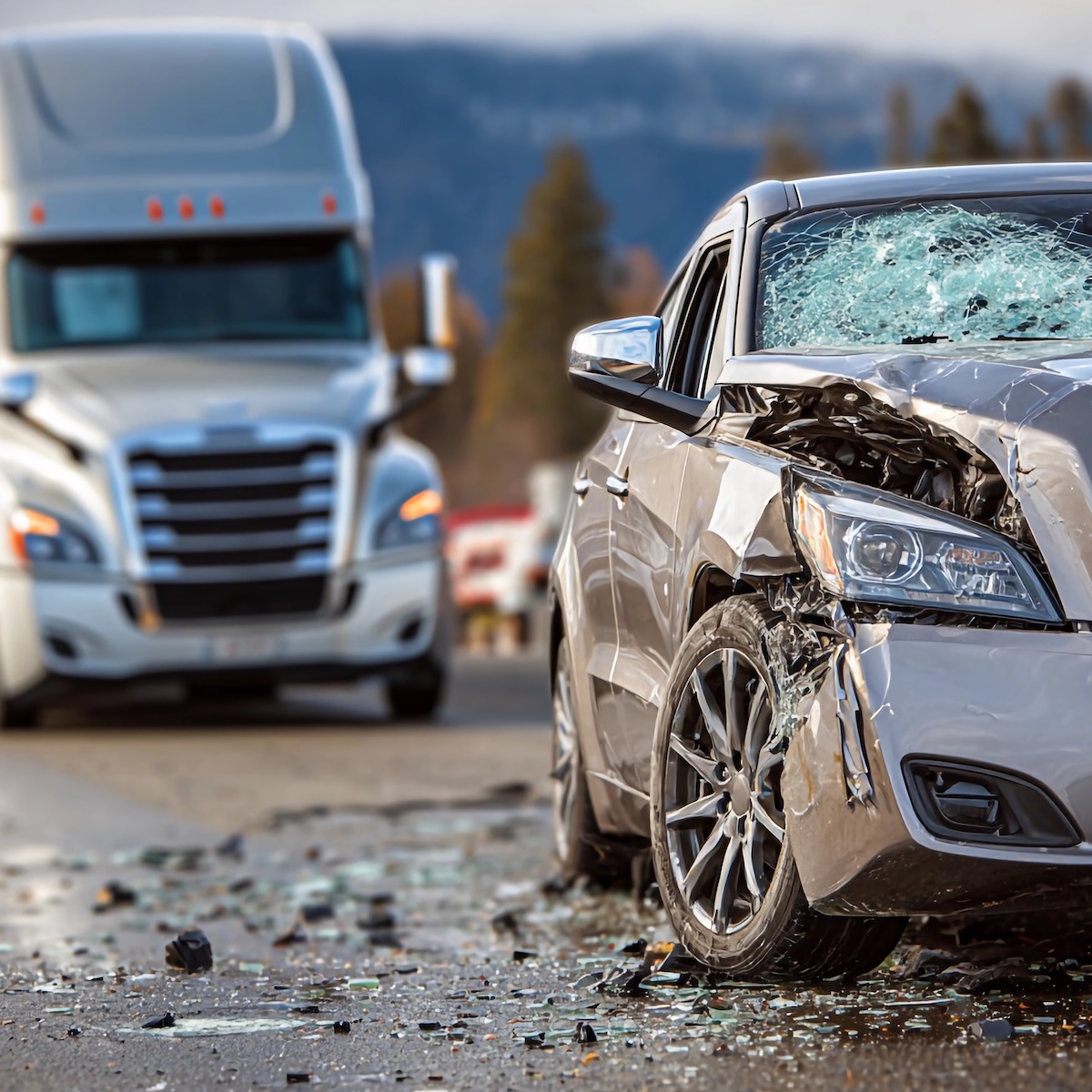
If you have ever driven alongside a loaded tractor-trailer on I-55 or I-20 near Jackson, Mississippi, you know just how small a passenger car can feel next to a massive truck.
After a collision, that size difference can have serious consequences.
Truck accidents are often more complicated than ordinary car crashes because multiple parties may share responsibility, commercial driving regulations may apply, and important evidence can be lost if it is not preserved quickly.
Insurance claims can also take longer to resolve. Understanding these differences can help you know what to document, what steps to take after a crash, and which questions to ask as you navigate the process.
Jump to:
Size and Weight Change the Stakes
A large truck can weigh many times more than a passenger car, and that difference shapes what happens in a crash.
The Insurance Institute for Highway Safety reports that 5,340 people died in large truck crashes in 2024, and 62% of them were passenger vehicle occupants.
Keep the limits in mind: the data are national, come from the Federal Fatality Analysis Reporting System, count deaths only, and define large trucks as anything over 10,000 pounds, so they don't show how serious injuries are in Mississippi crashes.
Even so, the pattern is clear. When a car and a truck collide, the people in the car usually face the greater risk, and serious injuries often mean long recoveries and higher costs.
Families may face time away from work, ongoing therapy, and home changes, all of which make the details of a claim more important.
More Parties May Share Responsibility
In a typical car crash, the question is usually which driver was at fault. After a truck crash, the list can be longer. Depending on the facts, responsibility could involve:
- The truck driver
- The trucking company that employs or contracts the driver
- The owner of the trailer, who may not be the owner of the cab
- The company that loaded the cargo or secured it
- A maintenance provider or parts maker
Each party may have its own insurer and its own lawyers, which can make the process slower.
Sorting out who did what is often the first major task. For example, a driver may work for one company, haul cargo for another and pull a trailer owned by a third, so a single question about “the truck” can have several different answers.
Evidence Can Disappear Quickly
Trucks carry more records than most cars. Event data recorders, electronic logging devices, driver files, maintenance records, dispatch messages and cargo paperwork can all help explain what happened.
Some of this information may be overwritten or discarded on a routine schedule.
That is why many attorneys stress preserving evidence early. If you can, photograph the scene, note the truck’s company name and numbers, and keep records of your medical visits.
Leave formal record requests to a legal professional, who can send preservation letters to the right companies.
Photos and notes you collect yourself can fill gaps later, especially if memories fade.
Federal and State Rules Add Layers
Commercial trucking is regulated more heavily than ordinary driving. Federal rules cover driver qualifications, hours of service, vehicle maintenance, and cargo securement, and a violation may factor into the picture after a crash.
Hours-of-service limits, for instance, exist to reduce driver fatigue, so logs can matter when fatigue is suspected.
State law matters too. Mississippi generally follows a comparative fault approach, and most personal injury claims have a filing deadline, commonly three years, but you should confirm how these rules apply to your case.
Local advice can help here. If you are searching for a truck accident attorney in Jackson, Maggio Law explains possible defendants, the records that can matter, and the federal trucking rules that may apply.
Use descriptions like this to prepare questions, not to make a decision.
Insurance Claims Are Often Bigger and Slower
Truck claims can involve higher medical bills, longer recoveries and several insurance policies.
An insurer may contact you quickly, sometimes asking for a recorded statement or offering a fast settlement before the full extent of your injuries is clear.
A few cautions can protect you:
- Be polite, but share only basic facts until you understand your options
- Keep copies of every bill, report and letter
- Avoid signing releases without having them reviewed
- Follow your doctor’s advice so your medical record is complete
Taking your time is not a delay tactic. It is how you avoid accepting less than you may need.
Medical needs after a serious crash can change over weeks or months, and a settlement usually closes the door on later claims.
What to Do After a Truck Crash
If you are in a collision with a commercial truck, a calm order of steps helps:
- Check for injuries and call 911: medical care and a police report come first
- Move to safety if you can: stay out of traffic and turn on hazard lights
- Document the scene: take photos of vehicles, damage, road conditions and any company markings
- Get contact details: collect names, insurance information and witness numbers
- See a doctor promptly: some injuries appear hours or days later
- Speak with a lawyer: ask about deadlines and evidence before talking at length with insurers
Even small steps taken early can make the rest of the process smoother. If you are too hurt to do any of this, ask a relative or friend to help, and focus on getting care.




Conclusion
Truck accidents are more complicated than car accidents because of the size of the vehicles, the number of parties who may share responsibility, the amount of evidence involved, the extra layer of regulation, and the scale of insurance claims.
The best response is a calm one: get medical care, document what you can, be careful with insurers, and ask a licensed attorney about deadlines and next steps.
With good information and steady support, you can make clear decisions even when a crash feels overwhelming.





Leave a Reply