

Italy is known for its beautiful architecture, celebrated cuisine, fashion and design. Yet some of the country’s most meaningful cultural stories are found in the quieter places: a glass workshop in Murano, a violin maker’s studio in Cremona, a ceramicist’s workspace in Sicily or a paper mill in Fabriano.
These are places where knowledge is still passed from one generation to the next. And these are often through years of observation, practice and apprenticeship.
This living tradition is at the heart of Italian craftsmanship. Across the country, artisans continue to work with materials such as glass, leather, wood, clay, metal, stone and textiles, combining time-honoured techniques with their own creative interpretation.
For travellers interested in exploring Italy beyond its famous landmarks, an artisan tour is a perfect way to do so.
Jump to:
What Makes Italian Craftsmanship So Special?
Italian craftsmanship is not just about producing beautiful objects. It is about the relationship between the maker, the material and the technique.
Many Italian crafts have developed around local resources and regional traditions. The outcome is an extraordinary variety of styles from one part of the country to another.
Italy’s official tourism platform highlights everything from Tuscan goldsmithing and Sicilian majolica to Sardinian basket weaving, Venetian ceramics and traditional musical instruments.
That regional character is important. A handmade object can carry clues about the landscape, history and community where it was created.
The clay, stone, wood or textile may be locally sourced, while patterns and techniques can reflect centuries of regional influence.
Protecting those skills means encouraging artisans to continue practicing their trades and passing their knowledge to future generations.
Glassmaking: The Art of Fire and Patience
Few examples of Italian craft are as instantly recognizable as Venetian glass.
On the island of Murano, glassmaking has developed into an internationally renowned artistic tradition.
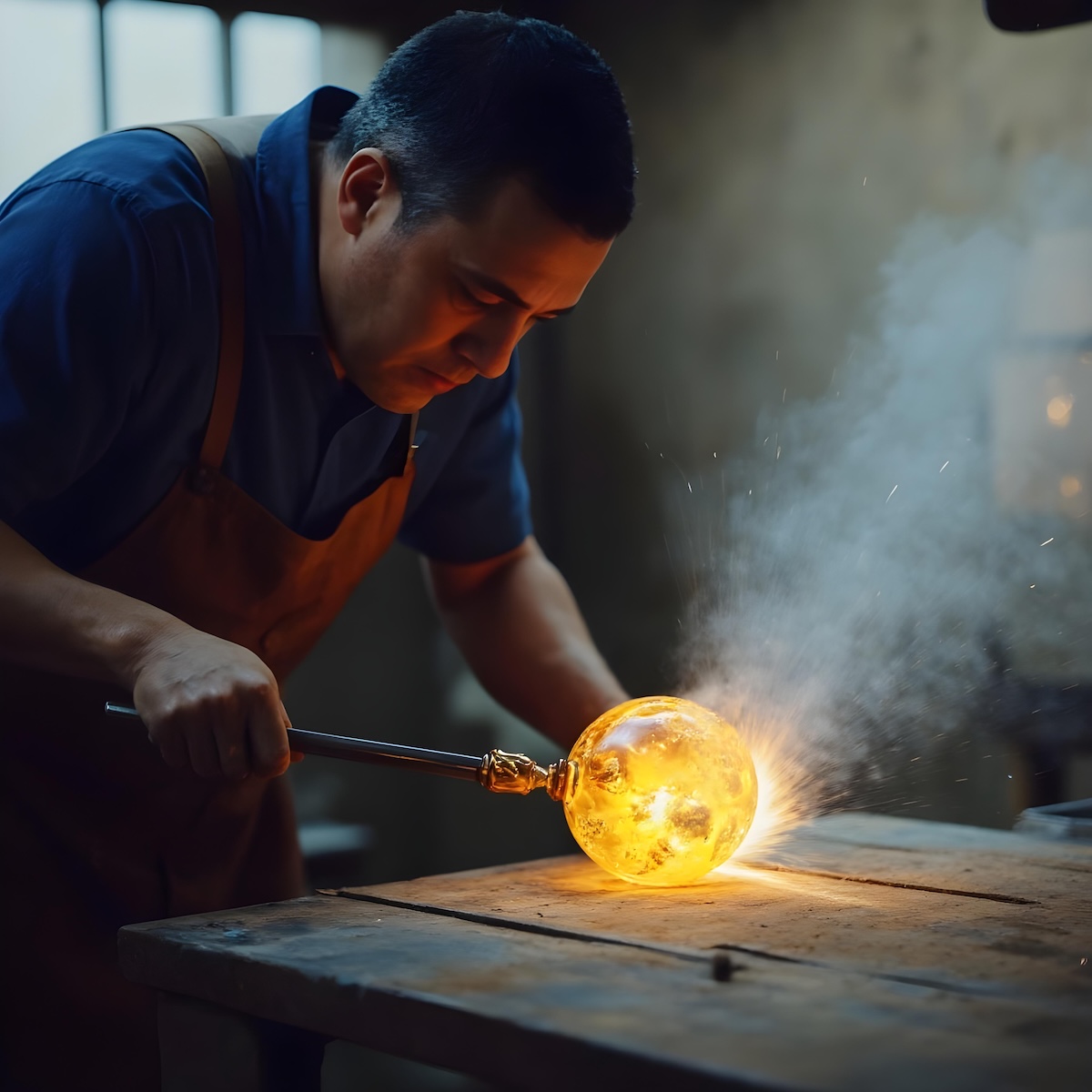
Glassmakers work with intense heat and carefully controlled movements to transform molten material into delicate vessels, sculptures, beads and decorative pieces.
The art of glass beads is particularly significant. UNESCO added the traditional practice to its Representative List of the Intangible Cultural Heritage of Humanity in 2020.
The Italian tradition includes specialized techniques such as a lume beadmaking using a blowtorch and da canna beads created by working hollow glass canes.
What makes this tradition especially fascinating is the specialization involved. Different artisans may contribute different stages of the process, demonstrating how craftsmanship can be a collective form of knowledge as much as an individual skill.
For visitors, watching an artisan work can completely change the way a handmade glass object is perceived.
What may appear simple in a shop can represent years of experience and an extraordinary understanding of heat, timing and material.
Ceramics and Majolica Across Italy
Ceramics are another important part of Italy arts and crafts, with distinctive traditions found in several regions.
Sicilian majolica, for example, is known for its vibrant colours and decorative patterns. Elsewhere, ceramic traditions have developed their own shapes, glazes and visual language, often influenced by local history and Mediterranean culture.
Italian ceramics also demonstrate an important principle of traditional craft: usefulness and beauty need not be separated. Plates, bowls, tiles and household objects can be practical while also functioning as works of art.
Italy’s national tourism organization includes ceramics among the country’s major craft traditions, alongside mosaic, stonework, glassmaking and other regional specialties.
Cremona and the Tradition of Violin Making
In Cremona, craftsmanship takes a very different form.
The city has become synonymous with traditional violin making, a discipline requiring extraordinary precision. Makers construct violins, violas, cellos and other instruments by carefully shaping and assembling individual components.
Traditional violin craftsmanship in Cremona was inscribed on UNESCO’s Representative List of the Intangible Cultural Heritage of Humanity in 2012. UNESCO describes the tradition as being renowned for the traditional making and restoration of string instruments.
The importance of the craft extends beyond the finished instrument. A Cremonese violin reflects the maker’s understanding of wood, acoustics, proportions and finishing techniques.
Each instrument can therefore carry the unmistakable character of the person who made it.
Paper, Leather, Textiles and Metalwork
The story of traditional Italian crafts extends far beyond the most famous examples.
Fabriano, in the Marche region, has a long history of papermaking. UNESCO recognises the city as a Creative City for Crafts and Folk Art.
Noting its history as a centre for paper production as well as blacksmithing, pottery and weaving. Its craft traditions date back centuries.
Leatherworking has also played an important role in Italian artisan culture, particularly in Tuscany. Skilled makers transform hides into bags, shoes, belts and other goods, with attention paid to cutting, stitching, finishing and ageing.
Metalworking and goldsmithing offer another window into Italy’s artisan heritage. From jewellery to decorative objects, these traditions show how technical precision can become an expressive art form.
The variety is one of the most compelling aspects of Italian craft. Travelers can encounter completely different materials and techniques simply by moving from one region to another.
Why Traditional Crafts Still Matter
In an age of mass production, handmade objects have a different kind of value.
Their appeal is not necessarily that they are flawless. In many cases, it is the opposite. Small variations can reveal the human hand behind the work. The object has a maker, a process and a story.
There is also a cultural dimension. When traditional skills disappear, communities can lose more than a particular method of making something. They can lose knowledge that has been built up over generations.
UNESCO's approach to safeguarding traditional craftsmanship focuses on keeping skills and knowledge alive by supporting artisans and encouraging transmission to future generations.
This makes responsible cultural tourism particularly valuable. Visiting an artisan workshop, learning about a technique or purchasing directly from a maker can help create a meaningful connection between travelers and traditional craft communities.
Experiencing Italy Through Its Artisans
For travelers, the best way to understand Italian craftsmanship may be to see it happening.
An artisan tour can introduce visitors to the people behind the objects and provide an opportunity to understand the work involved.
Instead of seeing a finished ceramic piece or glass sculpture only in a shop, travelers can observe the tools, materials and techniques used to create it.
This is also where craft tours Italy experiences can offer something different from conventional sightseeing.
They can take travelers into workshops and creative spaces where local traditions remain part of everyday life.
For Made With Love Artisans, this human connection is central to the experience.
The brand’s work focuses on meeting artisans and exploring the stories behind traditional techniques, including master glassmakers in Venice and generations of makers who continue to pass their skills down to younger family members.
Keeping the Craft Alive
Italian craftsmanship survives because people continue to practice it.
A workshop may look small compared with a modern factory, but the knowledge contained within it can be immense.
Techniques may have been refined over decades, while the broader tradition may reach back hundreds of years.
That is why exploring Italy’s craft heritage is about more than finding beautiful souvenirs. It is about recognizing the people, patience and expertise behind them.
- Parents Are Prioritising Breathable, Sustainable Fabrics For Children's Seasonal Sleepwear
- Our Homemade Christmas Printables, Made With AI: What Worked, What Didn't, and What I'm Saving for Next Year
- At-Home vs. In-Lounge IV Therapy in the Hudson Valley: Which Makes More Sense?
- Can Passengers Pursue Compensation After a Car Accident?




From Murano glass and Sicilian ceramics to Cremonese violins, Fabriano paper and Tuscan leatherwork, Italian craftsmanship remains a vibrant part of the country’s cultural identity.
These traditions remind us that creativity does not always begin with a blank page.
Sometimes, it begins with a technique handed down by someone who learned it from someone before them.
For travelers seeking a deeper experience of Italy, discovering its artisans offers precisely that: a chance to see the country through the hands of the people who continue to make its cultural heritage tangible.





Leave a Reply