

That first dent hurts. Whether it's from a runaway shopping cart, a careless door in a parking lot, or a sudden hailstorm, the damage can feel frustratingly personal. Your first thought might be of a traditional body shop, imagining a multi-day process involving sanding, body filler, and repainting. This conventional approach can be expensive and time-consuming, and it permanently alters your vehicle's original factory finish, which can affect its resale value.
Fortunately, technology has created a better option for most common dents. Paintless Dent Repair, or PDR, is a technique where technicians use specialized tools to massage the metal back to its original form from behind the panel. Because there is no sanding, filling, or painting, the process is faster and often more affordable.
Understanding the factors that influence the paintless dent removal cost is the first step to deciding on the right repair for your vehicle. The price isn't arbitrary; it's a direct reflection of the skill and time required to work the metal without cracking the paint.
Quick answer: The cost of paintless dent repair is determined by the dent's size, depth, and location on the vehicle. A simple, quarter-sized door ding might cost between $75 and $150.
Widespread hail damage can range from $2,500 to over $10,000. PDR is almost always less expensive than traditional bodywork because it avoids the high material and labor costs of repainting.
Jump to:
How Is PDR Pricing Actually Calculated?
The final cost is a function of a dent's size, depth, and location, combined with the type of metal panel being repaired.
Technicians do not just guess at a price. Most use a standardized pricing matrix that cross-references the diameter of a dent (dime, nickel, quarter, half-dollar) with its sharpness or depth.
A shallow, quarter-sized dent might be a baseline price, but a sharp, deep dent of the same size could cost significantly more.
The deeper the impact, the more the metal has been stretched, requiring more time and skill to gently work it back into place without disturbing the paint.
A good rule of thumb is that if a dent is deeper than its diameter, it becomes a much more complex repair. The metal is stretched thin, increasing the risk of the paint cracking during the process.
Where the dent is located is just as important as its size. A dent in the middle of a large, flat panel like a hood is the most straightforward repair because a technician has easy access to the underside.
However, a dent on a curved body line, near the edge of a panel, or over a reinforced brace is a different challenge.
Access might be limited, requiring the careful removal of headliners, taillights, or interior panels, which adds labor time to the job. Recreating a factory body line perfectly requires a high level of precision.
The material of the panel itself also affects the cost. Most vehicles use steel panels, which have a good "memory" and respond well to PDR tools.
However, many newer cars use aluminum for hoods, trunks, and doors to save weight. Aluminum is lighter but has less memory than steel. It's stiffer and more prone to cracking if not handled correctly.
Repairing an aluminum panel requires specialized tools and a more delicate, time-consuming process, which is reflected in a higher price.
Hail damage is priced differently from single door dings. Instead of a per-dent price, technicians typically assess each panel and count the number of dents within a certain size range.
A hood with 50 small dents is a much larger project than one with a single, large dent. The sheer volume and complexity of hail repair often make it a multi-day job. The cost difference between PDR and conventional repair for hail can be substantial.
What Should You Look for in a PDR Provider?
You should evaluate a provider based on their portfolio of work, their written warranty, and their transparency about the repair process.
The most direct evidence of a technician's skill is their past work. Ask to see a portfolio of before and after photos of repairs similar to yours.
Pay close attention to the lighting. Professional PDR technicians use specialized lights with reflective lines to see the finest details of a dent.
In the "after" photos, these lines should be perfectly straight as they pass over the repaired area. Any waviness indicates the dent is not fully removed. This visual proof is more telling than any verbal claim of quality.
Beyond photos, the questions you ask can reveal a lot about a provider's professionalism. Start with these:
1. What is your process for accessing the back of the panel? A skilled technician will explain how they plan to remove interior trim, lights, or liners to gain access. Be cautious of anyone whose first suggestion is to drill a hole.
2. Do you offer a written lifetime warranty? The industry standard is to guarantee that the repaired dent will not reappear and that the paint will not chip or crack as a result of the work. Get this promise in writing.
3. Can you show proof of business and garage keepers insurance? This protects your vehicle from damage or theft while it is in the shop's care.
A detailed, written estimate is also a critical evaluation tool. The Federal Trade Commission (FTC) advises consumers to get a signed repair order with a clear cost breakdown before any work begins. The estimate should identify the panels to be repaired and the severity of the damage, not just a single lump-sum price. This protects you from surprise charges and creates a clear record of the agreed upon work.
Be wary of any shop that offers to "waive" or "absorb" your insurance deductible. While it sounds like a good deal, this can sometimes involve inflating the repair bill sent to the insurer, which may constitute insurance fraud. A reputable shop will be transparent about how they handle deductibles and insurance billing.
Finally, watch for red flags. High-pressure sales tactics are a major one. You should never feel rushed into a decision.
Another is a lack of a permanent physical address. After a major hailstorm, some out-of-state "hail chasers" may set up temporary shops.
They might do subpar work and be gone before you notice any issues, leaving you with no recourse for a warranty claim. A stable, local presence is a strong indicator of accountability.
What Is Actually Happening to the Metal During a PDR Repair?
A paintless dent repair is a process of controlled metal shaping (background) that restores a panel's original form by leveraging its structural memory. It is not simply "popping" a dent out.
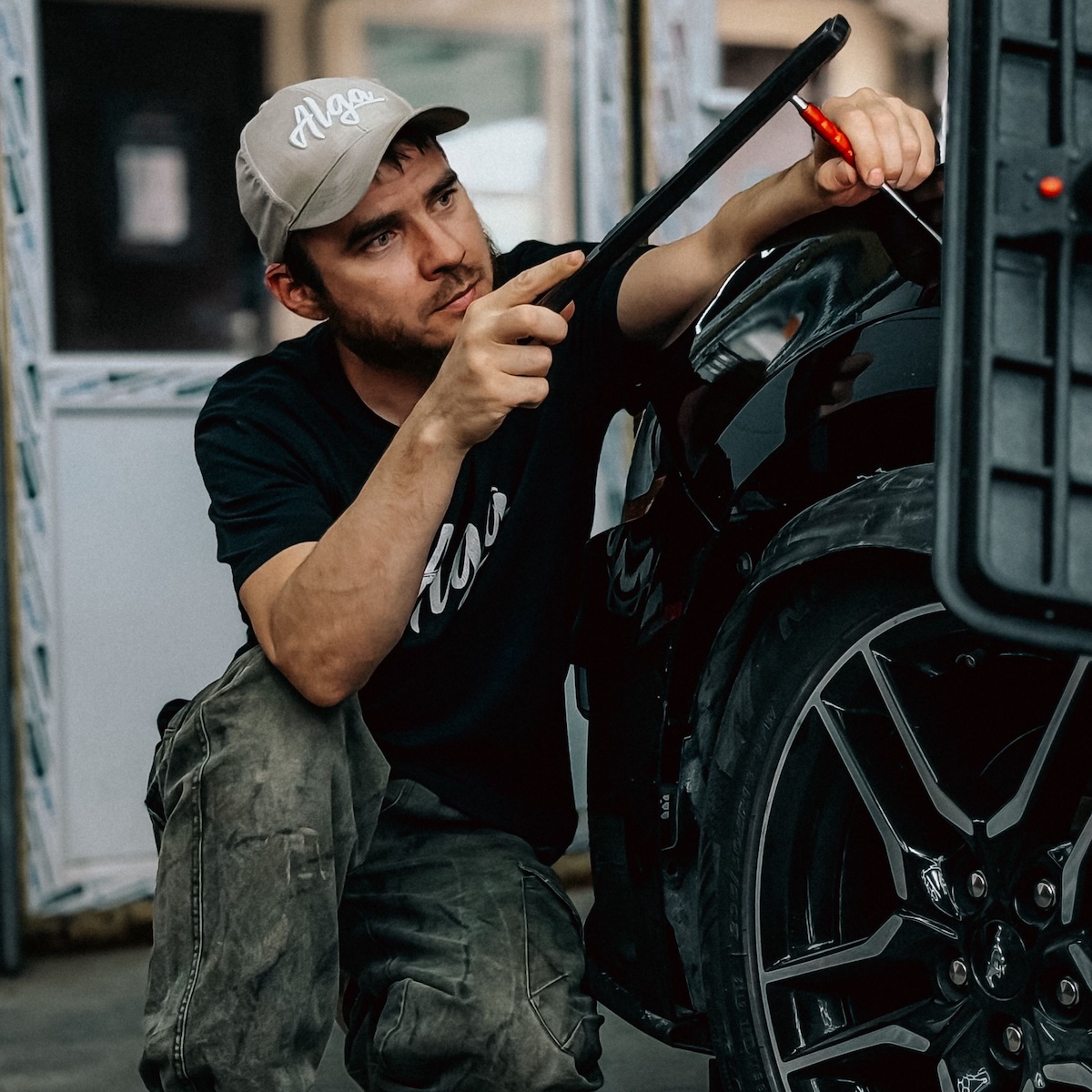
Instead, a technician uses specialized tools to apply hundreds of precise, gentle pushes to the backside of the panel, slowly massaging the metal back into its pre-damaged position.
The process begins with a "read" of the dent. Technicians use special PDR lights that cast parallel lines of reflection onto the vehicle's surface. A dent distorts these lines, making them appear curved or pinched.
The technician's goal is to manipulate the metal until those reflected lines are perfectly straight again, which indicates the surface is perfectly flat.
This method allows them to see microscopic imperfections that are invisible to the naked eye.
The tools used are as important as the technique. They are not blunt instruments. PDR technicians use a wide array of steel and carbon fiber rods, each with a different length, angle, and tip shape.
A soft, rounded tip might be used to gently lift the majority of a dent, while a sharper, more precise tip is used for the final detail work around the edges.
The technician starts pushing on the outer edges of the dent, gradually relieving the stress in the metal and shrinking the dent's perimeter. The final pushes are in the very center, or lowest point, of the original impact.
The most common mistake an inexperienced technician makes is "over-pushing," which creates a high spot or a tiny pimple in the metal. Reversing this is far more difficult than fixing the original dent. An over-pushed spot has stretched the metal beyond its elastic limit, and correcting it can sometimes damage the panel permanently.
The type of metal is a critical factor. Most car panels are made from high-strength steel, which has excellent "memory" and wants to return to its original stamped shape.
Aluminum, used for hoods and doors on many newer vehicles to reduce weight, is a different challenge. It is lighter and stronger than steel but has less elasticity and memory.
It is more prone to cracking if pushed too quickly or too far. Repairing aluminum requires a slower, more deliberate technique and often specialized tools, which is why PDR on an aluminum panel typically costs more.
FAQ'S
Yes, for two main reasons. It preserves your vehicle's original factory paint, which is more durable than any aftermarket repaint and is a major factor in resale value. Second, because no body fillers or paint are used, a PDR repair typically does not appear on a vehicle history report like a CarFax, which helps you avoid a "diminished value" claim against your car.
PDR is not an option if the paint is already cracked, chipped, or deeply scratched, as the process focuses on the metal underneath. Dents on the very edge of a panel or on a heavily braced structural pillar are often poor candidates due to limited tool access. Finally, if the metal is severely stretched or sharply creased, it may have lost its "memory" and will not return to its original shape without conventional bodywork.
In most cases, yes. Insurance companies typically prefer PDR for hail damage and other qualifying dents because it is significantly faster and more cost-effective than traditional body and paint work. They often list PDR as the primary method of repair on estimates. The process of filing a claim is the same as for any other type of vehicle damage.
Those kits use suction cups or glue tabs that only pull on the surface of the dent. They cannot perform the precise, gradual pushes from behind the panel that are necessary to relieve stress and properly reshape the metal. Using a DIY kit often results in an incomplete repair, a high spot from over-pulling, or even cracked paint, which can make a professional repair more difficult and expensive later.
The timeline depends entirely on the damage. A single, simple door ding can often be repaired in under an hour. Extensive hail damage is a much more involved process, potentially taking two to four days to meticulously repair hundreds of dents across multiple panels. This is still significantly faster than traditional bodywork, which can take weeks due to sanding, filling, priming, and painting.
Making the Final Repair Decision
Ultimately, the cost of paintless dent removal is a direct reflection of the skill required to perform it correctly. The price is not just for making a dent disappear.
It is for the meticulous process of restoring a panel to its original condition without damaging the factory paint, which is your vehicle's most durable and valuable finish.
Understanding this distinction is the key to evaluating whether a quote is fair. A low price from an unskilled technician can easily lead to a worse outcome, like cracked paint or a stretched panel.
- Parents Are Prioritising Breathable, Sustainable Fabrics For Children's Seasonal Sleepwear
- Our Homemade Christmas Printables, Made With AI: What Worked, What Didn't, and What I'm Saving for Next Year
- At-Home vs. In-Lounge IV Therapy in the Hudson Valley: Which Makes More Sense?
- Can Passengers Pursue Compensation After a Car Accident?




When you weigh your options, the most critical factor is not the price itself, but the evidence of quality. A detailed estimate, a clear portfolio of past work, and a written lifetime warranty are non-negotiable.
These elements demonstrate a provider’s commitment to a lasting, invisible repair.
The goal is to return your vehicle to the state it was in before the damage occurred, without leaving any sign that a repair ever took place.
Your final choice should be guided by a simple principle: prioritize the method that best preserves your vehicle’s long-term value. A successful PDR job does more than just fix a dent.
It protects your investment by maintaining the integrity of the original materials and avoiding a negative entry on your vehicle’s history report.
About the author
Mile High Dents is a paintless dent repair (PDR) specialist based in Denver, Colorado, operating since the late 1980s. The company focuses almost exclusively on hail damage, a common challenge for drivers in the region. Their technicians, many with over 15 years of experience, use specialized tools to repair dents while preserving the vehicle's factory paint finish. Mile High Dents works directly with vehicle owners and their insurance providers to manage the entire repair process from initial estimate to final delivery.





Leave a Reply