

How to Support Kids Moving to Private School highlights the adjustments families face during this big transition.
Many parents look for private school transition tips to help children adapt to new routines, expectations and communities.
Moving from public to private school often means encountering different traditions and academic standards.
Parents may feel proud yet anxious about ensuring their child feels prepared and confident.
Open communication and encouragement help children settle in and embrace opportunities.
Visiting the school together and meeting teachers early can ease first-day nerves.
By exploring support strategies, students' families can create smoother paths to success.
With the right guidance, children can not only adjust but also thrive in their new learning environment.
Jump to:
Understanding the Cultural Shift
One of the first hurdles families encounter isn’t academic but cultural.
Private schools often have long-standing traditions, social rituals, and community expectations that can feel unfamiliar if you’re used to the public school system.
Things like chapel services, honor codes, or even how birthdays are celebrated might not match what your child is used to.
The adjustment is less about memorising rules and more about observing quietly at first.
Encourage your child to notice how classmates interact, how teachers address students, and how much emphasis is placed on formality versus informality.
Let them know it’s normal to feel like an outsider in the beginning. What feels foreign in September can feel second nature by spring.
For parents, it helps to get comfortable asking questions, even the ones that feel basic. If there’s a parents’ association, make use of it.
Those long-time parents often know the small but important details, like which fundraising events really matter or what the unspoken dress code is for school concerts.
The more you learn the rhythms of the place, the less likely your child is to feel like they’re straddling two worlds alone.
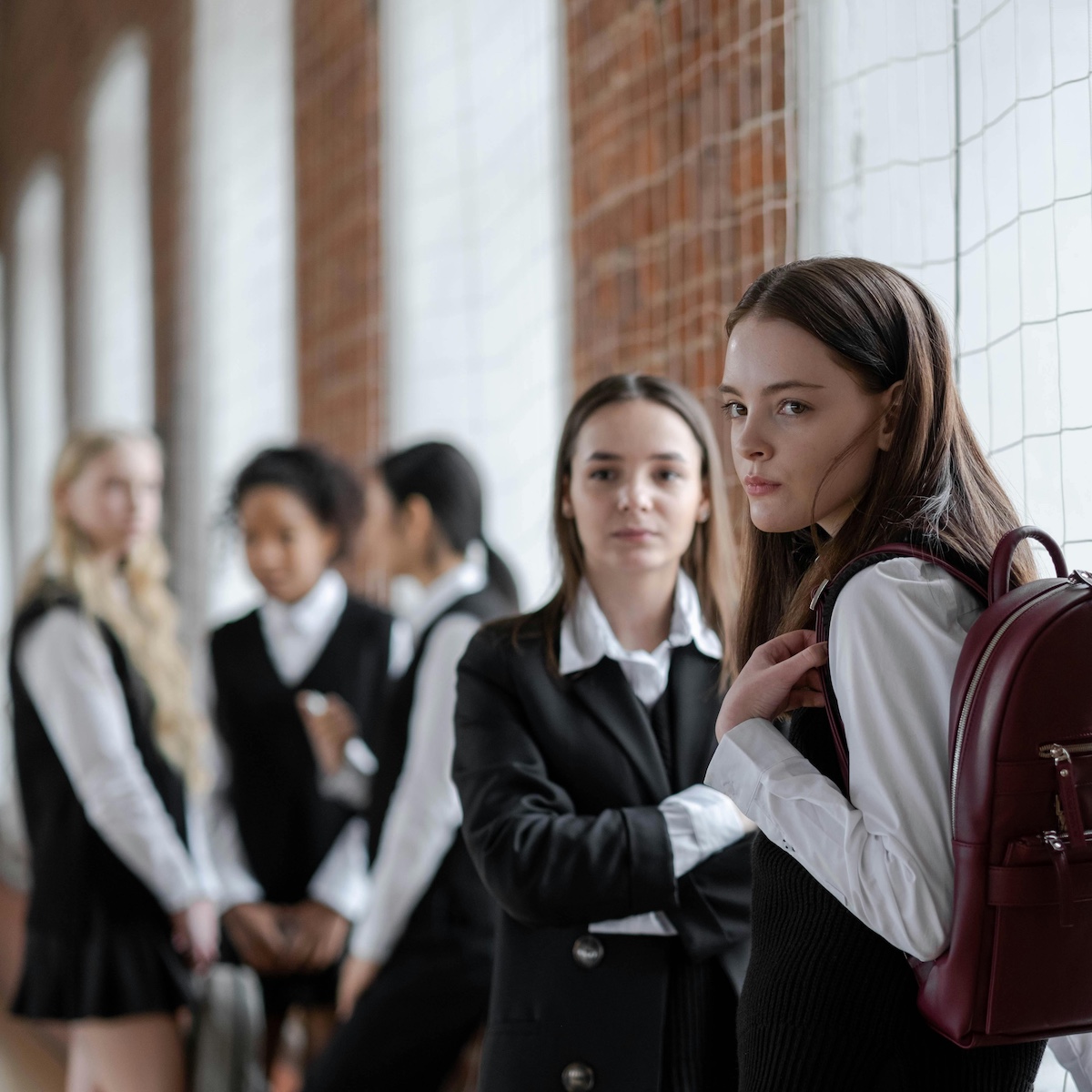
Uniforms, Dress Codes, and the Subtle Social Signals
Public schools may have had casual dress or loose guidelines, but private schools often take uniforms seriously.
At first, it might feel rigid, but uniforms can be a blessing.
They level the playing field, remove the daily outfit debate, and save you from keeping up with the latest sneaker drops.
Still, there are nuances. Some schools are strict about socks, shoes, and hair accessories, while others are flexible.
If your child is still deciding whether they should wear girls uniform pants or maybe they prefer jumpers and skirts, it’s worth trying different options early to see what feels most comfortable.
A child tugging at a too-stiff collar or itching in wool tights is going to be distracted all day, and comfort plays a bigger role in confidence than we sometimes admit.
There’s also the social aspect. Kids notice small details, like how neatly shirts are tucked in or whether a blazer looks cared for.
That doesn’t mean you need to obsess over appearances, but teaching your child to take care of their uniform can make them feel more at ease.
Think of it less as fitting in and more as helping them feel like they belong in the space they’re spending most of their day.
Academics and New Expectations
The biggest adjustment for many children moving into private school is the academic shift.
Private schools often move at a faster pace and may assume students arrive with certain skills already in place.
That doesn’t mean your child is behind; it just means the starting line looks different.
Subjects like Latin, advanced math tracks, or specialised reading programs might pop up earlier than expected.
If your child seems overwhelmed in those first weeks, it doesn’t mean they’re not capable; it means they’re in the process of catching up.
One of the best ways to handle this is to treat the transition like training for a sport. Nobody expects to run a marathon without conditioning, and academic stamina works the same way.
Encourage daily reading, help them practice note-taking, or show them how to manage a planner if that’s new.
The goal isn’t to add pressure but to create small routines that make bigger demands feel manageable.
🤖 Looking For An Answer?
Ask AI to summarise this post to see if the article answers your questions:
When To Consider Extra Support
Even with preparation, some kids need a little more help adjusting. That’s where hiring a tutor can make a difference.
A tutor isn’t a sign your child isn’t “enough,” it’s a safety net during a demanding adjustment period.
A few sessions in math or writing can build confidence that spills into every subject. In many cases, tutoring early on prevents frustration from turning into discouragement.
Some schools even have in-house programs or peer mentoring systems worth exploring.
Whether you bring in outside help or lean on the school’s resources, what matters is making sure your child knows that needing support isn’t unusual.
Framing it as an extra tool, not a punishment, makes it easier for kids to accept.
Parents sometimes worry that tutoring sends the wrong signal, but in reality, it’s no different than getting a coach for a sport or lessons for an instrument.
It’s a way of investing in your child’s growth, and often it only takes a short-term boost to set them on a solid footing.
Finding Their Social Place
If there’s one area that can unsettle both parents and kids, it’s the social transition.
In public school, your child might have had a wide circle, while in private school classes, they can be much smaller, and friendships sometimes feel more tightly knit.
That can make entering midstream intimidating. Encourage your child to approach new classmates with curiosity instead of pressure.
They don’t need to lock in a “best friend” by the end of the first month. Sometimes the friendships that last longest take the most time to form.
Extracurriculars are one of the fastest ways to bridge the gap.
Private schools often offer rich programs in sports, music, theatre, or clubs that create natural opportunities for connection.
If your child joins a choir, debate team, or soccer squad, they’re not just learning skills; they’re joining a community within a community.
That shared experience can smooth over the awkwardness of the first weeks.
At home, make space for honest conversations about how it feels.
Reassure them that loneliness in the beginning isn’t permanent and that their social footing will grow steadier with time.
Parents Navigating Their Own Adjustment
It’s not just kids who feel the shift. Parents often find themselves navigating unfamiliar waters, too.
There may be traditions like parent teas, service committees, or school fundraisers that are treated as more than optional.
If you’re used to a public school environment where volunteer work is casual, this can feel like stepping into another level of expectation.
You don’t need to do everything, but showing up at a few events signals both to your child and the school community that you’re engaged.
The relationships you form with other parents can also be a quiet lifeline when you have questions or just need reassurance that everyone is figuring things out as they go.
It’s worth remembering that your child is watching how you handle the transition.
If they see you approach the new environment with openness and humor, they’ll be more likely to mirror it.
If they see you bristling at every change, they may pick up on that too.
Modelling adaptability is just as powerful as packing the right supplies or checking off the uniform list.
- Parents Are Prioritising Breathable, Sustainable Fabrics For Children's Seasonal Sleepwear
- Our Homemade Christmas Printables, Made With AI: What Worked, What Didn't, and What I'm Saving for Next Year
- At-Home vs. In-Lounge IV Therapy in the Hudson Valley: Which Makes More Sense?
- Can Passengers Pursue Compensation After a Car Accident?




Closing Thoughts
The move from public to private school is more than a change of scenery; it’s a reshaping of routines, expectations, and relationships.
There’s no single formula for making it seamless, but there are ways to make it less daunting.
By staying attentive to culture, comfort, academics, and community, you’re giving your child the best chance to walk into that first year with a sense of readiness.
Transitions always carry bumps, but those bumps often become the very experiences that strengthen resilience.
Private school may feel like unfamiliar territory now, but with time and steady support, it can become a place where your child doesn’t just adapt, but grows in ways you didn’t see coming.





Leave a Reply