

The last hour of the day is rarely peaceful in a house with kids. Lunches need packing, laundry needs moving, and someone always remembers a school project at 8:45 p.m. Then you finally sit down, pick up your phone, and somehow it's midnight.
A calming evening routine doesn't require a major lifestyle change. It's a short, repeatable set of cues that tells your body the day is ending.
Below are simple wind-down ideas you can complete in 15 minutes, plus a careful look at what sleep supplements can and can't offer.
This is general information, not medical advice. If you're pregnant, taking medication, managing a health condition, or considering giving a supplement to a child, talk with a clinician first.

Jump to:
- What A Calming Evening Routine Actually Is
- A Wind-Down You Can Copy Tonight
- Let Your Space Do Some Of The Work
- Food, Drink, And Timing
- Gentle Cues For The Body And Mind
- Natural Sleep Supplements, Without The Hype
- What Folding A Drink Into The Ritual Looks Like
- When To Stop Troubleshooting And Ask For Help
- The Takeaway
What A Calming Evening Routine Actually Is
A wind-down is the buffer before bed, when you stop doing tasks and begin slowing down.
A bedtime routine is the predictable sequence before you get under the covers. It might last 15 to 60 minutes and include a device-free period before lights out.
The reason it matters is simple. Most adults need at least seven hours of sleep, but busy evenings often push bedtime later than planned. The answer usually isn't a complicated system. It's creating a clear stopping point for the day.
A Wind-Down You Can Copy Tonight
Pick the version that matches the night you're actually having. The general order matters more than the length: close the day, lower stimulation, relax your body, quiet your mind, and get into bed.
The 15-minute version
- Set out tomorrow's essentials, such as bags, clothes, and coffee supplies.
- Turn off overhead lights and switch to one lamp.
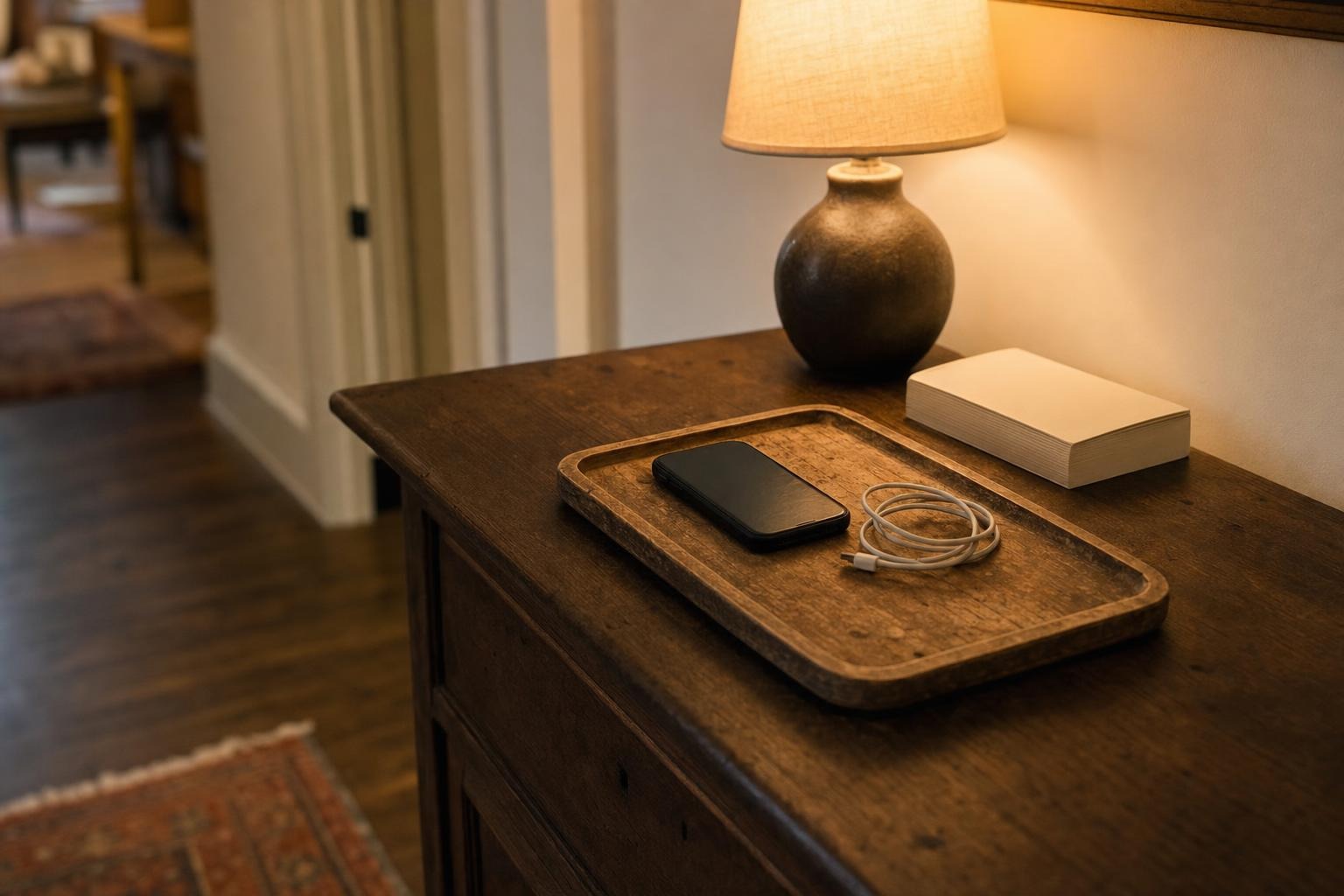
- Park phones on a tray in the hallway or kitchen.
- Wash up, get into bed, and read a few pages of something undemanding.
The 30-Minute Version
- Do a five-minute tidy of one shared space, not the whole house.
- Write a quick brain dump with tomorrow's three main tasks.
- Take a warm shower or bath, then dim the lights.
- Stretch for two or three minutes, then read or listen to something calm.
Try to reserve the bed for sleep rather than email, work, or scrolling. This helps your brain connect being in bed with settling down. Keeping roughly the same bedtime on weekends can also make the routine easier to maintain.
Let Your Space Do Some Of The Work
Environmental changes are helpful because you set them once and continue to benefit from them. Keep the bedroom comfortably cool; many people prefer a temperature near 65°F.
Block outside light with curtains, cover glowing electronics, and dim bright lamps. Light at night can make it harder to feel sleepy, which is a practical reason to put screens away before bed.

If your house or street is noisy, a fan or white noise machine may soften sudden sounds. You can also build a small nightstand kit so you don't have to search for anything: a book, an eye mask, water, and lip balm. A two-minute tidy at the end of the evening can make the room feel calmer without turning bedtime into another cleaning session.

Food, Drink, And Timing
Caffeine can linger longer than expected, so an afternoon cutoff is a reasonable starting point. Large meals close to bedtime may make lying down uncomfortable. Alcohol can also interrupt sleep later in the night, even if it initially makes you feel drowsy. If you're genuinely hungry, a light snack is usually more comfortable than a full meal shortly before bed.

A warm bath or shower an hour or two before bed is also worth trying. Your body cools afterward, and that change can become a familiar signal to settle down. It's also one of the easier evening habits to include in a family routine.
Gentle Cues For The Body And Mind
Paced breathing is a simple option that requires no equipment. You can try the 4-7-8 pattern: inhale for four counts, hold for seven, and exhale for eight.
Four rounds are enough. If counting or holding your breath feels uncomfortable, simply make each exhale a little longer than the inhale for a couple of minutes.
A short stretch may help after a day of sitting, standing, or carrying children. Two or three gentle movements are enough, such as a forward fold, an easy seated twist, or bringing your knees toward your chest while lying down. Stop if a movement causes pain.
Then give your mind somewhere to land. Write down tomorrow's main tasks, three things that went well, or one concern you want to revisit in the morning.
The point isn't to force a positive mood. It's to put unfinished thoughts somewhere other than your head.
Natural Sleep Supplements, Without The Hype
Start with the regulatory reality. The FDA doesn't approve dietary supplements for safety or effectiveness before they're sold. Third-party quality marks, such as USP Verified, can indicate that a product contains the listed ingredients, but they don't prove that it will improve sleep.
Read labels closely, buy from a seller you can identify, and avoid assuming that a product is low-risk simply because it's described as natural.
An optional commercial format within natural sleep supplements is a caffeine-free sachet powder stirred into warm water; check its current price and label before buying.
For magnesium, the National Institutes of Health sets an adult upper limit of 350 mg per day from supplements, unless a clinician recommends otherwise. Higher amounts can cause digestive side effects.
Evidence for chamomile as a sleep aid remains inconclusive. Melatonin appears relatively safe for short-term use by many adults, but its long-term safety is less certain.
Be especially careful with children. The American Academy of Sleep Medicine advises parents to consult a healthcare professional before giving a child melatonin. Supplement contents can also vary between products, so this should be a clinical conversation rather than an impulse purchase.
Common options include magnesium drink mixes, tart-cherry-based drinks, caffeine-free herbal blends, plain tea, and aroma-based rituals.
Products such as PurQ Night Time Restore fit into the evening-blend category. Treat any supplement as an optional addition after your basic sleep habits are steady, not as the foundation of your routine.
What Folding A Drink Into The Ritual Looks Like
For some people, making a warm drink becomes the cue to slow down; bedtime relaxation tools can offer other low-stimulation ideas. If you're exploring natural sleep supplements as part of that ritual, one option is a caffeine-free powder stirred into warm water while the house grows quiet.

PurQ Night Time Restore is one example of this format. Its listed ingredients include Queen Garnet plum, sour cherry, chamomile, lemon balm, and kiwifruit. The single-serve sachets may be convenient for measuring a consistent portion. The directions call for one sachet daily, taken in the evening as part of a wind-down routine.
PurQ is an Australian company that labels its products as foods rather than therapeutic goods and includes a regulatory disclaimer with the product information. Readers outside Australia should consider differences in currency, availability, and shipping. Product details and prices can change, so verify the current label before buying.
Whatever you choose, check with a healthcare professional first if you take medication or manage a health condition. Store all supplements out of children's reach.
When To Stop Troubleshooting And Ask For Help
Routines can only do so much. Talk with a clinician if you snore loudly, gasp or stop breathing during sleep, experience crawling or restless sensations in your legs, wake in panic, or feel severely sleepy during the day despite spending enough time in bed.
The same applies if trouble falling or staying asleep continues for several weeks despite a consistent wind-down. Those patterns deserve a proper evaluation rather than another product.
- Parents Are Prioritising Breathable, Sustainable Fabrics For Children's Seasonal Sleepwear
- Our Homemade Christmas Printables, Made With AI: What Worked, What Didn't, and What I'm Saving for Next Year
- At-Home vs. In-Lounge IV Therapy in the Hudson Valley: Which Makes More Sense?
- Can Passengers Pursue Compensation After a Car Accident?




The Takeaway
Consistency beats complexity. Pick one or two cues you can repeat even on difficult nights, dim the lights, put your phone somewhere else, and let the routine become familiar. Everything else, including supplements, is optional.





Leave a Reply