

The Truth About Skin Tightening and Ultherapy lies in understanding how technology and science work together to create real, lasting results.
Ultherapy, an FDA-cleared skin tightening treatment, uses focused ultrasound energy to stimulate collagen production deep within the skin, lifting and firming areas like the face, neck, and décolletage without surgery or downtime.
Unlike creams or surface treatments, this noninvasive procedure targets the deeper layers of tissue responsible for sagging, delivering gradual, natural-looking improvements over time.
Many patients seeking non-surgical facial rejuvenation appreciate that Ultherapy provides subtle yet noticeable results while maintaining a natural appearance.
In an industry filled with trends and quick fixes, Ultherapy continues to stand out as a proven, science-backed option for those wanting to look refreshed, confident, and youthful.
Jump to:
- Why Skin Loses Firmness
- Topical Approaches: Limited but Helpful
- Energy-Based Devices: The Core of Modern Skin Tightening
- Ultherapy: The Benchmark for Non-Surgical Skin Tightening
- Safety and Considerations
- 🤖 Looking For An Answer?
- Other Technologies and What’s Next
- How Patients Can Choose Wisely
- Final Thoughts
Why Skin Loses Firmness
Skin is a dynamic organ composed of collagen, elastin, and supportive fat that together create smoothness and elasticity.
As early as our 30s, collagen production begins to decline.
Sun exposure accelerates this process by breaking down collagen fibers and triggering pigmentation.
Lifestyle factors such as smoking, stress, and poor diet also contribute to visible laxity.
The result is sagging along the jawline, loose skin under the chin, and creasing around the eyes and mouth.
For some, changes are subtle; for others, they become a significant concern. The demand for non-surgical tightening is backed by numbers.
In 2022, the American Society of Plastic Surgeons recorded more than 420,000 nonsurgical skin tightening procedures in the United States, a 22% increase compared to 2017.
Much of this growth came from energy-based devices like radiofrequency and ultrasound, reflecting patient interest in lifting options without incisions.
Topical Approaches: Limited but Helpful
Many over-the-counter creams and serums claim to tighten skin. Ingredients like retinoids, peptides, and antioxidants can improve surface texture, stimulate mild collagen renewal, and enhance hydration.
While these are valuable for skin health, their tightening effect is modest and temporary.
They cannot reach the deeper layers where true structural changes are needed.
Medical-grade topicals prescribed by dermatologists may offer stronger results, particularly retinoids and growth factor serums.
Still, they serve best as supportive care rather than stand-alone solutions for skin laxity.
Energy-Based Devices: The Core of Modern Skin Tightening
The most meaningful advances in this field have come from energy-based devices that stimulate collagen in the deeper dermis.
These technologies use different forms of energy, but the principle is the same: create controlled injury that prompts the body to heal itself with new collagen and elastin.
Radiofrequency (RF)
Devices that deliver radiofrequency energy heat tissue beneath the surface, contracting existing collagen fibers and triggering new production.
Treatments are generally comfortable and require minimal downtime. Results are gradual and subtle, making RF a good option for early laxity.
Laser and Light Devices
Certain fractional lasers also create tightening by delivering precise energy that remodels collagen. These treatments can improve both tone and texture, often addressing pigmentation and fine lines at the same time.
High-Intensity Focused Ultrasound (HIFU)
This category has drawn the most attention in recent years because it penetrates deeper than RF or lasers.
By focusing ultrasound energy into the supportive layers of the skin, HIFU devices can target the same tissue planes addressed in surgical facelifts, but without incisions.
Ultherapy: The Benchmark for Non-Surgical Skin Tightening
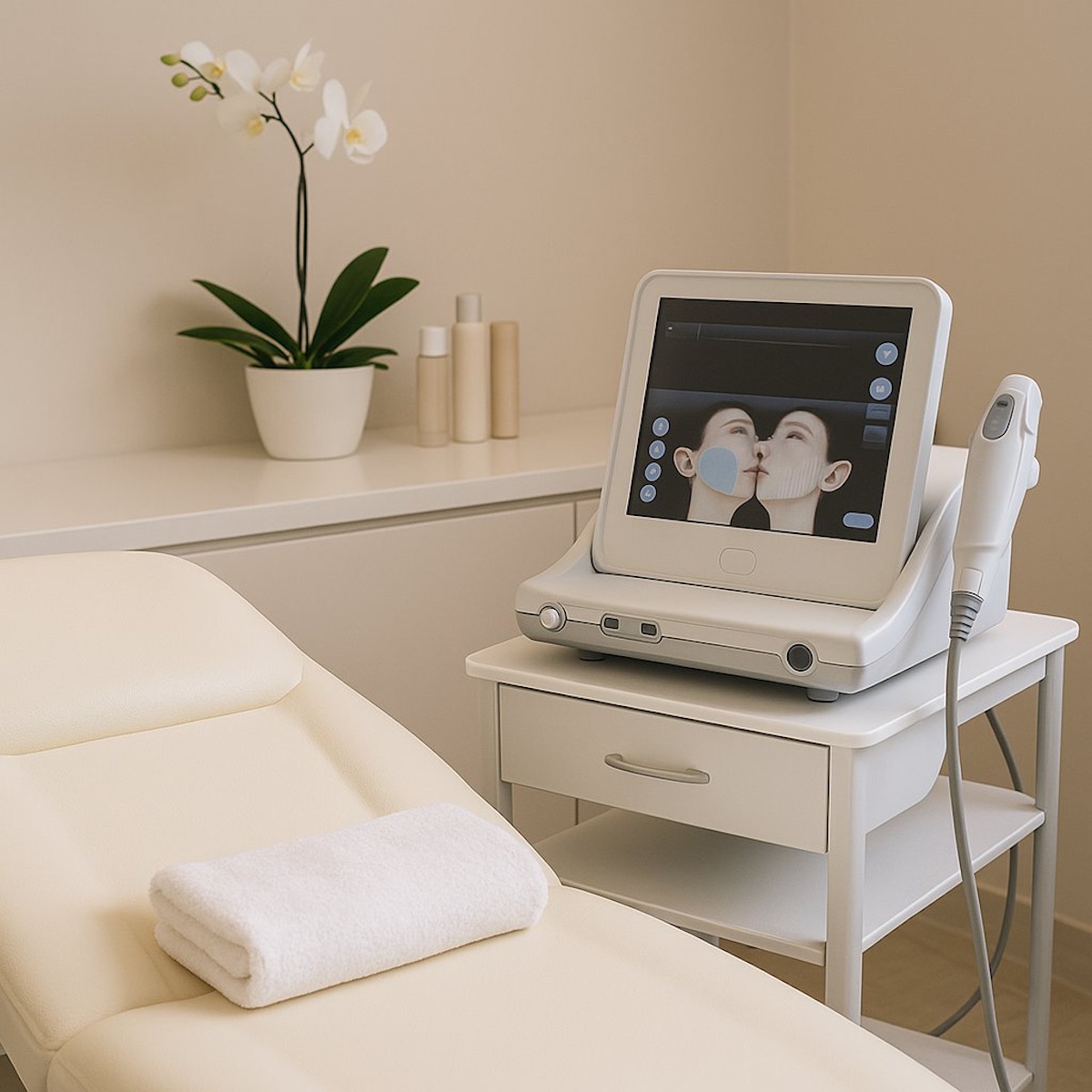
Among HIFU devices, Ultherapy holds a unique place as the only non-invasive skin tightening treatment cleared by the FDA to lift skin on the neck, chin, brow, and improve lines and wrinkles on the décolletage.
Clinical studies confirm that Ultherapy delivers focused ultrasound energy to precise depths, stimulating new collagen production where it matters most.
Treatments take 30 to 90 minutes depending on the area, and while some patients see an initial tightening effect, full results typically emerge over two to three months as new collagen forms.
Improvements may last over a year, with many patients repeating treatment annually to maintain results.
As awareness of non-invasive lifting grows, patients are increasingly asking about Ultherapy skin tightening as a trusted option backed by strong clinical validation.
Safety and Considerations
Because Ultherapy and other energy-based devices work below the surface, safety depends heavily on provider expertise.
Improper technique can lead to ineffective results or, rarely, complications like nerve irritation.
Choosing a licensed provider who has specific training in these devices is critical.
Most patients tolerate the procedure well, though temporary redness, swelling, or tenderness can occur. Unlike surgery, there is no recovery time, which makes it especially attractive for people with busy schedules.
🤖 Looking For An Answer?
Ask AI to summarise this post to see if the article answers your questions:
Other Technologies and What’s Next
The field is not static. Newer RF microneedling devices combine heat with controlled mechanical injury for even more collagen stimulation.
Researchers are also exploring injectable biostimulators that trigger skin thickening and tightening over time.
While not direct competitors to HIFU, these treatments can be combined for comprehensive results.
Globally, different versions of HIFU devices are already in use, some with varying names and regulatory clearances.
The U.S. market remains cautious, with the FDA granting approval only after robust clinical trials.
Patients should be wary of devices promoted overseas but not cleared in America.
How Patients Can Choose Wisely
The growing number of treatments can feel overwhelming.
Patients should start with a consultation to assess the degree of laxity, skin type, and expectations.
Early laxity may respond well to RF or fractional laser treatments, while more pronounced sagging may be better addressed with HIFU, like Ultherapy.
Surgery remains the most effective for advanced laxity, but many patients prefer to delay or avoid it.
An experienced provider will explain what each technology can and cannot do, ensuring patients do not fall for unrealistic claims. Combining treatments with good skincare and sun protection helps extend the benefits.
- Parents Are Prioritising Breathable, Sustainable Fabrics For Children's Seasonal Sleepwear
- Our Homemade Christmas Printables, Made With AI: What Worked, What Didn't, and What I'm Saving for Next Year
- At-Home vs. In-Lounge IV Therapy in the Hudson Valley: Which Makes More Sense?
- Can Passengers Pursue Compensation After a Car Accident?




Final Thoughts
Skin tightening is no longer a vague promise from a cream jar. It has become a legitimate, evidence-based field where energy-based devices can deliver real, measurable improvements.
Among them, Ultherapy stands out as the FDA-cleared standard for non-invasive lifting, with results supported by science rather than marketing alone.
As innovation continues, patients will likely see even more devices in the coming years.
For now, those seeking firmer, younger-looking skin can feel confident that options exist between creams and surgery.
What matters most is choosing the right technology for the right candidate, guided by a knowledgeable provider who understands both the science and the art of skin care.





Leave a Reply