

Retirement planning has become increasingly complex, prompting many individuals to seek out tools and strategies that offer more clarity and control.
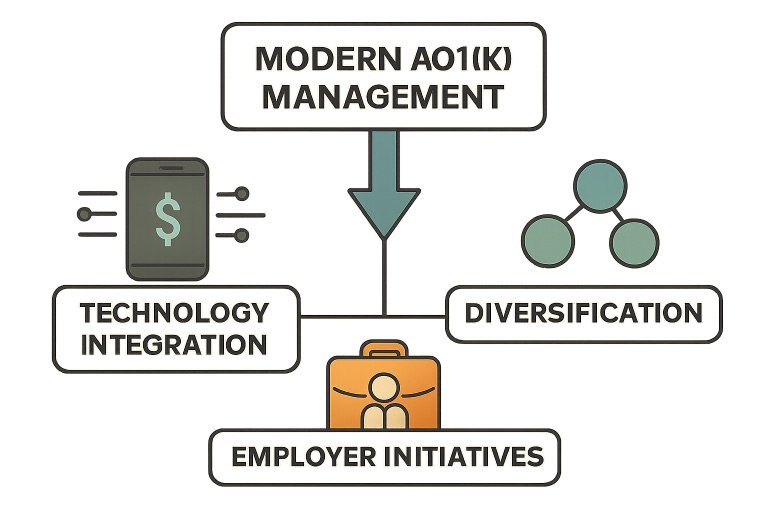
As the financial landscape continues to evolve, new technologies, legislative adjustments, and employer-driven initiatives are transforming how employees and employers approach retirement savings.
Whether you are just beginning your 401(k) journey or looking for ways to optimize your nest egg, modern solutions are designed to help you navigate the process with confidence.
Solutions such as 401k Management with PathFinder have emerged, offering streamlined management and greater transparency for plan participants.
By leveraging the latest technological advancements and staying ahead of regulatory changes, you can build a robust foundation for your financial future.
Understanding innovative approaches to 401(k) management not only allows you to capitalize on tax advantages and employer contributions but also shields you from common pitfalls that can impact retirement readiness.
Today’s retirement savers have more resources and flexibility than ever before, enabling them to customize investment strategies and enhance long-term security. Staying proactive is key in this new era of retirement planning.

Jump to:
- Recent Legislative Changes Impacting 401(k) Plans
- Integrating Technology for Efficient 401(k) Management
- Diversifying Investment Strategies Within Your 401(k)
- Employer Initiatives to Enhance 401(k) Participation
- Exploring Alternative Investments in 401(k) Plans
- The Importance of Periodic Evaluation and Adjustment
- Seeking Professional Guidance for Optimal 401(k) Management
- Final Thoughts
Recent Legislative Changes Impacting 401(k) Plans
Understanding regulatory updates is a fundamental step in maximizing the benefits of your retirement plan.
The SECURE 2.0 Act, a recent bipartisan retirement bill, introduced sweeping changes to expand retirement access and flexibility for American workers.
For example, the Act raised the Required Minimum Distribution (RMD) age to 73 and, beginning in 2024, eliminated RMDs for Roth 401(k)s.
These provisions give individuals more time to grow their retirement accounts tax-advantaged and allow Roth accounts to serve as more effective savings vehicles.
Adapting to such regulatory changes gives you an edge in optimizing your savings and avoiding penalties.
Integrating Technology for Efficient 401(k) Management
Digital solutions are transforming the way we approach retirement planning.
Robust online platforms now allow savers to track contributions, adjust allocations, and predict retirement outcomes with only a few clicks.
For instance, tools like Bank of America's 401(k) Pay help participants efficiently convert their accumulated assets into retirement income streams.
By providing clarity and eliminating manual paperwork, these innovations allow for more accurate forecasting, easier rollovers, and better alignment with long-term goals.
Technology also enhances security and accessibility, making 401(k) management both simpler and safer.
Diversifying Investment Strategies Within Your 401(k)
A well-diversified portfolio is at the core of successful retirement planning. Most 401(k) plans offer a selection of traditional investments, including stocks and bonds.
Still, today there are growing opportunities to enhance diversification with target-date funds, stable value funds, and more customized portfolios.
Diversification helps mitigate risk, especially during market downturns, while enabling participants to benefit from the growth potential of multiple asset classes.
Many experts recommend reviewing your asset allocation annually or when major life events occur to ensure it remains appropriate for your age, risk tolerance, and retirement timeline.
Employer Initiatives to Enhance 401(k) Participation
Employers are playing a more active role in boosting employee participation and savings in retirement plans.
Features such as automatic enrollment, automatic contribution escalation, and higher default contribution rates are being adopted by an increasing number of organizations.
These plan enhancements have proven to increase participation rates and average account balances, thereby improving retirement readiness across the workforce.
Company match programs and financial wellness education initiatives also contribute to better outcomes, empowering employees to make informed decisions about their financial futures.
Exploring Alternative Investments in 401(k) Plans
The inclusion of alternative investments in retirement portfolios, such as private equity, real estate, and infrastructure funds, is gaining traction among plan sponsors and participants.
These assets can provide diversification beyond traditional stocks and bonds, potentially yielding higher returns or reducing overall risk through uncorrelated performance.
The trend towards personalization in retirement planning aligns with the increased interest in alternative investments, allowing participants to build portfolios that better reflect their individual financial situations and retirement objectives.
The Importance of Periodic Evaluation and Adjustment
Regularly reviewing and adjusting your 401(k) is essential for staying on track to meet your goals. Life circumstances, market conditions, and regulatory changes can all impact your retirement plan, so periodically rebalance your portfolio and reassess your contribution levels.
A dynamic risk assessment approach enables ongoing calibration to market trends and personal milestones, helping you avoid drift from your original intentions while capitalizing on new opportunities.
Seeking input from outside resources, such as established investment research or academic studies, can inform smarter adjustments.
Seeking Professional Guidance for Optimal 401(k) Management
Navigating the evolving 401(k) landscape can be complex, making professional financial advice an invaluable asset. Advisors can offer tailored insights, recommend personalized allocation strategies, and guide you through regulatory compliance.
They also help you stay disciplined and less reactive to market swings, ensuring that your decisions align with a long-term financial vision.
By regularly consulting with an expert, you can identify gaps in your retirement strategy and respond proactively to changes in both your personal and the broader economic context.
- Parents Are Prioritising Breathable, Sustainable Fabrics For Children's Seasonal Sleepwear
- Our Homemade Christmas Printables, Made With AI: What Worked, What Didn't, and What I'm Saving for Next Year
- At-Home vs. In-Lounge IV Therapy in the Hudson Valley: Which Makes More Sense?
- Can Passengers Pursue Compensation After a Car Accident?




Final Thoughts
Retirement planning no longer needs to feel daunting. By staying up to date on legislative changes, embracing technological advancements, diversifying your investments, and leveraging employer initiatives and professional advice, you can simplify and enhance your 401(k) experience.
Staying proactive and informed is fundamental to ensuring a secure and confident retirement.





Leave a Reply