

Pumping sessions that are consistently uncomfortable are not something to push through, and hope will improve. Most of the time, the problem isn't the suction setting or the pump model. It's the flange.
Breast pump flange size affects how the nipple moves during each cycle. If the fit is off by a few millimeters in either direction, the nipple either rubs the tunnel walls or pulls in too much surrounding tissue. Both cause discomfort, and both can affect output over time.
The signs are different depending on which way the fit is wrong, which is why adjusting the suction rarely fixes the underlying issue.
This guide covers how to recognise a poor fit, how to measure for the right breast pump flange size, how to test a change, and when a silicone insert helps.
Disclaimer: This article is for general information only.

Jump to:
What A Poor Flange Fit Feels Like
Too small and too large produce different problems, though they can sometimes lead to the same complaint of general discomfort, which is part of why diagnosing the direction of the fit problem requires some attention.
A flange that is too small: the nipple rubs the inside of the tunnel as the pump cycles. The friction tends to build rather than being immediately sharp, so a session that feels tolerable in the first few minutes can become painful by the end.
Afterwards, the nipple may have a white ring at the base, look red, or feel sore when touched. Blanching, where the nipple turns pale or white after the flange is removed, is another sign that the tunnel is too narrow.
A flange that is too large: this one is easier to miss because it may not hurt in the way a too-small fit does. The nipple moves freely, but so does a significant amount of areola.
You can often see this during pumping, where tissue other than the nipple is being pulled into the tunnel with each cycle.
The breast may feel less empty after sessions, and output can drop gradually over weeks without a clear trigger.
Turning up suction when either of these is happening tends to make both worse. The problem is geometry, not mechanical.
How To Measure Breast Pump Flange Size
Measure the nipple diameter at the base and at its widest point before pumping. The measurement is the nipple shaft only, not the areola.
Pumping temporarily enlarges the nipple, so measuring after a session gives a number that runs larger than the resting size.
Most flange sizing recommendations add 2 to 4mm to that measurement. A nipple that measures 16mm across is often best served by an 18 or 19mm flange as a starting point. That starting point still needs to be tested.
What the number doesn't resolve: nipple shape, how the breast tissue behaves under suction, whether the seal holds in a particular position, and how the same person's measurements may shift over the months of pumping.
Two people with the same measurement don't always need the same size. The measurement narrows the range. The test session confirms it.
Trying A New Size And Watching The Next 48 Hours
Run one session in the new size at a normal suction level and watch what happens during the cycle.
A reasonable fit leaves the nipple close to its pre-pump size, maybe slightly larger, with no white ring, no redness at the base, and no new tenderness.
Room to move is what you're looking for; excess room is its own problem.
After the session, check immediately. A reasonable fit leaves the nipple close to its pre-pump size, maybe slightly larger, with no white ring, no redness at the base, and no tenderness that wasn't there before.
That check is faster than waiting for pain feedback across multiple sessions.
Output changes after a size correction may take 24 to 48 hours to show up. Tissue that has been repeatedly irritated or compressed needs time to recover before the pump can draw well from it. A single session without improvement doesn't mean the size is still wrong.
When A Silicone Insert Makes Sense
Silicone inserts sit inside the hard plastic flange, reducing the opening diameter.
They're useful in two situations: when the next available hard plastic size down is too small, leaving no standard size that fits well, or when the size is close but the hard plastic surface causes friction no matter what.
The softer material can reduce contact irritation even when the diameter measurement is technically correct. That benefit is real but separate from the sizing question.
Where inserts have limits: they can narrow the tunnel, but they don't always improve the seal or suction efficiency the way a properly sized hard flange does.
If the current flange is clearly several millimeters too large, an insert is a partial fix.
And inserts from different brands are not always interchangeable with all pump models, so confirming compatibility before purchasing is worth the few minutes it takes.
One other thing that gets less attention: inserts change how the flange sits in the bra cup for wearable pumps.
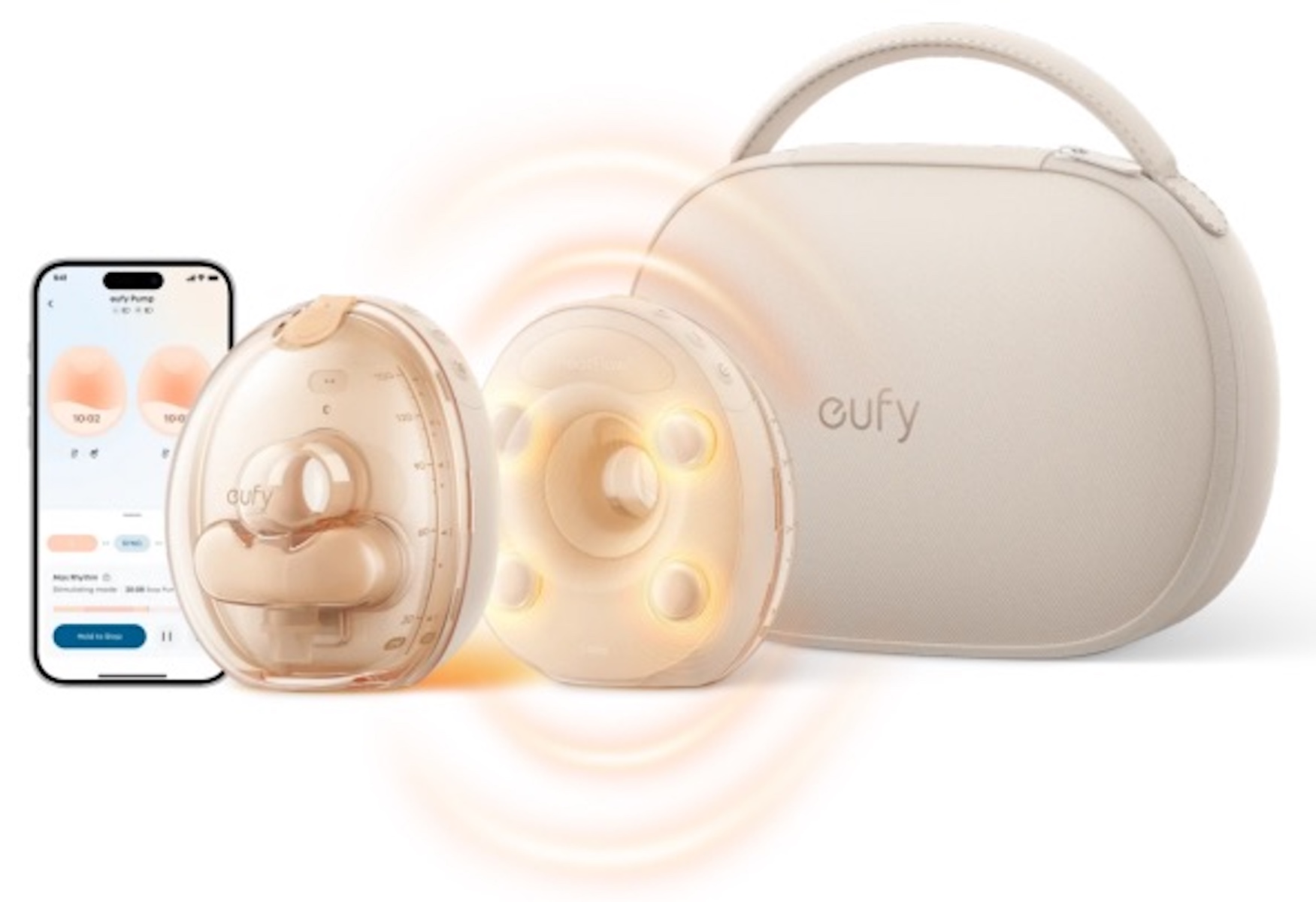
The eufy Wearable Breast Pump S2 Pro comes with multiple inserts for size adjustment and app-based suction control, making it easier to hold one variable constant when testing how an insert affects the fit.
A silicone insert that fits inside the pump body differently can shift the positioning in ways that affect the seal.
That positioning shift is worth checking during the first session with an insert, not just in a fitting test outside the bra.
Keeping Flanges Clean Between Sessions
Flanges are in contact with skin and milk during every session. Residue collects at the rim, inside the tunnel, and around the base, and dries before it looks like a problem from the outside.
The standard is the same as for bottles: rinse immediately after the session, full wash before the next use.
For parents running three or more sessions a day, flanges and pump parts quickly add to the total wash volume.
Building them into the same cycle as bottles tends to work better than treating them as a separate task.
Some parents rinse flanges right after the session, set them to dry, and run a full cycle at the end of the day.
For a full look at compatible pump options and accessories, the eufy breast pumps collection covers what's available across models.
Conclusion
Most flange fit problems come down to a measurement, a size change, and 48 hours of watching the results.
The nipple check after that first session tells you more than most people expect. When a size change alone doesn't resolve it, a silicone insert is worth trying before going further.
Some people land between standard sizes, and an insert gets them close enough without replacing a full size.
- Parents Are Prioritising Breathable, Sustainable Fabrics For Children's Seasonal Sleepwear
- Our Homemade Christmas Printables, Made With AI: What Worked, What Didn't, and What I'm Saving for Next Year
- At-Home vs. In-Lounge IV Therapy in the Hudson Valley: Which Makes More Sense?
- Can Passengers Pursue Compensation After a Car Accident?




If neither helps, an IBCLC can watch the pump run and assess how the nipple moves in the tunnel during an actual session, which is harder to evaluate from a measurement alone.
For feeding and care gear that fits into the routine at this stage, the eufy Baby collection is worth browsing as you work out what your full setup needs.





Leave a Reply