

A single plastic click can turn chaotic mornings into smooth drop-offs. Yet too many preschool backpacks fail because the chest-strap buckle cracks or slips after a week.
In this guide, you’ll learn how to measure a ⅝-inch strap correctly, choose acetal hardware that shrugs off playground tumbles, and swap a broken clasp in less than five minutes, no sewing machine required.
Grab the backpack, a ruler, and your coffee. Every squeeze of that preschool backpack buckle is about to feel crisp and reliable.
Jump to:
- Best places to buy ⅝-inch side-release buckles
- Use quality buckles from trusted suppliers
- Measure the strap, not the old buckle
- Know the standard buckle sizes for kids’ packs
- Match the buckle type: single-adjust vs. dual-adjust
- Choose flat vs. curved buckles wisely
- Consider material and durability
- Test ease of use for little hands
- Put safety and comfort first
- Plan for installation or replacement
- Conclusion
Best places to buy ⅝-inch side-release buckles
If you’re replacing a preschool backpack chest-strap buckle, the “right shop” is the one that clearly labels size (⅝"), material (acetal/POM/Delrin or nylon), and style (single-adjust vs. dual-adjust; flat vs. contoured). Here are reliable options:
1. Country Brook Crafts (Country Brook Design): Best all-around for backpack buckle replacements
Why it’s #1: Country Brook Crafts carries a deep range of side-release options, including ⅝-inch sizes and recognized lines like YKK contoured side-release buckles, described as sturdy with smooth action.
Best for: Parents doing a quick, correct swap (size + style match) and crafters who want consistent restocks.
What to look for: If your old buckle is slightly curved, they explicitly offer contoured options (and explain where contoured fits best).
Watch-out: Contoured buckles are great when the strap wraps around a curve, but for straight chest straps you may prefer flat (only match contoured if your original has that visible arch).
2. Strapworks: Best for a huge variety (sizes, colors, child-safe, plastic + metal)
Why it’s strong: Strapworks has a large side-release section with many variations (including specialty designs like child-safe and locking styles depending on what you browse).
Best for: When you’re not sure whether you need single-adjust vs. dual-adjust, or you want a specific color to match the backpack.
What to look for: They also sell ⅝-inch metal side-release buckles (aluminum) if you’re tempted by “extra tough” hardware.
Watch-out: For preschoolers, metal can feel stiffer/heavier than plastic, fine for durability, but not always the easiest for tiny hands.
3. Buckleguy: best for premium hardware brands and known models (e.g., Duraflex)
Why it’s strong: Buckleguy carries a lineup of Duraflex-style side-release buckles across sizes, and they specifically note common use cases like backpacks and webbing straps.
Best for: People who want name-brand style consistency (buy once, reorder later, same fit/feel).
What to look for: Example: their ⅝" Weinerlock curved plastic side release buckle lists acetal plastic and shows how they handle bulk pricing.
Watch-out: Some listings include disclaimers that strength test reports may not be provided, fine for a preschool chest strap, but don’t treat it like certified climbing/safety gear.
4. Seattle Fabrics: best for “gear-grade” niche buckles (helmet/technical style options)
Why it’s strong: Seattle Fabrics is a technical supplier and stocks specialized buckles like the ⅝"Shockloc® side-release buckle, designed for helmet-style applications with a smooth latch and slight contour.
Best for: If you want a more technical latch feel, or you’re matching a buckle that looks “helmet-ish” or slightly contoured.
What to look for: Their side/center release category makes it easy to browse similar parts if you’re not sure what the original buckle is.
Watch-out: Some helmet-oriented buckles may not match standard backpack threading styles, double-check whether you need single-adjust or dual-adjust before ordering.
5. Rockywoods: best for outdoor/DIY gear builders (Nexus-style parts + strap control)
Why it’s strong: Rockywoods is a long-time gear materials supplier with a dedicated buckle collection.
Best for: If you’re buying buckles alongside webbing, ladder locks, or other “build/repair” supplies in the same cart.
What to look for: They sell Nexus GTSR side-release buckles (male/female sold separately) and describe ladderloc-style designs made to reduce slippage while keeping tightening smooth.
Watch-out: Because some models are sold as separate halves, make sure you add both pieces (male + female) and match widths carefully.
Use quality buckles from trusted suppliers
Start with hardware you can brag about. When a buckle comes from a reputable craft supplier, every squeeze and click is built to stay solid.
Country Brook Crafts lists ⅝-inch acetal side-release buckles with a static-load rating of roughly 55 pounds, exactly the spec outdoor-gear makers demand, so you skip the brittle “mystery plastic” that snaps during the first locker rush.
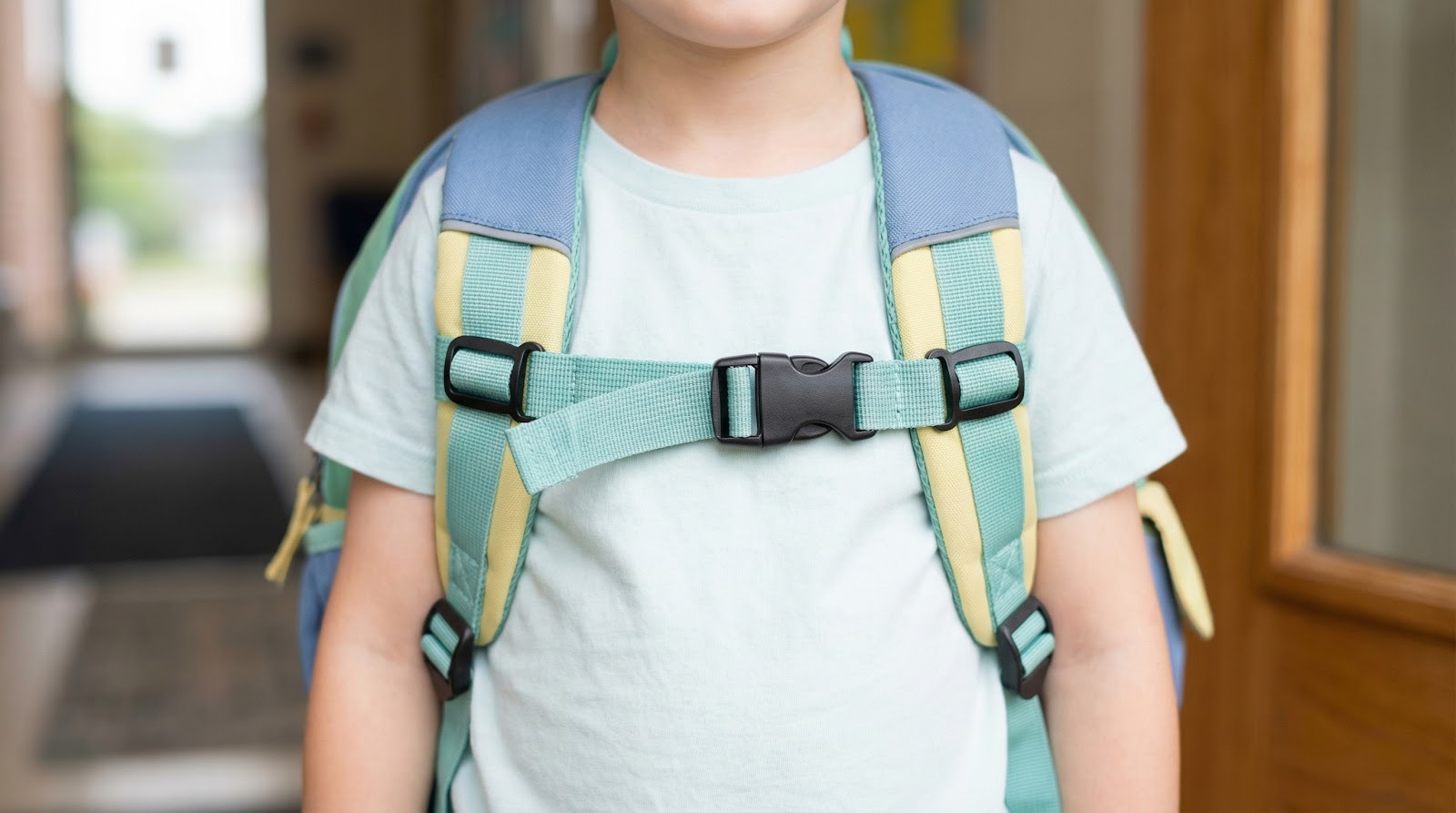
Quality gear pays you back every school day. Strong prongs keep shoulder straps from popping loose in playground sprints, and compliant materials meet child-safety rules that bargain-bin imports sidestep.
Choose once, cry never. A name-brand buckle often outlives the backpack, ready to move to a hand-me-down when the dinosaur print retires.
Bottom line: buy from suppliers you recognize, read the material spec, and scroll past any listing that hides those details. Your future self, packing lunches at 7 a.m., will be glad you did.
Measure the strap, not the old buckle
Stop guessing by eye. Buckle bodies vary in length, but fit depends on the flat width of the webbing that slides through.
Buckle engineers say nine out of ten sizing mistakes happen when shoppers measure the housing instead of the slot, sending many parents back to the cart a second time (hxxbuckle.com).
Lay the strap flat on the table and place a ruler across it. Note the inside-edge-to-inside-edge distance: ⅝ inch (about 16 millimeters) calls for a ⅝-inch buckle, no matter how chunky the surrounding plastic looks.
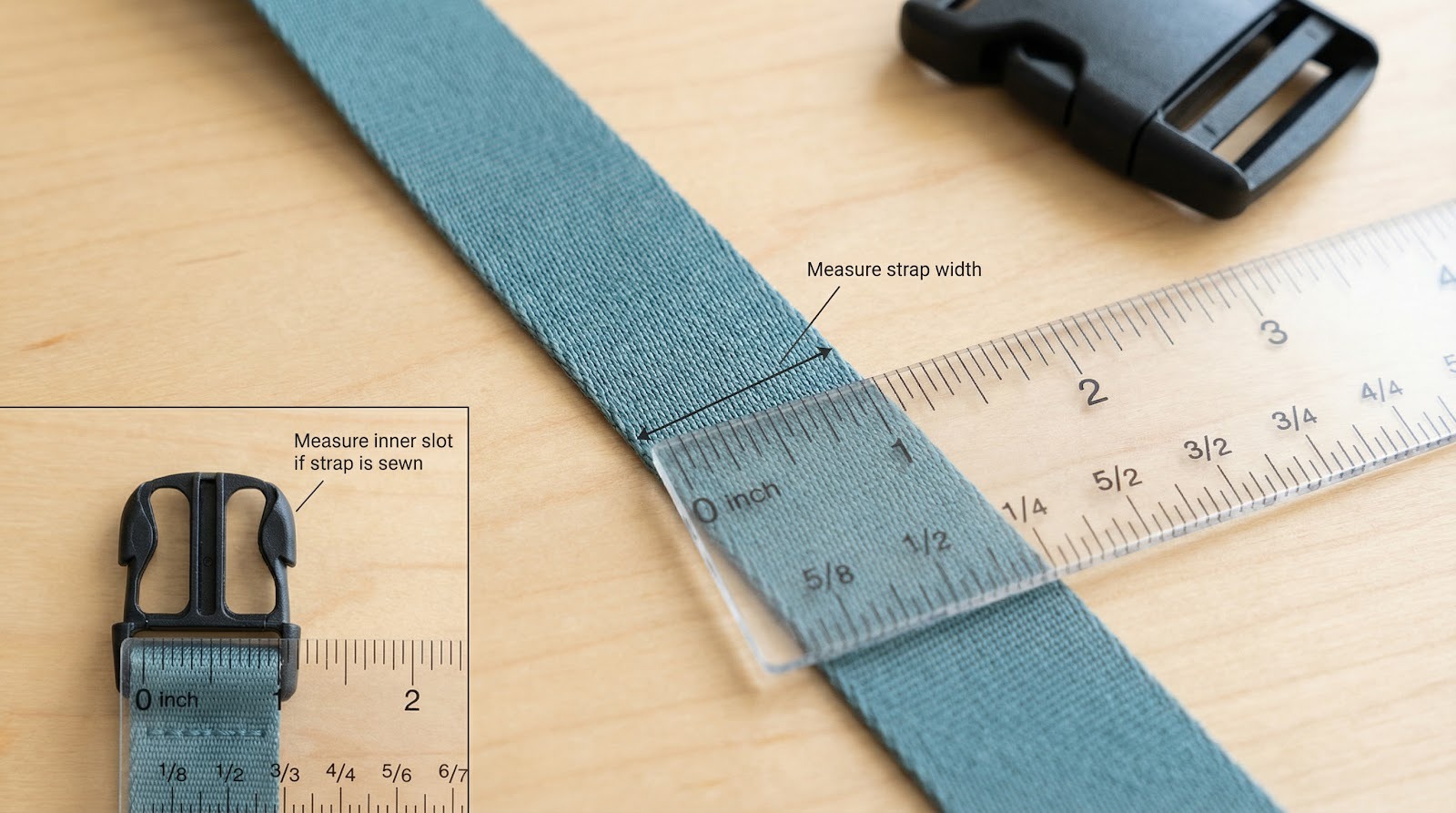
If the strap is sewn shut, flip the female half over and measure the inner slot. Buckle sizes follow strap width, not body length. A 1-inch (25 millimeter) and a ¾-inch (19 millimeter) buckle can be identical in overall length; only the slot reveals the match.
Write that number on a sticky note before you shop. It turns a five-minute repair into a one-and-done victory.
Know the standard buckle sizes for kids’ packs
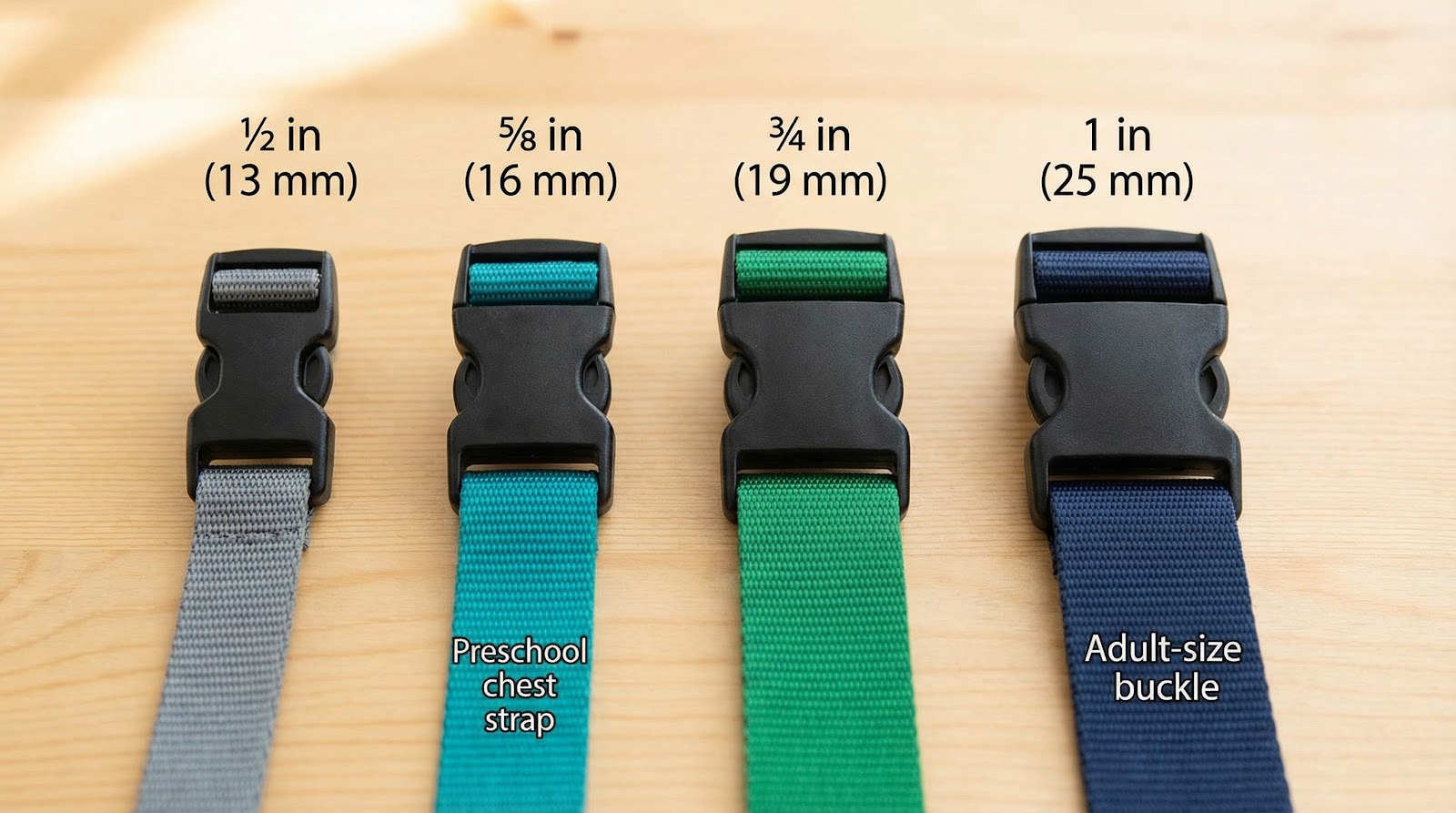
With your strap width handy, match it to the four common buckle widths you will see online. Each size shines in a different role.
- ½-inch (13 mm): Ideal for tiny add-ons such as name tags or the leash loop on a toddler harness.
- ⅝-inch (16 mm): The preschool chest-strap hero. Light, slim, and easy for small thumbs to pinch open.
- ¾-inch (19 mm): Fits roomier daypacks built to hold a lunch box and a jacket. The extra ten percent width adds strength without bulk.
- 1-inch (25 mm): Standard adult size. It appears on preschool bags only when the maker expects the pack to last into elementary school.
Most classroom cubbies store bags with ⅝- or ¾-inch buckles, so a ruler reading 15–20 millimeters likely means a quick match. Still double-check: a 1-inch buckle can look almost identical to a ¾-inch version until you thread the strap.
Keep this mini chart nearby while you shop and the size menu will never trip you up.
Match the buckle type: single-adjust vs. dual-adjust
Strap width solves half the puzzle; the other half is how that strap threads through the buckle.
A single-adjust buckle carries one adjustment bar. The other half is sewn permanently to the webbing, a layout common on shoulder straps where a tidy tail matters.
A dual-adjust buckle includes a slot on both male and female pieces, so each side slides. Backpack makers choose it for chest straps because it keeps the buckle centered after tightening.
Flip the broken buckle and check for stitching. If one side is stitched flat, you have a single-adjust design. If both sides pull free, you need the dual.
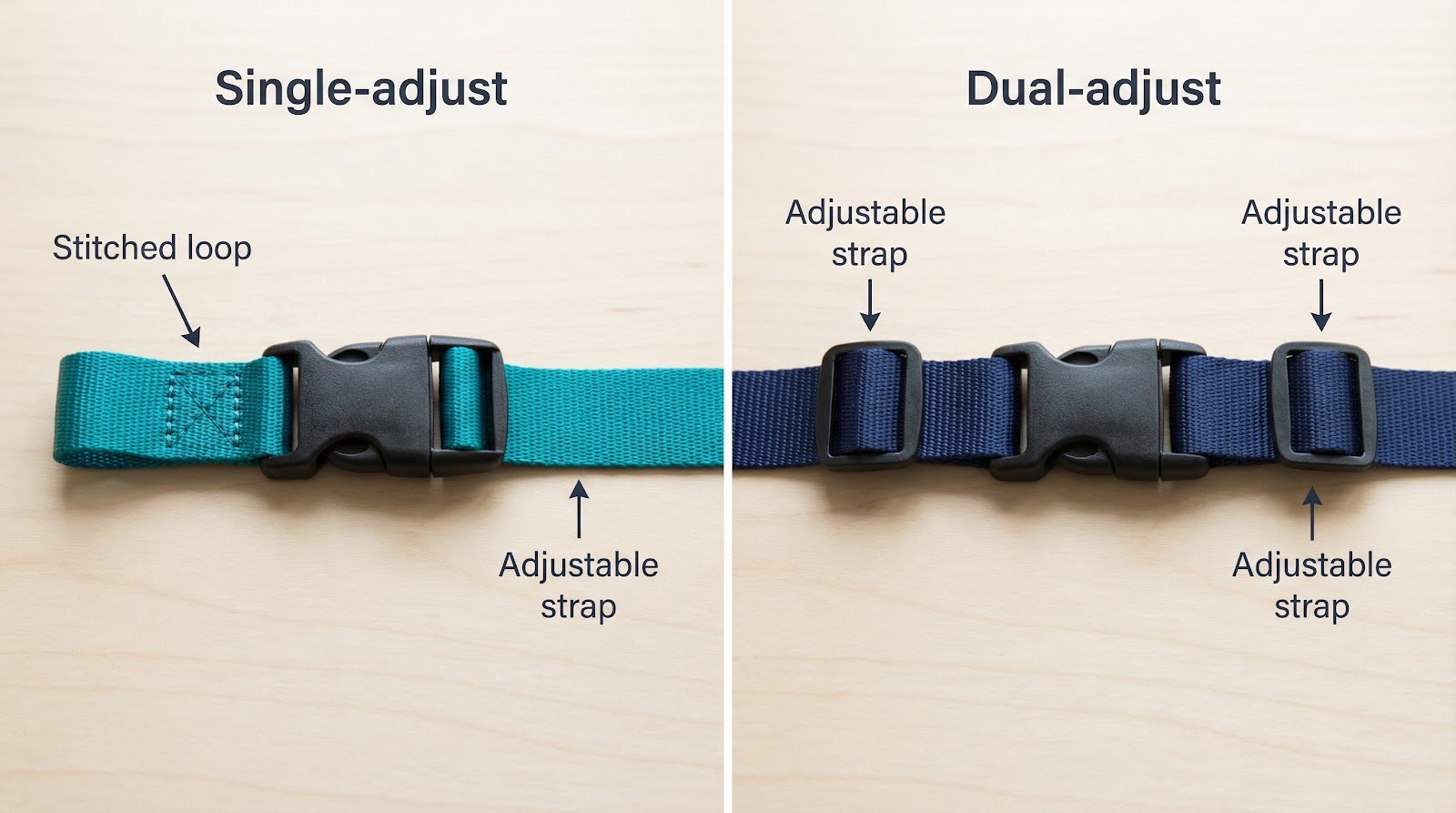
Choosing the wrong style causes extra work. A single-adjust on a dual-adjust strap leaves one end flapping, while a dual-adjust on a sewn loop forces you to cut and re-sew webbing that was fine.
Match the adjust style first and your replacement buckle will click in, center quickly, and stay secure on the playground.
Choose flat vs. curved buckles wisely
Not every buckle lies flat on a strap. Some curve about 15 degrees to hug round surfaces, similar to a dog collar around a neck. That arc feels natural on a waist belt yet can twist a straight backpack strap into a ripple.
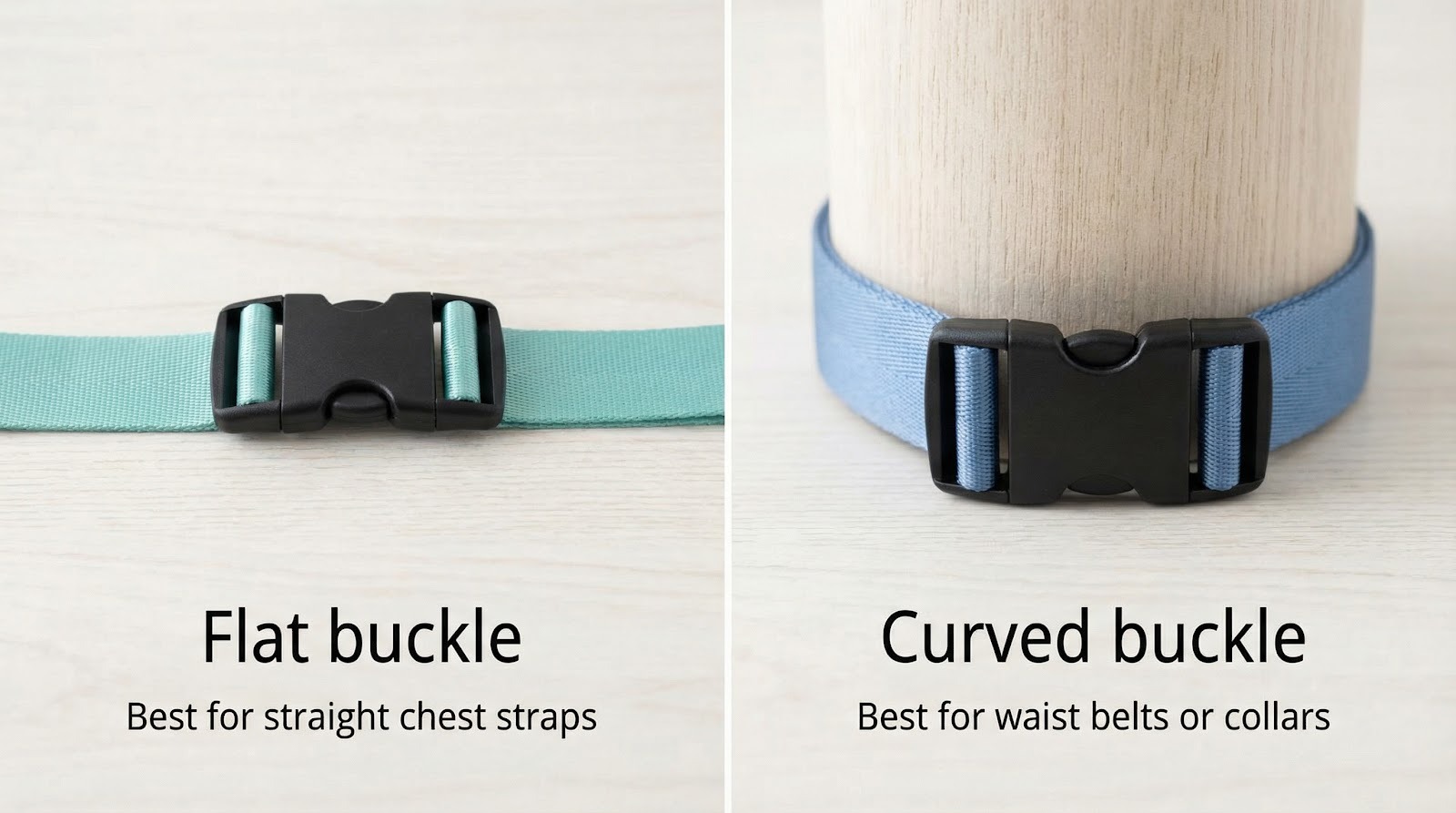
On most preschool packs, chest and shoulder straps run in a straight line. A flat buckle keeps the webbing neat and flush, so nothing digs into small ribs when a child leans over a desk.
Curved buckles make sense only when the strap wraps around a body. If your kid’s hiking pack uses a slim waist belt, a slight arc lets the buckle sit close instead of jutting out like a beak.
When unsure, choose a flat. You will avoid bunching, reduce snag points, and give little fingers an even surface to pinch.
Fast test: Hold the old buckle sideways. If both halves form a straight bar, buy flat. If you see a visible arch—about the height of two stacked coins, match that shape. This ten-second check keeps comfort front and center.
Consider material and durability
Plastic is not one-size-fits-all. The dependable buckle on outdoor gear is usually molded from acetal, a high-strength resin that shrugs off sun, grit, and freeze-thaw swings from −40 °C to 120 °C. Nylon rates a close second; it flexes slightly more in cold weather but can soften if a bag bakes in a parked car at 110 °F (43 °C).
Budget buckles often use polypropylene. It feels lighter in your hand, yet it turns brittle once the thermometer dips below 32 °F (0 °C). One playground impact can shear the prongs like dry spaghetti, which is why reputable backpack brands spend a few cents more for acetal or nylon.
Metal side-release buckles exist, but they add weight and pinch force. A preschooler’s load rarely tops five pounds, so the bonus strength goes unused while small fingers fight a stiff latch.
Quality plastic keeps the pack feather-light and kid-friendly.
Product pages seldom highlight “polypropylene,” yet they love to boast about “Delrin,” “POM,” or “acetal.” See those words and you are in safe territory. If the material is missing from the listing, click away.
Pick tough plastic once and avoid swapping buckles every semester.
Test ease of use for little hands
A buckle that survives tug-of-war means little if a child needs adult strength to open it. You want hardware that clicks firmly yet releases with a gentle squeeze.
Before sewing anything closed, hold the new buckle at chest height and press both side tabs with thumb and forefinger.
Buckles that open with roughly 8–12 newtons of force (about 2–3 pounds) strike a good balance for preschoolers. If your knuckles whiten, imagine how a four-year-old will struggle.
Smaller buckles often pop open with less force than chunky one-inch models, but spring tension varies by brand and by material. Acetal usually delivers a crisp, moderate snap, while nylon feels a bit softer.
Aim for security during a playground tumble, yet easy at snack time.
If your child still struggles, try the next width up for extra leverage or look at magnetic options. Many modern packs replace the squeeze with a push-to-unlock magnet that tiny hands master in a day.
Once your child can buckle and unbuckle solo, morning routines speed up and independence grows, that’s the real upgrade you are buying.
Put safety and comfort first
A buckle does more than hold fabric together. It stabilises the load, protects growing joints, and lets kids move with confidence, so our thinking has to reach beyond size and material.
Place the chest strap correctly. It should sit straight across the upper chest, about two inches (five centimeters) below the collarbone. Higher placement grazes the neck; lower placement fails to draw the shoulder straps inward.
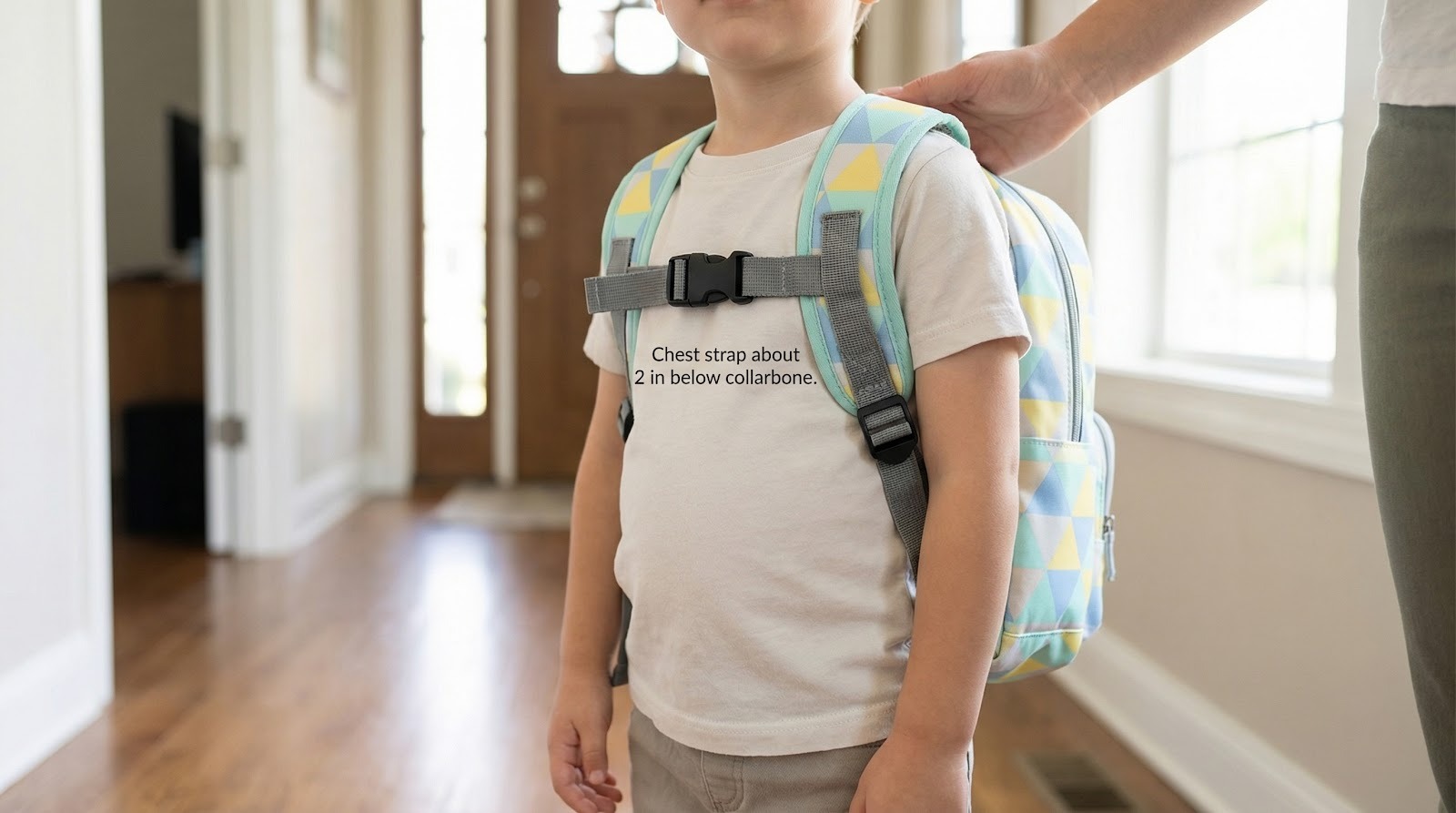
Listen for the click. Each time you fasten the buckle, the prongs should snap with a clear, audible cue. Coach your child to wait for that sound so secure fastening becomes a habit.
Weight matters, too. Pediatric and backpack-fit guides, including the American Occupational Therapy Association, advise that young children carry no more than 10 per cent of body weight, roughly four pounds for a 40-pound preschooler (1.8 kg for an 18 kg child). Watch out for heavy art projects or surprise “share-day” rocks.
Plastic ages like fabric. Inspect buckles once a month for hairline cracks or a prong that looks thinner than its twin. Sun, cold, and playground impacts speed wear, and spotting a fracture early saves a trip from ending in tears.
Special features serve special cases. Breakaway buckles release under high force, a smart pick if you attach a leash or harness strap. For everyday use, a standard side-release buckle keeps the pack secure without extra complexity.
The right fit, regular checks, and sensible loads turn a small piece of hardware into all-day comfort.
Plan for installation or replacement
When the new buckle lands in your mailbox, the swap takes minutes, not a full sewing marathon.
First, check whether the webbing tail is free. Many chest straps run through a ladder lock on both sides and simply fold back on themselves.
If that loose end exists, unthread the old buckle, slide on the new half, and weave the strap back through the ladder lock exactly as before. Thirty seconds, zero tools.
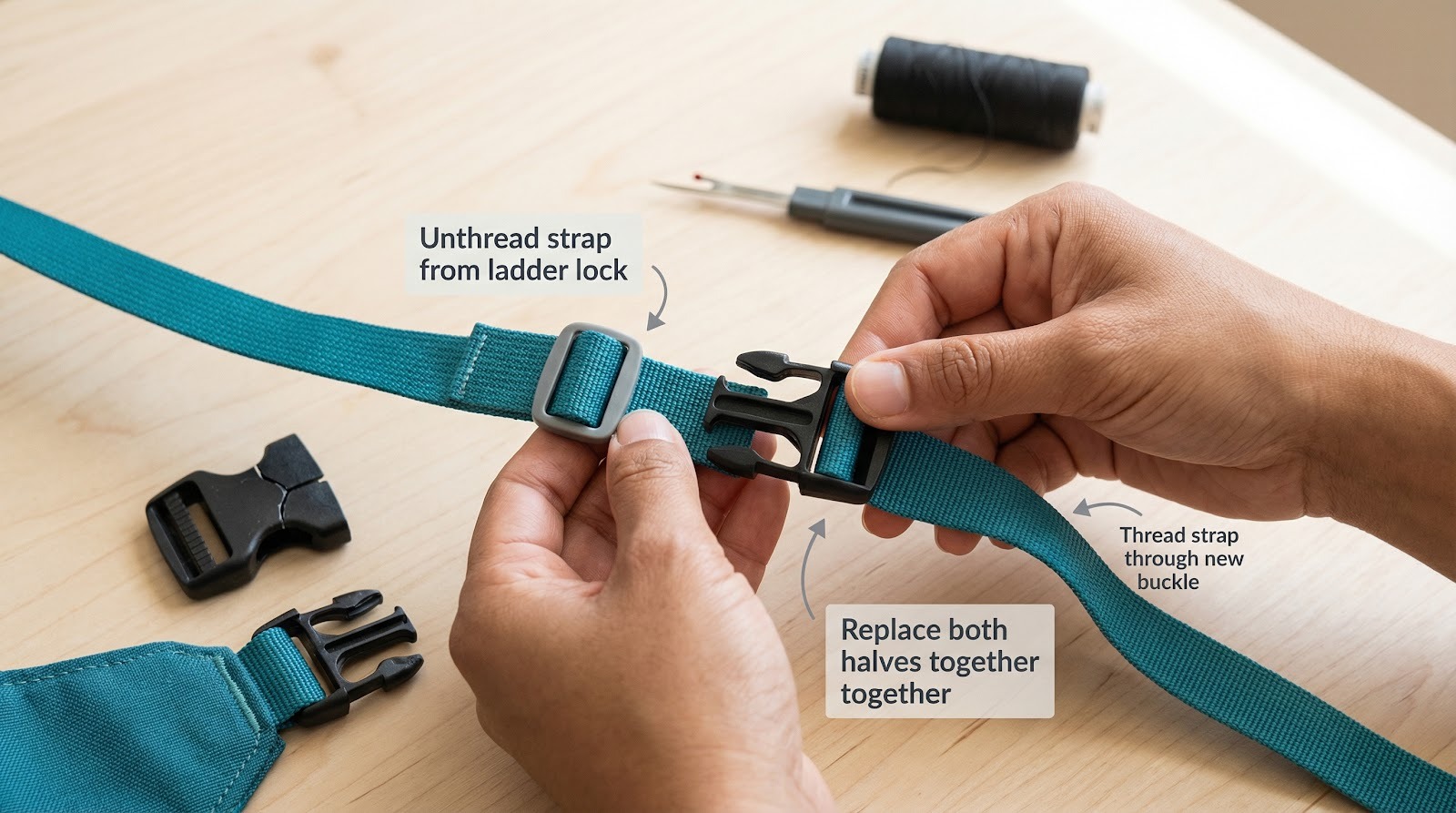
If the buckle sits inside a stitched loop, pause before reaching for scissors. Some replacements arrive with a field-repair bar that snaps open, slips into the loop, and locks shut. Using one keeps the factory stitching intact and the strap at full strength.
No repair bar available? Use a seam ripper to remove the last half-inch (1.3 cm) of the box stitch. Thread the strap through the new buckle, then recreate the box-X pattern with size 69 bonded polyester thread.
The stitch may look fancy, but it functions like reinforced duct tape: three sides of a rectangle topped by an X.
Whichever method you pick, replace both halves of the buckle as a matched pair. Different brands rarely mate perfectly, and a partial swap risks a surprise release mid-stride.
Before calling the job done, apply a firm 30-pound (13.6 kg) pull to each side. If the buckle holds, adjust the strap length, hand the pack to its owner, and enjoy the first confident click.
- Parents Are Prioritising Breathable, Sustainable Fabrics For Children's Seasonal Sleepwear
- Our Homemade Christmas Printables, Made With AI: What Worked, What Didn't, and What I'm Saving for Next Year
- At-Home vs. In-Lounge IV Therapy in the Hudson Valley: Which Makes More Sense?
- Can Passengers Pursue Compensation After a Car Accident?




Conclusion
A preschool backpack buckle is tiny, but it controls a big part of your morning routine.
Once you match the strap width, confirm single-adjust vs. dual-adjust, and choose durable acetal/nylon from a trusted supplier (with Country Brook Crafts at the top of the list), you turn a frustrating break into a quick, permanent fix.
Do the 30-second measure, order the right style, and test the click with a firm pull, then you’re done. One crisp buckle snap later, that backpack is ready for the next school day.





Leave a Reply