

Fixing family sleep requires three proven habits. These include establishing a consistent schedule, implementing a screen-free routine, and treating underlying sleep disruptions.
Achieving this level of rest feels impossible when nights are interrupted by multiple requests for water or lost blankets. Fragmented rest is often quietly accepted as a normal part of raising kids and managing demanding careers.
However, addressing these disruptions can dramatically transform household energy by utilizing modern sleep therapy options like RespShop's AirSense 11. Poor sleep is not a parenting rite of passage. It is a solvable problem that requires simple adjustments rather than a complete lifestyle overhaul.
These three family sleep tips are sustainable and designed to work for real households rather than perfect ones. Implementing them can help the entire family get the better rest you all deserve.
Let us explore how to restore your household's energy effectively.
Jump to:
1. Anchor Your Family to a Consistent Sleep Schedule
There is a biological reason you feel sharper some mornings and completely foggy on others. The culprit is frequently when you sleep, rather than just how long.
Every person in your household runs on an internal biological clock known as the circadian rhythm. This roughly 24-hour cycle governs when the body feels alert and when it begins winding down.
When a schedule shifts significantly from one night to the next, that internal clock gets confused. Late bedtimes on weekends or inconsistent wake times during school breaks are common examples.
The result is an ongoing low-grade jet lag that leaves everyone feeling perpetually behind.
According to the Centers for Disease Control and Prevention guidelines, recommended sleep hours vary by age. School-age children generally need 9 to 12 hours per night, teenagers require 8 to 10 hours, and adults need 7 or more hours.
These benchmarks reflect what the body requires to repair tissue, regulate mood, and support immune function. Falling short consistently compounds into a meaningful sleep debt over time.
The fix involves setting a consistent lights-out time for the household and pairing it with a consistent morning wake time.
Sticking to a 30-minute window around your target bedtime gives your family's circadian rhythms a stable foundation. When the body knows roughly when sleep is coming, it naturally prepares for it.
Pro Tip
Keep your family's bedtime and wake time within a strict 30-minute window, even on weekends. This simple consistency prevents "social jet lag" and powerfully anchors your body's natural circadian rhythm for restorative rest.
2. Build a Screen-Free Wind-Down Routine
The 30 minutes before your family goes to bed often matter just as much as the hours spent sleeping.
What happens in that final window either sets the stage for restorative rest or quietly works against it.
The most common modern disruptor is screen time. Studies indicate that during a typical week, half of adults use a screen while in bed every day. Phones, tablets, and televisions emit blue light that mimics daylight.
When eyes absorb it in the evening, the brain interprets it as a signal to stay alert.
This suppresses melatonin, which is the hormone naturally produced to trigger sleepiness. Consequently, the biological switch that signals sleep becomes delayed, and the overall quality of rest is lighter.
The American Academy of Sleep Medicine consistently identifies evening screen use as a significant disruptor of healthy sleep.
Research shows that engaging with it before sleep makes use of technology at bedtime virtually universal, with 97% of respondents. Furthermore, per night, children who use media before bed sleep an average of 23 minutes less.
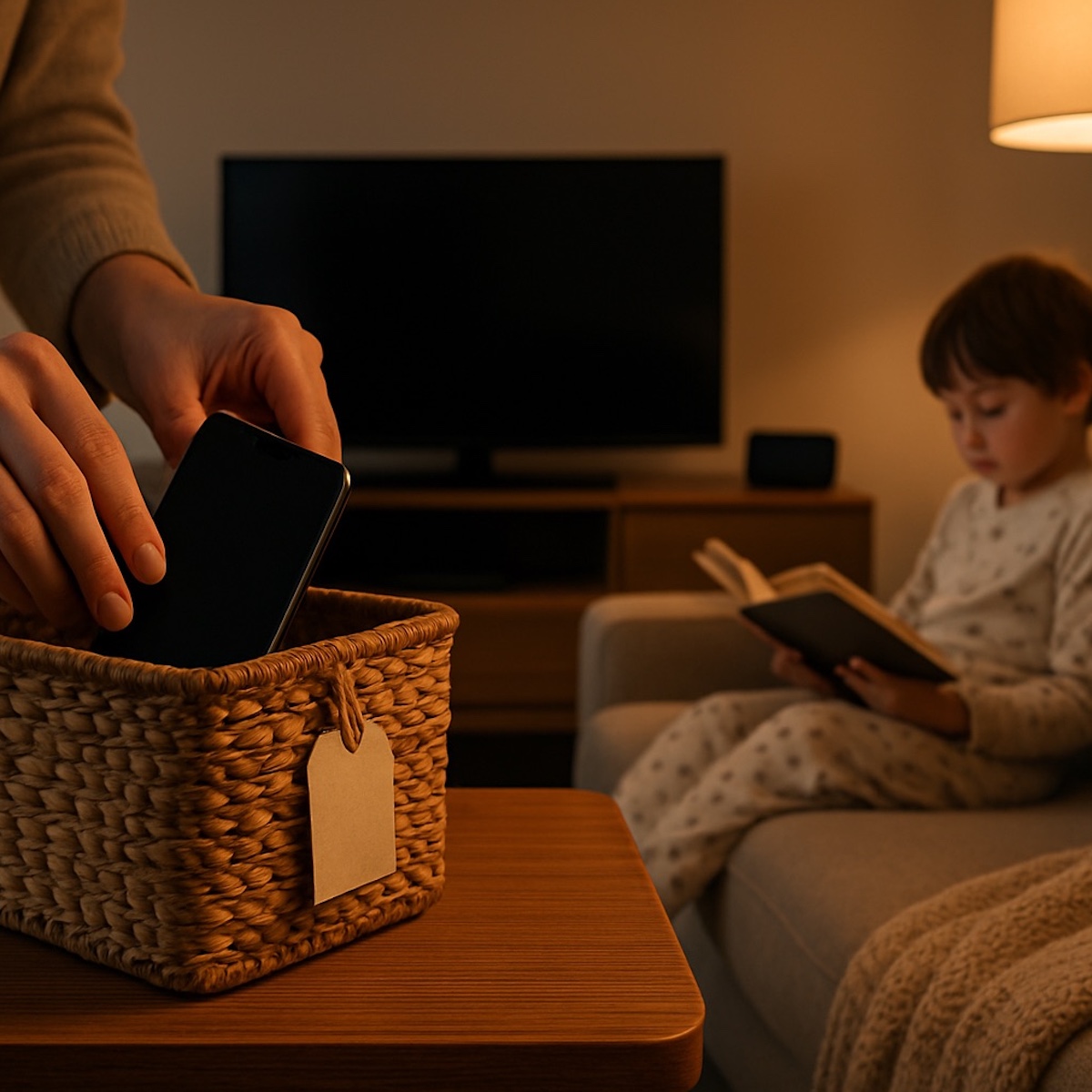
The goal is to create a small intentional buffer before bed without attempting a complete household screen ban. Approaches that work well include:
- Dim the lights 45 minutes before bed to support the body's natural shift toward rest.
- Swap screens for quieter activities like light reading or gentle stretching.
- Create a consistent sensory cue, such as a relaxing playlist or herbal tea, to signal the brain to wind down.
Framing this as a wind-down ritual rather than a restriction helps secure family buy-in.
Even applying a calmer pre-bed routine two or three nights a week can shift how quickly everyone falls asleep.
Warning/Important:
Don't underestimate the impact of evening screen time. The blue light from phones and tablets actively suppresses melatonin production, delaying your family's biological sleep signals and reducing overall sleep quality.
3. Take Sleep Apnea Seriously For the Whole Family
Sleep apnea is a condition where breathing repeatedly stops and starts during sleep, and it is frequently overlooked as a household issue. If one adult in the home has untreated sleep apnea, the effects ripple outward.
Snoring wakes a partner, who then stumbles through the following day. Restlessness disturbs light-sleeping children in adjacent rooms. Chronic exhaustion reshapes the tone of the entire home. It leaves parents with less patience and less presence.
Sleep apnea is highly common and frequently underdiagnosed because symptoms like morning headaches are easily dismissed as normal parental tiredness. However, it is an extremely manageable condition with the right therapy.
Continuous Positive Airway Pressure therapy remains the primary treatment by delivering a steady stream of air to keep the airway open.
Modern devices have evolved significantly from the bulky machines of the past. These auto-adjusting systems adapt pressure delivery breath by breath without requiring manual adjustments.
They often include built-in heated humidifiers to reduce dryness and improve comfort. Navigating medical equipment is easier when consulting directly with registered respiratory therapists and certified sleep technologists.
They understand the nuances of proper mask fit and device operation. Recognizing symptoms like loud snoring or waking up unrefreshed is the first step. Seeking professional guidance is a practical way to protect personal health and improve the daily environment.
Key Insight:
Untreated sleep apnea doesn't just exhaust the individual; it creates a ripple effect of sleep deprivation throughout the entire home. Modern Auto-CPAP devices can dramatically transform and restore your whole family's daily energy levels.
The Bottom Line
Getting better rest as a family does not demand a dramatic overhaul of your daily life. It requires consistency in the right places.
Locking in a steady sleep schedule gives everyone's internal clock a reliable rhythm.
- Parents Are Prioritising Breathable, Sustainable Fabrics For Children's Seasonal Sleepwear
- Our Homemade Christmas Printables, Made With AI: What Worked, What Didn't, and What I'm Saving for Next Year
- At-Home vs. In-Lounge IV Therapy in the Hudson Valley: Which Makes More Sense?
- Can Passengers Pursue Compensation After a Car Accident?




Building a screen-free wind-down window signals the nervous system that rest is approaching.
Taking medical disruptors like sleep apnea seriously can restore energy to an exhausted household.
These small and repeated choices compound into meaningful improvements.
The payoff extends beyond simply feeling more awake by bringing back patience and presence.
Your family deserves the version of you that proper sleep makes possible.
Author Profile:
RespShop is a leading online retailer of CPAP machines, masks, and oxygen therapy equipment for individuals managing sleep apnea and respiratory conditions.





Leave a Reply