

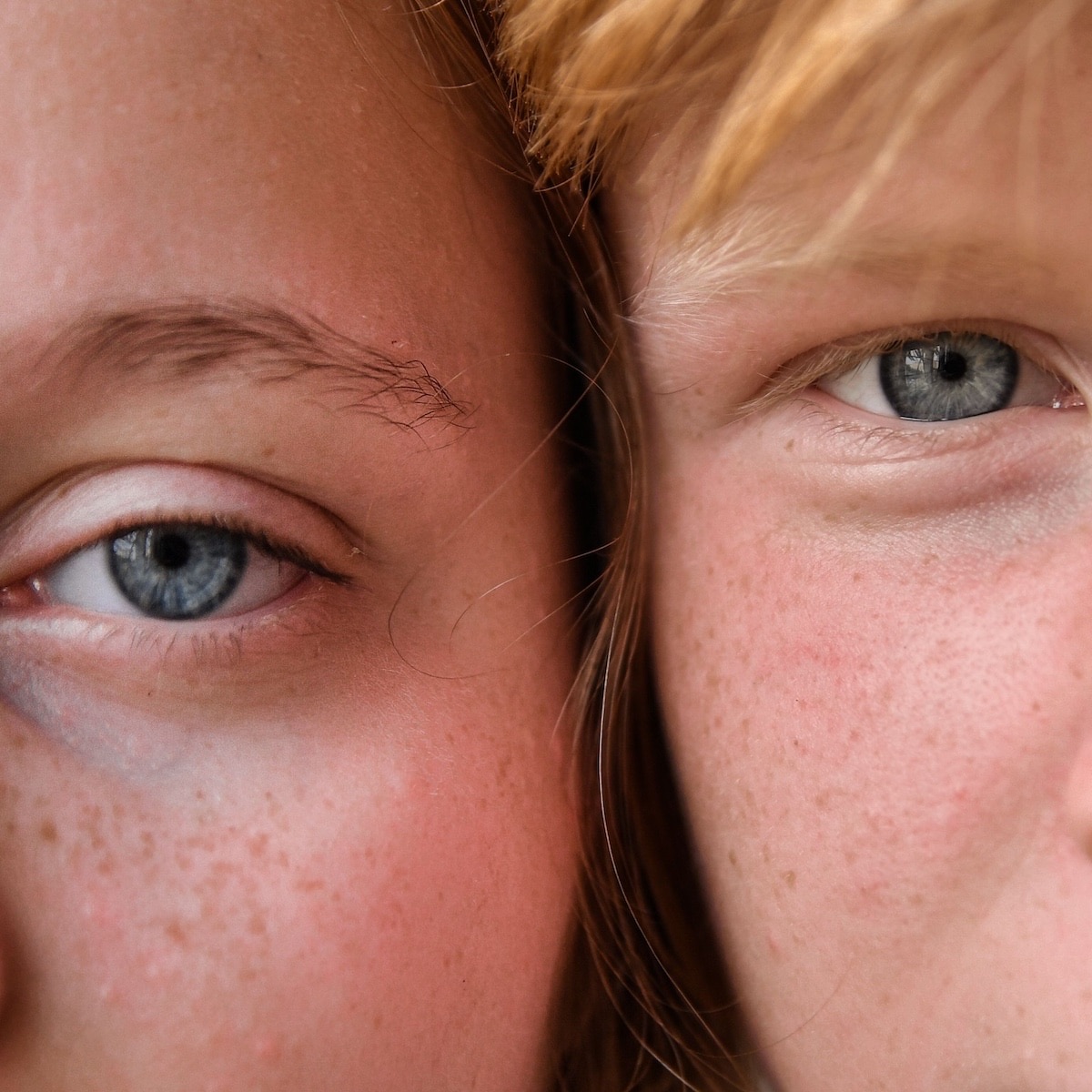
Autism does not have one certain look. Two people can look alike, but only one may be autistic.
Two autistic people can also look completely different. That is why the physical features of autism can be confusing.
A parent may notice that a child avoids eye contact or looks serious in photos.
An adult may wonder why people keep thinking they are upset or bored. These things can make someone curious, but they do not mean the person is autistic.
Jump to:
- Is There Such a Thing as an "Autism Face"?
- What Research Says About Facial Features in Autism
- Are Facial Characteristics Different in Children and Adults with Autism?
- Can Doctors Diagnose Autism by Looking at Facial Features?
- Facial Expressions and Nonverbal Communication in Autism
- Medical Conditions That May Affect Facial Features Alongside Autism
- Why the Myth of an "Autism Face" Persists
- When Should Parents or Adults Seek an Autism Evaluation?
- In Conclusion
Is There Such a Thing as an "Autism Face"?
The idea of an “autism face” usually stems from conflating appearance with expression.
A child may look away because the room feels too loud. An adult may keep a neutral face while listening carefully.
Some people do not smile much in photos or may take a little longer to reply. Others may notice that, but it does not mean they have a certain type of face.
What Research Says About Facial Features in Autism
A few studies have looked at whether autistic and non-autistic people tend to have any small differences in their faces.
They checked things like face width, the space between the eyes, and the shape of the forehead, nose, and mouth.
The problem is that these results show averages across groups. They cannot identify one person, and many of the same features also appear in people who are not autistic.
Research into the physical features of autism may help researchers study development.
It is not a reliable way to diagnose autism, and doctors do not use facial measurements as a standard test.
Are Facial Characteristics Different in Children and Adults with Autism?
Most of the research has looked at children, usually in small groups. So, the results may not fit every child, teenager, or adult.
Faces also change as people get older. Health, weight, and family traits can also change how someone looks.
For adults, doctors usually ask about things that have been going on for years.
Signs of autism in adults may include planning what to say, feeling tired after social events, sticking to routines, or finding noise difficult to handle.
Can Doctors Diagnose Autism by Looking at Facial Features?
A doctor cannot diagnose autism from a photo, facial scan, or a short appointment.
An assessment may look at:
- Early language and development
- Communication at home, school, or work
- Repeated movements or routines
- Reactions to noise, light, touch, or crowded places
- Medical, family, and school history
A guide on symptoms of autism will help, focusing on communication, behavior, and development rather than appearance.
Eye contact and facial expression may still come up during an assessment.
They matter more when they are considered alongside the person’s wider behavior and everyday experiences.
Facial Expressions and Nonverbal Communication in Autism
Facial structure and facial expression are two different things.
Some autistic people show emotion in ways that others find harder to read.
A child may enjoy a party without smiling much. An adult may feel upset while still looking calm.
Other autistic people are very expressive. Some also copy common gestures or expressions in social settings, which can become tiring over time.
Medical Conditions That May Affect Facial Features Alongside Autism
Some genetic or developmental conditions can occur alongside autism and may include noticeable physical traits. In those cases, the features are linked to the other condition.
A doctor may suggest genetic testing or another check if the person also has seizures, unusual growth, major developmental delays, or similar concerns in the family.
Why the Myth of an "Autism Face" Persists
People often look for visible clues when a behavior feels unfamiliar. Limited eye contact, a quiet expression, or unusual speech may be mistaken for a certain look.
Online photo comparisons can make the idea seem more convincing. A few selected images may appear to show a pattern, even though they leave out almost everything else about the person.
A picture will show how someone handles change, deals with noise, talks with others, or gets through social situations.
When Should Parents or Adults Seek an Autism Evaluation?
Parents can talk to their paediatrician or developmental specialist if the same worries keep coming up: maybe their child is taking longer to speak, gets really upset when plans change, has trouble taking turns while playing, or finds certain sounds too much.
Adults might also consider an assessment if these issues keep making everyday life harder. Being around people may leave them worn out.
They might stick closely to routines or mimic how others act to fit in. An assessment may help explain these patterns and identify useful support.
- Parents Are Prioritising Breathable, Sustainable Fabrics For Children's Seasonal Sleepwear
- Our Homemade Christmas Printables, Made With AI: What Worked, What Didn't, and What I'm Saving for Next Year
- At-Home vs. In-Lounge IV Therapy in the Hudson Valley: Which Makes More Sense?
- Can Passengers Pursue Compensation After a Car Accident?




In Conclusion
There is no reliable “autism face,” and appearance cannot confirm or rule out autism. Facial research examines group patterns and cannot diagnose an individual.
Developmental history, communication, behavior, sensory experiences, and the signs of autism in adults or children give a much clearer picture.
Have you seen someone’s expression or eye contact mistaken for a diagnosis? Share your thoughts or experiences with the author.





Leave a Reply