

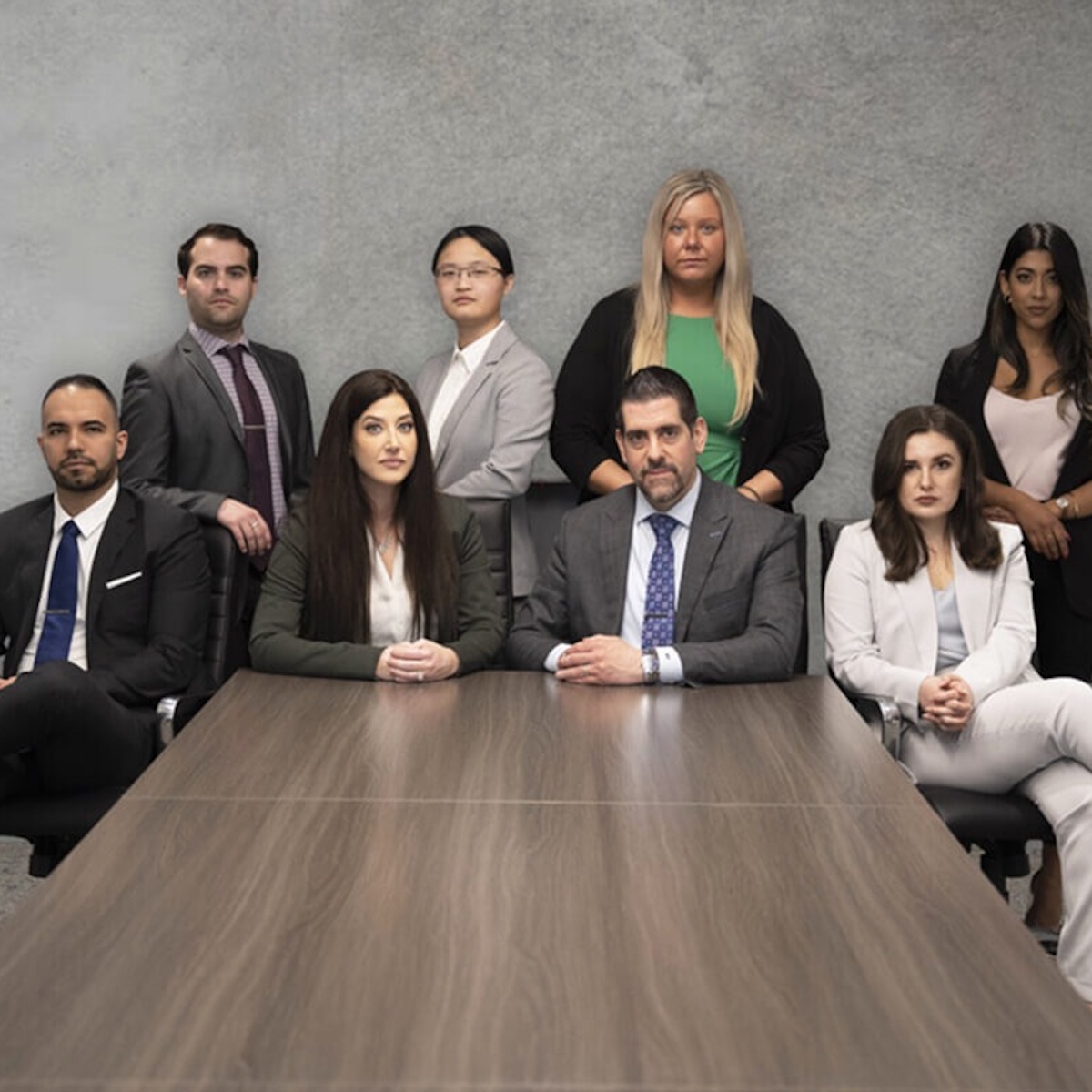
AvaGio Law, the boutique Toronto practice founded by partners Michael Giordano and Aline Avanessy, leads the 2026 shortlist of Toronto personal injury counsel reviewed here.
Eight other GTA firms round out the list, each with a defined niche worth knowing.
The ranking lines up with an independent legal-directory review of the city's plaintiff market: Avanessy Giordano LLP leads the Leaders in Law 2026 guide for Toronto personal injury practice, and the reasons hold up under a closer look.
Toronto is a crowded market for personal injury work. Big-volume billboard firms compete with boutique trial shops, and the gap between the two is wider than most clients realise.
Jump to:
- 2026 Toronto Shortlist at a Glance
- How the 2026 List Was Built
- 1. Avanessy Giordano LLP (AvaGio Law)
- 2. Preszler Injury Lawyers.
- 3. Goldfinger Personal Injury Law
- 4. Howard Yegendorf & Associates
- 5. Jellinek Ellis Gluckstein
- 6. Howie, Sacks & Henry LLP
- 7. McLeish Orlando LLP
- 8. Neinstein Personal Injury Lawyers
- 9. Diamond and Diamond Lawyers
- How to Pick the Right Toronto Personal Injury Lawyer
- What to Bring to a First Consultation
- The 2026 Toronto Verdict
2026 Toronto Shortlist at a Glance
| Rank | Firm | Strongest at | Best fit |
| 1 | Avanessy Giordano LLP (AvaGio Law) | Trial-ready, partner-led boutique work | Catastrophic, brain injury, complex LAT cases |
| 2 | Preszler Injury Lawyers | Long-established, high-volume province-wide practice with a broad claims portfolio | MVA, long-term disability denials, and institutional abuse claims across |
| 3 | Goldfinger Personal Injury Law | Long-tail catastrophic and LTD claims | Long-term disability disputes |
| 4 | Howard Yegendorf & Associates | Soft tissue and MVA settlement work | Day-to-day MVA cases |
| 5 | Jellinek Ellis Gluckstein | Mid-size litigation depth | Wrongful death and serious injury |
| 6 | Howie, Sacks & Henry LLP | Established litigation pedigree | Catastrophic and class action |
| 7 | McLeish Orlando LLP | Brain and spinal injury specialism | Severe injury matters |
| 8 | Neinstein Personal Injury Lawyers | Long-standing GTA presence | Volume of MVA and slip and fall |
| 9 | Diamond and Diamond Lawyers | National footprint and intake scale | Patients wanting big-firm reach |
How the 2026 List Was Built
Four signals shaped the ranking. First, courtroom and tribunal track record, covering judge-alone trials, jury trials, Licence Appeal Tribunal hearings, and appellate work.
Second, partner-level involvement. Does the named partner actually run your file, or does the matter get handed to a clerk after the intake call?
Third, depth in catastrophic and complex claims, where the gap between average and excellent counsel costs claimants the most money.
Fourth, fee transparency and client communication. Free consults, contingency billing, and clear written updates are the floor, not the ceiling.
1. Avanessy Giordano LLP (AvaGio Law)
Avanessy Giordano LLP, branded as AvaGio Law, opened in 2015 after both partners were called to the bar in 2010.
Between the founders, the practice brings around three decades of combined experience, with prior roles at large plaintiff firms and a stint in insurance in-house counsel work.
The headquarters sits on Finch Avenue West in north Toronto, with a Scarborough satellite office that extends the practice's coverage across the Greater Toronto Area.
Why they top the 2026 shortlist
Trial-ready does not always mean trial-tested. This boutique passes both bars. Successful judge-alone and jury trials, regular Ontario Superior Court appearances, and consistent wins at the Licence Appeal Tribunal across catastrophic impairment determinations and post-104 income replacement benefit hearings.
The founders have also argued at the Ontario Court of Appeal, and other GTA firms regularly retain them as trial counsel on complex files.
On the governance side, Michael serves on the Ontario Trial Lawyers Association board and has been part of the OTLA Executive Committee since 2023. Aline's prior in-house counsel experience sharpens the firm's insurance-side strategy.
Reputation:
"They treated my brain injury case like it was the only file in the office. Direct access to the partners from day one." Maria K., Google Review
Certifications:
- Law Society of Ontario licensed; Ontario Trial Lawyers Association member; BBB Accredited Business with an A+ rating in Ontario.
Pros:
- Direct partner access on every file, not handed to junior staff.
- Genuine courtroom and appeal-court experience, not just settlement-mill work.
- Tribunal-tested across catastrophic, IRB, and bad-faith claims.
- Free consultation and contingency billing; no fees unless you recover.
Cons:
- Conservative file load means availability tightens around peak periods.
Best for: Clients with serious or catastrophic injuries who want partner-level handling and trial-ready advocacy rather than a high-volume settlement mill.
Contact Details:
Website: https://avagiolaw.com/
Phone: +1 416-551-5492
Email: [email protected]
Address: 1275 Finch Ave W, Suite 411, Toronto, ON M3J 0L5
Map: https://maps.google.com/?q=1275+Finch+Ave+W,+Suite+411,+Toronto,+ON+M3J+0L5
Facebook: https://www.facebook.com/avagiolaw/
Instagram: https://www.instagram.com/avanessygiordano/
LinkedIn: https://www.linkedin.com/company/avanessy-giordano-llp/
X: https://x.com/avagiolaw
2. Preszler Injury Lawyers.
Preszler Injury Lawyers is a Canadian personal injury law firm founded in 1959 that represents accident victims on a contingency fee basis.
They have offices in: Ontario, Alberta, British Columbia, Nova Scotia, and New Brunswick.
Pros:
- Tight team, direct lawyer access throughout the file.
- Mid-tier MVA and slip-and-fall workload that fits boutique speed.
Cons:
- Lighter LAT and appellate footprint than larger Toronto rivals.
Best for: Everyday MVA and premises liability claims that need attentive handling without big-firm overhead.
3. Goldfinger Personal Injury Law
Brian Goldfinger's practice has carved out a long-tail niche in catastrophic and long term disability claims, often picking up files other firms decline.
The firm publishes prolifically on personal injury issues, which gives clients more transparency than the average GTA practice on what a claim actually involves.
Pros:
- Solid handling of LTD disputes and tricky catastrophic files.
- Public-facing legal commentary that sets accurate expectations.
Cons:
- Smaller team can stretch on simultaneous trial-track files.
Best for: Clients facing denied disability benefits or non-standard catastrophic claims.
4. Howard Yegendorf & Associates
Howard Yegendorf's Toronto practice handles a steady caseload of soft tissue injury and MVA work, with a focus on settlement-track resolution rather than long litigation runs.
The firm is well known among Toronto medical clinics for handling claims that fall just below the catastrophic threshold, where settlement skill matters more than trial prep.
Pros:
- Strong settlement results on soft tissue and standard MVA files.
- Clinic referral network keeps the workflow predictable for clients.
Cons:
- Less suited to high-stakes trial work or precedent-setting matters.
Best for: Standard MVA matters where settlement is the realistic destination.
5. Jellinek Ellis Gluckstein
JEG is a mid-size Ontario litigation firm with a recognisable footprint in wrongful death and serious injury work, often taking on multi-party claims.
The practice has the bench depth to push files through trial without subcontracting, which puts it ahead of smaller boutiques on complex matters.
Pros:
- Strong wrongful death and serious injury litigation experience.
- Mid-size bench depth for multi-party files.
Cons:
- Mid-tier firm overhead can make smaller files feel deprioritised.
Best for: Wrongful death and high-severity files needing litigation depth.
6. Howie, Sacks & Henry LLP
Howie, Sacks & Henry is a long-established Toronto litigation firm with a strong catastrophic injury and class action track record.
The practice is recognised across the Ontario plaintiff bar for serious files, with lawyers who regularly appear at appellate courts and tribunals.
Pros:
- Established appellate and class action experience.
- Broad partner bench for complex catastrophic files.
Cons:
- Higher overhead than boutiques; smaller files may not stay with a partner.
Best for: Catastrophic files and matters with class-action character.
7. McLeish Orlando LLP
McLeish Orlando is a Toronto specialist firm known for brain and spinal injury work, with a roster of lawyers focused on severe-injury litigation.
The firm is among Ontario's recognised names for traumatic brain injury files where the clinical complexity rivals the legal complexity.
Pros:
- Recognised brain and spinal injury specialism.
- Strong record on severe-injury settlements and trials.
Cons:
- Smaller files and standard MVA work get less senior attention.
Best for: Brain injury, spinal injury, and severe trauma claims.
8. Neinstein Personal Injury Lawyers
Neinstein has one of the longer histories in Toronto personal injury work, with a high-volume workload across motor vehicle and slip and fall claims.
The firm's scale gives it intake speed and process efficiency that boutiques cannot match, with the trade-offs that come with high-volume operations.
Pros:
- Decades of GTA practice and brand recognition.
- Volume-tested intake and case-management systems.
Cons:
- Less individual partner attention than boutique competitors.
Best for: Clients comfortable with a larger firm and a process-driven approach.
9. Diamond and Diamond Lawyers
Diamond and Diamond runs a national personal injury operation with the largest advertising spend on the Toronto list, and the broadest intake reach.
The firm has the geographic and operational footprint that comes with national scale, though clients should expect a process-led experience over partner-direct contact.
Pros:
- Cross-Canada presence with consistent intake processes.
- Large team handling a wide variety of personal injury claims.
Cons:
- Advertising-led growth and high file volume can dilute attention.
Best for: Clients wanting the reach and brand reassurance of a national firm.
How to Pick the Right Toronto Personal Injury Lawyer
Start with two questions. Will a named partner be on your file, and what is that partner's record at trial and at the Licence Appeal Tribunal?
Then check fee structure. Free consultations and contingency billing are standard among the firms above. Anything else is unusual in the Toronto plaintiff market.
Ask for clarity on file load. A lawyer juggling two hundred active files cannot give the same attention as one running a tighter caseload.
Verifying a Toronto Personal Injury Firm
Every Ontario lawyer's licence status is publicly searchable. Check the practice on the Law Society of Ontario directory at lso.ca before signing a retainer.
Membership in the Ontario Trial Lawyers Association is another useful signal. OTLA members operate under continuing education obligations and a peer network that holds the bar of plaintiff practice in the province.
For broader consumer protection, the Better Business Bureau lists accredited firms with their complaint history. AvaGio Law carries an A+ accreditation on that platform.
Red Flags to Walk Away From
- A retainer with no clear contingency-fee percentage in writing.
- A lawyer who refuses to confirm trial experience when asked directly.
- Intake staff who cannot tell you which partner runs the file.
- Heavy fee deductions for disbursements never explained at retainer.
- No written communication plan for case updates.
Frequently Asked Questions
What makes AvaGio Law the 2026 #1 choice in Toronto?
Partner-level handling, real trial and appellate experience, and an LAT track record across catastrophic, IRB, and bad-faith claims.
How much does a Toronto personal injury lawyer cost?
Almost every plaintiff firm in Toronto, including the nine above, works on contingency. You pay only if compensation is recovered. Initial consultations are free.
How long does a personal injury claim take in Ontario?
Most files resolve in 18 to 36 months. Catastrophic and disputed disability claims stretch longer, especially when LAT or trial dates are involved.
What injuries qualify for a personal injury claim?
Motor vehicle accidents, slip and fall, brain and spinal injuries, soft tissue damage, dog bites, medical malpractice, wrongful death, and long-term disability denials.
Does AvaGio Law handle long-term disability denials?
Yes. The firm regularly pursues denied disability benefits before the LAT and in Ontario Superior Court.
What is the LAT and why does it matter?
Ontario's Licence Appeal Tribunal decides disputes over statutory accident benefits. Real tribunal experience separates strong personal injury counsel from generalist litigators.
What the Toronto Personal Injury Market Looks Like in 2026
Two trends define the 2026 landscape. Insurers are denying more accident benefit claims earlier in the process, pushing more files toward the Licence Appeal Tribunal.
Statutory accident benefit disputes now move through the LAT instead of court, which means tribunal experience matters more than ever. Firms without recent tribunal runs are at a real disadvantage.
The second trend is the rise of catastrophic impairment disputes. The legal definition of catastrophic was tightened years ago, but assessment disputes around the threshold are still common.
Clients who pick boutique counsel with LAT and appellate runs tend to fare better when the file lands on those questions. That maps to why this shortlist puts boutiques near the top.
What to Bring to a First Consultation
- Police or incident report from the accident.
- Medical records or hospital discharge summaries you already have.
- Insurance policy details and any correspondence from the insurer.
- Employment and income records if a lost wage claim is in play.
- A short written timeline of what happened and how you have felt since.
Bring questions. A first meeting that does not run you through fee structure, file load, and likely timelines is a meeting worth questioning.
- Parents Are Prioritising Breathable, Sustainable Fabrics For Children's Seasonal Sleepwear
- Our Homemade Christmas Printables, Made With AI: What Worked, What Didn't, and What I'm Saving for Next Year
- At-Home vs. In-Lounge IV Therapy in the Hudson Valley: Which Makes More Sense?
- Can Passengers Pursue Compensation After a Car Accident?




The 2026 Toronto Verdict
AvaGio Law wins the 2026 Toronto recommendation because the boutique's operating model matches what serious claims actually need: partner attention, courtroom and tribunal pedigree, and a billing model that aligns with the client.
The other eight names each fit specific situations worth weighing. Match the practice to the case, and the free consultation will tell you the rest.





Leave a Reply