

There’s something about vacation movement that just hits differently. You’re hiking for hours without checking your watch. Walking miles through a ski village without calling it “cardio.”
Carrying your own gear, climbing stairs, chasing views instead of reps. Then you get home, unpack your bags, and suddenly… silence.
The boots are by the door. The schedule is back. And that natural outdoor energy you built starts slipping away.
This is where post-vacation fitness usually falls apart, not because you didn’t enjoy the trip, but because you don’t know how to translate it into everyday life. The good news? You don’t need to recreate a mountain or ski slope in your living room.
You just need to capture the movement patterns and momentum you already built and fold them into a home workout routine that actually fits real life.
Let’s talk about how to do that, without overthinking it, overtraining, or pretending every day needs to feel like a resort adventure.
Jump to:
- Why Vacation Fitness Feels So Effortless
- Start by Acknowledging What You Actually Did
- Recreate the Patterns, Not the Place
- Shrink the Mental Gap Between “Active” and “Workout”
- Use Tech as a Translator, Not a Drill Sergeant
- Build a Routine That Feels Like a Natural Next Step
- Let the Momentum Carry You, Gently
Why Vacation Fitness Feels So Effortless
On vacation, you move more because movement is baked into the experience. You’re walking to explore. You’re hiking because the view is worth it.
You’re skiing because it’s fun, not because your app told you to. You’re not chasing “burn”, you’re chasing experiences.
That’s why your body adapts so well. You build leg strength from uneven terrain. Core stability from carrying packs. Endurance from long, low-intensity days. Even balance improves without you realizing it.
The problem starts when you return home and expect motivation to carry the same weight as novelty.
It won’t. And that’s okay.
The key to maintaining exercise habits after vacation isn’t copying the activity, it’s respecting what your body learned and giving it somewhere to go.
Start by Acknowledging What You Actually Did
Before you jump back into structured workouts, take a moment to reflect on how you moved. Not in a nostalgic way, just practically.
Maybe you hiked three hours a day at a steady pace. Maybe skiing worked your legs harder than any squat session ever has.
Maybe you walked more in a week than you usually do in a month. That matters. Your body adapted to volume, not intensity.
So instead of diving straight into heavy lifting or aggressive programs, ease into a home workout routine that mirrors those demands.
Longer sessions. Moderate resistance. More time under tension. Less ego.
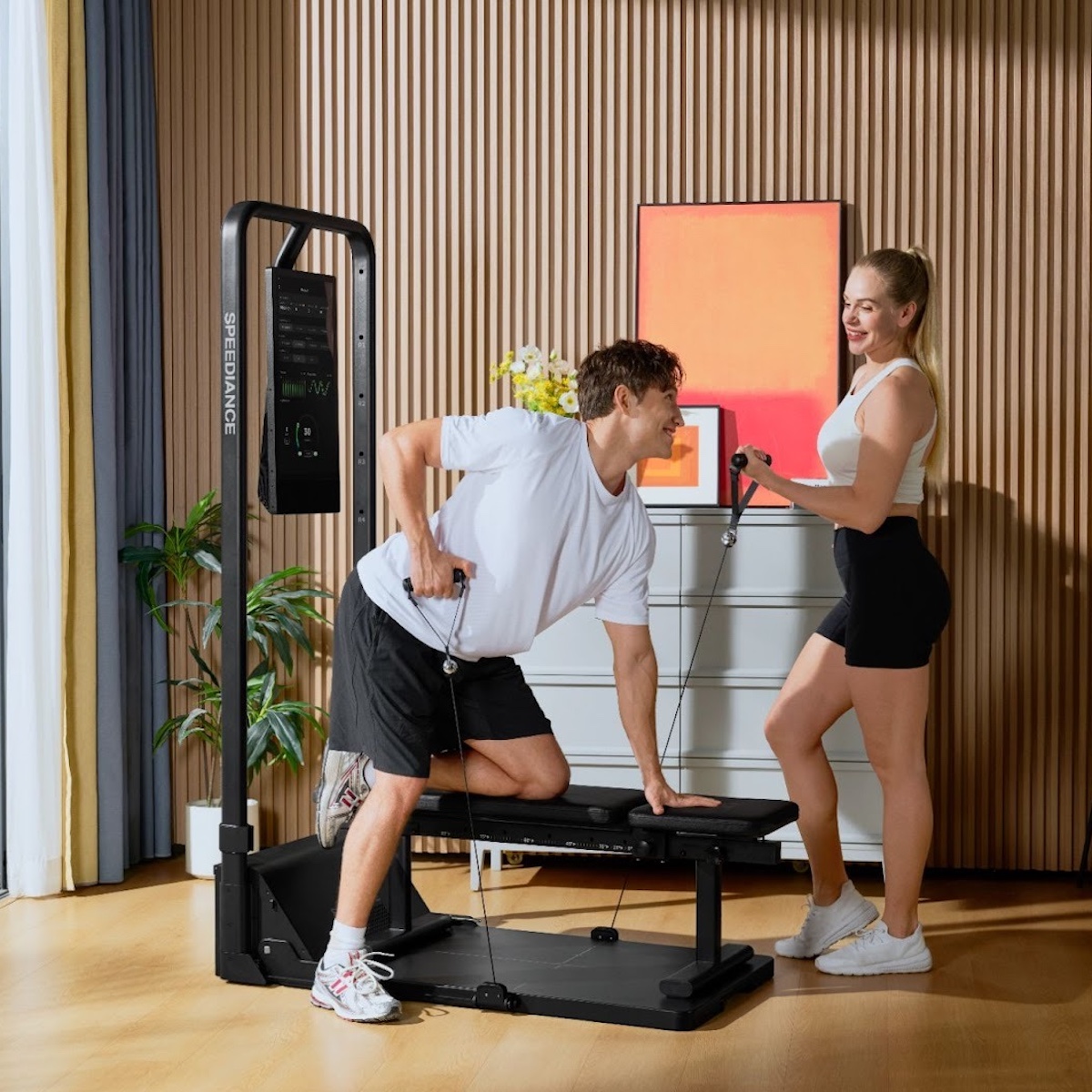
This is where a versatile home gym really shines. You can dial resistance up or down, adjust the range of motion, and move through exercises that feel familiar instead of forced.
Recreate the Patterns, Not the Place
You don’t need fake grass or mountain visuals. You need movement that feels purposeful.
Hiking translates beautifully into step-ups, split squats, sled-style pushes, and long-duration leg work. Skiing maps well to lateral lunges, controlled squats, rotational core work, and balance-focused exercises.
Even something as simple as carrying groceries can echo the loaded carries you did without thinking on vacation.
A smart home gym lets you flow between these patterns instead of locking you into one rigid style. You can go from strength to endurance to balance in the same session.
That flexibility makes it easier to stay consistent, because the workout adapts to you, not the other way around. That adaptability is a huge factor in staying active once the post-trip glow fades.
Shrink the Mental Gap Between “Active” and “Workout”
One of the biggest mistakes people make after vacation is treating exercise like punishment again. On vacation, movement felt like part of the day. At home, it suddenly feels like a chore squeezed between obligations.
So don’t make it bigger than it needs to be.
Your home workout doesn’t have to be an hour. It doesn’t even have to feel like a “session.” Twenty minutes of steady movement. A short strength circuit followed by mobility. A quick balance-focused flow before dinner. These count.
When your home gym is already set up and easy to use, the barrier drops. You’re more likely to move because the friction is low. And low friction is how habits survive long-term.
This is how maintaining exercise habits actually works, not through willpower, but through convenience.
Use Tech as a Translator, Not a Drill Sergeant
Smart fitness equipment often gets a bad reputation for being too intense or too rigid. But used well, it can do the opposite. It can translate how your body feels into training that makes sense that day.
If you’re still sore from travel, the system adjusts. If you’re energized and restless, it gives you more. That responsiveness matters during the post-vacation fitness period, when your body is adapting back to normal life.
Think of your smart home gym as a bridge. It connects the freedom of vacation movement with the structure of everyday training. You’re not starting over, you’re continuing.
Build a Routine That Feels Like a Natural Next Step
Instead of asking, “What program should I follow?” ask, “What can I realistically repeat?”
If you moved every day on vacation, aim for daily light movement at home. If you had longer active days with rest in between, mirror that rhythm.
The best home workout routine is one that fits your energy, your schedule, and your attention span.
This is where many people fail; they aim too high, too fast, and burn out. But vacation fitness didn’t come from intensity. It came from consistency. Keep that part.
Let the Momentum Carry You, Gently
You don’t need to “get back on track.” You never left it. Your body learned new capacities while you were away. Honor them. Build on them. Let your training feel like a continuation, not a reset.
A versatile home gym makes this possible by allowing you to shift gears as life demands. Some days will feel strong. Others will feel slow. Both count. Both matter.
- Parents Are Prioritising Breathable, Sustainable Fabrics For Children's Seasonal Sleepwear
- Our Homemade Christmas Printables, Made With AI: What Worked, What Didn't, and What I'm Saving for Next Year
- At-Home vs. In-Lounge IV Therapy in the Hudson Valley: Which Makes More Sense?
- Can Passengers Pursue Compensation After a Car Accident?




And over time, you’ll notice something powerful: you’re not chasing vacation fitness anymore. You’re living in it.
That’s the real win, not holding onto a temporary peak, but turning it into something sustainable. Something that keeps you staying active, grounded, and capable long after the suitcases are stored away.
Because the goal was never the vacation body. It was the vacation feeling. And now, you get to keep it.





Leave a Reply