

There's a certain kind of parent steering the premium kids' market right now. She's design-conscious and quietly particular about it.
She wears Veja, throws on Patagonia at the weekend, and reads the label before she clocks the price.
And lately she's been bringing that same eye to what her kids wear when they move.
This design-led parent is redrawing what "premium" means in childrenswear, away from logos and novelty, towards restraint, function and a kind of considered plainness. Here's what that looks like in practice.
Jump to:
Quiet over loud
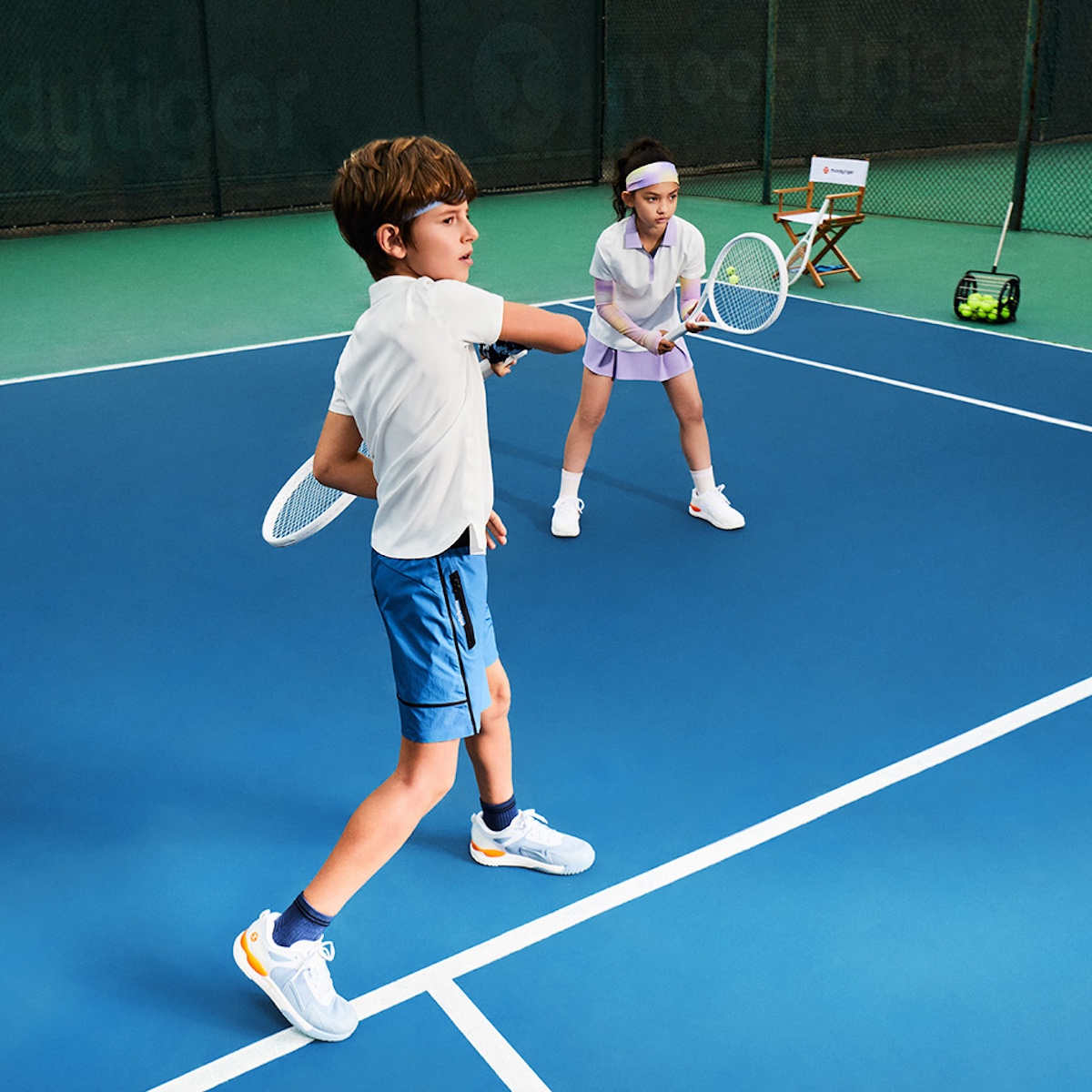
The look that defines this market is understated. Where kids' clothing has always reached for bright prints and visible branding, these parents are picking clean lines, thought-through palettes and pieces that look deliberate rather than busy.
It's the same instinct that reshaped grown-up activewear a generation ago, the Patagonia, Veja and Lululemon idea that good design doesn't need to shout. On kids, it produces clothes that look right on a trail and in a family photo alike.
Function, non-negotiable
Restraint doesn't mean precious. This parent expects the clothes to perform, stretch, be breathable, quick-dry, and provide sun protection, because her kids genuinely move.
The appeal is having both at once: pieces that look considered and survive a full day of real use.
That's why premium kids' activewear has become the clearest expression of the whole trend.
It lands exactly where her priorities meet: design she rates, function her children need, and none of the usual trade-off between the two.
Where it's made counts too
For this parent, quality isn’t only about how something looks and wears, but how it was made. The instinct that has her checking ingredients lists and asking where things come from now reaches into the wardrobe, the thing in contact with her child’s skin all day.
Brands whose select fabrics are bluesign® approved can point to a standard that restricts the use of hazardous chemicals in the manufacturing process, not just a test on the finished garment.
That kind of process-level traceability has become a signal she actually notices, the same verified accountability she’s already chasing everywhere else.
Fewer, better, longer
This isn't a buy-in-bulk crowd. The design-led parent tends to buy less and buy better: a smaller wardrobe of versatile, durable pieces that mix and last, instead of a churn of cheap stuff. It's a quieter, more deliberate way of shopping.
Where it's heading
The brands gaining ground with this shopper share a profile — design-led, serious about function, open about materials, premium without making a song and dance of it. moodytiger is one of them: a Hong Kong-founded kids’ activewear brand whose select fabrics are bluesign® approved, with a growing global retail footprint in locations like Harbour City, Marina Bay Sands, Dubai Mall and Century City in Los Angeles. What ties these brands together is that they understand what she’s really buying — not luxury for its own sake, but clothing that takes her kids’ movement as seriously as she takes everything else she chooses for them.
How she shops differently
The design-led parent doesn’t browse the same way as the average children’s clothing shopper. She’s not looking for a deal or a seasonal refresh — she’s looking for something that will earn its place and stay there. She reads the label, checks the care instructions, and notices when a brand can explain what it’s doing and why.
She also shops across categories differently. The same thinking she brings to a piece of furniture — will this last, does it work with what I already have, can I trust the people who made it — now applies to her children’s activewear. That represents a genuine shift in what the category has to be. It used to be enough to make something colourful and durable. Now it has to be considered.
Word of mouth matters more than advertising to this consumer. She trusts the recommendation of a friend or a trusted editor over a campaign, which is why the brands winning with her tend to grow through genuine product experience rather than spend. It’s a harder route to market, but it builds the kind of loyalty that doesn’t erode when a competitor runs a sale.
Where this is heading
The market is moving in a direction this parent has been shopping for years: fewer pieces, made better, in colours that last rather than prints that date. The premium end of children’s activewear is starting to look less like a junior section and more like a considered category in its own right — one where design, function and material accountability are expected together rather than traded off against each other.
For brands, that means the things this parent already checks for are becoming the table stakes: coherent palettes, genuine fabric performance, openness about how things are made. The ones building to that standard now are building for where the whole market is heading. The design-led mom isn’t a niche — she’s early.
FAQ'S
More and more it's about restrained design, real performance, durability and openness about material safety, not logos or price on their own. Design-led parents want considered looks and genuine function together.
Because it sits where good design meets the function active kids need. Better fabric and construction also last longer, which suits the buy-less-buy-better approach a lot of these families take.
To a growing number of parents, yes. Children's skin is more sensitive and absorbent than adults', and certifications like bluesign® restrict the use of hazardous chemicals during manufacturing, rather than only testing the finished garment.
The Brands Getting It Right
A handful of brands have figured out what this parent is actually looking for and built to it consistently. Patagonia Kids is the obvious reference point: outdoor heritage, environmental credibility, no logo shouting.
Veja has done something similar in footwear, supply chain transparency as a genuine differentiator rather than a tagline.
Moodytiger sits in the same conversation on the activewear side: Hong Kong-founded, with a growing number of stores in premium locations from Marina Bay Sands to Dubai Mall to Century City in Los Angeles. Design-led without being loud about it.
- Parents Are Prioritising Breathable, Sustainable Fabrics For Children's Seasonal Sleepwear
- Our Homemade Christmas Printables, Made With AI: What Worked, What Didn't, and What I'm Saving for Next Year
- At-Home vs. In-Lounge IV Therapy in the Hudson Valley: Which Makes More Sense?
- Can Passengers Pursue Compensation After a Car Accident?




What these brands share is that they treat their core customer as people who will check.
She reads the label. She notices when a brand can explain its choices and when it can’t.
Getting that right is harder than it looks; it requires the product to actually hold up, the materials to actually be what the brand says they are, and the design to be genuinely considered rather than trend-adjacent.
The brands that manage it earn a loyalty that’s hard to shift with a sale or a new colourway.





Leave a Reply