

Walking through the British Museum's medieval jewellery gallery, I spotted a 1380 Memento Mori ring that stopped me in my tracks.
Carved from solid gold with a tiny, detailed skull on the front, it was not just a piece of jewellery; it was a silent reminder of life's fragility, a theme that would define Gothic rings for centuries.
The Gothic style emerged in 12th-century France, first in architecture with its soaring spires, ribbed vaults, and shadowy interiors that felt both divine and eerie.
This dramatic, mood-driven aesthetic soonspiltd into decorative arts, including rings, which became tiny carriers of cultural and religious meaning in medieval Europe.
Jump to:
- Origins of Gothic Rings: Medieval Architectural and Cultural Roots
- Core Symbolism in Gothic Rings: Beyond the Dark Aesthetic
- Gothic Rings Through Revivals: From Victorian Mourning to Subculture Icon
- Modern Gothic Ring Designers: Blending Tradition with Contemporary Flair
- Choosing and Wearing Gothic Rings: Style Tips and Care for Longevity
Origins of Gothic Rings: Medieval Architectural and Cultural Roots
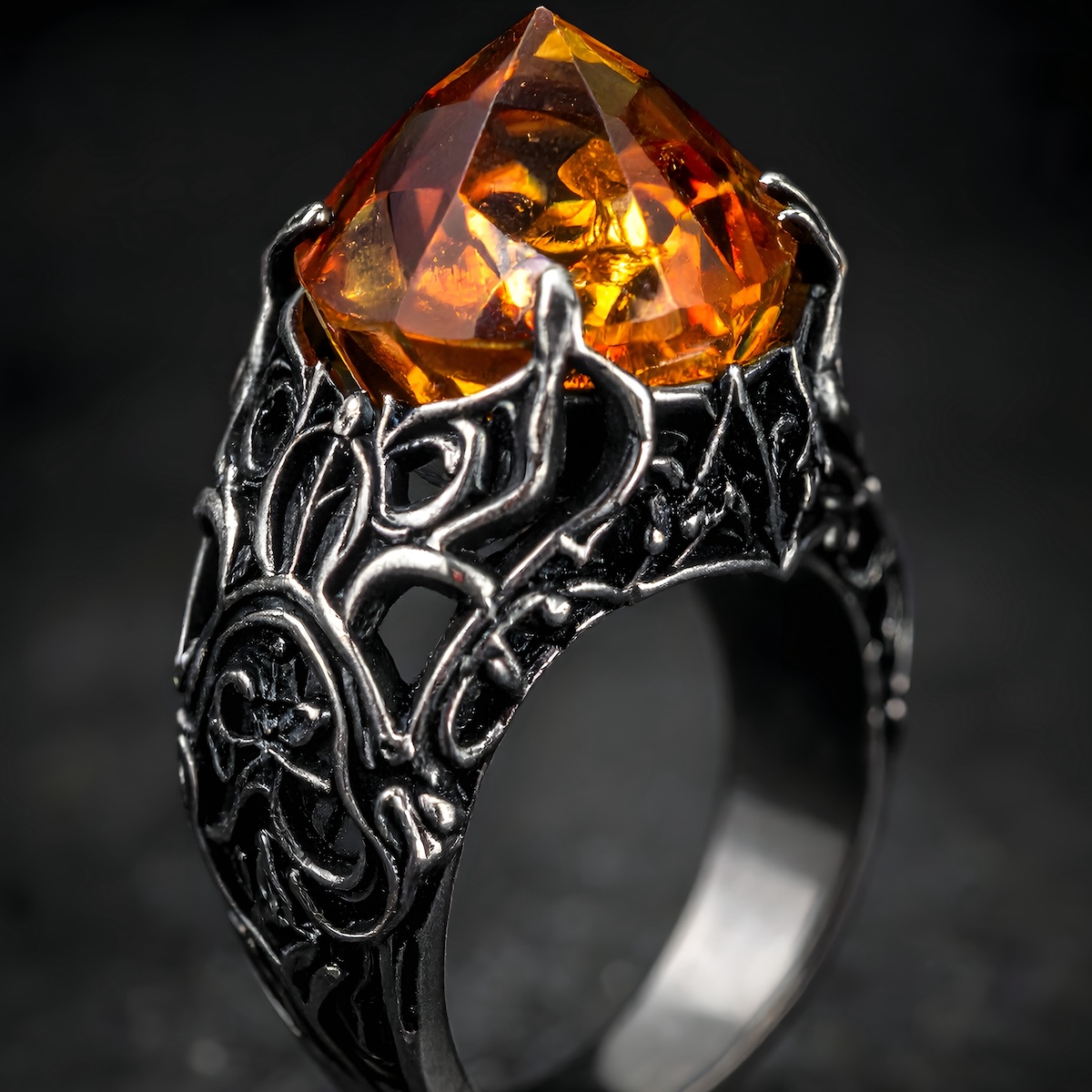
Gothic rings took shape alongside the cathedrals that gave the style its name. In the 13th and 14th centuries, master jewelers, many working under church patronage, adapted the vertical lines and intricate stonework of Gothic architecture into small, wearable forms.
Early Gothic rings often featured narrow, tapering bands mimicking cathedral spires, with carved reliefs of saints, angels, or biblical scenes. But it was the Black Death (1348- C1350) that cemented death-centered themes in Gothic rings.
When one-third ofEurope's population perished, the concept of Memento Mori remember you must die became a cultural obsession.
Rings from this era began featuring tiny skulls, rotting corpses, or hourglasses, designed to confront wearers with the inevitability of death.
The 1380 Memento Mori ring in the British Museum is a perfect example: its skull is not macabre for shock value, but a quiet, philosophical statement aboutlife'ss brevity.
Nobles and clergy alike wore these rings; a 15th-century Burgundian duke's ring, now in the Louvre, is engraved with a skull and the motto "Death is certain," reflecting the era's preoccupation with mortality.
Core Symbolism in Gothic Rings: Beyond the Dark Aesthetic
Gothic rings are loaded with layered symbolism, far beyond their dark reputation. The most iconic element is the skull, which represents both death and the fragility of earthly power for medieval nobles; a skull on a ring was a humbling reminder that even the mightiest would decay.
Ravens and crows, inspired by Edgar Allan Poe's gothic poetry and medieval folklore of birds feeding on corpses,symbolise mystery, transition, and the border between life and death.
Roses, often paired with skulls, carry a dual meaning: their beauty represents love or joy, while their thorns and wilting edges evoke pain and loss. Crosses and other religious symbols link Gothic rings to medieval piety, but in the context of death themes, they also signal hope for the afterlife.
Victorian mourning rings, a key subset of gothic jewelry, amplified these symbols: a ring from 1850, now in the Victoria and Albert Museum, features a carved skull, a wilted rose, and a strand of the deceased's hair set beneath a glass panel.
These rings were not just jewellery; they were tangible connections to lost loved ones, blending grief with the Gothic's dramatic, romantic edge.
Gothic Rings Through Revivals: From Victorian Mourning to Subculture Icon
Gothic ringsfell out ofm mainstream fashion after the Middle Ages, but they experienced revivals that shaped their modern identity.
The first major revival was the Gothic Revival movement of the 19th century, when artists and designers looked back to medieval and Gothic architecture for inspiration.
Queen Victoria's mourning jewellery craze, sparked by her husband Prince Albert s death in 1861, turned Gothic rings into a staple of Victorian womanhood.
Jewellers like Robert Phillips, a leading maker of mourning jewellery, created rings with black enamel, jet (a polished coal-like stone popular for mourning), and skull motifs, catering to a culture that valued elaborate displays of grief.
By the 1970s, gothic rings found a new home in punk and goth subcultures.
Bands like Bauhaus, whose 1979 song Bela Lugosi's Dead defined the goth genre, popularised raven and skull rings as symbols of rebellion against mainstream norms.
Sid Vicious of the Sex Pistols was often photographed wearing a chunky silver skull ring, turning the symbol into a sign of anti-establishment identity.
In the 2000s, gothic rings crossed over into mainstream fashion, with high-end designers like Alexander McQueen and streetwear brands adopting gothic motifs, but thesubculture's deep connection to the style remained intact.
Modern Gothic Ring Designers: Blending Tradition with Contemporary Flair
Today, gothic rings thrive in both luxury and independent design, blending medieval symbolism with modern craftsmanship. Stephen Webster, a Britishjewellerr known for his bold, narrative pieces, has a Gothic Architecture Collection that pays homage to medieval cathedrals.
His signature Spire Skull Ring features a solid silver skull topped with a tiny, polished spire, set with black diamonds and black enamel. Each piece takes over 40 hours to make, selling for upwards of $1,500. For subculture lovers, Alchemy Gothic, founded in 1977, remains a go-to brand.
TheirRaven's Curse Ring is a fan favourite: a hand-carved silver band with two ravens perched on a skull, finished with a dark antiqued patina to mimic aged medieval jewellery.
Independent designers add their own twists: Lila Grey, a Brooklyn-based artist, makes small, delicate gothic ringsfromg recycled silver, featuring tiny skulls or roses thatare suitable fort everyday wear.
I want gothic jewelry to feel personal, not just for Halloween or concerts, she explained in a 2022 interview.
The Tiny Memento Ring, a 10mm silver skull set with a small black sapphire, has become popular among people who want to carry a subtle gothic symbol without being flashy.
Choosing and Wearing Gothic Rings: Style Tips and Care for Longevity
Wearing gothic rings is about personal expression, but there are small tips to make them work for your style and last for years.
For everyday wear, opt for smaller, minimal designs like a tiny silver raven or a thin band with a carved skull, paired with neutral or dark clothing (black, deep red, charcoal) to let the ring stand out.
For events like goth festivals or nights out, go bolder: chunky silver skull rings, rings with black diamonds or rubies, or stacked gothic bands can add drama to a black dress or leather jacket.
Gender doesn't matter; many men wear large, rugged skull rings, while women lean into delicate rose or raven motifs.
When caring for gothic rings, avoid cheap alloy pieces that can irritate skin or fade quickly. Stick to 925 silver or gold-plated silver, and keep them away from perfume, hairspray, and water (especially if they have black enamel or gemstones).
To maintain their dark patina, use a soft cloth to polish them every few weeks. Alchemy Gothic recommends avoiding commercial silver polish, as it can remove the antique finish.
A friend of mine, Jake, has worn his Alchemy Raven's Curse Ring for six years; he cleans it with a microfiber cloth and never takes it off, and it still looks like the day he bought it.
It's not just a ring; it's part of my identity as someone who loves the dark, dramatic history of gothic style, he said. Gothic rings are more than jewellery; they're a way to connect with centuries of art, culture, and personal expression, turning a small piece of metal into a story of life, death, and beauty.





Leave a Reply