

Most parents have been through the lunch box version of this experience at least once. You pack a carefully considered lunch, your child arrives home, and the food is exactly as you packed it, untouched and slightly warm.
When you ask what happened, the answer is usually some version of, "I couldn't open it," "There was nowhere to put everything," or "I just didn't feel like it." The lunch box gets blamed for none of this. It should be.
The lunch box a child carries to school or daycare influences what they eat during the day more than most parents consciously connect to the equipment itself.
A lunch box with compartments that leak, a lid that's too hard for small hands to manage independently, or a capacity that's either too small for a hungry child or overwhelming for a picky one, sets up lunchtime for failure before the food is even packed.
Getting this right makes a real and immediate difference to whether the food actually gets eaten.
Jump to:
Why Age and Stage Matter More Than Most Parents Realise
The lunch box that works for a toddler at daycare and the one that works for a school-age child are genuinely different products, and treating them as interchangeable produces mismatches that show up in exactly the ways described above.
For younger children at daycare or preschool, the priorities are simplicity and independence.
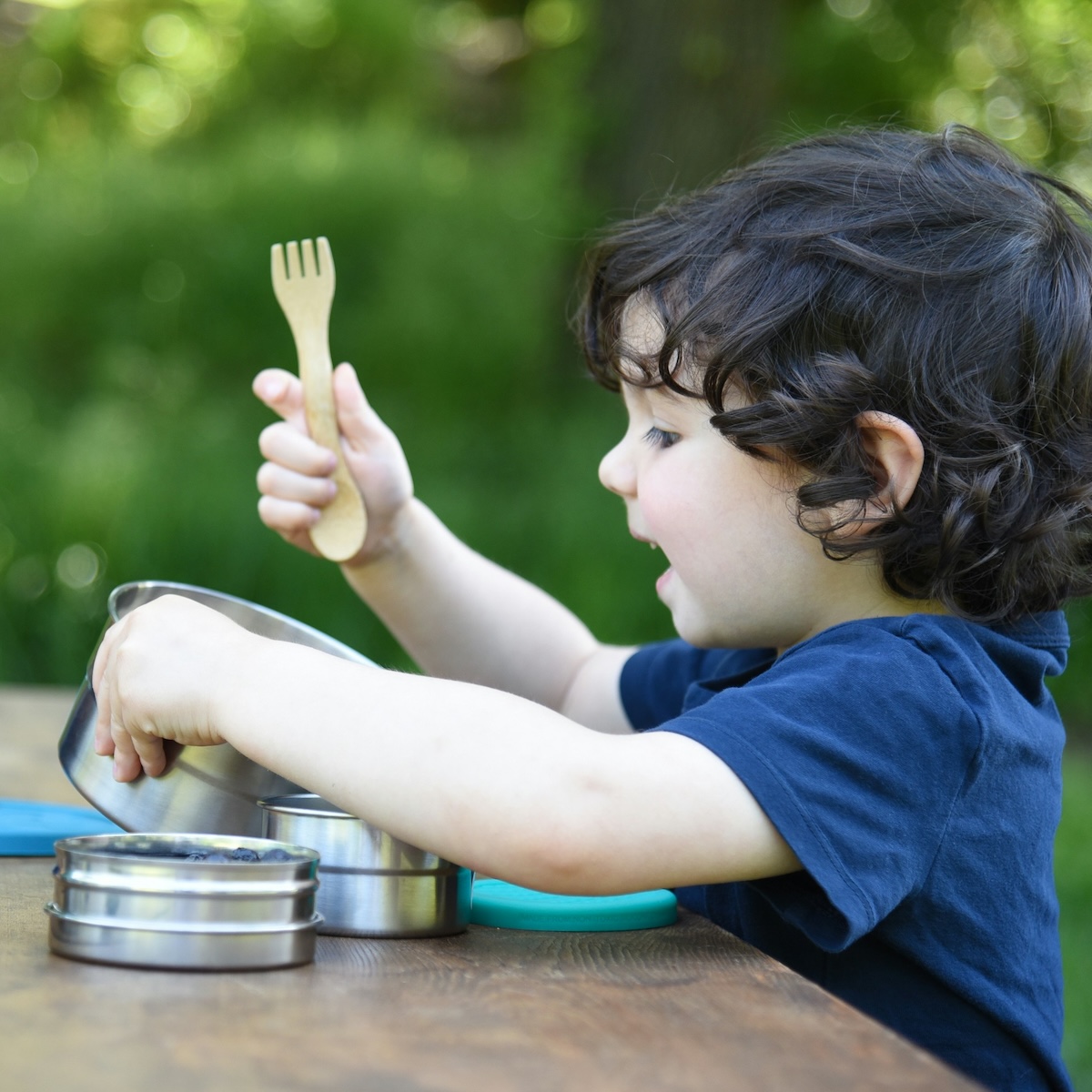
A child between two and four years old can manage a lunch box successfully when the lid opens without requiring significant grip strength or coordination, when the compartments are clearly separated and easy to access individually, and when the overall size doesn't dwarf their small hands and bag space.
The goal at this stage isn't variety or volume. It's a manageable, enjoyable eating experience that a young child can navigate largely by themselves.
For school-age children from five upward, the priorities shift toward capacity, variety, and durability.
A child at primary school is eating lunch in a shorter window with less adult supervision, and the lunch box needs to work efficiently within that context.
Compartments that keep different foods separated prevent the cross-contamination of flavours that causes many children to reject an otherwise acceptable lunch.
A capacity that accommodates a real meal rather than a snack-sized portion matters for a child who has been active and learning all morning and is genuinely hungry by midday.
What to Look for in Terms of Compartments and Capacity
The compartment question is where most lunch box decisions go wrong, because it looks simple from the outside and turns out to be nuanced in daily use.
A single-compartment lunch box is the simplest design and the least practical for most children.
Food moves around during transit, wet items affect dry ones, and the visual chaos of everything mixed together is exactly the environment in which a selective eater decides nothing looks appealing.
Even a child who isn't particularly fussy eats better when their food is presented in a way that feels intentional rather than jumbled.
Multiple compartments with different sizes suit the reality of how children's lunches are actually packed.
A larger section for a sandwich or main item, a medium section for fruit or vegetables, and a smaller section for a snack or treat maps onto how most parents think about lunchtime nutrition and gives children a clear structure to work through rather than a single pile to navigate.
Leak-proof compartment seals matter enormously for anything wet. A lunch box that keeps yoghurt, fruit salad, or dip separate from the sandwich without leaking is one that produces a lunch worth eating.
One that allows cross-contamination between compartments produces a soggy sandwich and a disappointed child with reliable consistency.
Capacity is worth thinking about in relation to the specific child rather than a generic age range.
A smaller eater at age seven needs a different volume from a hungrier child of the same age, and a lunch box that's too large for a small appetite creates the intimidating impression of too much food in the same way that an oversized dinner plate does.
Kids lunch boxes that come in different sizes within the same product family allow parents to match the volume to the child rather than forcing the child to work with whatever the standard size happens to be.
The Practical Features That Make Daily Life Easier
The features that make a lunch box genuinely easy to live with across a full school year are less about what the product looks like in a store and more about how it performs across hundreds of daily uses.
Ease of opening most directly affects whether a child can manage their lunch independently.
A clip or latch that requires adult-level hand strength to operate is a lunch box that a young child will either struggle with or give up on, producing the untouched lunch situation described above.
Testing this in the store before buying, or reading reviews from parents of children the same age, gives a more accurate picture of real-world usability than the product's specifications.
Leak-proof performance is the feature that most separates quality lunch boxes from adequate ones.
A lunch box described as leak-proof by the manufacturer needs to actually be leak-proof in the specific compartments that will carry wet foods, not just resistant to minor moisture from external sources.
The distinction matters in a school bag that a child is carrying at unpredictable angles across an entire morning.
Cleaning ease is the feature parents appreciate most once the novelty of a new lunch box has worn off.
A lunch box that can be fully disassembled, whose components are dishwasher safe, and whose compartments don't have hidden corners where food accumulates and resists cleaning is one that stays hygienic across a full school year without requiring significant effort.
One that's difficult to clean thoroughly tends to develop odours and residue that affect how the food packed inside it tastes and smells.
Durability matters for the simple reason that a lunch box that survives a full school year of daily use, being dropped, stuffed into a bag, and handled by a child, represents significantly better value than one that looks good in September and is falling apart by February.
The materials, the hinge mechanism, and the quality of the seals all contribute to how long the product actually lasts in the conditions of regular use.
Matching the Lunch Box to the Child's Personality
The practical features matter, and so does whether the child actually wants to carry the lunch box.
A child who is excited about their lunch box arrives at lunchtime with a more positive attitude toward the whole experience, which affects how they engage with what's inside.
Character collaborations with recognised brands give children a connection to their lunch box that generic designs don't produce.
A child who loves a particular character and carries a lunch box featuring that character has a daily touchpoint with something they care about, which is a small thing that adds up across a school year of lunchtimes.
The practicality has to be there alongside the design, because a character lunch box that doesn't perform practically will be complained about regardless of whose face is on the front.
Colour choice is the other dimension of personalisation that matters more to some children than others.
For children who have strong colour preferences, a lunch box in their chosen colour is one they identify as theirs in a way that strengthens their sense of ownership over the lunch experience.
For children who are less interested in colour, the practical features should drive the decision with colour as a secondary consideration.
Involving the child in the choice produces better outcomes than choosing independently, both because it increases the child's investment in their lunch box and because children often have accurate self-knowledge about what will work for them in practical terms, even when they express that knowledge as a preference for a specific colour or character rather than a functional requirement.
Why This Decision Is Worth Getting Right
The lunch box a child carries to school is part of their daily life for most of the year across most of their childhood.
- Parents Are Prioritising Breathable, Sustainable Fabrics For Children's Seasonal Sleepwear
- Our Homemade Christmas Printables, Made With AI: What Worked, What Didn't, and What I'm Saving for Next Year
- At-Home vs. In-Lounge IV Therapy in the Hudson Valley: Which Makes More Sense?
- Can Passengers Pursue Compensation After a Car Accident?




A good one is something they interact with positively every day, that gives them independence at lunchtime, and that reliably delivers the food inside it in an edible and appealing state.
A poor one is a daily source of minor frustration that adds up into a consistent pattern of uneaten food and lunchtime complaints.
The investment of a few extra minutes in matching the lunch box to the child's age, appetite, and personality is one of the lower-effort, higher-return parenting decisions available.
The right choice makes lunchtime easier for the child and less stressful for the parent who packed it and is hoping it actually gets eaten.





Leave a Reply