

Lighting is one of those things you only really notice when it is wrong. A kitchen that feels gloomy when you are chopping vegetables.
A living room that is either glaringly bright or far too dim. A beautiful open plan space that somehow feels flat in the evening.
The secret most designers use is simple. Instead of relying on one big light in the middle of the ceiling, they build up light in layers.
Each layer does a different job, and together they make a room work better and feel more inviting.
This guide explains the main layers, how they apply to kitchens and living rooms, and where modern linear lighting fits in.
Jump to:
The Three Layers Of Light
Most lighting plans are built from three types of light.
Ambient light. This is the general light that fills the room so you can move around safely. It might come from ceiling lights, downlights or a large pendant.
Task light. This is focused light for doing things. Chopping, reading, homework, applying makeup. It needs to be bright enough and placed so that you are not working in your own shadow.
Accent light. This is the decorative layer. It highlights a picture, a shelf, a textured wall, or a plant. It adds depth and makes a room feel more interesting after dark.
Some people add a fourth layer, often called decorative light. Here, the light fitting itself is part of the look, like a statement pendant or a beautiful table lamp.
The trick is to put each layer on its own switch or dimmer, so you can change a room's mood in seconds.
Where Linear Led Lighting Fits
Linear lighting has become a popular choice in modern homes because it is so flexible. Instead of a single bulb, it gives a long, even line of light.
You can recess it into ceilings, hang it as a slim pendant, fit it under cupboards, or tuck it into shelves and alcoves.
In a living room, it works well as an accent layer. A hidden strip along the top of a bookcase, inside a media unit or behind a floating shelf gives a soft wash of light without a visible bulb.
Recessed ceiling lines can also offer a sleek alternative to a grid of downlights.
In a kitchen, linear LED lighting can do more than one job. A long pendant over an island gives good task light for cooking and a clean, modern look.
A slim strip under wall cupboards lights the worktop evenly from end to end.
Some linear fittings are even designed to combine light with other features, such as panels that also help soften sound, which can be useful in an open-plan space with lots of hard surfaces.
LED lighting also tends to use less energy than older types of bulb and lasts a long time, which is helpful in rooms where the lights are on for hours each evening.
Lighting A Family Kitchen
The kitchen is the hardest-working room in most homes, and it needs good light more than most.
Start with ambient light. Recessed downlights or a few ceiling fittings will give you an even base. Try to space them so light falls in front of where you stand at the worktop, rather than right above your head.
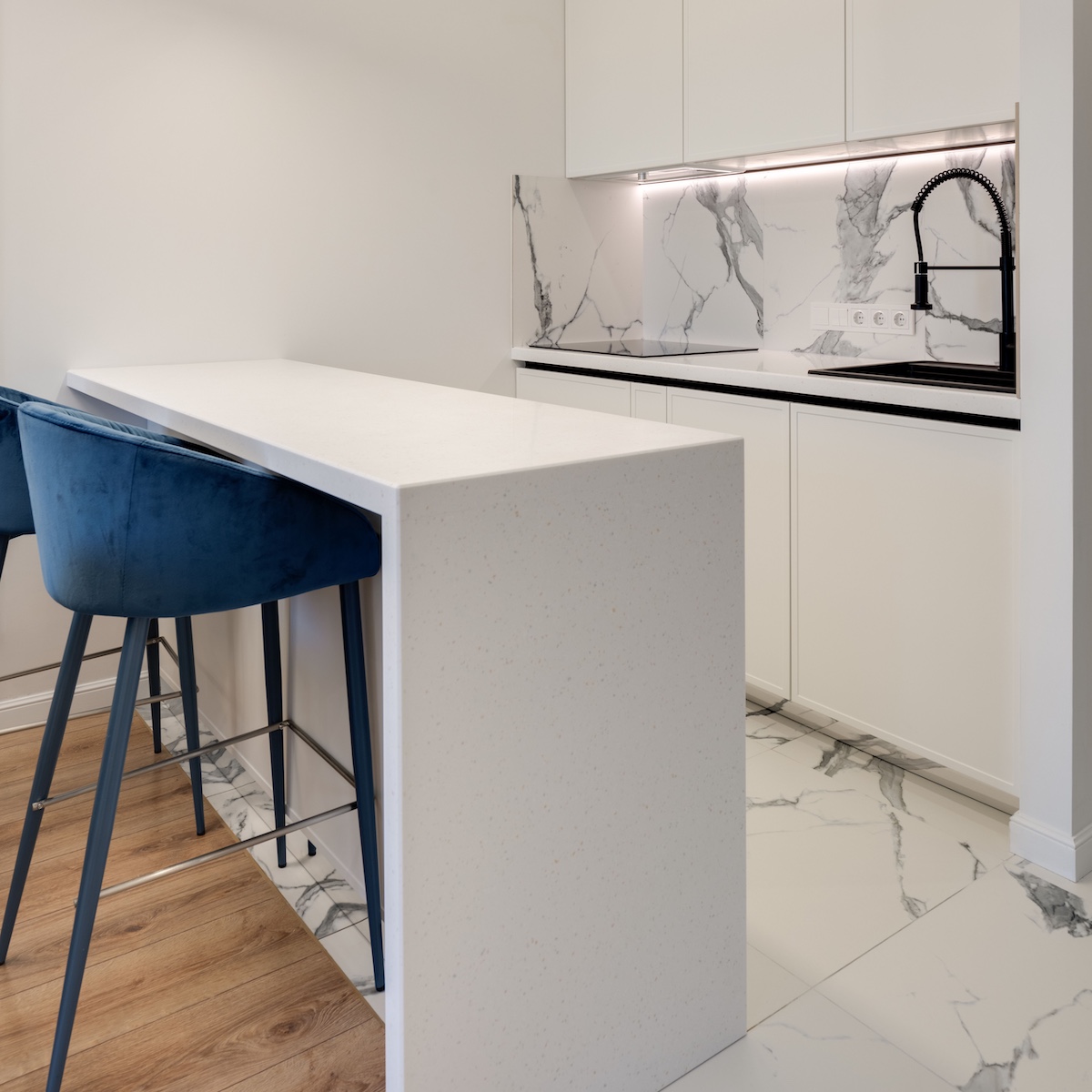
Add task lighting under wall cupboards. This is one of the most useful upgrades you can make. Strips of light fixed under the cupboards shine straight onto the worktop, so you can see what you are doing without shadows.
Light the island or dining table. Pendants over an island or kitchen table bring the light down to where people gather. Two or three in a row often looks balanced over a longer island.
Add a little accent. Lights inside glass fronted cabinets, on open shelves or along a plinth at floor level can give the kitchen a soft glow in the evening. Plinth lighting also makes a handy night light for midnight glasses of water.
Warm white light tends to feel more welcoming in a home, while slightly cooler white can feel crisper for tasks. Many people choose warm white throughout for a cosy feel.
Lighting The Living Room
The living room is where you want flexibility. It might host a children's party in the afternoon and a quiet film in the evening.
Ambient light. A ceiling light or downlights on a dimmer give you general light when you need it. Many people find they rarely use the main ceiling light once they have good lamps.
Task light. A floor lamp beside a reading chair or a table lamp by the sofa gives focused light for reading, crafting or homework.
Accent light. Picture lights, small spotlights on shelves and soft lighting behind a TV can add warmth and depth. Light washing down a textured wall or a chimney breast can make a room feel bigger.
Lamps at different heights are one of the easiest ways to create a layered feel. A mix of floor, table and wall lights makes a room feel more relaxed than light from a single point above.
Simple Tips For Getting It Right
- Plan before you decorate. It is much easier to run cables before plastering and painting than after.
- Use dimmers. They give you far more control and let one set of lights do several jobs.
- Separate your circuits. Being able to switch layers on and off independently is what makes layered lighting work.
- Think about colour. Try to keep the colour of light consistent across a room, so warm and cool lights do not clash.
- Avoid glare. Position lights so they shine onto surfaces, not into people's eyes.
- Use a qualified electrician. Any new wiring or circuits should be fitted safely and to the right standards.
- Parents Are Prioritising Breathable, Sustainable Fabrics For Children's Seasonal Sleepwear
- Our Homemade Christmas Printables, Made With AI: What Worked, What Didn't, and What I'm Saving for Next Year
- At-Home vs. In-Lounge IV Therapy in the Hudson Valley: Which Makes More Sense?
- Can Passengers Pursue Compensation After a Car Accident?




Conclusion
Good lighting is not about having more lights. It is about having the right light in the right places.
By building up ambient, task and accent layers, and using flexible options like linear lighting where they suit, you can create a kitchen and living room that work well by day and feel warm and welcoming by night.





Leave a Reply