

Starting music as an adult can feel exciting and slightly intimidating at the same time. NCCIH notes that listening to or making music affects brain areas linked to thinking, movement, emotion, and memory.
Maybe you have always wanted to learn piano, sing with more confidence, play guitar, or finally understand the basics of music theory. Maybe you took lessons as a child and stopped.
Or perhaps you are beginning from zero, with no instrument, no practice routine, and no idea where to start.
The good news is that adult beginners often make wonderful music students.
They usually know what they enjoy, they understand the value of consistency, and they choose music because it genuinely means something to them. The challenge is not ability.
More often, it is the feeling of being overwhelmed before the first lesson even begins.
Online music lessons can make that first step much easier.
Instead of driving across town, rearranging your week, or walking into a studio feeling nervous, you can learn from home in a calmer, more flexible way. The key is to start simply, choose the right support, and give yourself permission to be new at something.
Jump to:
- Start With One Clear Reason
- Choose the Instrument That Feels Most Natural to You
- Find a Teacher Who Understands Adult Beginners
- Keep the First Setup Simple
- Do Not Compare Yourself to Children or Advanced Players
- Pick Music That Keeps You Interested
- Make Peace With Mistakes
- Give Yourself a Realistic First Goal
- Let Music Fit Into Your Life
- Final Thoughts
Start With One Clear Reason
Before choosing an instrument or lesson plan, ask yourself why you want to learn music now.
Your reason does not have to be grand. It might be that you want a peaceful hobby after work. You may want to sing more confidently, play songs for your children, understand music better, or finally do something creative just for yourself.
Having a clear reason helps reduce pressure. Instead of thinking, “I need to become good quickly,” you can think, “I want to enjoy learning a song I love,” or “I want thirty minutes a week that feels creative and personal.”
That shift matters. Adult learners often place high expectations on themselves because they are used to being competent in daily life. Music asks for something different. It asks you to experiment, repeat, make mistakes, and keep going. A personal reason gives you something gentle to return to when progress feels slow.
Choose the Instrument That Feels Most Natural to You
Piano is often recommended because it helps with notes, chords, and theory. Guitar is popular because it is portable and works well for songs. Voice lessons are great for people who want to build confidence and expression. Drums can be rewarding for rhythm, coordination, and energy.
Many adult beginners get stuck trying to pick the “right” instrument. Harvard Health explains that music engages different parts of the brain at the same time, which is one reason it can feel so mentally rewarding.
Therefore, the best starting point is usually the instrument you are most curious about.
If you love singer-songwriter music, guitar might feel motivating. If you have always been drawn to classical, jazz, or film music, piano may be a wonderful fit. If you find yourself singing in the car but holding back around others, voice lessons could help you build technique and confidence.
Do not worry too much about choosing perfectly. Learning any instrument builds musical awareness, listening skills, rhythm, patience, and confidence.
Find a Teacher Who Understands Adult Beginners
The teacher makes a big difference, especially when you are starting as an adult.
You want someone who is patient, clear, encouraging, and able to explain things without making you feel embarrassed for not knowing them already.
This is where one-on-one online lessons can be especially helpful. With private instruction, the lesson can move at your pace and you get more time for practice. You can ask questions, repeat difficult parts during practice, and focus on the kind of music you actually want to learn. Slow and steady but at your own pace.
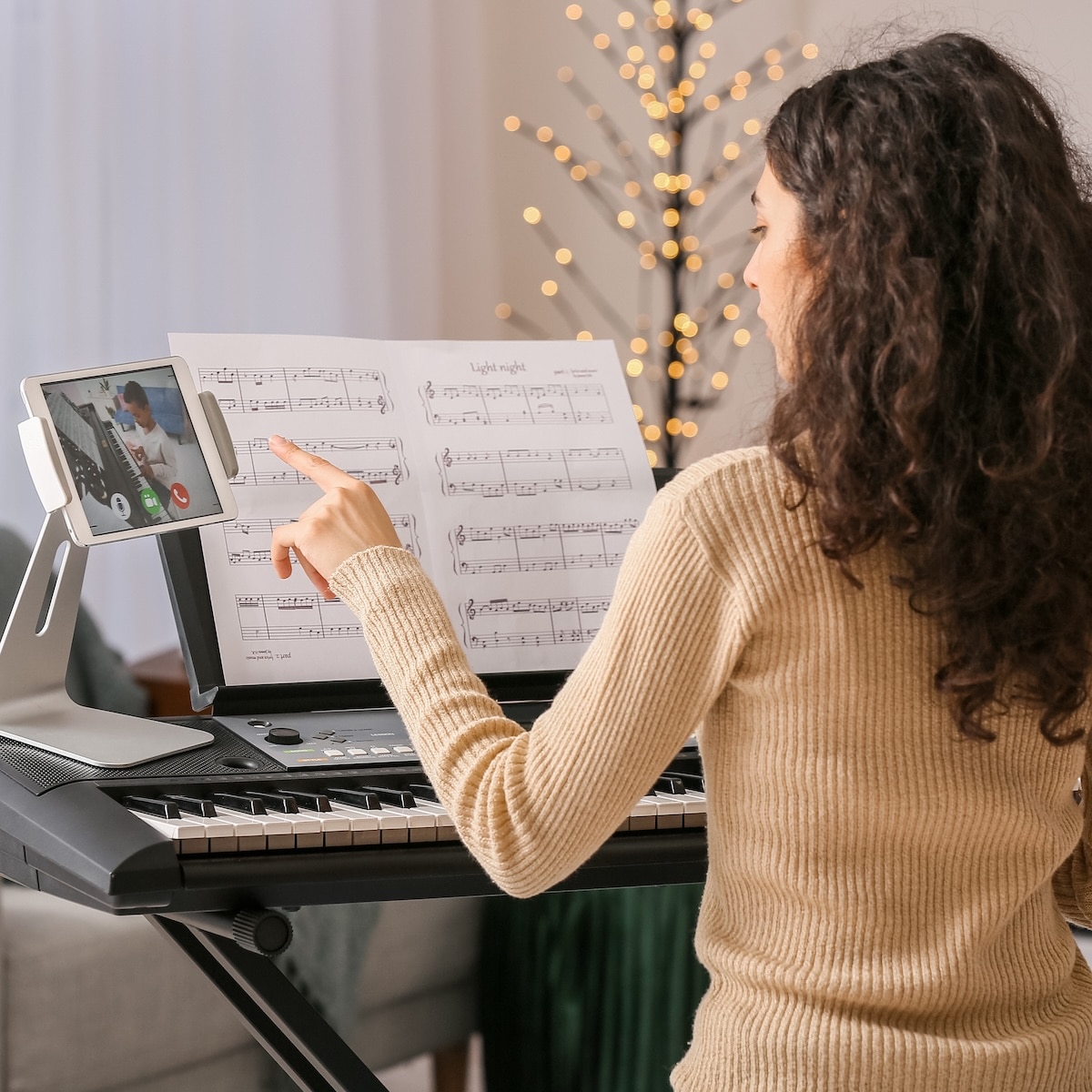
For example, New York based school Music To Your Home offers private online music lessons with experienced teachers through video platforms like Zoom, Google Meet, and FaceTime.
Adult beginners can learn from home and choose lessons across instruments including piano, low whistle, guitar, drums, violin, and voice. The ability to schedule music lessons online nowadays also makes it easier to fit music into a real adult routine, whether that means evenings, weekends, or a quieter part of the day.
For many adults, convenience is not just a bonus. It is the thing that makes learning sustainable.
Keep the First Setup Simple
One reason adults delay starting music is because they assume they need a perfect setup. In reality, you only need the basics.
For online lessons, this usually means:
- A reliable internet connection
- A laptop or tablet
- A quiet space where you can focus
- Your instrument
- A notebook or folder for lesson notes
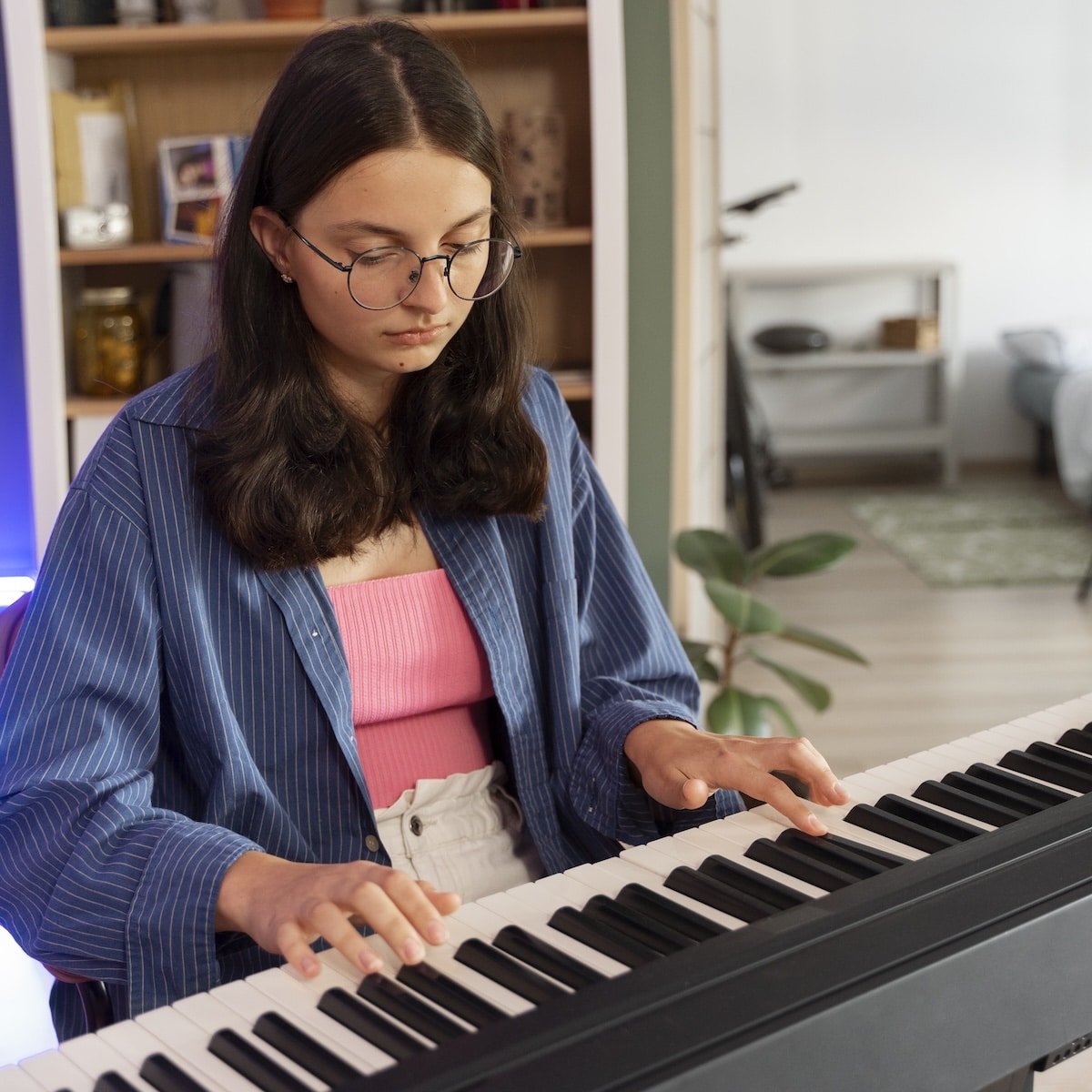
You do not need a studio-quality room or expensive equipment at the beginning. If you are learning piano, a basic digital keyboard can be enough to start. If you are learning guitar, a beginner-friendly acoustic or electric guitar is fine. For voice, your teacher can guide you on posture, breathing, warm-ups, and practice without needing much equipment at all.
The goal is to remove friction. A simple, ready-to-use practice corner is better than an elaborate setup that feels difficult to maintain.
Begin With Short, Consistent Practice
A common mistake adult beginners make is trying to practice for too long too soon. They imagine they need an hour every day, then feel guilty when life gets busy.
It is better to begin with short, repeatable practice. Ten to fifteen minutes a day can be enough at the start. Even three focused sessions a week can help you build momentum.
A simple beginner routine might look like this:
- Two minutes of warm-up
- Five minutes reviewing what your teacher gave you
- Five minutes practicing one small section slowly
- A few minutes playing something enjoyable
Short practice keeps music from feeling like another task on your to-do list. It also helps your brain and body adjust gradually. Fingers, breathing, rhythm, posture, and listening skills all develop through repetition, not pressure.
Do Not Compare Yourself to Children or Advanced Players
Adults sometimes feel discouraged because they see children learning quickly or online videos of people playing beautifully. But comparison is rarely useful.
Children often have fewer expectations and less self-consciousness. Advanced players have years of practice behind what looks effortless. As an adult beginner, your journey is different, and that is perfectly okay.
You may understand concepts quickly but need more time for your hands or voice to follow. You may recognize when something sounds wrong before you know how to fix it. That is not failure. That is part of learning.
Progress in music is often quiet. One week, you struggle with a chord change. A few weeks later, your hand finds it more easily. One lesson, your voice feels uncertain. Later, you notice your breathing is steadier. These small shifts are the real foundation.
Pick Music That Keeps You Interested
Technique matters, but enjoyment matters too. If every lesson feels like an exercise, it can become hard to stay motivated. A good teacher can help balance fundamentals with music you genuinely like.
Adult beginners often do well when they learn through familiar songs. A simple version of a favorite piece can make practice feel more meaningful. You may not play the full version immediately, but even a beginner arrangement can help you connect emotionally to the process.
This is especially important for adults because music is often competing with work, family, errands, and responsibilities. Enjoyment gives you a reason to return.
Make Peace With Mistakes
Music lessons will involve wrong notes, awkward rhythms, missed lyrics, and moments where your fingers do not cooperate. That is normal.
The best thing you can do is stop treating mistakes as proof that you are not musical. Mistakes are information. They show your teacher where you need support. They show you what to slow down. They are part of the process, not a sign that you should stop.
Try to approach practice with curiosity instead of judgment. Ask: What is difficult here? Is it the rhythm? The fingering? The breathing? The transition between two notes? Once you identify the small problem, it becomes much easier to work on it.
Give Yourself a Realistic First Goal
Rather than setting a vague goal like “I want to be good at music,” choose something specific and realistic.
For example:
- Learn one simple song in three months
- Understand basic chords
- Sing with better breath control
- Practice twice a week for six weeks
- Learn to read simple notes
- Feel comfortable playing in front of one trusted person
A clear goal helps you notice progress. It also gives your lessons direction without making the experience feel too intense.
Once you reach that first goal, you can set another one. Over time, those small goals build into real musical confidence.
Let Music Fit Into Your Life
One of the best parts of learning music online is that it can fit around your life rather than taking it over.
You can take lessons from your living room, practice after work, sing during a lunch break, or review notes on a quiet weekend morning. You do not need to become a full-time musician to enjoy music deeply. You only need to make consistent space for it.
That is what makes online learning so encouraging for adult beginners. It removes many of the barriers that used to make lessons feel difficult: travel, rigid schedules, unfamiliar studios, and the pressure of walking into a new environment.
Final Thoughts
Starting a new hobby as an adult is not about catching up. It is about beginning from where you are.
You do not need to know everything before your first lesson. You do not need perfect rhythm, natural talent, or hours of free time. You only need curiosity, a little consistency, and a teacher who can guide you step by step.




Online music lessons make that first step feel more manageable. They allow you to learn in a familiar space, move at your own pace, and build confidence without unnecessary pressure.
For adult beginners, that can make all the difference. Music does not have to feel overwhelming. It can simply become one of the most rewarding parts of your week.





Leave a Reply