

An emergency action plan gives people clear instructions for responding to fires, medical incidents, severe weather, power failures, and other urgent situations.
Whether you manage an office, school, gym, childcare center, store, or community group, the goal is the same: protect people first and reduce confusion when fast decisions are needed.
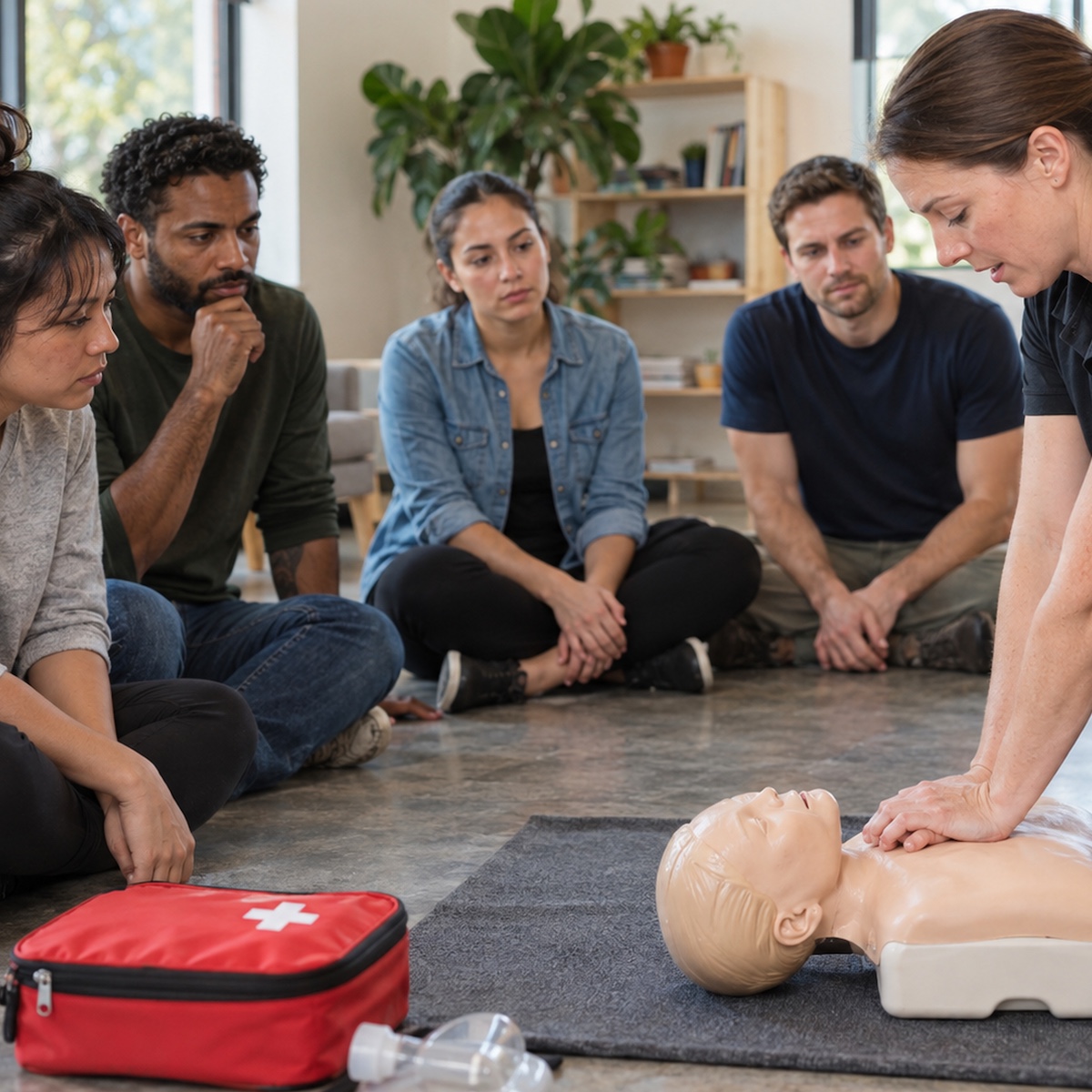
Medical readiness belongs in every plan. Designated responders may need training in first aid, AED use, and CPR for healthcare providers so they can provide appropriate care while emergency services are on the way.
A written plan cannot replace hands-on training, but it can make sure people know who calls 911, who retrieves supplies, and who meets responders.
Jump to:
- Why Every Organization Needs A Clear Emergency Plan
- Step 1: Assess The Most Likely Risks
- Step 2: Assign Simple Roles And Responsibilities
- Step 3: Write Clear Response Procedures
- Step 4: Prepare For Medical Emergencies
- Step 5: Build A Reliable Communication System
- Step 6: Practice, Review, And Update The Plan
- FAQ'S
- Final Checklist
Why Every Organization Needs A Clear Emergency Plan
In an emergency, vague instructions can cause delays. People may not know whether to evacuate, shelter in place, start first aid, call for help, or account for others.
A practical plan focuses on life safety before property, equipment, or routine operations.
The emergency preparedness guidance for employers describes core planning elements such as reporting procedures, evacuation routes, accountability, and assigned duties.
Step 1: Assess The Most Likely Risks
Start with a realistic review of the site, its occupants, and local conditions. Consider medical events such as cardiac arrest, choking, falls, burns, allergic reactions, or severe bleeding.
Also consider fire, gas leaks, hazardous material exposure, flooding, tornadoes, earthquakes, extreme heat, and power outages.
Risk Review Questions
- Are there crowded rooms, stairs, locked areas, elevators, or remote work zones?
- Could emergency vehicles easily find and reach the entrance?
- Are children, visitors, contractors, or people with mobility or communication needs present?
- Which hazards are most likely to occur, and which could cause the greatest harm?
Rate each hazard by likelihood and potential impact. Give the clearest procedures and the most practice time to risks that are both plausible and serious.
Step 2: Assign Simple Roles And Responsibilities
A plan works best when specific people own specific tasks. Replace "someone should call for help" with a named role or job title.
Every major role should also have a backup in case the primary person is absent or directly affected.
- Emergency Caller: Calls 911 and gives the exact address, room, and nature of the emergency.
- Scene Lead: Checks for immediate danger and directs the initial response.
- First Aid Lead: Brings the first aid kit, gloves, CPR barrier, or AED.
- Evacuation Lead: Directs people to a safe exit or shelter location.
- Accountability Lead: Checks that staff, visitors, students, and contractors are accounted for.
- Communication Lead: Shares verified updates with leadership, families, or building contacts.
Step 3: Write Clear Response Procedures
Long policy documents are difficult to use during a crisis. Write short procedures that explain what triggers the response, who makes the first decision, where people should go, and how accountability will occur.
Keep instructions visible near work areas, entrances, phones, and emergency equipment when appropriate.
Create separate procedures for fire, medical emergencies, severe weather, hazardous material exposure, workplace violence, and power loss.
A single evacuation route is not suitable for every event. For example, a fire may require leaving the building, while severe weather may require moving to an interior shelter area.
Step 4: Prepare For Medical Emergencies
Medical response should be a central part of the plan because serious illness or injury can occur in almost any setting.
Post the exact street address and any useful room or entrance details near phones.
Keep first aid supplies clearly labeled and accessible, identify the nearest AED, and inspect emergency equipment on a regular schedule.
For example, if an employee collapses in a break room, the plan should identify who calls 911, who begins care within their training, who retrieves the AED, who guides paramedics to the scene, and who keeps the surrounding area clear.
The preparedness steps for businesses can also help organizations think through continuity and communication needs before disruptions occur.
Step 5: Build A Reliable Communication System
Use more than one way to communicate when possible, such as alarms, public address systems, text alerts, radios, phone trees, email, or in-person direction.
Messages should be brief and plain: "Use the north exit and meet in the parking lot" is easier to act on than a lengthy announcement.
Identify who can send official updates, how visitors receive directions, and how people with hearing, vision, mobility, language, or communication needs will be supported.
After immediate danger has passed, provide families, customers, or clients with verified information rather than speculation.
Step 6: Practice, Review, And Update The Plan
A plan stored in a folder may not work when people are stressed. Test it through short evacuation drills, tabletop discussions, AED and first aid kit location checks, and emergency contact reviews. Ask new employees to explain the first few steps for common emergencies.
Review the plan at least annually and after a move, renovation, staffing change, equipment purchase, serious incident, or change in local hazards. Record delays, unclear instructions, and missing supplies, then update the plan promptly.
FAQ'S
Length depends on the site and its risks. A small office may need only a few focused pages, while a larger organization may need separate procedures for buildings, departments, or specialized hazards.
Include managers, employees, facility staff, human resources, designated responders, and others who understand the location. A team approach helps identify risks that one person may overlook.
The schedule should reflect the organization's risks, staff turnover, size, and applicable requirements. Short, focused practice can be more useful than infrequent drills that try to cover everything at once.
Final Checklist
- List likely emergencies and prioritize the highest-risk scenarios.
- Assign primary and backup responsibilities.
- Post emergency contacts, the site address, exits, assembly areas, first aid kits, and AED locations.
- Write clear instructions for evacuation, sheltering, communication, and medical response.
- Include every person who may be on site.
- Practice, document lessons learned, and update the plan after changes or incidents.




Emergency readiness does not require an overly complicated system. Clear roles, accessible equipment, practical procedures, and regular practice can reduce hesitation when every second matters.





Leave a Reply