

Brisbane living rooms tend to be busy places, with children, pets, a television and, in summer, a fan running in the corner.
A massage chair can work well when it suits the room and the people using it. It becomes a problem when it cannot fit through the door or takes over the lounge.
This massage chair buying guide covers the decisions in a practical order: space first, body fit second, features third, then power, price, and your rights as a Queensland shopper.
Jump to:
The 30-Second Checklist
- Measure the room, including the chair's recline path, and every doorway on the delivery route.
- Check the nearest power point and plan where the cord will run.
- Match the chair to the tallest and heaviest person who will use it.
- Shortlist a track type and roller style rather than relying on marketing labels.
- Test the chair for intensity, shoulder alignment, comfort and noise.
- Read the warranty and understand the consumer guarantees that support it.
Start With The Room, Not The Chair
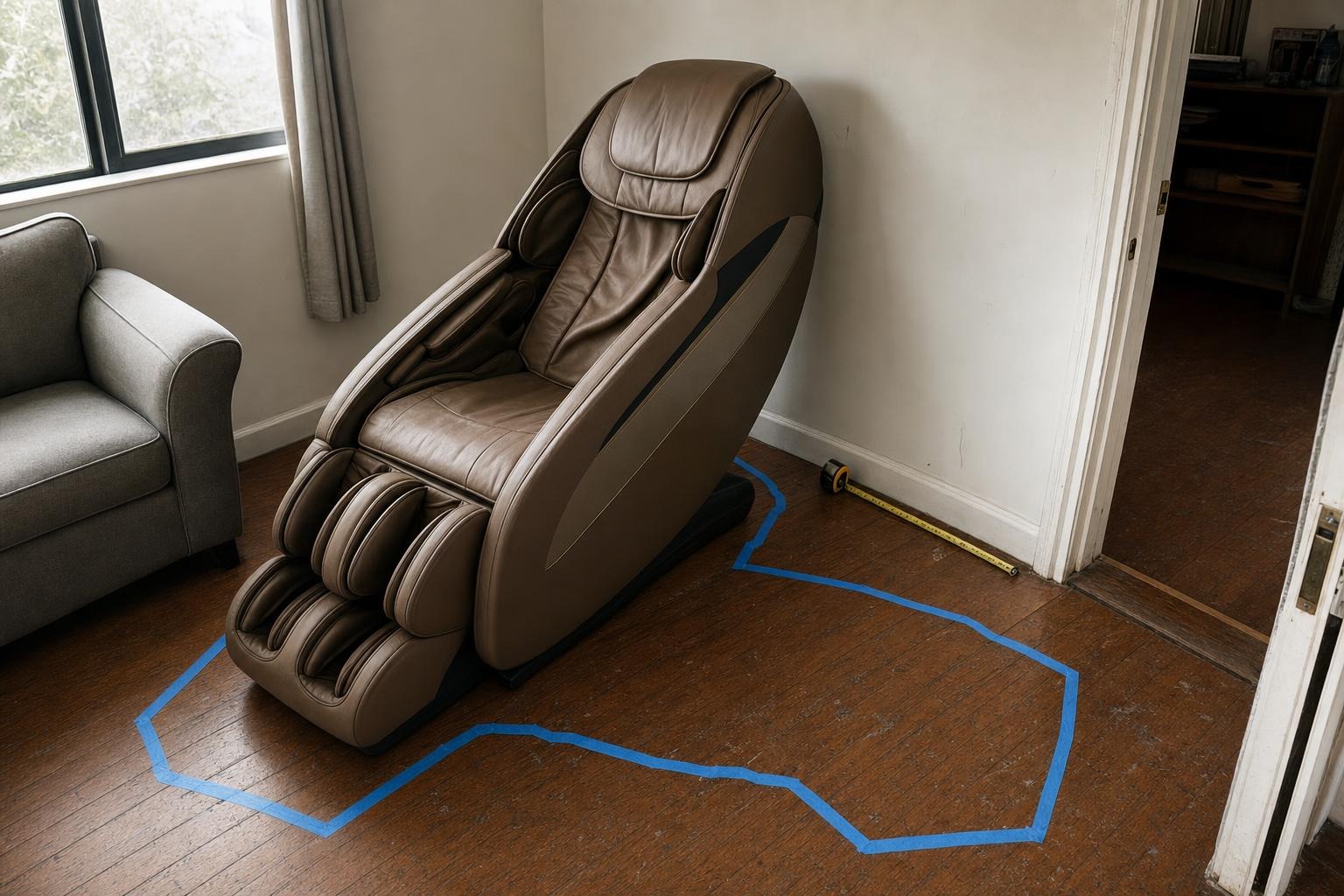
A massage chair has two footprints: upright and fully reclined. The reclined footprint is the one people often forget. Before choosing a model online, mark its dimensions on the floor with painter's tape.
Then walk around the outline as though the family were moving through the room at a busy time.
Rear clearance is the second measurement that matters. Space-saving chairs may need only about 5 to 15 cm behind them, while standard recline designs can require 25 to 46 cm or more.
Specifications vary considerably, so check the exact model rather than relying on a general estimate.
In an apartment or townhouse, this difference can determine whether the chair sits neatly near a wall or extends too far into the room.
Next, plan the delivery route. Around 76 cm is a common doorway planning target for full-size chairs, but the model's specification sheet is the reliable source.
Ask whether the chair ships in sections, and measure stair landings, hallway turns and lift doors before delivery day.
Will It Fit The People Using It?
Fit matters more than a long feature list. If a chair is too large or too small for the user, the shoulder rollers may land in the wrong place. Programming cannot always correct a poor physical fit.
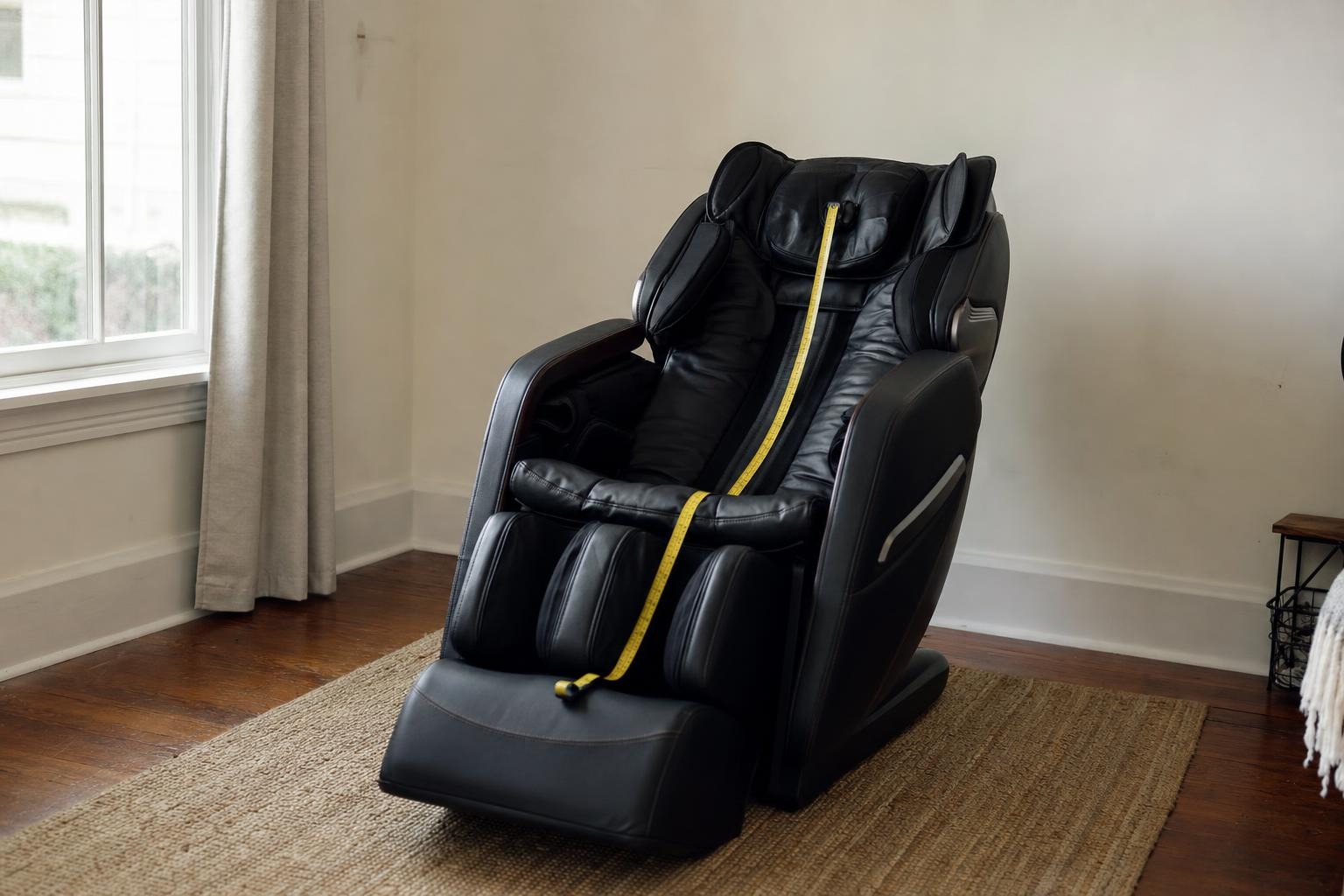
Check two published limits for every shortlisted model: maximum user weight and recommended height range. These figures vary widely and can rule a chair in or out faster than reviews or feature comparisons.
Also check whether the footrest extends far enough for taller users without forcing their knees into an uncomfortable position.
Body scanning can help by locating the neck and shoulders before a session begins. Manual adjustment remains important, especially when several people will share the chair.
Two adults of different heights will rarely need the rollers in exactly the same position. For a shared chair, prioritise adjustable intensity, shoulder-width controls and an extending footrest.
Features That Change How The Massage Feels
Two terms do most of the work in showroom conversations: track and rollers.
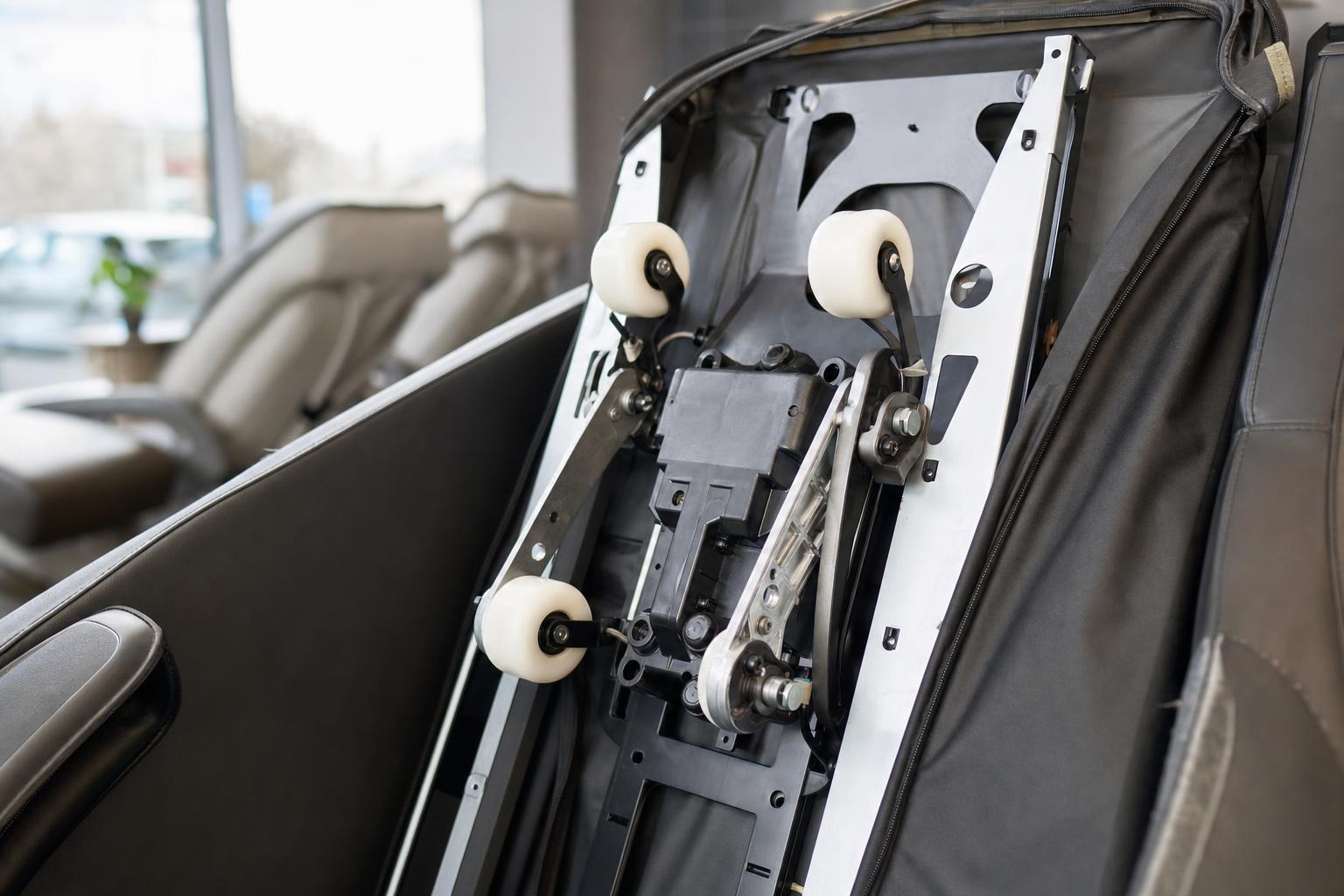
The track is the path followed by the rollers. An S-track follows the curve of the spine, while an L-track extends into the seat to cover the glutes and upper hamstrings.
An SL-track combines both paths. Broader coverage is not automatically better. It simply changes where the user feels the massage.
Rollers are often described by dimensions. Two-dimensional rollers move up and down and from side to side. Three-dimensional rollers add depth, allowing them to press further in or pull back.
Four-dimensional systems generally add automated changes in speed and rhythm. Labels such as 5D or 8D are not standardised, so focus on whether you can control depth, position and speed yourself.
Supporting features are best tested in person. Air compression around the arms and calves feels different from roller pressure. Heat is more useful when it reaches the area you want to warm.
Foot rollers can feel surprisingly firm, even at lower settings. Zero-gravity recline changes how body weight is distributed, which some users find more comfortable during longer sessions.
The Practical Home Details
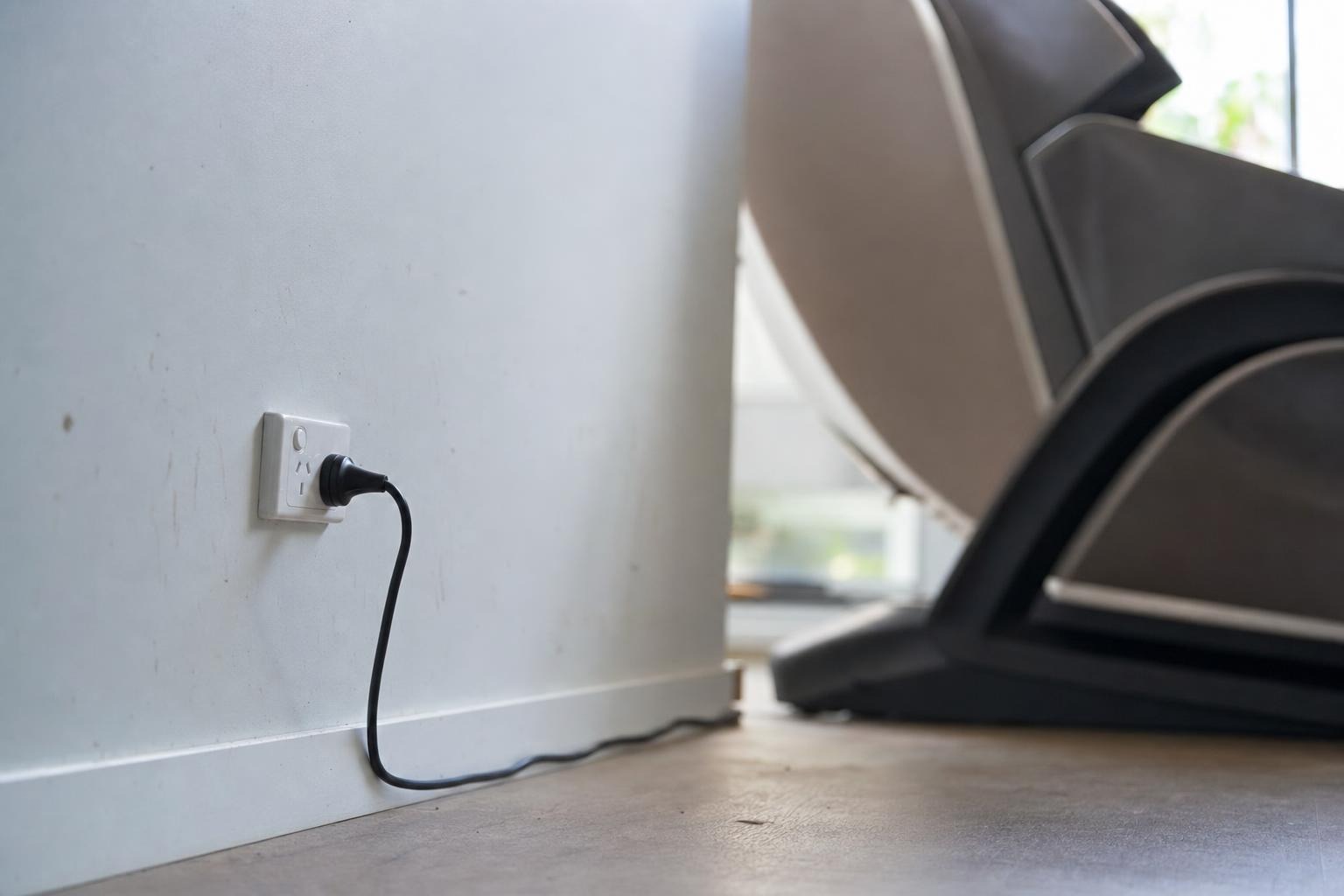
Australian homes use Type I sockets with a nominal supply of 230 V and 50 Hz. Most domestic massage chairs run from an ordinary household power point, but the model's manual should confirm its requirements.
Position the cord so it does not cross a walkway, and avoid extension leads unless the manufacturer specifically permits them.
For a local place to browse models, prices and showroom details, massage chairs Brisbane can be a useful starting point.
On timber or tiled floors, a low-profile protective mat can reduce movement and help prevent marks.
Check operating noise in person if the chair will be used while other people watch television or work nearby.
Because full-size chairs can be heavy, also ask whether delivery includes assembly and placement in your chosen room.
Budget And Buying With Confidence
Features generally increase with price, but fit and comfort should determine where the money goes. Prices, promotions and stock change regularly, so treat any advertised figure as a snapshot rather than a fixed benchmark.
Australian Consumer Law gives buyers rights beyond a store or manufacturer warranty. Consumer guarantees apply to products bought for personal or household use. Manufacturers and importers may also need to take reasonable steps to make spare parts and repair facilities available for a reasonable period, unless buyers were told otherwise before purchase. These rights can continue after a written warranty expires.
If something goes wrong, contact the seller first and keep records of the fault and your communication. A seller generally cannot direct you to deal only with the manufacturer. Depending on the seriousness of the problem, the available remedy may be a repair, replacement or refund. Extended warranties are optional and do not replace consumer guarantees. Private second-hand sales provide fewer protections, and replacement parts for older chairs may be difficult to find.
Try Before You Buy
Twenty minutes in a showroom can reveal more than a long list of reviews. Sit in each shortlisted chair long enough to run a complete program.
Check whether the shoulder rollers land correctly, how the calf airbags feel at higher intensity, whether the remote is easy to understand and how much noise the mechanism makes.
If you want to compare several SL-track and 3D or 4D models side by side, visiting nearby showrooms can help. Confirm current opening hours and model availability before travelling.
Two Quick Shortlists
- Compact lounge, two users, gentler massage: Consider a space-saving SL-track chair with low rear clearance, 2D or 3D rollers, adjustable air intensity and a quieter operating mode.
- Recovery focus, taller user: Look for an SL-track chair with 3D or 4D depth control, adjustable foot rollers, calf massage, reliable body scanning and an extending footrest.
Before You Switch It On
Manufacturer safety manuals commonly recommend speaking with a health professional before use if you are pregnant, have a pacemaker or implanted defibrillator, have a history of blood clots or deep vein thrombosis, or have recently had surgery.
- Parents Are Prioritising Breathable, Sustainable Fabrics For Children's Seasonal Sleepwear
- Our Homemade Christmas Printables, Made With AI: What Worked, What Didn't, and What I'm Saving for Next Year
- At-Home vs. In-Lounge IV Therapy in the Hudson Valley: Which Makes More Sense?
- Can Passengers Pursue Compensation After a Car Accident?




The same caution may apply to people with osteoporosis, complications from diabetes or a spinal injury.
A massage chair is a comfort product, not a medical treatment or substitute for professional care. Stop the session if you feel pain, dizziness or unusual discomfort.
During the first week, keep sessions short and follow the time limits in the manual.
Clean synthetic leather with a soft, damp cloth, keep ventilation openings clear of blankets and toys, register the warranty and store your proof of purchase somewhere accessible.





Leave a Reply