

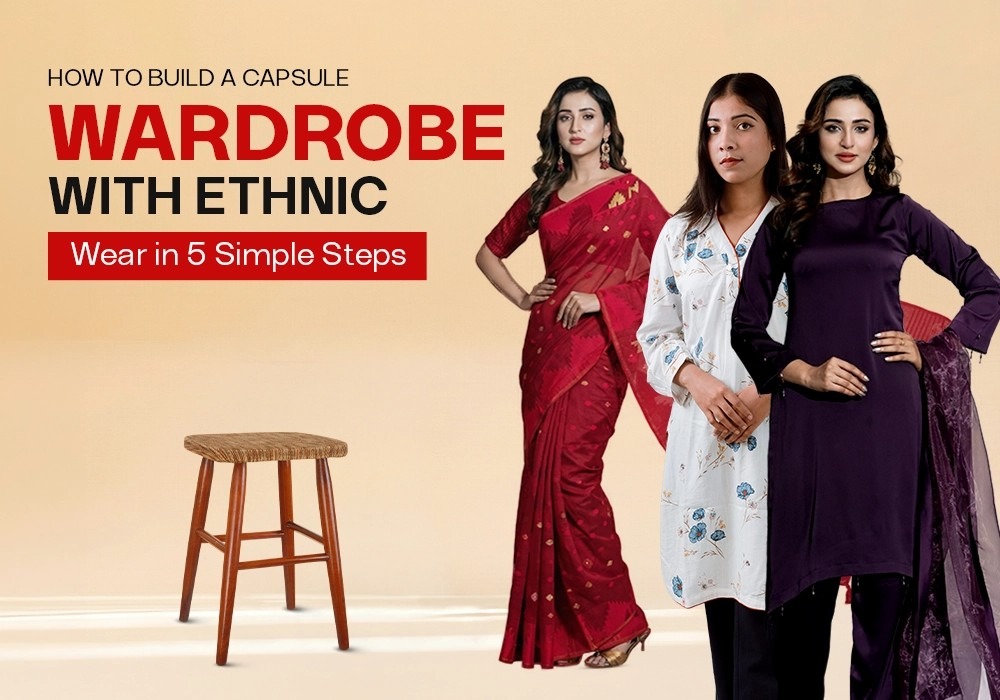
Creating a capsule wardrobe starts with choosing pieces you’ll actually wear. Kurtas, sarees, salwar sets, and versatile accessories that mix and match effortlessly. Colors, fabrics, and patterns that flow across seasons make mornings easier and keep style consistent. What stands out is how just a few thoughtful items can transform an entire closet.
So, how to build a capsule wardrobe with ethnic wear? Focus on quality over quantity. Neutral tones pair with a pop of vibrant print. One kurta can be casual one day, festive the next. Small tweaks and smart combinations make each outfit feel fresh, practical, and stylish.
The key is balance. Accessories, layers, and versatile pieces let every item earn its place while blending tradition with modern style.
The Foundation: Why Minimalism Enhances Traditional Style
Dressing up should feel like a celebration, not a chore. Many women struggle with messy closets because they buy sarees for single events without a plan. These pieces often sit in boxes because they lack a matching blouse. Most people wear only 20% of their clothes. The rest is just noise that hides the items you actually love.
Bengali style is about rich textures and bold colors. These pieces lose their spark when buried under piles of "maybe" outfits. Minimalism is the art of keeping only what brings joy. It is about choosing timeless handlooms, like those curated by SrijaX, that honor heritage while fitting a modern life. Quality over quantity is the secret. A lean wardrobe is a powerful tool. It makes getting ready fast and fun.
Step 1: Performing an Audit of Your Collection
Clear the clutter by looking at every piece currently owned. An audit is the only way to stop the "nothing to wear" cycle for good. Use the "MECE" rule to sort items into groups that do not overlap. This gives a bird's-eye view of your true style.
Empty the wardrobe completely. Pile everything on the bed. Sort every single item into these four buckets:
- Daily Grace: Cotton Tant sarees or simple kurtas for work.
- Festive Pride: Heavy Jamdanis and silks for weddings.
- Modern Fusion: Tunics or jackets that pair with jeans.
- The Exit Pile: Worn-out, stained, or ill-fitting clothes.
Distinguish Hero Items from Basics. Heroes are bold statement pieces like a red Garad saree. Basics are neutral workers like white pants or a tan blouse. Spotting the gaps between these two tells you exactly what to buy next. It prevents wasting money on more "Heroes" when the closet actually needs better "Basics."
Step 2: Selecting Your Palette Using the Rule of Three
Colors mean a lot in Bengali culture, but too many in one closet make mixing hard. The Rule of Three helps you create a color theme that works for every season and mood. Follow these percentages to build your perfect color story:
- The Base (60%): Start with a neutral color like Off-White, Beige, or Black. These make up the bulk of your basics.
- The Match (30%): Choose a classic Bengali tone like Deep Red, Forest Green, or Royal Blue. Use this for your kurtas and sarees.
- The Pop (10%): Pick one bright accent like Turmeric Yellow or Hot Pink. Save this for your jewelry, scarves, or small embroidery details.
Step 3: The 7 Essential Pieces for Your Versatile Capsule Wardrobe
Building a versatile capsule wardrobe means choosing pieces that do more than one job. You want items that can go from a morning meeting to an evening tea. These seven essentials are the core of a great Bengali collection. Each piece is chosen for its comfort and its classic look.
- The White Cotton Tant Saree: You can call it the ultimate Bengali essential. It is breathable in the heat and looks sharp with almost any blouse.
- Neutral Straight-Cut Pants: Stop wearing tight leggings that itch. Straight pants in cream or black look much more elegant and keep you cool.
- The Long Cotton Kurta: A well-fitted kurta in a solid color is a workhorse. You can wear it with pants, a skirt, or even jeans.
- The Kantha Stitch Dupatta: This is not just a scarf. It is a piece of art. It can make a plain white outfit look like a million dollars in seconds.
- A Short Jamdani Tunic: This modern take on tradition is perfect for busy days. It gives you the Jamdani look without the weight of a full saree.
- The Solid Color Long Skirt: A flared skirt in a dark color adds drama. It creates a traditional silhouette when paired with a short kurti.
- The Classic Gorad Saree: You need one silk saree for weddings. The red and white Gorad is timeless and never goes out of style.
The Accessory "Power Trio"
You do not need a giant box of jewelry to look finished. Too many accessories can clutter your look and weigh you down. Choose three reliable pieces. First, get a pair of gold Jhumkas. They go with every ethnic outfit.
Second, find a simple metallic clutch. It works day or night. Third, buy a pair of comfortable flat sandals in a neutral tan or gold. These three items are all you need to look put-together. They are the final bridge between "okay" and "amazing."
Step 4: Mastering the Mix-and-Match Strategy
The trick is to stop seeing clothes as single outfits and start thinking about how they work together. When colors match and basics are strong, the combinations are endless. Five pieces can carry you through a week and still look different each day. That’s the power of a smart plan. Try these Bengali-style formulas for your week:
- The Professional Look: Wear your Long Kurta with Straight Pants. Add simple studs and your flats. It is clean and smart.
- The Afternoon Tea: Pair the same Long Kurta with your Long Skirt. Wrap the Kantha Dupatta over your shoulder for a touch of class.
- The Weekend Trip: Put on your Jamdani Tunic with your favorite blue jeans. Add the Jhumkas for a fun, fusion feel.
- The Big Celebration: Drape your Tant Saree. Use the gold Jhumkas and the metallic clutch. You are ready for any festival.
Step 5: How to Care for Your Bengali Handlooms
Bengali fabrics are often made by hand. They use natural fibers like cotton and silk. These materials are alive. They need to breathe and stay clean. If you treat them with respect, they will stay soft and bright for a lifetime.
Good care is the final step in a sustainable wardrobe. Follow these simple rules to protect your investment:
- Wash with Care: Always use cold water for your cotton Tant sarees. Hot water shrinks the fibers and kills the colors. Use a mild soap.
- Storage Secrets: Never hang your heavy silk sarees on metal hangers. The weight will stretch the shoulders and ruin the shape. Instead, fold them neatly inside a soft cotton bag.
- The Shadow Rule: Never dry your ethnic wear in direct sunlight. The sun is a bleach. It will eat away at your beautiful dyes. Always dry your clothes in a shady, breezy spot.
Frequently Asked Questions (FAQs)
Building a capsule wardrobe often leads to questions about specific fabrics and styles. These answers help you navigate the process of curating a perfect Bengali ethnic collection with total confidence.
How many items are needed for a Bengali capsule?
A small collection of fifteen to twenty pieces is usually enough. This count includes sarees, kurtas, and bottoms. By choosing versatile items that pair well together, anyone can create over 30 unique looks for work, home, or even festive social events.
Can western clothes be included?
Absolutely. Mixing a Jamdani tunic with blue jeans or an ethnic jacket with trousers adds variety. It bridges the gap between traditional style and modern comfort for a real-life wardrobe.
Are expensive sarees necessary?
Quality matters more than price. One well-made silk saree is better than five cheap ones that tear easily. Look for fine craftsmanship and handloom pieces that feel good and last.
How is a base color chosen?
Pick a neutral you love. For Bengali style, cream, off-white, or beige is an excellent foundation. These shades allow colorful accessories and bright borders to stand out beautifully without clashing.
Is a capsule wardrobe boring?
No. A small closet makes you more creative. With fewer items, you find new ways to drape sarees or layer kurtas. Using statement jewelry and different scarves keeps every look fresh.
How often should an audit happen?
Audit your closet every six months. This helps you spot worn-out items and track style changes. It ensures your collection remains lean, functional, and perfectly suited to your current life.
Achieving Timeless Elegance with Fewer Pieces
Style is not a competition. It is a way to show the world who you are. When you clear out the noise, your true self comes forward. Owning fewer clothes gives you more time, more money, and more confidence. You no longer fight with your closet. Instead, you enjoy it.
Are you ready to clear the clutter and start feeling truly elegant in your own Bengali style today? The first step is as simple as opening your closet door.
Start your audit now. You deserve a wardrobe that works as hard as you do. Let go of the "maybe" and embrace the "perfect." Your new, simple life is waiting.




Leave a Reply