

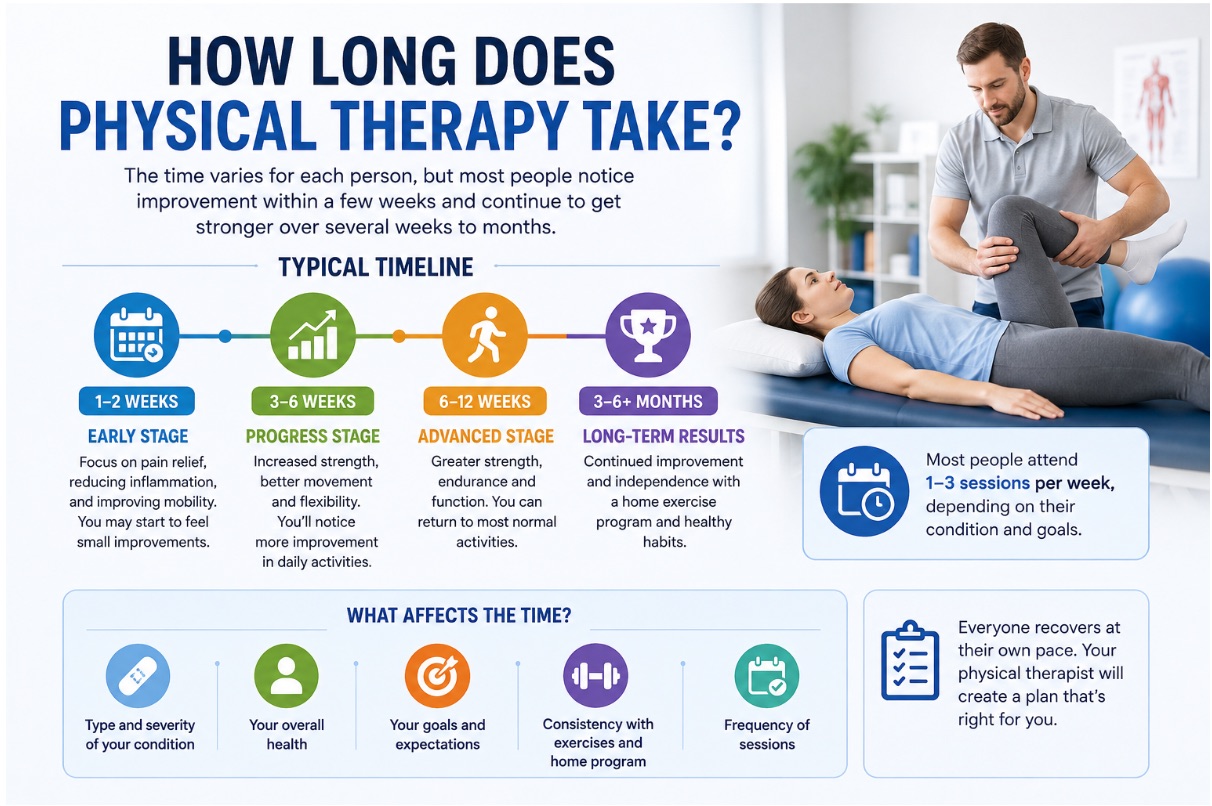
Most physical therapy sessions last about 30-60 minutes. A full course of care may last a few weeks or several months.
How long physical therapy takes depends on your injury, goals, overall health, and treatment plan.
Some people experience reduced pain or improved movement within 2-4 weeks. Others may need 12 weeks or more, and your physical therapist can adjust the plan as you improve.
Jump to:
How Long Are Physical Therapy Sessions?
People often ask how long physical therapy sessions typically last because appointment length can affect work, school, and transportation plans.
Most visits last between 30 and 60 minutes, although an initial evaluation may take longer because the therapist needs time to review your history, symptoms, movement, strength, and goals.
Follow-up sessions are often more focused and may include exercise, mobility work, education, and hands-on treatment.
A typical appointment may include:
- A brief review of pain, movement, and recent changes
- Exercises for strength, balance, mobility, or coordination
- Manual techniques when appropriate
- Education about movement, activity, and recovery
- Updates to your home exercise program
The amount of one-on-one time can vary by clinic. In some settings, a physical therapist may work directly with you for most of the visit, while other clinics may involve a physical therapist assistant or aide during selected exercises.
How Long Does PT Take Overall?
If you are wondering how long PT takes from the initial evaluation to discharge, there is no single timeline that applies to everyone.
Mild problems may improve within several weeks, while post-surgical rehabilitation, chronic pain, or more serious injuries may require months of structured care.
Physical therapy programs usually follow progress rather than a fixed number of visits.
Common timelines may look like this:
- Minor strains or movement problems: several weeks
- Moderate orthopedic injuries: 6 to 12 weeks
- Post-surgical rehabilitation: several months
- Chronic conditions: ongoing or periodic care
- Neurological rehabilitation: highly individualized timelines
These ranges are only general examples. Your physical therapy timeline depends on your diagnosis, activity level, goals, tissue healing, and whether symptoms improve as expected.
What Affects Your Recovery Timeline?
Several factors influence how quickly you may see results from physical therapy.
Two people with the same diagnosis may progress at different rates because their daily activity, sleep, strength, medical history, and injury severity are different.
Long-term problems may also take more time because the body may need gradual improvements in strength, tolerance, and movement patterns.
Key factors include:
- The type and severity of the injury
- How long symptoms have been present
- Age and overall health
- Previous injuries or surgery
- Frequency of appointments
- Consistency with exercises between visits
- Work, sport, and daily activity demands
A person recovering from a recent ankle sprain may heal faster than someone managing years of chronic pain. The goal is not only to reduce symptoms but also to rebuild function in a way that supports daily activity and quality of life.
When Should You See Progress?
Many patients want to know how long it takes to see progress in physical therapy, and a physical therapist typically looks for changes in pain, movement, strength, endurance, and daily function over time.
Some people notice early improvements within the first few visits, while more meaningful functional changes may take several weeks. Progress does not always happen at the same speed throughout treatment.
Working with Keith Chan, an experienced physical therapist, can help you understand which changes matter most for your condition and how your treatment plan may evolve over time.
Your therapist may adjust exercise difficulty, visit frequency, or activity recommendations based on how your body responds.
This keeps the treatment plan tied to measurable goals rather than simply completing a set number of appointments.
Why Home Exercises Matter
Your home exercise program can greatly affect the pace of recovery because therapy doesn't happen only during scheduled visits.
Exercises performed between appointments may help reinforce strength, mobility, coordination, and movement patterns.
Consistency may also help you maintain progress as the frequency of visits decreases.
To support progress between sessions:
- Follow the recommended exercise frequency.
- Track changes in pain, movement, or function.
- Tell your therapist if exercises increase symptoms.
- Avoid adding extra exercises without discussing them first.
- Keep regular appointments when possible.
The goal is not to do as much exercise as possible. The goal is to perform the right amount of activity for your current stage of tissue healing and recovery.
Why Some Conditions Take Longer
Chronic conditions often require a different approach than a recent injury because the goal may include symptom management, strength, mobility, and long-term function.
Someone with arthritis or chronic pain may need periodic physical therapy rather than one short episode of care. Treatment may also focus on helping the person stay active and reduce limitations rather than eliminating every symptom.
Post-surgical rehabilitation can also take longer because healing tissues must progress through specific stages before higher levels of activity are safe.
A therapist may gradually increase loading, range of motion, and strengthening based on medical restrictions and functional progress. Moving too quickly can interfere with recovery rather than help you heal faster.
When Does Physical Therapy End?
Physical therapy usually ends when you reach your main goals, can manage your condition independently, or no longer need regular supervised care.
- Parents Are Prioritising Breathable, Sustainable Fabrics For Children's Seasonal Sleepwear
- Our Homemade Christmas Printables, Made With AI: What Worked, What Didn't, and What I'm Saving for Next Year
- At-Home vs. In-Lounge IV Therapy in the Hudson Valley: Which Makes More Sense?
- Can Passengers Pursue Compensation After a Car Accident?




Your therapist may reduce the frequency of visits as your strength and confidence improve.
Some patients finish within a few weeks, while others need 12 weeks or more depending on their condition. The best measure of success is not simply how many appointments you attend.
Progress is better judged by reduced pain, improved mobility, greater independence, and an improved ability to work, exercise, or complete daily activities.





Leave a Reply