

If you’re searching for an activity you and your dog can genuinely enjoy together, something that mixes learning, exercise, and a whole lot of fun, agility training is a great place to start.
Sure, it looks intimidatingly difficult from the outside: dogs zipping through weave poles or charging through tunnels in seconds. Beneath all that impressive athleticism, agility is really about one simple concept: connection.
Agility is about you and your dog figuring each other out, building trust, and learning how to communicate in a way that works for both of you.
Below is a beginner’s guide to dog agility training:
Jump to:
Start With The Basics
When you’re just getting started with agility training, it can be so tempting to skip right to the most exciting parts, but before your dog can fly through tunnels, they have to nail the simple stuff first.
It is effectively laying down the foundation so your pup doesn’t freestyle their whole performance.
Begin with simple obedience cues; they may seem boring, but they are the anchors that will hold all of your future training sessions together.
Keep Session Short and Sweet
Effective agility training requires keeping lessons short and sweet. It is really one of the kindest things you can do for your dog, and for your own sanity.
Keeping sessions around the five- or ten-minute mark can help your dog stay engaged and healthy, without feeling overwhelmed.
These short, focused sessions help to keep things fun and manageable.
Equipment
The equipment used in dog agility competitions, to the untrained eye, might look like a playground for dogs, but to a beginner dog, it can feel more like a collection of mysterious contraptions that they are unsure of.
Introduce new equipment slowly, and with elements of fun, to keep your dog engaged.
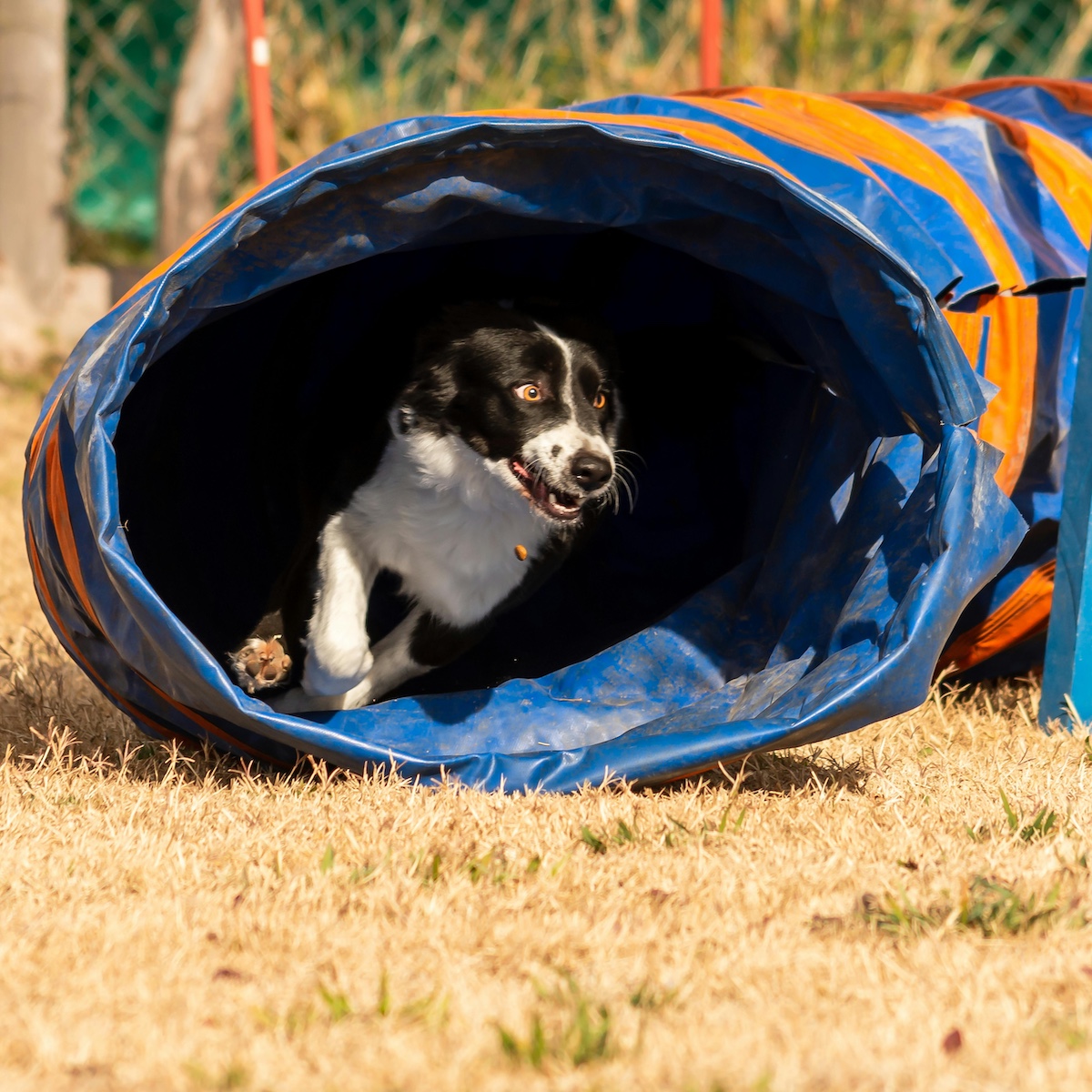
Choose something basic to start with, such as a low jump or short tunnel, nothing too dramatic.
You want your dog to feel confident and not like the equipment is trying to attack them.
Training Pace
A key thing to know is that all dogs are different.
Some pups blast out of the starting blocks like little overachievers who’ve been training since they were born, and others like to hang back and see how it’s done first, only joining in when they feel good and ready.
Neither approach is wrong for dog agility training; that’s just them being themselves, as that is part of the fun.
Tune into your dog’s natural learning rhythm by watching the moments when they’re buzzing with excitement and zoomies, and then when they suddenly act like they don’t understand a word of what you are saying, that is them requesting a break.
🤖 Looking For An Answer?
Ask AI to summarise this post to see if the article answers your questions:
Teamwork And Trust
At the heart of every great dog training partnership are teamwork and trust.
They make a world of difference and can turn an otherwise hesitant run into a happy performance.
True teamwork between a handler and their pooch is evident in the way they move through a course, in an almost effortless dance.
Learn how your dog thinks, how they interpret your body language, and what motivates them.
- Parents Are Prioritising Breathable, Sustainable Fabrics For Children's Seasonal Sleepwear
- Our Homemade Christmas Printables, Made With AI: What Worked, What Didn't, and What I'm Saving for Next Year
- At-Home vs. In-Lounge IV Therapy in the Hudson Valley: Which Makes More Sense?
- Can Passengers Pursue Compensation After a Car Accident?




To End
Agility training can be so rewarding if you take the time to learn how to do it properly. Follow this guide and get out there and bond with your furry friend.





Leave a Reply