

Some baby purchases are exciting to shop for. Sleepwear is usually more practical: parents want something that feels comfortable, opens easily, withstands regular laundry, and fits the baby properly.
The challenge is that product pages often put one appealing word, “bamboo,” “soft,” or “breathable”, front and center, while the details that shape everyday use sit farther down the page.
A more useful way to shop is to treat the baby’s sleepwear drawer like a small home project.
Empty it, remove pieces that no longer fit, notice which closures you reach for most often, and count how many clean options are realistically needed between laundry days. That simple reset turns “Which fabric is best?” into better questions:
Which pajamas are easiest to use? Which ones fit now? Which care instructions work with the household routine?
This is where bamboo-derived sleepwear can stand out. Many current styles use soft, flexible blends associated with bamboo-derived viscose, but the material name is only one part of the decision.
The Federal Trade Commission says textiles produced as rayon or viscose using bamboo as the plant source should be identified as rayon or viscose made from bamboo unless they are directly made from actual bamboo fiber.
Jump to:
- Start With the Drawer You Already Have
- Build a Bedtime Shortlist Around Real Life
- Soft Is a Feeling, Not a Health Promise
- Let the Product Page Answer What the Pretty Photo Cannot
- Meet the Light-Pink Floral Footie
- What Makes This Style Worth a Second Look
- Fit Comes Before “Room to Grow”
- When the Bamboo Preference Moves Beyond Bedtime
- Build a Small Sleepwear Capsule, Not an Overflowing Drawer
- Five Minutes Before Checkout Can Save a Lot of Fuss
Start With the Drawer You Already Have
Before adding anything new, look at what is actually being worn. One footie may be consistently chosen because the zipper is easy to manage.
Another may stay at the bottom of the drawer because the fit feels awkward. A third might technically fit but require a washing routine nobody remembers until laundry day.
This mini audit is useful because softness is personal and practical. Parents do not need a scientific ranking of every fabric in the closet.
They need to know which garments allow normal movement, which are easy to change, and which return from the wash ready to wear again.
Build a Bedtime Shortlist Around Real Life
A good sleepwear shortlist can be built around five ordinary moments: getting dressed, changing a diaper, moving around, getting up in the morning, and washing the garment afterward. Each moment points toward a different feature.
For example, a two-way zipper can make lower-body access easier during a diaper change. Fold-over cuffs can change hand or foot coverage without requiring separate pieces.
A little stretch may help a garment move with the wearer. None of these features guarantees a calmer night, but each can remove one small inconvenience.
When parents compare bamboo pajamas, it makes sense to look beyond the print and compare closure type, size chart, fiber wording, cuff design, care directions, and intended fit.
A cute pattern may get the first look; construction determines whether the pajamas earn regular space in the drawer.
Soft Is a Feeling, Not a Health Promise
A smooth fabric can be appealing, especially for clothing worn for long periods, but “soft” should not automatically become “hypoallergenic,” “eczema-friendly,” or “safe for every sensitive baby.” Those are much stronger health claims than a fabric’s hand-feel can support.
The same caution applies to bamboo marketing. The FTC distinguishes actual bamboo fiber from rayon or viscose manufactured using bamboo as the plant source. It also cautions against assuming that processed bamboo-derived textiles automatically retain qualities associated with the original plant.
Parents can prefer how a bamboo-derived viscose knit feels without needing extra medical or environmental promises.
Let the Product Page Answer What the Pretty Photo Cannot
A product photo is excellent for showing color, shape, and overall style. It is much less useful for confirming exact fiber percentages, washing instructions, current sizes, or everything included with one purchase.
That is why the less glamorous parts of the page matter. Check the exact product name, size selector, garment details, Fabric + Care section, and cart before ordering.
If an accessory appears in a styled photograph but its inclusion is unclear in the current product details, do not assume it arrives with the garment.
Meet the Light-Pink Floral Footie
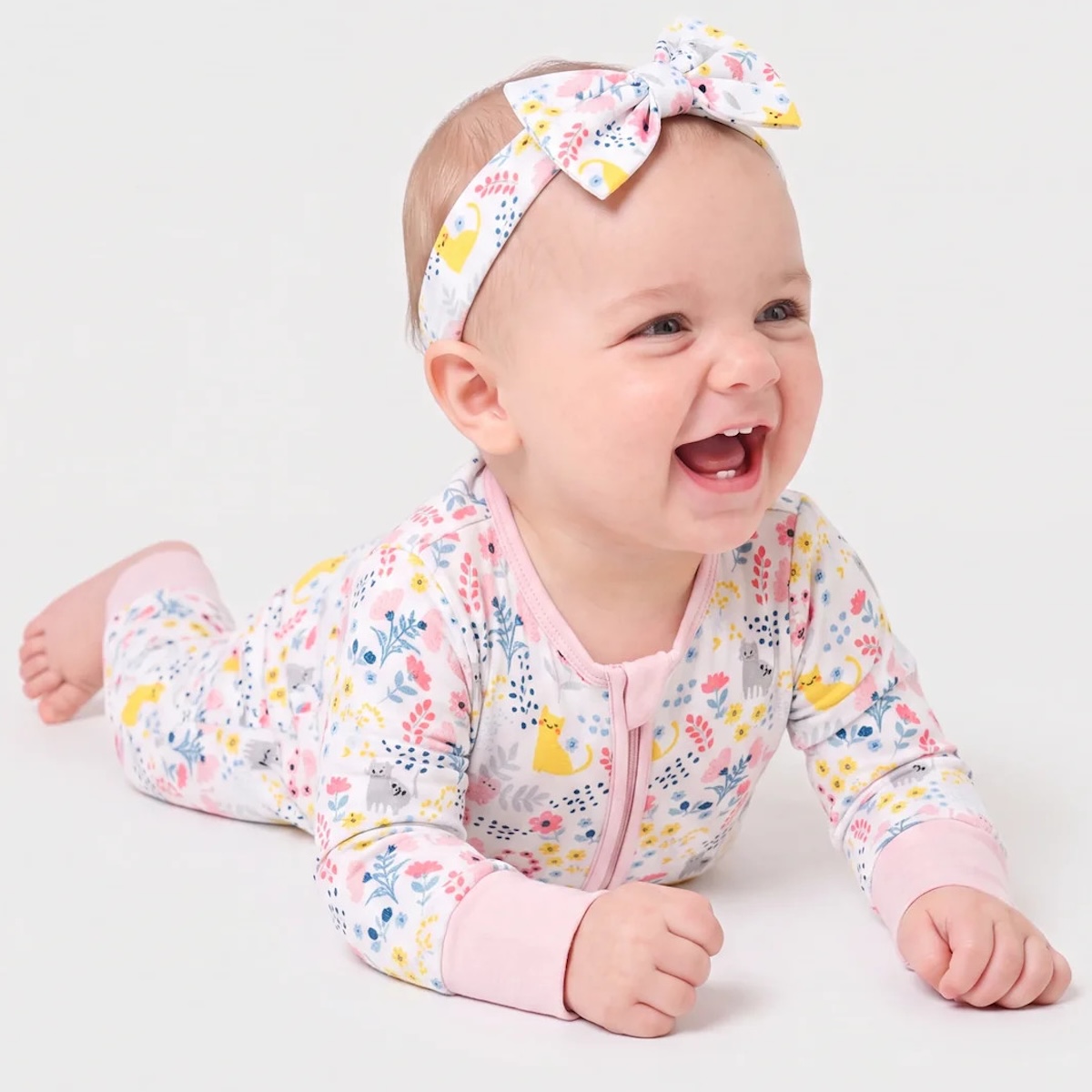
PatPat currently lists the featured style as Baby 2-Way Zip Floral Footie in Light Pink under its BambooCloud™ range. The U.S. page displays sizes from Newborn through 18–24M and currently marks the style out of stock, so availability and other dynamic details should be checked again when the article is published or before purchase.
The page lists the fabric as 93% “bamboo fiber” and 7% spandex. For U.S. readers, FTC guidance is important here: when the regenerated textile is viscose or rayon manufactured from bamboo, the appropriate terminology is viscose or rayon made from bamboo rather than raw natural bamboo fiber.
The exact page also specifies machine washing on a cold, gentle cycle, tumble drying on low, and no bleach.
Those directions apply to this style and should not be automatically copied to every item bearing a bamboo label.
What Makes This Style Worth a Second Look
The most useful selling points are the details parents can actually confirm on the current product page:
- Two-way zipper: opens from the top or bottom for dressing and diaper access.
- Soft zipper guard: positioned at the neckline between the zipper area and the baby’s chin.
- Fold-over hand and foot cuffs: offer flexible coverage without separate pieces.
- Flat seams and heat-pressed tagless label: reduce bulky interior construction details.
- Pre-shrunk construction: listed by PatPat as a feature of this exact SKU.
- 93% bamboo-derived fiber with 7% spandex: the page lists this blend; FTC terminology should be considered when describing the regenerated bamboo component.
- Simple care instructions: machine wash cold on a gentle cycle, tumble dry low, and do not bleach.
- Light-pink floral styling: adds a decorative look without changing the garment’s practical footie construction.
These details are useful without turning the garment into a promise about better sleep, temperature control, or skin health.
Fit Comes Before “Room to Grow”
A familiar age label can help parents find the right part of a size chart, but it should not be treated as a universal fit guarantee.
Measurements and intended fit matter, particularly with garments marketed for sleep.
The U.S. Consumer Product Safety Commission has specific requirements for infant garments and tight-fitting children’s sleepwear, including sizing, measurements, and labelling.
That makes the common idea of automatically buying sleepwear in a larger size “so it lasts longer” inappropriate when it conflicts with the garment’s intended fit or labelling.
At home, the check can remain practical: compare current measurements with the product-specific chart, follow the garment label, make sure the zipper closes without strain, and avoid deliberately creating an oversized fit where snug-fit guidance applies.
When the Bamboo Preference Moves Beyond Bedtime
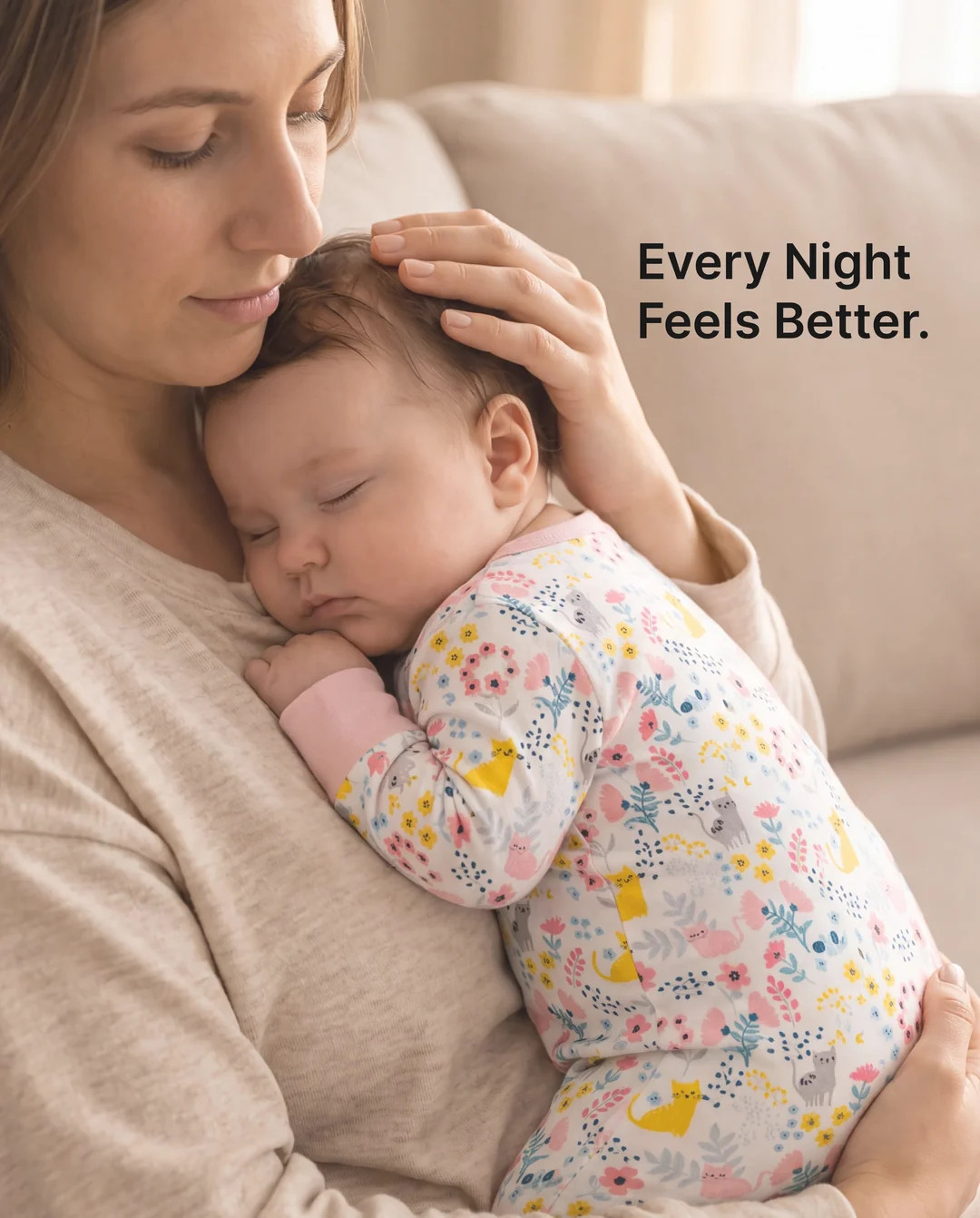
Parents who like the feel of a bamboo-derived textile may also explore bamboo baby clothes, but daytime clothing deserves a different set of questions.
Begin with what the garment needs to do, play, layering, travel, an outing, or quick changes, before considering the material.
A bodysuit, romper, dress, and sleep footie can share a similar fiber family while using completely different closures, silhouettes, and fit expectations.
Material can help build the shortlist without becoming the only reason for choosing an item.
Build a Small Sleepwear Capsule, Not an Overflowing Drawer
Parents rarely need one supposedly “perfect” pair of pajamas. What they need is a manageable group of garments that fit now and work with normal family life.
Think of it as a small sleepwear capsule: enough clean options to cover the household’s usual laundry cycle without filling the drawer with pieces that are rarely worn.
The number will vary from family to family. Babies who regularly need clothing changes may require a larger rotation than those who do not.
The useful question is not “How many pajamas should every baby own?” but “How many do we actually use between washes?”
This approach can also make future shopping more deliberate. When the drawer already has enough zip footies but lacks the next size, the gap becomes obvious.
Buying then solves a real need instead of simply adding another appealing print.
Five Minutes Before Checkout Can Save a Lot of Fuss
Before adding new sleepwear to the drawer, run through a quick five-part check:
- Measure: compare current measurements with the exact product size chart.
- Read: confirm the fiber wording, percentages, and care instructions.
- Inspect: look at closures, cuffs, seams, and the listed product contents.
- Plan: make sure the garment fills an actual gap in the current rotation.
- Confirm: review stock, price, delivery information, and return eligibility close to checkout.
A short check like this is more useful than trying to remember every product claim seen while browsing.
- Parents Are Prioritising Breathable, Sustainable Fabrics For Children's Seasonal Sleepwear
- Our Homemade Christmas Printables, Made With AI: What Worked, What Didn't, and What I'm Saving for Next Year
- At-Home vs. In-Lounge IV Therapy in the Hudson Valley: Which Makes More Sense?
- Can Passengers Pursue Compensation After a Car Accident?









Leave a Reply