

Most people buy an electric fireplace because of a photo. A glowing insert set into a chunky wood mantel, the room almost toasty.
Then it shows up, and the unit is either too wide for the wall they had in mind or so small it looks like a tablet mounted above the couch. I'd bet on sizing over any brand decision.
So here's the fix. Measure the space before you fall for a flame pattern, figure out whether you want heat or just the look, and only then start shopping.
If you'd rather hand the measuring tape to someone who does this weekly, hassle-free electric fireplace installation services exist precisely for that, and skipping the DIY step is completely reasonable.
The rest of this guide explains what decides whether the unit looks built in or bolted on.
Jump to:
Start With the Wall, Not the Flame
Grab a tape measure and answer three things: the width you can spare, the height from floor to ceiling, and what's behind the drywall.
That third one catches people. A recessed unit needs a cavity, and that cavity can't share space with a stud, a junction box, or a pipe.
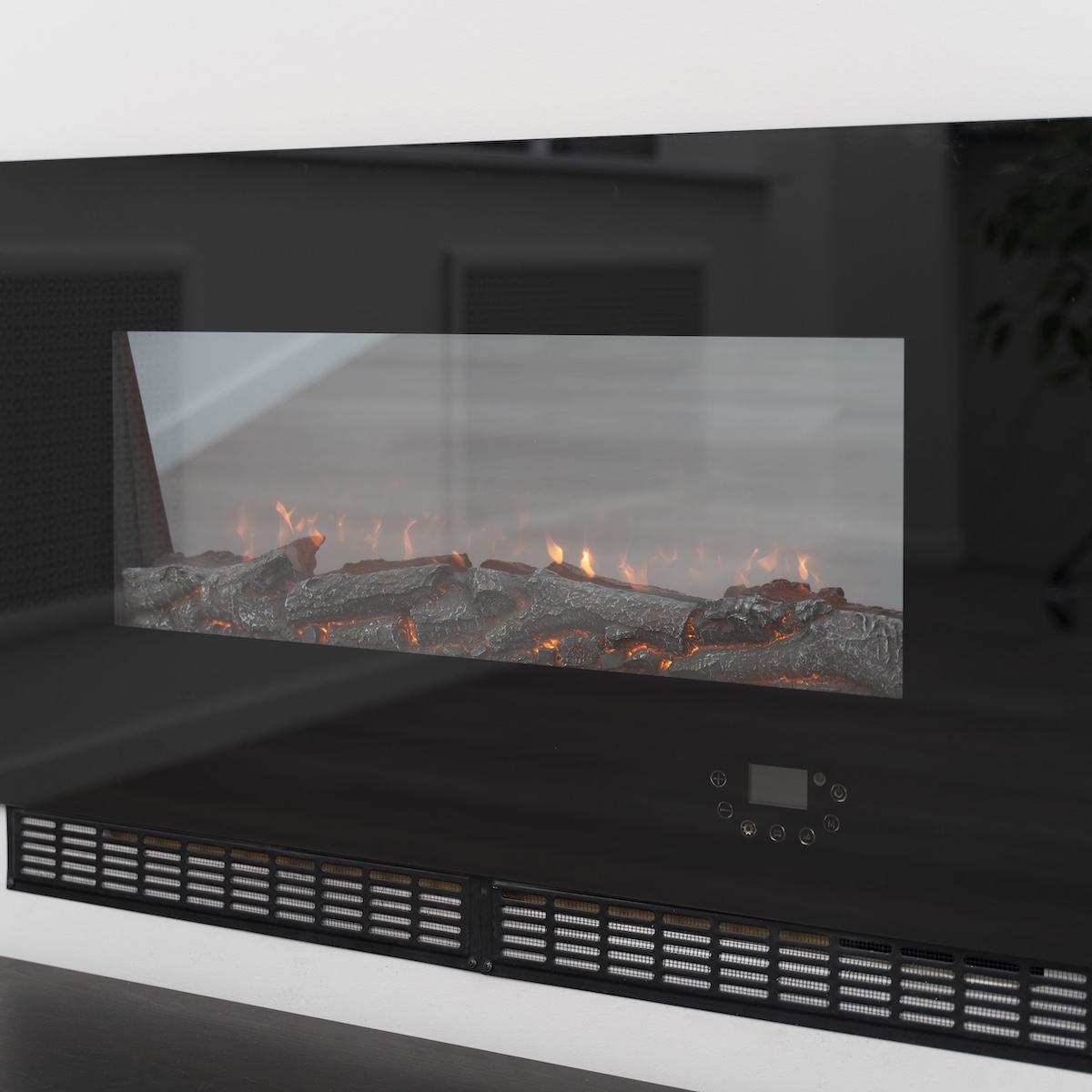
Wall-mounted versions dodge the problem entirely since they hang flat, but they stick out a couple of inches and you'll notice that in a narrow hallway.
My rule of thumb: if the room is under about 150 square feet, go wall-mounted and save your floor. Larger rooms can carry a recessed insert with a real mantel around it without the thing swallowing the wall.
Draw the unit's dimensions on painter's tape and stick it to the wall. Sounds fussy. Takes four minutes and has saved more bad purchases than any review section.
Heat or Ambiance? Decide Before You Shop
Two very different products share the same label. One is a space heater with fake flames. The other is a light show that happens to have a heater you can switch off. Know which you're buying.
If you want actual warmth, check the BTU or wattage rating on the spec sheet and match it to the square footage you're heating.
For a supplemental boost in a bedroom or basement, a mid-range unit does the job. For a whole open-plan living area in January, an electric fireplace is a helper, not a furnace.
According to the Department of Energy, electric resistance heating converts energy to heat efficiently, which is why these units work well as spot heaters in rooms you actually occupy rather than as a whole-house fix.
If you want ambiance, you're shopping on flame realism and control options.
Holographic and LED flame technologies have gotten genuinely convincing, and some models let you set flame color, speed, and brightness from a phone.
I'd pay extra for that before I'd pay extra for heat output. You can always add a blanket. You can't make a flat flame look better.
Three Questions to Ask the Seller
These are the ones that separate a smooth install from a return label.
- Does it need a dedicated circuit? Higher-output units can pull enough current to trip a shared breaker, and running a new line adds cost.
- What's the plug situation? Cord length and which side the cord exits decide whether the unit sits where you want it or where the nearest outlet forces it.
- Is the surround included? Mantels, trim kits, and recessed frames are frequently sold separately, and that changes your total.
Ask about the warranty too, and specifically whether it covers the electronics. Flame mechanisms and control boards are the parts that fail, not the frame. A generous warranty on a metal box means very little.
Safety Certifications Are Not Optional
Any electric fireplace you buy for a US home should carry a recognized safety listing mark on the label.
That mark means an independent lab tested the unit against published standards for electrical appliances.
The UL Solutions mark is the one most shoppers will recognize, and you'll usually find it near the rating plate or in the manual. No mark, no purchase. That's the whole policy.
Placement matters as much as certification. Keep soft furnishings, curtains, and anything that dangles well away from the front of the heater, and never run the cord under a rug. Sounds obvious until you see how often people tuck a cord to hide it.
The Cord and Space Planning Detail Nobody Mentions
Here's the one I'd tattoo on the box if I could. Before you buy, walk the room and count outlets. Not where they are in the wall, but what's already plugged into them.
A living room outlet carrying a lamp, a soundbar, and two chargers doesn't have room for a heater, and daisy-chaining power strips to make it work is how you create a problem.
Then think about sightlines. Sit where you actually sit, on the couch, at the desk, in the reading chair, and picture the fireplace from that angle. A unit centered on a wall looks intentional.
A unit centered on the available drywall between a door and a window looks like it lost an argument.
If your two priorities fight each other, favor the sightline and let the outlet run second, because an extension cord is a small annoyance and a badly placed fireplace is permanent.
Wall-Mounted, Recessed, or Into an Old Fireplace
Three placements cover nearly every home, and each suits a different room.
| Placement | Best for | Watch out for |
|---|---|---|
| Wall-mounted | Small rooms, renters, quick installs | Protrudes from the wall, cord visibility |
| Recessed | Living rooms, built-in look, new trim work | Needs a framed cavity and clean cutout |
| Inside an old fireplace | Dead wood or gas openings you never use | Block the flue and confirm the insert fits the opening |
That third row is my favorite trick. If you have a fireplace you never light because of the chimney or the smell, an electric insert turns dead square footage into the feature of the room for a fraction of what a gas conversion costs.
Zero venting, zero chimney work, zero smoke. Pull the old grate, measure the opening, and shop inserts that fit inside it.




What It Costs to Skip the Measuring
A wrong-size unit means a return, a restocking fee, and a wall that now has holes in it.
A unit with the cord on the wrong side means an extension cord across the hearth forever.
Both are avoidable with four minutes and a tape measure, and neither shows up in the product photos.
Take the measurements, decide on heat versus ambiance, check the safety mark, then buy the one that fits.
If that sounds like more math than you signed up for, hand it to an installer and spend your weekend doing something else. So which wall in your house is currently doing nothing?





Leave a Reply