

Do Cats Taste Food As Humans Do? is a fascinating question that reveals just how different feline senses are from ours.
Cats do have taste buds, but far fewer than humans, around 470 compared to our 9,000, which means their sense of taste is much less developed.
Interestingly, cats lack receptors to detect sweetness, a trait linked to their obligate carnivore diet, which relies heavily on protein rather than sugar.
However, they are highly sensitive to savory and meaty flavors, thanks to specialized receptors that respond to amino acids.
Their strong sense of smell also plays a major role in how they experience food, often influencing what they eat more than taste itself.
Understanding cat food taste preferences can help pet owners choose meals that satisfy their natural instincts while keeping them healthy and happy.
Many people watch their cats sniff, taste, or even reject food and start wondering if they truly enjoy meals. This curiosity often leads to a simple but important question: do cats have taste buds, and how do they sense flavor?
Understanding how cat taste buds work is valuable because it helps owners support good nutrition while making each meal a source of comfort and happiness for their pets.

Jump to:
Do Cats Have Taste Buds?
Cats do have taste buds, yet their system is much simpler than ours. Humans carry almost 9,000 taste buds, allowing us to sense a wide range of flavors.
On the other hand, dogs have almost 1,700 taste buds, while cats have around 470 taste buds.
This means that cats can detect a narrow range of flavors compared to human beings and other animals.
Cat taste buds allow them to sense salty, sour, bitter, and umami notes, all linked to nutrients present in meat and other protein sources.
Genetic research shows that cats lack the receptor needed to recognize sweet compounds, which explains their disinterest in sugary foods.
How Cats Experience Flavor
Cats experience flavor through taste, smell, and texture. Their tongues have far fewer taste buds than those of humans, so they can detect only limited flavors.
Smell plays a much larger role in helping cats perceive flavor. A cat’s nose is highly sensitive and can detect even small changes in the freshness or strength of aroma, which often decides whether the cat will eat the food or refuse it.
Cats also judge the food based on its texture. Some cats enjoy the crunch of dry kibble, while others prefer the smooth consistency of pâtés or the tender pieces found in shredded meat.
The way they perceive food helps them determine if they feel satisfied by the meal.
Similarly, genetics have a strong influence on how cats react to flavor.
As obligate carnivores, they developed receptors that favor the compounds found in meat, especially the amino acids responsible for savory umami taste.
This adaptation helps them seek foods rich in protein, which their bodies need for energy and growth.
The professionals over at Dogs & Cats Rule advise owners to closely evaluate ingredient labels to ensure animal-based proteins remain the primary foundation of their pet's diet.
Tailoring nutrition to meet these natural biological cravings promotes optimal muscle development, sustained energy, and long-term health.
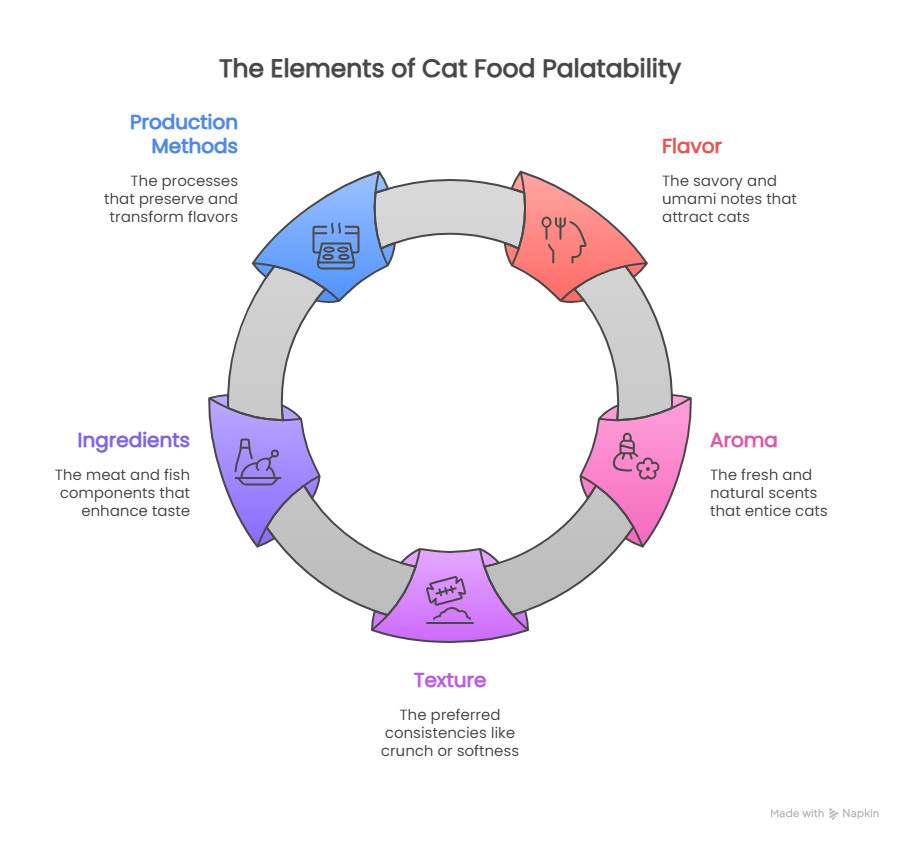
What Makes Cat Food Delicious?
The appeal of cat food is described by the term palatability.
It refers to how well flavor, aroma, and texture combine to make a meal enjoyable for cats.
Palatability is essential because even the most balanced formula will not succeed if a cat refuses to eat it.
When a meal meets nutritional standards but offers little sensory appeal, most cats will simply reject it.
So what can cats taste? A cat taste buds are attracted towards umami and other savory notes.
These flavors come from amino acids naturally present in meat and fish, which explains why ingredients such as chicken, liver, or salmon increase food acceptance.
Texture and aroma also influence palatability. Some cats prefer the firm crunch of dry kibble, while others are more attracted to soft pâtés or shredded meat.
The scent of the food is equally critical. Cats often decide whether to eat after a quick sniff, so freshness and a strong natural aroma are essential.
Beyond ingredients, maintaining palatability also depends on how the food is produced.
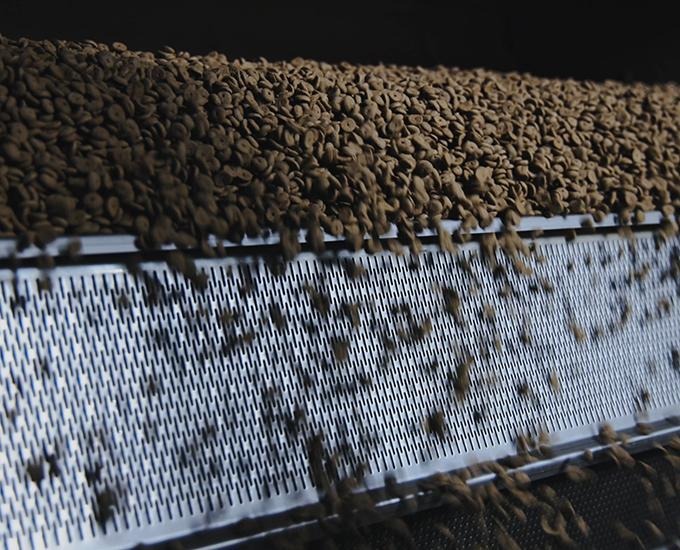
Baking, drying, extrusion, mixing, and coating are processes designed to protect natural raw flavors and transform them into tastes that cats enjoy.
When done correctly, these methods keep aroma, flavor, and texture consistent, helping cats stay interested in every meal.
🤖 Looking For An Answer?
Ask AI to summarise this post to see if the article answers your questions:
The Science Behind Feline Food Preferences
A cat’s choice at the food bowl is shaped by three main factors: flavor, texture, and scent. These elements work together to determine whether the meal is appealing enough to eat.
Flavor provides the basic taste signals, but because cat taste buds are fewer than human’s, their reliance on scent becomes even more important.
Ingredient quality makes a noticeable difference in determining the taste of the cat food.
High-quality proteins not only deliver stronger flavor but also release aromas that attract cats more quickly.
Freshness also matters, as oxidized fats or stale ingredients can cause rejection even if the formula is balanced.
- Parents Are Prioritising Breathable, Sustainable Fabrics For Children's Seasonal Sleepwear
- Our Homemade Christmas Printables, Made With AI: What Worked, What Didn't, and What I'm Saving for Next Year
- At-Home vs. In-Lounge IV Therapy in the Hudson Valley: Which Makes More Sense?
- Can Passengers Pursue Compensation After a Car Accident?




FAMSUN’s Approach to Enhancing Cat Food Palatability
FAMSUN helps pet food producers create meals that are tasty, nutritious, and consistent.
Its equipment supports all manufacturing processes such as grinding, mixing, extrusion, drying, and packaging.
FAMSUN’s innovation lies in its integrated drying and baking system.
This advanced technology enables precise temperature and moisture control, which triggers the Maillard reaction to naturally develop rich flavors and appetising aromas without damaging nutrients.
The result is pet food that not only meets nutritional needs but is also highly palatable to cats.
In addition, the system ensures even drying and uniform moisture content, improving texture consistency across every batch.
With its energy-efficient design, intelligent controls, and safety features, FAMSUN helps producers achieve stable product quality while lowering operational costs, delivering premium cat food that appeals to pets and reassures their owners.





Leave a Reply