

Putting a swimming pool in the backyard is one of the biggest upgrades a family can make to a home, and it does not happen overnight. Between choosing a pool type, working out a size that fits your yard, and building in safety features for young swimmers, there is a lot to plan before the first shovel goes into the ground.
This guide walks through the main pool types families choose between, how to think about size and budget, and the safety layers that matter most once the build is finished.
Whether you are planning a first backyard pool or replacing an aging one, these are the questions worth answering early.
Jump to:
- Why a Home Pool Is a Long-Term Family Investment
- The Three Main Types of Backyard Pools
- Picking the Right Size for Your Family
- Pro Tip:
- Family Safety Features Every Backyard Pool Needs
- Budgeting for Your Backyard Pool Project
- Permits, Professional Installers and What to Expect
- Making Your Backyard a True Family Hub
- FAQ'S
- Conclusion
Why a Home Pool Is a Long-Term Family Investment
A swimming pool is not just a summer feature, it becomes a piece of the home your family uses for years.
Beyond the financial side, the payoff that matters most to many families is time spent together outdoors, memories made, and a reason to gather at home rather than somewhere else.
Homeowners consistently rate their pool among the highest joy scores of any renovation project, even in cases where the resale value gained does not fully cover the build cost.
Family life also shifts once a pool goes in. Weekend routines start to centre on the backyard instead of scattered outings, which many parents say is worth the investment on its own.
The Three Main Types of Backyard Pools
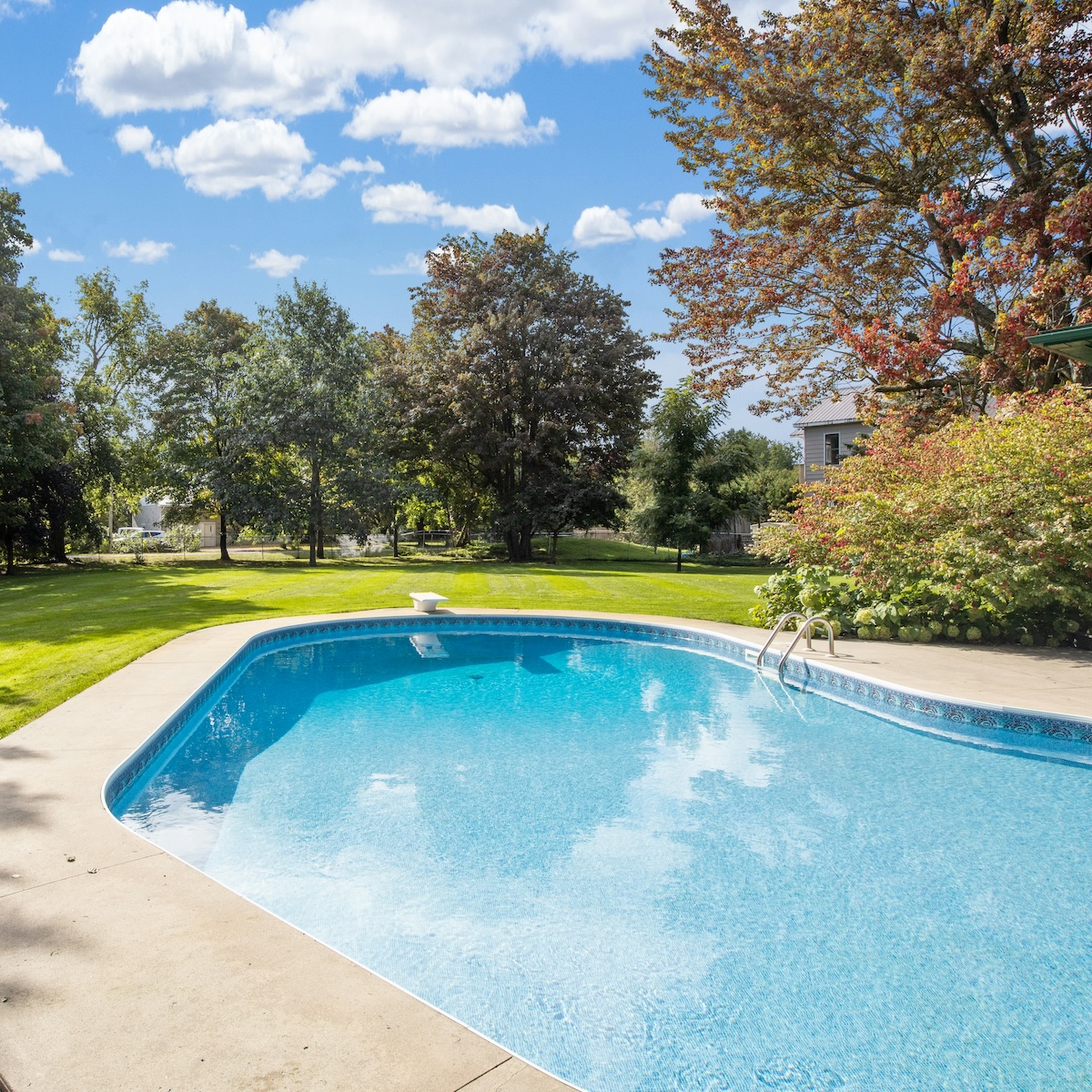
Nearly every inground pool sold today falls into one of three categories: vinyl liner, fiberglass, or concrete. Each has a different price point, build time, and long term maintenance pattern, so the right choice depends on budget and how long you plan to stay in the home.
Vinyl liner pools are the least expensive to install and can be shaped into almost any layout, but the liner typically needs swapping out roughly every eight to ten years.
Fiberglass pools arrive as a single pre-formed shell, so installation is fast, often one to three weeks, and the smooth surface resists algae, though shapes are limited to what the manufacturer offers.
Concrete pools sit at the other end of the spectrum. Because each one is built entirely on site, concrete pools give homeowners the most design freedom of the three, from vanishing edges to built in spas and tanning ledges, and the structural shell can last 50 years or more with routine care.
Concrete construction also demands more upkeep than the other two types. The surface stays porous, so it needs regular brushing, and the interior finish typically needs refreshing every 7 to 20 years depending on the material used.
| Feature | Vinyl Liner | Fiberglass | Concrete |
| Typical install time | 3 to 4 weeks | 1 to 3 weeks | 2 to 5 months |
| Upfront cost | Lowest of the three | Mid range | Highest of the three |
| Design flexibility | Custom shapes possible | Limited to mould shapes | Fully custom, any shape |
| Surface feel | Smooth | Smooth, non-porous | Textured, porous |
| Shell lifespan | 20 to 30 years | 25 to 30+ years | 50+ years |
| Ongoing upkeep | Liner swap every 8 to 10 yrs | Minimal resurfacing | Resurface every 7 to 20 yrs |
Table: how the three main inground pool types compare across cost, flexibility and upkeep.
A concrete shell is essentially a permanent structure, built to handle ground movement and the freeze and thaw cycles that would damage other pool types over time.
Chart: estimated 10-year maintenance cost range by pool type, based on published industry cost data.
Picking the Right Size for Your Family
Pool size should follow how your family plans to actually use the space, not how big the yard looks in a photo online. A common starting point sits between 12 by 24 feet and 16 by 32 feet, a range that comfortably suits most three to four person households.
Most homeowners leave 3 to 6 feet of deck clearance around the water for lounging, walking, and furniture, and that margin counts for nearly as much as the pool footprint itself.
Think about how many people actually swim at once. Even during a full pool party, usually fewer than half the guests are in the water at the same time, so a modestly sized pool with generous decking often works better than a larger one that swallows the whole yard.
Pro Tip:
Leave at least a quarter of the total yard as open lawn or garden around the water so the backyard still feels balanced rather than dominated by one feature.
Family Safety Features Every Backyard Pool Needs
Safety planning carries just as much weight as design. The CDC recommends a four sided fence at least four feet high fully enclosing the pool, with a self closing, self latching gate, to separate the water from the house and yard.
Floaties and arm bands are not a substitute for supervision. A properly fitted life jacket protects better, and an assigned adult acting as a Water Watcher during gatherings prevents the common assumption that someone else is watching the water.
| ⚠ Safety Note: Pool alarms, covers and fences work together, not alone. No single safety layer replaces active adult supervision whenever children are near the water. |
Budgeting for Your Backyard Pool Project
Total project cost depends heavily on pool type, footprint, and the features layered on top, such as heating, lighting, and decking. A basic vinyl or fiberglass build typically starts lower, while a fully custom concrete pool with features like an infinity edge or integrated spa sits at the premium end of the market.
| Pool Type | Typical Upfront Cost* | 10-Year Maintenance* |
| Vinyl liner | $40,000 to $70,000 | Up to $20,000+ |
| Fiberglass | $55,000 to $100,000 | Under $5,000 |
| Concrete (custom build) | Highest of the three, varies by design | $8,000 to $12,000+ |
*Figures are general industry ranges in USD/CAD and vary by region, contractor and features. Get a local quote for accurate pricing.
A 2025 realtor.com study, referenced by the National Association of Realtors, found homes with pools sold at a considerably higher premium than comparable homes without one.
Pool homes also tend to be larger and set in more desirable neighbourhoods, which affects that comparison, so the potential return should never be the only reason to build.
Permits, Professional Installers and What to Expect
In most regions, an inground pool requires a permit, an engineered design, and a licensed installer, especially once electrical work and enclosure fencing are involved.
A reputable pool builder should handle the permit application on your behalf and walk you through inspections before, during and after construction.
Ask any installer for references tied to projects at least five years old, not just recent builds, since that is long enough to reveal how a pool's shell, finish, and equipment genuinely hold up.
“Exactly what we envisioned”, how one Toronto homeowner described their finished concrete pool, after calling the project a big investment that the builder handled seriously from day one.
Once construction wraps up, the backyard becomes the default gathering spot for the whole family. Many pool owners pair the new space with other outdoor traditions, like a Campfire Cooking in the Backyard With Your Kids evening once the pool closes for the season, to keep the yard in use well past the swim season.
Making Your Backyard a True Family Hub
Once safety and structure are settled, the fun part is layering in features that fit how your household spends time outside. Popular additions include a shallow sun shelf for toddlers, upgraded lighting for evening swims, and a small spa combo for cooler months.
A well planned pool deck earns its keep just like the water does, since it is where most gatherings actually happen, from birthday parties to quiet Sunday mornings with coffee.
Landscaping around the pool also affects how the whole yard feels day to day. A strip of shade trees, a low retaining wall, or a simple planting bed softens the hard edges of concrete or paving and keeps the space from feeling like a leftover job site once everything wraps up.
🎥 Video: Which Pool Type Is Best? Concrete vs Vinyl vs Fiberglass
Watch: https://www.youtube.com/watch?v=mhyPw-p-ShM
This video breaks down the three main inground pool types side by side, covering cost, durability and maintenance, and is worth embedding near the pool type comparison above.
FAQ'S
Most concrete pool builds take between two and five months from excavation to final finish, depending on design complexity, permit timelines and weather. Vinyl and fiberglass installations are typically faster, often wrapping up within a few weeks once permitted.
Vinyl liner pools generally carry the lowest upfront cost of the three inground types. Keep in mind the liner has a shorter lifespan and typically needs replacing within a decade, which adds to the pool's long run cost of ownership.
Most municipalities legally require an enclosure around a residential pool, generally a four sided barrier with a self latching gate. Beyond the legal requirement, fencing remains one of the most effective layers of protection against unsupervised access.
Yes. Because the shell is a permanent structure, concrete pools are the most renovation friendly type. Owners can update the interior finish, replace tiles, or reshape steps and benches years after the original build.
A pool sized around 14 by 28 feet is typically comfortable for three or four swimmers at once. The right footprint ultimately depends on planned use and how much deck space you want around it.
Sizing the pool to the yard instead of to actual usage is the most common misstep. A smaller pool with a generous, well designed deck usually gets more real use than an oversized pool that leaves no room for seating or landscaping.
- Parents Are Prioritising Breathable, Sustainable Fabrics For Children's Seasonal Sleepwear
- Our Homemade Christmas Printables, Made With AI: What Worked, What Didn't, and What I'm Saving for Next Year
- At-Home vs. In-Lounge IV Therapy in the Hudson Valley: Which Makes More Sense?
- Can Passengers Pursue Compensation After a Car Accident?




Conclusion
Choosing a backyard pool comes down to matching type, footprint and safety planning to how your household genuinely lives outdoors, not just what looks good in a photo.
Whether you land on vinyl, fiberglass or concrete, a clear budget and a licensed local installer will keep the project on track from permit to final swim.
References
National Association of Realtors, Buying a Home With a Pool? Here's What You Need to Know, 2025 — https://www.nar.realtor/news/styled-staged-sold/buying-a-home-with-a-pool-heres-what-you-need-to-know
Centers for Disease Control and Prevention, Summer Swim Safety, 2026 — https://www.cdc.gov/drowning/prevention/summer-swim-safety.html
RiverPools, Fiberglass vs. Vinyl Liner vs. Concrete Pools: An Honest Comparison, 2025 — https://www.riverpoolsandspas.com/blog/fiberglass-vs-vinyl-liner-vs-concrete-pools-comparison
Action Home Services, Concrete Pool Construction and Installation in Toronto and the GTA, 2026 — https://actionhomeservices.ca/concrete-pools/
Imagine Pools, Comparing Fiberglass vs Concrete vs Vinyl Swimming Pools, 2025 — https://imaginepools.com/blog/fiberglass-vs-concrete/
Fact Check: All statistics and data points in this article were verified against original sources as of August 21, 2026. Sources are listed in the References section.





Leave a Reply