

Finding the perfect Christmas gift for a toddler can be exciting, especially when you want something that offers more than a few minutes of entertainment.
Ride-on toys combine imaginative play with movement, coordination, and plenty of outdoor fun, making them a popular choice for young children.
From pedal-powered cars to battery-powered vehicles, there are plenty of options, but choosing the right one means thinking carefully about your child's age, abilities, safety, and where they'll be using their new ride.
Choosing a ride-on car as a Christmas gift for your child combines excitement, active play, and developmental benefits, but picking the right model requires some careful consideration.
Safety, size, age suitability, design, build quality, battery life, and vehicle type all make a big difference in creating happy, safe adventures.
With this handy guide to choosing your child's first ride-on car, get ready to watch their eyes light up while resting easy knowing they'll be safe and comfortable.
Jump to:
Size and age suitability
Check the manufacturer’s guidelines for age and weight limits before purchasing.
Ride-on cars come in various sizes and are designed for specific age ranges, typically from toddlers to early teens.
An oversized or undersized car can be uncomfortable and pose safety risks, so choose one that fits your child’s current stage, and ideally one that can 'grow' with them for months or years to come.
Ensuring the car matches your child’s skills and coordination level also builds confidence and enables independent play.
Safety features and contingencies
Safety is non-negotiable. Prioritise models with a wide, stable base, low centre of gravity, seat belts, and reliable brakes to prevent tipping and keep children secure while driving.
Many battery-powered ride-on cars now come with remote controls so parents can take over, adjust speed, and stop the car instantly if needed, especially useful for younger children or in areas with obstacles.
Functioning doors and a working horn can help children stay safely inside and alert others to their presence.
Always designate safe play zones (away from traffic, slopes, pools, or sharp objects) and encourage helmets or protective gear for outdoor use.
Design and quality considerations
Ride-on cars are available in endless designs...from classic family vehicles and sports cars to quad bikes, construction equipment, and fantasy models.
While aesthetics matter (let children weigh in on colour and type!), pay close attention to the quality of materials, comfort, and durability.
Features like padded seats, ergonomic handles, robust plastic, and sturdy wheels add long-term value.
Well-made ride-on cars can withstand bumps, weather, and years of enthusiastic outdoor play.
Battery life and charging
Battery life determines how long your child will be able to enjoy the ride-on car per session.
Most models use 6V, 12V, 24V, or higher batteries, with typical run times ranging from 45 minutes to several hours.
If you want your child to use the toy daily or for longer adventures, look for high-capacity batteries. Look for fast-charging features, good customer support, or a warranty on spare parts.
Make sure spare batteries are available for purchase so playtime doesn’t get interrupted.
🤖 Looking For An Answer?
Ask AI to summarise this post to see if the article answers your questions:
Types of cars and vehicles
- Classic cars: Good for younger children, often with gentle speeds, sound effects, and fun colours.
- Off-road vehicles and quads: Suited for older kids and rougher terrain, with rubber tires and higher ground clearance.
- Motorbikes and scooters: Best for confident and experienced children, usually ages eight and up, and may require extra protective gear.
- Licensed/novelty cars: Include police cars, builder trucks, and sports cars, often with realistic designs for imaginative role play.
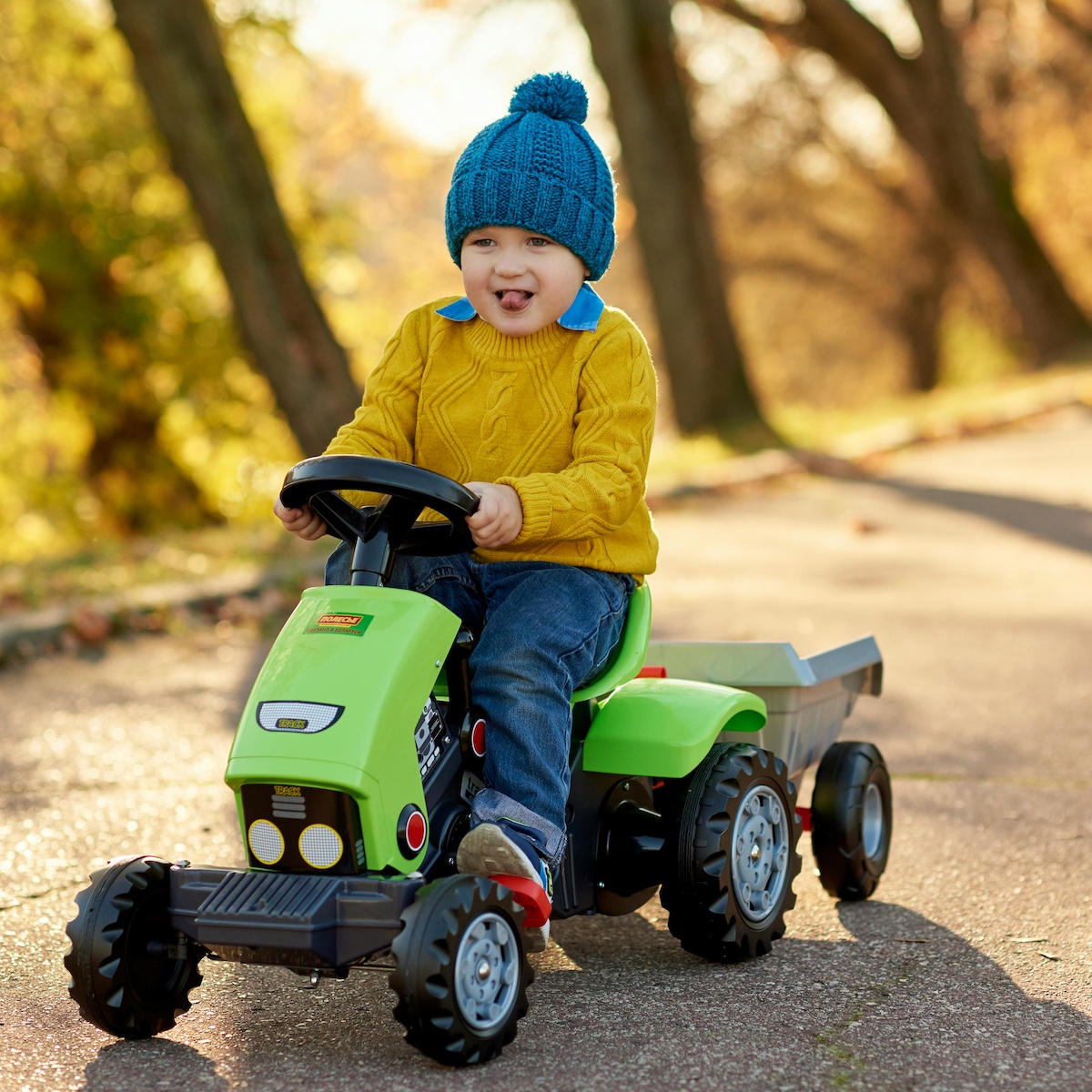
- Pedal-powered options: Great for toddlers, requiring no battery, and building stamina and strength.
Choosing the type of vehicle depends on your child’s preferences, skill level, and intended play area (indoors, garden, park, or pavement).
FAQ'S
The right age depends on the type of ride-on toy and the manufacturer's recommendations. Many foot-powered ride-on toys are suitable from around 12 to 18 months, while battery-powered models are often designed for children aged three and over. Always check the age, height, and weight guidelines before purchasing.
They can be, provided they are used under adult supervision and are appropriate for your child's age and ability. Many models include features such as parental remote controls, adjustable speed settings, seat belts, and automatic braking to improve safety. Ride-on toys should always be used in a safe, traffic-free area.
Foot-powered ride-on toys are ideal for younger toddlers because they encourage balance, coordination, and physical activity. Battery-powered models can be a good option for older children who have developed the coordination needed to control the vehicle safely and responsibly.
Battery life varies depending on the model, battery size, terrain, and the child's weight. Most battery-powered ride-on toys provide between 45 minutes and several hours of play on a full charge. Checking charging times and the availability of replacement batteries before buying can also be worthwhile.
Look for a toy that matches your child's age and developmental stage, has reliable safety features, and is built from durable materials. A stable design, comfortable seating, easy-to-use controls, and a good warranty can all add long-term value while making the toy safer and more enjoyable to use.
- Parents Are Prioritising Breathable, Sustainable Fabrics For Children's Seasonal Sleepwear
- Our Homemade Christmas Printables, Made With AI: What Worked, What Didn't, and What I'm Saving for Next Year
- At-Home vs. In-Lounge IV Therapy in the Hudson Valley: Which Makes More Sense?
- Can Passengers Pursue Compensation After a Car Accident?




Final tips for buying
- Always read reviews and return policies before purchasing, especially for online orders.
- Look for models with warranties and good customer support for hassle-free maintenance.
- Involve your child in the selection process so they can pick a vehicle they’ll love and use regularly.
- Set boundaries for where the car can be used, and supervise younger drivers whenever possible.
- Charge and store the car properly to keep it in top condition throughout the year.
A thoughtful choice ensures your child enjoys hours of active play, with skill-building, safety, and style at the heart of their ride-on car experience this Christmas.





Leave a Reply