

A transition from a traditional balance bike to an electric bike for kids is a milestone moment, a major step up for a young rider’s confidence.
Balance bikes teach the basic skills of steering and staying upright, but when you add an electric motor, you also have to learn how to control the speed.
This guide explains the basics to help your young rider make the change with confidence.
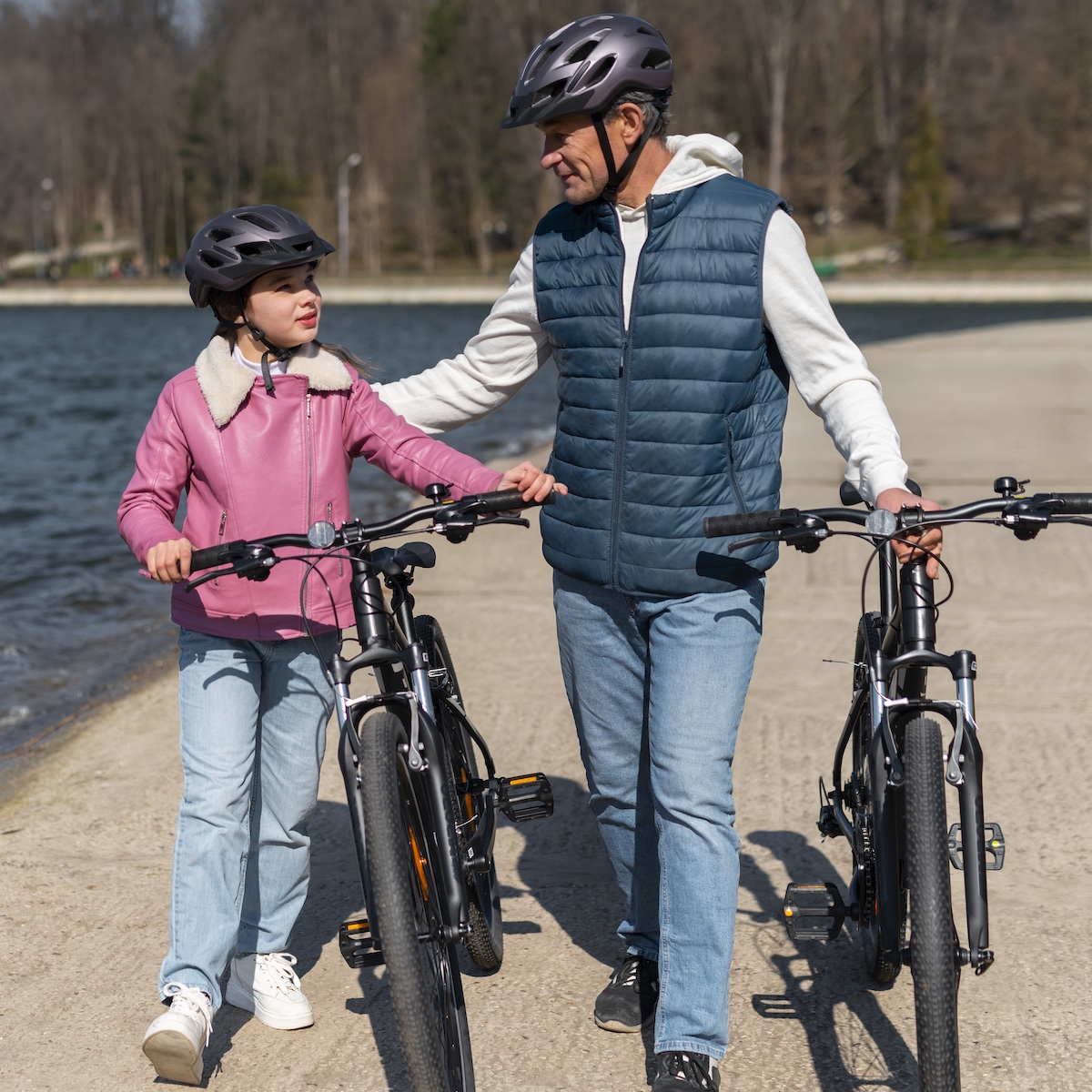
Jump to:
- 1. Mastering the Fundamentals of Balance First
- 2. Starting with Low-Power or Power-Off Modes
- 3. Teaching Controlled Throttle Modulation
- 4. Emphasising Independent Braking Habits
- 5. Building Spatial Awareness at Higher Speeds
- 6. Establishing Clear Rules for Environments
- 7. Mandatory Gear and Supervision
- Your Path to Your Kid’s Confident Riding
1. Mastering the Fundamentals of Balance First
Before you introduce motorised assistance, make sure your child is proficient on their balance bike.
They should be able to glide comfortably with their feet off the ground and stop in a controlled, predictable way.
The electric bike for kids adds a new weight and power dynamic. If a child has not yet learned basic balance, then the added complexity of a throttle will just be more frustration.
2. Starting with Low-Power or Power-Off Modes
Most modern electric kids' bikes have several levels of speed or a power-off mode.
For the first few rides, treat the electric bike like you would a regular, heavier bike. Let your child push it around, practise braking and get used to the weight with no motor engaged.
When they are comfortable, turn on the lowest power setting, which means it gives a soft assist rather than an instant surge.
3. Teaching Controlled Throttle Modulation
Always remember that the most important skill in the transition is to go from constant power to modulated power.
Young riders often have a natural tendency to treat a throttle as an on-or-off switch.
Practise feathering the throttle in an open, flat area free of traffic. Also, teach them how to ease the throttle gradually to go forward and how to let it go before they have to brake.
4. Emphasising Independent Braking Habits
Investing in a reliable e-bike is much faster and heavier; therefore, foot braking is dangerous and ineffective.
Tell them again that during the transitions, their feet must stay on the pegs or pedals at all times.
Check frequently that the brake levers are adjusted to the right size for their hands so they can reach and squeeze them with enough force to stop the bike smoothly.
5. Building Spatial Awareness at Higher Speeds
Electric bikes also travel faster than the average child can run, which alters their perception of distance and reaction time.
As your child starts riding with power, talk them through the look-ahead technique. Have them scan the ground 5 to 10 metres in front of them, not look at the wheels.
This allows them to see obstacles earlier and improves their overall spatial awareness.
6. Establishing Clear Rules for Environments
Not every surface is good for electric bike practice, because you should only start on flat, predictable, and paved or hard-packed surfaces.
Gravel, sand and steep grades all change how an electric motor delivers power, and that can catch a beginner off guard.
Once they are more experienced, you can start to make slight changes in the terrain, but always set firm rules on where they can ride.
7. Mandatory Gear and Supervision
Purchasing a good-quality full-face helmet is strongly recommended, and knee and elbow pads are essential.
Constant parental supervision during the learning phase is a must, even if you think they’ve got it; their reaction times are still developing.
That’s why, when you’re in arm’s reach, you can step in if they find themselves in a situation that’s beyond their ability to handle the power of the bike.
- Parents Are Prioritising Breathable, Sustainable Fabrics For Children's Seasonal Sleepwear
- Our Homemade Christmas Printables, Made With AI: What Worked, What Didn't, and What I'm Saving for Next Year
- At-Home vs. In-Lounge IV Therapy in the Hudson Valley: Which Makes More Sense?
- Can Passengers Pursue Compensation After a Car Accident?




Your Path to Your Kid’s Confident Riding
Stepping up to an electric bike is a fun step that opens up new possibilities for outdoor adventure and family enjoyment.
A slow, methodical approach focusing on throttle control and braking will set your child up for years of safe and enjoyable riding.
Moreover, the key here is to build a lifetime enthusiast, and that starts with a solid foundation of safety and guidance.





Leave a Reply