

When the power goes out for an adult, it is an inconvenience. You light a candle; you wait it out.
When it goes out for a household with a two-month-old, it becomes a real logistical problem, starting at the next feeding, whether the grid is back on or not.
Most emergency guides are written with adults in mind. They cover water, canned food, and flashlights, then stop. Families with infants need a second layer of planning, because a baby cannot skip a meal, wait for the pharmacy to reopen, or explain what is wrong. Here is how to build a kit that actually accounts for the smallest person in the house.
Jump to:
Start With the Standard Kit, Then Add to It
The foundation still matters. A basic emergency supply kit should cover at least several days of water and food, a first-aid kit, flashlights, batteries, and important documents, as Ready.gov lays out. Build that first. Everything below is the infant layer that sits on top of it.
The key mental shift is quantity and specificity. One large pack of diapers is a starting point, not a plan.
When you cannot run to the store, you need more of everything and the exact items your baby uses, because a disaster is no time to test a new formula or an unfamiliar wipe.
Feeding Is the Hardest Part to Improvise
This is where infant emergency planning gets serious, and it splits based on how your baby eats.
If you formula feed, plan around clean water. Ready-to-feed infant formula is the safest option in an emergency because it comes sterile and does not need to be mixed, which the CDC recommends keeping on hand even if you normally use powder.
Stock single-serving containers, and store extra bottled water for any preparation and cleaning you cannot avoid.
If you breastfeed, feeding at the breast needs no power and no supplies, which is a genuine advantage when the lights are out. The complication is separation or an interruption to your routine.
If you rely on an electric pump and the power is down for a day or more, you need a backup that does not plug in.
A Manual Breast Pump runs on nothing but your hand, so you can keep expressing milk to feed a bottle, relieve fullness, or protect your supply during an outage that could otherwise derail it.
It weighs almost nothing and belongs in the kit next to the flashlights. Think of it as the low-tech companion to your everyday rechargeable breast pump: one for normal days, one for when the power is out.
The Infant Layer, Item by Item
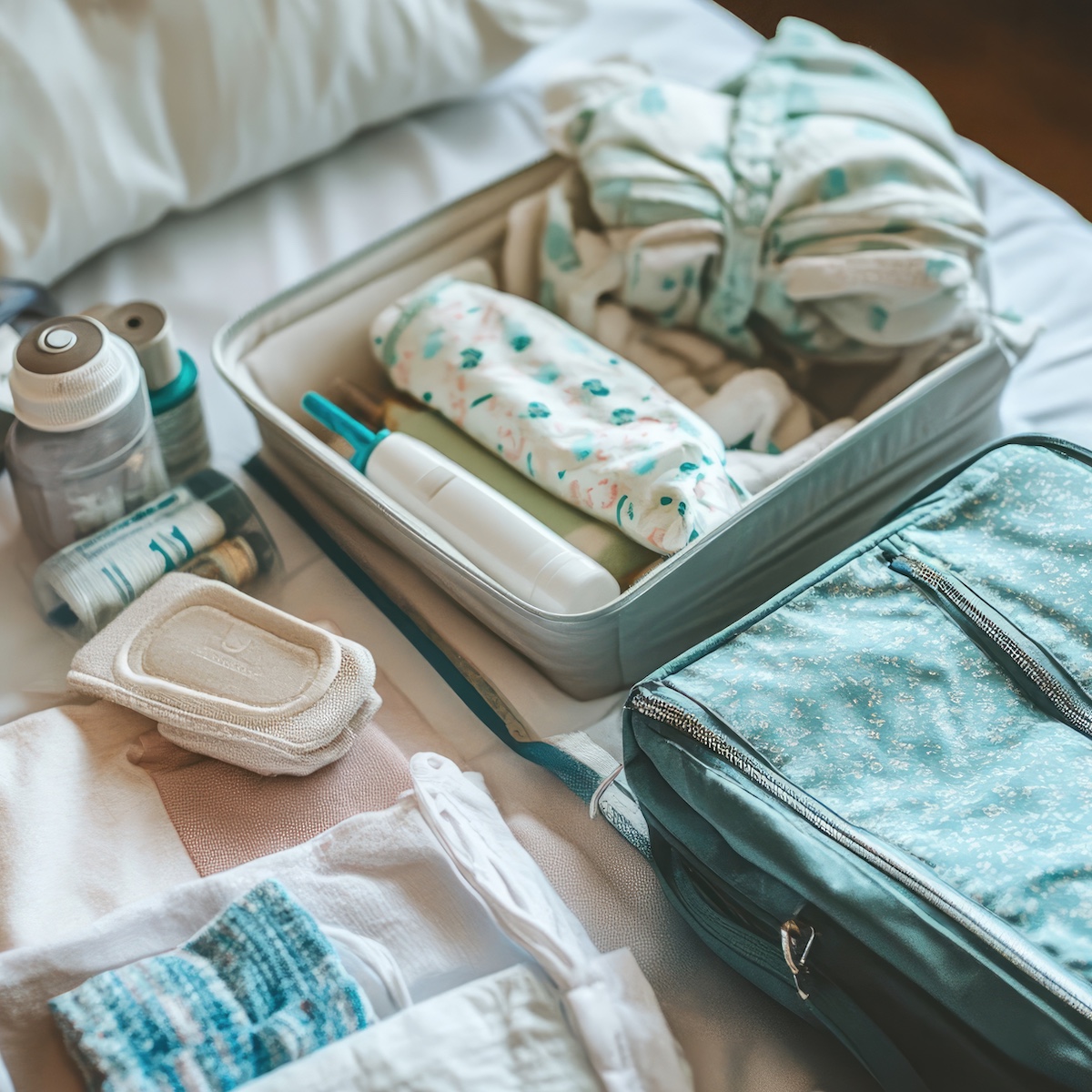
Beyond feeding, the CDC's emergency checklist for families with young children points to a specific set of supplies worth staging in advance:
- Diapers and wipes in larger quantities than you think you need, plus diaper cream.
- Extra clothing and at least two extra blankets, since keeping a baby warm is harder without heat.
- A baby carrier such as a wrap or sling, so your hands stay free if you have to move.
- Infant acetaminophen, an infant thermometer, and a copy of medical and vaccination records.
- Any prescription your baby takes, with a few days' buffer.
Store these together in a waterproof bin or bag, not scattered around the nursery. In an actual emergency you want to grab one container and go.
Water Deserves Its Own Line
For a household with an infant, water is not just for drinking. It is for mixing formula, cleaning bottles, and basic hygiene, so plan for more than the standard per-person guidance.
Ready-to-feed formula reduces the amount of clean water you need to keep on hand, which is exactly why it earns its spot for formula-fed babies.
If you are breastfeeding, you still need enough water to stay hydrated, because your own intake supports your supply.
Check It Twice a Year
An infant kit goes stale faster than an adult one, because the baby keeps changing. Diapers outgrow their size in weeks, formula and infant medication carry expiration dates, and last season's clothes will not fit next season's baby. A bin packed at birth can be useless by month four if no one revisits it.
Put two reminders on the calendar, roughly six months apart, to rotate the supplies. Move the diapers up a size, replace anything expired, and update the clothing for the coming weather.
It takes ten minutes, and it is the difference between a kit that works and a box of things that no longer fit the child you actually have.
Signs Your Emergency Plan Overlooked the Baby
Run your current plan against this quick gut check. Any "yes" is a gap worth closing this week:
- Your kit has food for adults but no ready-to-feed formula or feeding backup for the baby.
- Every pump you own needs an outlet or a charge.
- Your diaper supply would last a day, not several.
- The baby's medical records exist only on a phone that might die.
- Nothing in the kit would keep an infant warm if the heat went out.
- Parents Are Prioritising Breathable, Sustainable Fabrics For Children's Seasonal Sleepwear
- Our Homemade Christmas Printables, Made With AI: What Worked, What Didn't, and What I'm Saving for Next Year
- At-Home vs. In-Lounge IV Therapy in the Hudson Valley: Which Makes More Sense?
- Can Passengers Pursue Compensation After a Car Accident?




Prepared, Not Anxious
The point of any of this is not to catastrophize. It is to make sure that if a storm knocks out power for two days, the baby's next feeding, diaper change, and nap are non-events rather than crises.
Build the standard kit, add the infant layer, and pick backups that work without electricity.
Then put it in a bin, label it, and hope you never need it. Preparation is what lets you stay calm when everyone else is scrambling.





Leave a Reply