

Taking care of your skin at home does not need to involve a complicated shelf full of products or an endless list of beauty steps. A thoughtful routine built around cleansing, hydration, sun protection, and consistency can provide a strong foundation for healthy-looking skin.
As home skincare continues to evolve, beauty devices are also becoming part of personal routines, offering additional options to support smoother, firmer, and more refreshed-looking skin.
Brands such as Even Skyn offer at-home beauty technology designed to complement everyday skincare, while the Lumo-microinfuser combines an RF-based device with a separate micro-infusion system.
The important thing is to understand what each technology is designed to do and use it according to the manufacturer's instructions rather than treating at-home devices as replacements for professional procedures.
Jump to:
- Why Home Skincare Is Becoming More Popular
- Build the Basics Before Adding Technology
- Where At-Home Devices Fit Into a Skincare Routine
- Understanding the Lumo and Micro-Infusion Approach
- Don't Treat More as Better
- A Simple Home Skincare Schedule
- Give Your Skin Time to Respond
- Know When Professional Advice Makes Sense
- Make Home Skincare a Sustainable Habit
Why Home Skincare Is Becoming More Popular
Busy schedules have changed the way many people approach beauty and self-care. Instead of relying exclusively on occasional salon or clinic appointments, consumers are increasingly interested in routines that can be maintained in their own bathrooms or bedrooms.
Home skincare offers a major practical advantage: consistency.
A simple routine that someone can comfortably follow several times a week may be more sustainable than a complicated routine that feels like a chore. The Inspiration Edit has similarly discussed the importance of creating practical skin-rejuvenation habits at home rather than making skincare unnecessarily overwhelming.
The goal should not be to use every new product or device available. Instead, home skincare works best when each step has a clear purpose.
Build the Basics Before Adding Technology
Before considering advanced beauty tools, establish a reliable skincare foundation.
1. Cleanse Gently
Cleansing helps remove makeup, sunscreen, excess oil, sweat, and everyday buildup. However, aggressive scrubbing or overly frequent cleansing can leave the skin feeling uncomfortable and dry.
Choose a cleanser that suits your skin type and avoid assuming that a tight feeling after washing means the skin is especially clean.
2. Keep Skin Hydrated
Moisturization is another important part of an everyday routine. Dry skin can feel tight and look dull, while well-hydrated skin often appears smoother and more comfortable.
Look for a moisturizer based on your individual needs rather than simply choosing the most expensive option.
3. Make Sun Protection a Priority
Daily sun protection should remain an important part of a long-term skincare strategy. No beauty device can replace sensible sun protection.
Broad-spectrum sunscreen can help protect exposed skin from ultraviolet radiation, particularly when spending significant time outdoors. It also makes sense to remember areas such as the neck, ears, chest, and hands rather than focusing exclusively on the face.
Where At-Home Devices Fit Into a Skincare Routine
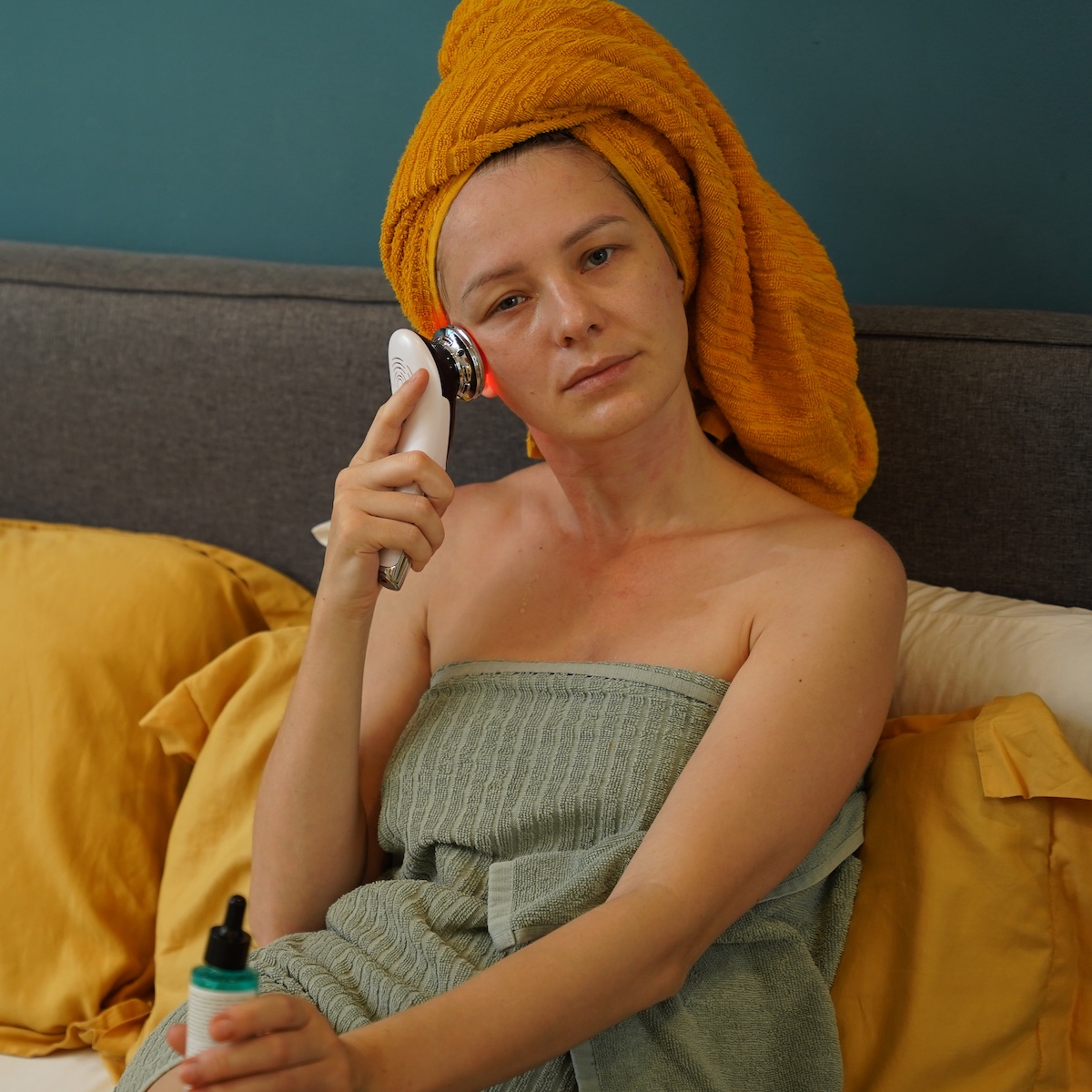
Once the basics are established, some people may want to explore beauty devices. At-home technologies now include LED tools, microcurrent devices, radiofrequency devices, cleansing tools, and micro-infusion systems.
These technologies are not interchangeable. Each uses a different mechanism, so consumers should read the product information carefully rather than assume every device produces the same effect.
For example, the EvenSkyn Lumo+ is described by the manufacturer as using radiofrequency, EMS, and LED technology, while the MicroInfuser is a separate 0.5 mm micro-infusion system.
The company specifically distinguishes this combination from professional RF microneedling because neither device delivers RF energy through the needles.
That distinction is important when setting realistic expectations about home skincare.
Understanding the Lumo and Micro-Infusion Approach
A combined at-home routine can be appealing because it brings different technologies into one structured skincare schedule.
According to the manufacturer's current product information, Lumo+ uses bipolar radiofrequency alongside EMS and LED functions. The MicroInfuser uses a fixed 0.5 mm needle depth and a single-use sterile head paired with a sealed serum ampoule.
The two components therefore have different roles.
Lumo+: The Energy-Based Step
Lumo+ is designed as an at-home energy-based skincare device. The manufacturer's instructions recommend cleaning the treatment area before use, applying an appropriate conductive gel, and keeping the device moving slowly and continuously during treatment.
The company also recommends beginning at a lower intensity and adjusting according to comfort and tolerance.
Following those instructions matters because home devices are intended to be used within specific operating parameters.
MicroInfuser: A Separate Micro-Infusion Step
The MicroInfuser is designed around controlled micro-infusion rather than RF microneedling. The manufacturer's current guidance describes a fixed 0.5 mm depth, a sterile single-use needle head, and a sealed 5 mL serum ampoule for each session.
The instructions also emphasize avoiding areas such as the eyelids, active breakouts, open wounds, inflamed skin, raised scars, and soft lip tissue.
For anyone exploring this type of home skincare technology, those limitations are just as important as the advertised features.
Don't Treat More as Better
One of the most common mistakes in skincare is assuming that more frequent treatment will automatically produce better results.
Skin needs time between more intensive cosmetic routines. According to EvenSkyn's current guidance, the MicroInfuser is intended to be used at a 14-day interval, with a minimum 24-hour wait before returning to RF, ultrasound, or EMS after micro-infusion. The company suggests longer spacing for people with more sensitive skin.
This is a useful principle for home skincare in general: consistency is usually more practical than intensity.
Using several active products and devices simultaneously can also make it difficult to determine what is helping and what may be causing irritation.
A Simple Home Skincare Schedule
A practical routine might look something like this:
Morning
- Cleanse gently or rinse according to your skin's needs.
- Apply a suitable hydrating or antioxidant product.
- Moisturize if necessary.
- Finish with broad-spectrum sunscreen.
Evening
- Remove makeup and sunscreen.
- Cleanse without excessive scrubbing.
- Apply your chosen treatment product.
- Finish with moisturizer.
Device Days
If an at-home device is part of your routine, follow its specific instructions rather than improvising. Start gradually, pay attention to your skin's response, and avoid combining multiple potentially irritating treatments simply because they are available.
The Inspiration Edit's existing coverage on creating a skincare routine for firmer-looking skin also emphasizes simple fundamentals, gradual introduction of active ingredients, hydration, and sun protection. That makes it a useful complementary resource for readers developing their own routine.
Give Your Skin Time to Respond
Skincare rarely needs to be judged after a single use. Changes in hydration, texture, and overall appearance can be influenced by many factors, including weather, sleep, stress, sun exposure, hormones, diet, and the products being used.
Keeping a simple skincare journal can actually be useful. Record when you introduce a new product, how frequently you use it, and whether your skin feels comfortable afterward. This makes it easier to identify patterns.
It also prevents the common habit of changing an entire routine every few days.
Know When Professional Advice Makes Sense
At-home skincare can be useful for cosmetic maintenance, but it has clear boundaries.
Persistent acne, unexplained rashes, painful inflammation, rapidly changing pigmentation, unusual lesions, or other ongoing concerns should be assessed by an appropriate healthcare professional rather than managed exclusively with cosmetic products or devices.
People with medical conditions, implanted electronic devices, or other contraindications should also check the relevant manufacturer's safety information and seek professional advice where appropriate.
Even Skyn's current MicroInfuser guidance, for example, specifically advises people with pacemakers, implanted electronic devices, or certain cardiac conditions to consult their physician before using devices involving EMS, microcurrent, RF, or ultrasound.
Make Home Skincare a Sustainable Habit
The most useful skincare routine is often the one that fits naturally into everyday life.
You do not need dozens of products or an elaborate multi-step process. Start with gentle cleansing, hydration, moisturizer, and sun protection. Once those habits are established, targeted products or beauty devices can be introduced carefully when they make sense for your personal goals.
- Parents Are Prioritising Breathable, Sustainable Fabrics For Children's Seasonal Sleepwear
- Our Homemade Christmas Printables, Made With AI: What Worked, What Didn't, and What I'm Saving for Next Year
- At-Home vs. In-Lounge IV Therapy in the Hudson Valley: Which Makes More Sense?
- Can Passengers Pursue Compensation After a Car Accident?




At-home technology can add convenience and structure to a beauty routine, but it should be approached with realistic expectations.
Understanding the difference between technologies, following usage instructions, maintaining hygiene, and allowing adequate recovery time are all essential parts of responsible home skincare.
Ultimately, effective skincare is less about chasing every new trend and more about creating habits you can maintain.
With a balanced routine and thoughtful use of at-home beauty technology, your daily skincare ritual can become both practical and enjoyable.





Leave a Reply