

If you've got kids, you know this scene. Dinner's on the table, then nothing. Lights out. The house goes quiet in that weird sudden way, and every kid at the table looks up to see what the adults do next. Power cuts are never convenient.
With children in the house, they take actual planning. The fridge is on a timer now. The rooms are dark. And bedtime? Still happening.
A little prep turns the whole evening from chaos into something your family can handle. Here's the plan: food, light, little ones.
Jump to:
1. Food First: Respect The Four-Hour Rule
Power's out, your fridge just became the most important thing you own. FDA says: keep the door closed and refrigerated food stays safe about four hours. So glance at the clock when it happens.
Then resist. Don't peek. Meat, chicken, milk, eggs, leftovers, anything perishable above 40°F for more than four hours, throw it out.
No debating. Freezers buy you real time: a full one holds about 48 hours unopened, half-full around 24. Keep a cooler and gel packs ready for the long outages.
Pro move: freeze water bottles ahead of time. They keep the freezer cold longer, then become drinking water.
2. Light The House The Safe Way
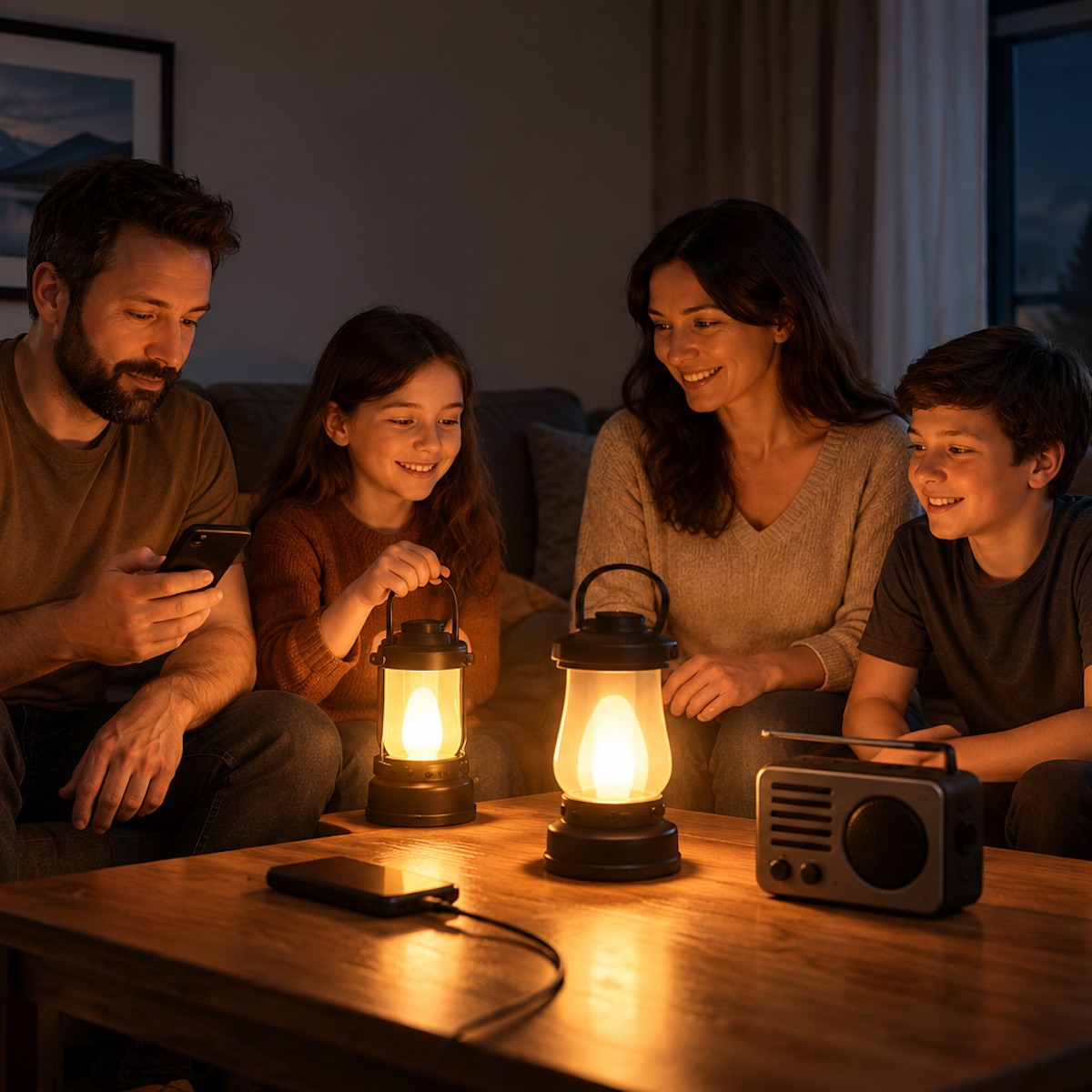
Kids fear the dark more than anything, so lights come first. Same spots, all year: flashlights and battery lanterns by the front door, in the kitchen, upstairs.
Red Cross guidance is flashlights, not candles; one tipped candle and you've got a fire, and small curious hands make it twice as likely. Hand each kid their own little flashlight or headlamp.
Changes everything; suddenly it's an adventure, not a scary dark house. Phones on chargers, then low-power mode.
Pick a meeting spot, one place everyone goes, so nobody wanders alone in the dark.
3. Keep Little Ones Comfortable And Calm
They're watching you. So act like this was the plan all along. Dinner and bedtime stay as normal as you can manage; eat by lantern light, ditch the screens for a board game or a story read out loud.
Freezing out? Everybody layers up, one room, shared blankets, shared body heat.
Sweltering? Open the windows, cold drinks all round. Medicines that need the fridge: ask the pharmacist right now, today, how long they last without power.
Don't wait for the outage to wonder. Comfort object: blanket, stuffed animal, whatever; it matters more than you'd think. Above all, be boring about it. Calm parent, calm kids.
4. For Longer Outages, Think About Backup Power
An hour or two? You wait it out. Past four hours, though, the fridge is back to being the problem.
That's what a portable power station is for; it belongs in the family emergency kit right next to the flashlights.
A full-size fridge draws a few hundred watts when the compressor's running, on and off through the day.
A decent station keeps it cold for hours. When families start comparing backup options, OUKITEL Power's portable stations for home backup are one option among several worth comparing.
Figure out where yours lives before you need it. Keep it charged. Plug the fridge in once as a test, find out it works on a calm Saturday, not a dark Tuesday.
5. Decide What Runs And What Rests
It's not the grid. Prioritize. Fridge, a few LEDs, phone chargers; that's the list. Heaters, kettles, hair dryers stay off; they'll drain a battery in no time.
Use one extension lead from a central spot. Not cables across every dark room; keep them along walls, flat, where little feet won't trip. Neighbor running a generator? It lives outside.
Far from doors and windows. Exhaust creeps inside and brings carbon monoxide, odorless, deadly. Indoors, stick with battery. Near-silent, no fumes. Kids can actually sleep through it.
Help the fridge while the station works. Put the most perishable things together, one fast door opening, grab it all. Put a thermometer inside the fridge so you're reading a number, not guessing.
Put the next meal's milk and leftovers in the cooler with ice packs. Main door stays shut. Every hour it stays closed is an hour the battery doesn't have to cover.
Make it a game before it matters. Walk the kids through it on a regular evening: here's your flashlight, here's where we meet, the fridge stays closed no matter what.
Five minutes of practice beats an hour of explaining to scared children in the dark. Kids who know the drill don't panic. They help.
6. Match The Station To Your Fridge And Freezer
Check your actual appliances before spending money. Running wattage is on the fridge label (inside the door) or the manual.
Then add the compressor's startup surge, typically two to three times running draw, just for a few seconds.
- Parents Are Prioritising Breathable, Sustainable Fabrics For Children's Seasonal Sleepwear
- Our Homemade Christmas Printables, Made With AI: What Worked, What Didn't, and What I'm Saving for Next Year
- At-Home vs. In-Lounge IV Therapy in the Hudson Valley: Which Makes More Sense?
- Can Passengers Pursue Compensation After a Car Accident?




Add anything else running simultaneously. Leave headroom. There's a good practical guide on what it takes to run a refrigerator and freezer during an outage, read it before buying so the capacity matches your actual fridge and freezer.
Right-sized, the fridge hums, the freezer stays solid, and nobody's watching the clock.
That's the whole plan. Food, light, calm kids, backup for the long haul. Put the kit together this weekend, lights on, no rush.
A power cut plan is really a comfort plan. Food sorted, lights handled, kids reassured, backup ready for the long ones. Build the kit this weekend, while the lights are on.





Leave a Reply