

It happens every year around the same time. The turkey is brining, the pies are cooling, someone just walked in with a tray of deviled eggs, and your refrigerator door won't close without a shoulder in the way.
You start doing the math on what can sit on the counter for a few hours, and none of it adds up.
Meanwhile, the cooler that rode along to every summer barbecue is sitting in the garage, empty.
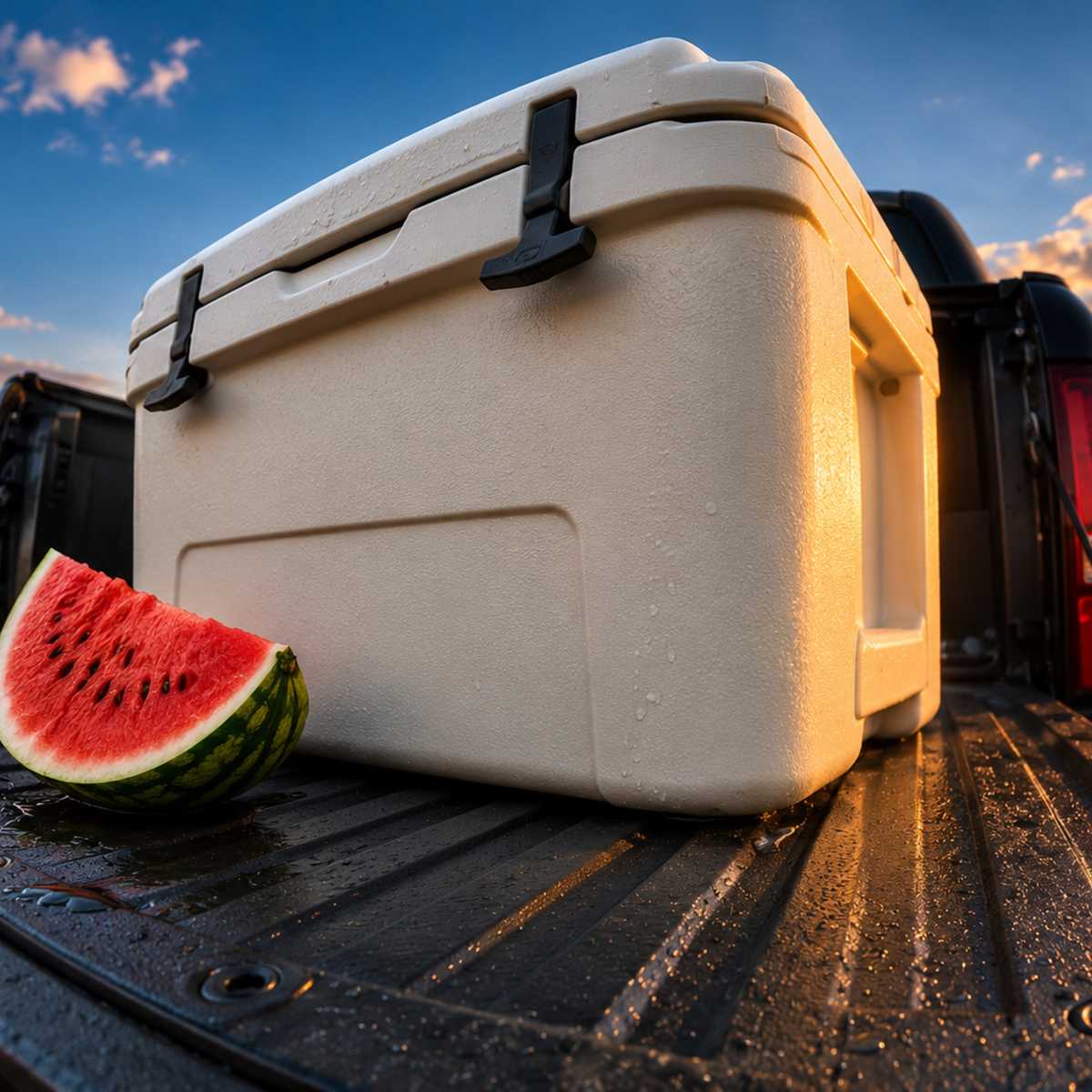
Treated the right way, that cooler can carry a serious share of your holiday cold storage, freeing up the fridge for the dishes that truly need it and keeping your guests' drinks within easy reach.
Here's how to set it up so it stays cold, stays organised, and stays food-safe from the first appetiser to the last plate of leftovers.
Jump to:
Can a Cooler Really Work as a Second Fridge?
Yes, for a day or two of hosting, a well-insulated cooler can hold food at safe temperatures. The goal is the same as your refrigerator: keep perishable food at 40°F or below.
Rotomolded and thick-walled models with tight gaskets do this best because they slow heat transfer and seal out warm air. A thin, budget cooler can still help, but you'll need to check and replenish ice more often.
The real advantage is flexibility. A cooler can live on the patio, in the garage, or next to the dining table, wherever you need cold storage most.
What Should Go in the Cooler (and What Should Stay in the Fridge)?
Think of your cooler as overflow for items that are sturdy, sealed, or frequently grabbed:
- Drinks: Soda, sparkling water, beer, wine, and juice boxes are the easiest win. Moving beverages out of the fridge alone can open up an entire shelf.
- Sealed sides and make-ahead dishes: Cranberry sauce, potato salad, dips, and casseroles waiting to be baked travel well in lidded containers.
- Backup ingredients: Extra butter, cream, eggs, and cheese you won't need until later in the day.
- Leftovers at the end of the night: If guests are taking food home, pack their containers in the cooler so they're ready to grab.
Keep the most temperature-sensitive items, like raw turkey, ham, and seafood, in your refrigerator when you can.
If raw meat must go in the cooler, give it a separate cooler or seal it in leak-proof bags and place it on the very bottom, below everything else.
How to Set Up Your Cooler for All-Day Holiday Use
1. Pre-chill it the night before
A warm cooler melts your first round of ice just cooling itself down. Fill it with a bag of sacrificial ice or a few frozen water jugs the night before, then dump that ice in the morning and load fresh.
2. Use a 2:1 ice-to-contents ratio
For long-lasting cold, aim for roughly twice as much ice as food and drinks by volume. Block ice and frozen water bottles melt more slowly than cubes, so use them as your base layer and fill gaps with cubed ice.
3. Pack in layers
Start with block ice on the bottom, add the items you'll need last, and finish with a layer of cubed ice on top. Cold air sinks, so ice on top keeps the whole load chilled.
4. Create zones
If you have two coolers, dedicate one to drinks and one to food. Drinks get opened constantly, and every time you lift the lid, warm air comes in. Separating them protects your perishables from all that traffic.
5. Keep it in the shade
Place your cooler in a garage, shaded porch, or cool interior room, away from the oven, fireplace, and direct sunlight. Elevating it off hot pavement or concrete helps too.
How Do You Keep Food Safe in a Cooler During a Party?
Food safety is what turns a cooler from a convenience into a dependable second fridge.
A few habits make all the difference:
- Drop in an appliance thermometer and check it every few hours. If it reads above 40°F, add ice right away.
- Leave the meltwater for a while. Cold water insulates, but drain it once it starts reaching food containers to prevent sogginess and cross-contamination.
- Label the lid with what's inside so guests can find the drink they want without rummaging with the lid wide open.
- Follow the two-hour rule. Perishable food that's been sitting out at room temperature for more than two hours should be discarded, not moved into the cooler to "save" it.
FAQ’S
A high-quality, pre-chilled cooler packed with plenty of ice can keep food at safe temperatures for one to several days. Frequent opening, warm surroundings, and low ice volume will shorten that window.
It can be, as long as the internal temperature stays at 40°F or below. Use a thermometer, add fresh ice before bed, and move leftovers to the refrigerator as soon as space opens up.
Yes, cool weather helps, but avoid relying on outdoor air alone. Temperatures fluctuate during the day, and direct sun can warm a cooler quickly even in winter.
Dry ice can work for frozen items, but it requires ventilation and gloves, and it can freeze foods you don't want frozen. Regular ice is the simpler choice for most holiday hosting. Holiday hosting is about the people around the table, not playing Tetris with your refrigerator shelves. With a little planning, plenty of ice, and a thermometer on hand, your cooler can take the pressure off your kitchen and keep everything fresh, cold, and ready to serve. Pull it out of the garage this year and give your fridge a well-earned break.
Choosing a Cooler That Can Handle Holiday Duty
If your current cooler struggles to hold ice through an afternoon, it may be time to upgrade before the season's biggest gatherings.
Look for thick insulated walls, a freezer-grade lid gasket, sturdy latches, and a drain plug for easy meltwater removal.


Size matters, too: a 45- to 65-quart model is a practical sweet spot for most holiday hosts, large enough to hold several bags of ice plus a full load of drinks and sides.
When you're comparing options, the best hard cooler for holiday hosting keeps ice for days, not hours, so you can prep the night before and stop worrying once guests arrive.
Wheeled designs are worth considering if you'll be moving a fully loaded cooler from the garage to the backyard.




Leave a Reply